The Substance of Things Seen: Creating Contemporary Icons for the Christian Community

Inspired by Robin M. Jensen

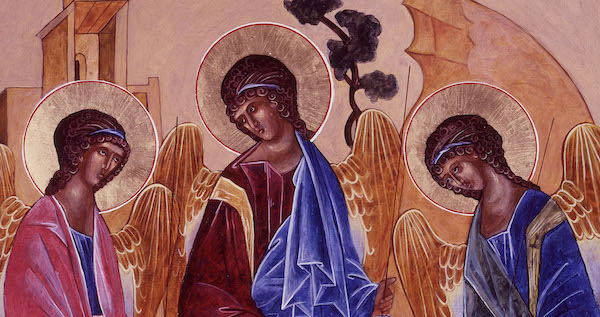
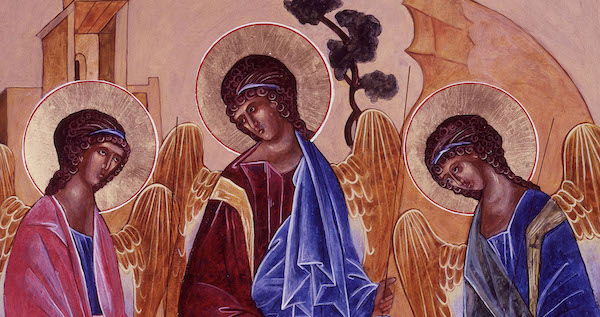
Detail, Trinity Icon. written by Christine Hales. after Andre Rublev

Christian art has never existed merely to decorate sacred spaces or to please the eye. At its best, it has served the Church as a theological language—one that gives visible form to invisible truths and nurtures worship practices that are both spiritually vital and theologically rooted. In The Substance of Things Seen, Robin M. Jensen articulates with clarity the indispensable role of art in Christian theology, worship, and communal life. Her insights are particularly relevant today as artists and iconographers seek to create contemporary icons that speak faithfully within modern contexts while remaining rooted in tradition.

Art as a Theological Practice

Christian art, and iconography in particular, occupies a unique place within the life of faith. Icons do not simply illustrate doctrine; they participate in it. They promote an ongoing conversation between faith and art—one in which visual form, prayer, and theology are inseparably linked. As Jensen reminds us, art within the Christian tradition is not neutral. It shapes belief, informs devotion, and forms the imagination of the worshiping community.

Yet this formative power carries responsibility. “If we remember that imitations are secondary things,” Jensen writes, “meant to guide us or inspire us toward the truth but not to substitute for it, we may avoid confusing objects with values or beautiful things with beauty itself.” The icon, then, is not an end in itself. It is a means—an invitation toward encounter rather than a replacement for the divine reality it signifies.

Icon Writing as Spiritual Formation

Within this framework, contemporary icon writing can be understood not simply as an artistic discipline but as a process of spiritual formation. Icon writing classes, when properly grounded, are aimed at producing visible images that point far beyond themselves. Creation and formation unfold together. The artist is shaped even as the image takes form.

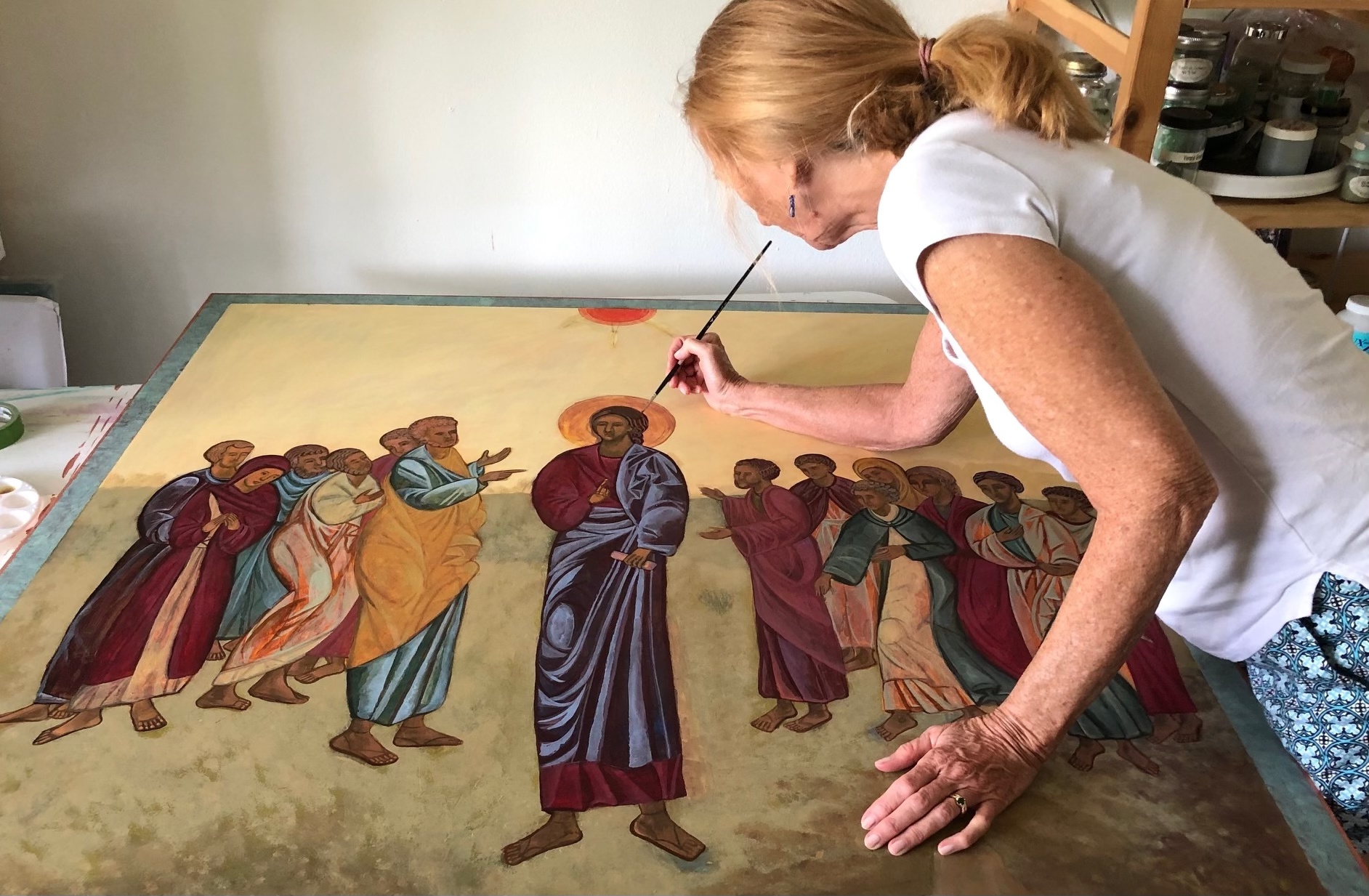
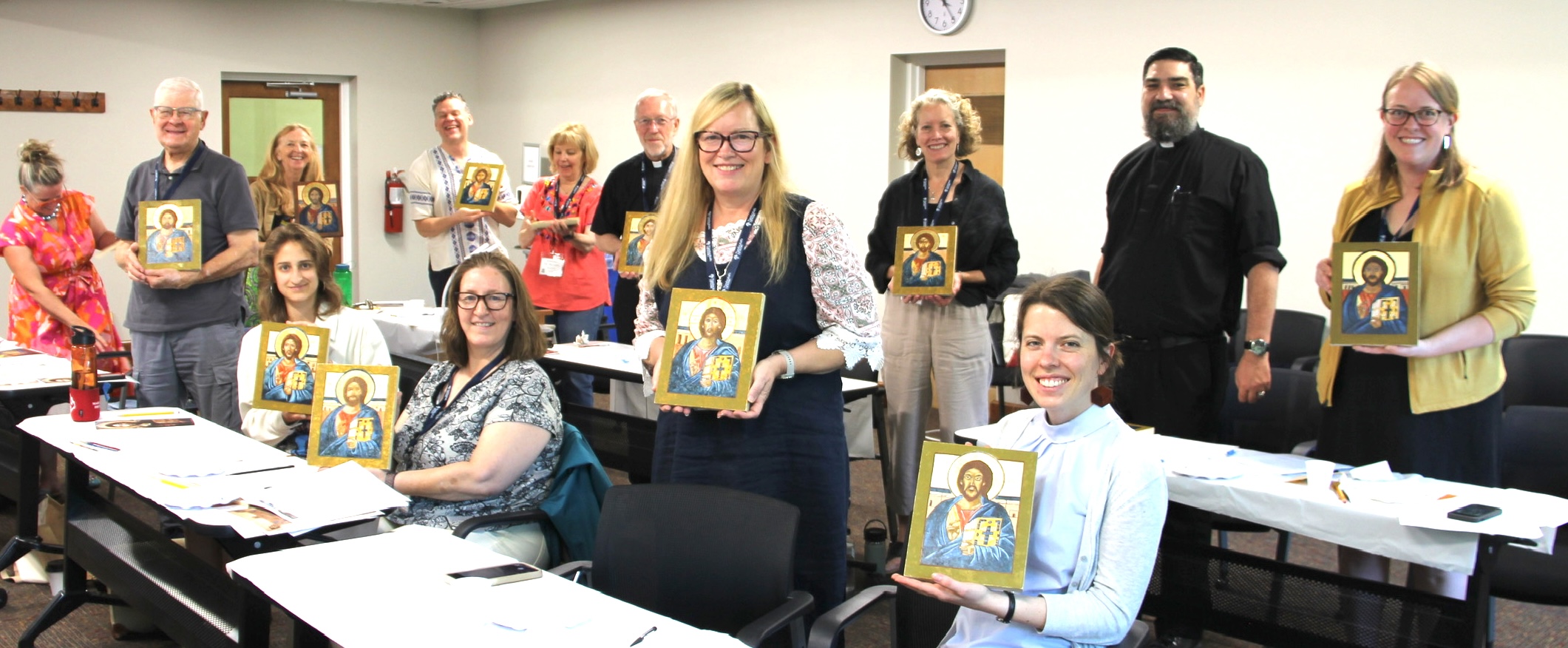
My Icon Class at Nashota House Seminary

This understanding resonates deeply with the Christian conviction expressed in 2 Corinthians 3:18: “We see not the truth itself, but are being transformed as we behold.” The thing we see is not the truth itself, but a means of encounter with the truth. In icon writing, the slow, prayerful process—layer upon layer of pigment, prayer, and contemplation—mirrors the gradual transformation of the human heart.

Seeing, Meaning, and Community

Jensen also reminds us that the perceived meaning of any work of art depends upon the experience, social location, interests, needs, and predispositions of its audience. Icons are not viewed in a vacuum. They exist within communities, cultures, and lived realities. Contemporary iconography must therefore attend carefully to context—not by abandoning tradition, but by allowing tradition to speak into the present moment with discernment and humility.

My Saint James Icon being blessed by Bishop Carlos in Santiago Spain

The icon does not record a particular physical appearance so much as it gathers and focuses prayer. It helps the viewer sense the invisible presence of the one to whom prayer is addressed. In this sacred exchange, the viewer does not merely look at the image but is invited to look through it. The icon serves as a medium of prayer directed toward a reality beyond the painted surface.

Holy Places and Sacred Spaces

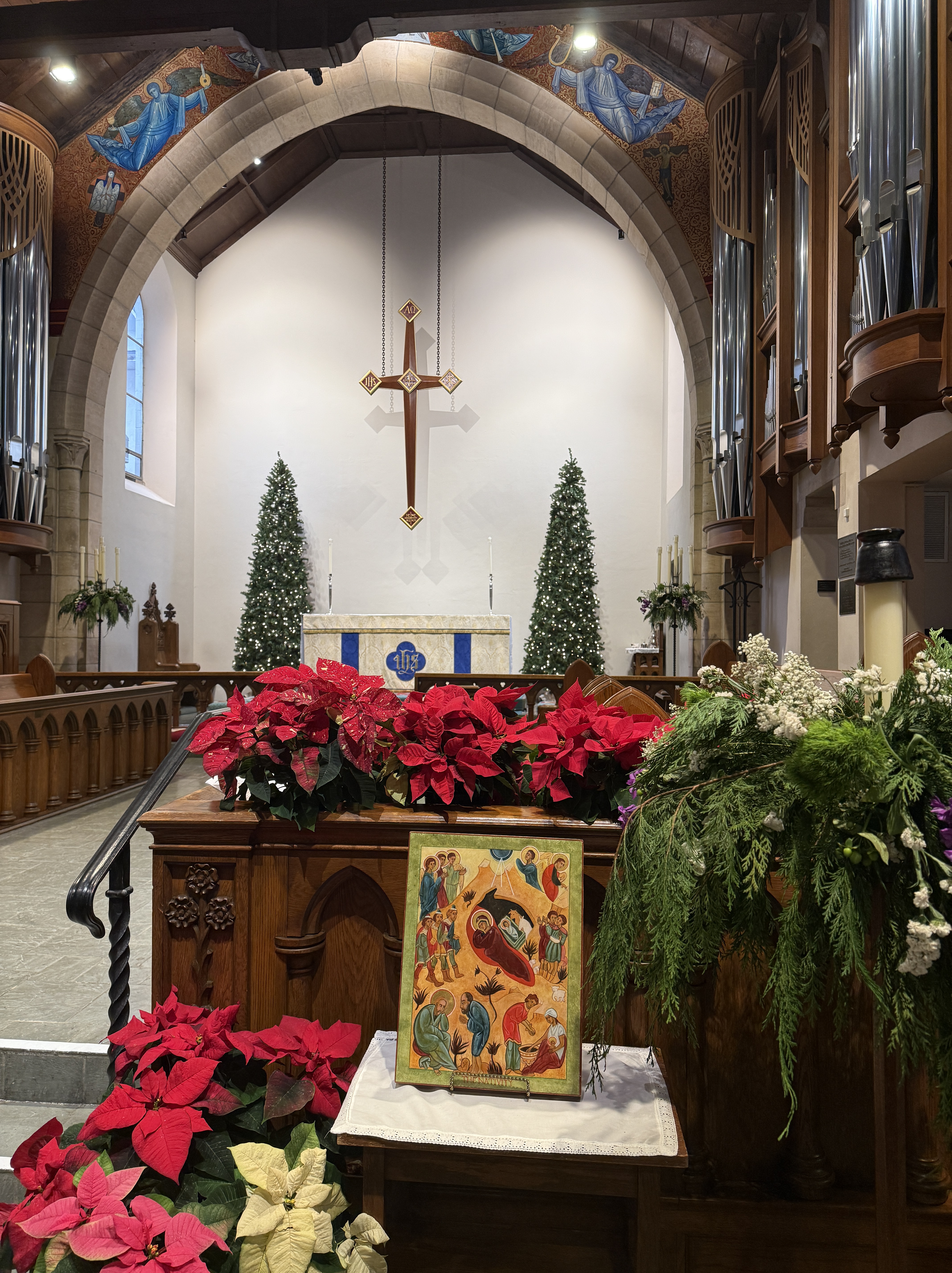
My Nativity Icon at Church of the Redeemer, Sarasota, FL

This sacramental understanding of images naturally extends to architecture and sacred space. A holy place is traditionally understood as a meeting point between heaven and earth—a site where the divine presence has manifested, a gateway between the visible and the invisible. In this sense, all architecture functions iconically, and religious architecture does so in a particularly concentrated way.

Like painted icons, sacred spaces manifest ideas in nonverbal form, functioning symbolically at both the most mundane and the most profound levels. Depending on how it is viewed and used, a religious space may mediate or even “contain” holy presence in much the same way as a traditional icon painted on a wooden panel.

Toward a Faithful Contemporary Practice

Creating contemporary icons, then, is not about innovation for its own sake. It is about faithfulness—faithfulness to theological truth, to liturgical life, and to the formative power of sacred art within Christian community. Drawing on the wisdom articulated by Jensen, contemporary iconographers are invited to see their work not merely as aesthetic production, but as participation in the Church’s ongoing act of seeing, praying, and becoming.

In this way, the substance of things seen becomes a pathway toward the mystery of things unseen—and the icon remains what it has always been at its best: a window into divine presence, held in humility, reverence, and prayer.

Wishing you all a blessed and joyous New Year!

Christine Hales

https://newchristianicons.com

Interesting Links for Iconographers:

Religious symbolism- Explained by Britannica https://www.britannica.com/topic/religious-symbolism History and symbolism of Iconography  

History and symbolism of Iconography  – Monastery Icons

Introduction to Icons:   Patristix

Sacred Spaces: Richard Vosko, God’s House is Our House, Reimagining the Environment for Worship, Liturgical Press; and also by Richard Vosko.  Art and Architecture for Congregational Worship: The Search for a Common Ground

Photo by Mick Hales

Discover the Spiritual Depth of Icons and Saints

Two Books That Open the Heart Through Icons and the Saints

John the Baptist Icon. written by Christine Hales

In the world of Christian spirituality, a beautiful mystery unfolds whenever art and prayer meet. Two icon related books—The Dwelling of the Light: Praying With Icons of Christ by Dr. Rowan Williams, and The Song of Saints: Celebrating the Saints with Anglican Prayer Beads by Catherine Gotschall—offer readers rich opportunities to encounter that mystery with depth and devotion. Though very different in scope, each invites us to slow down, to look more deeply, and to let the Holy Spirit reshape how we see God, the world, and ourselves.

Seeing Christ Anew: Rowan Williams on Praying With Icons

When The Dwelling of the Light was first published in 2003, Dr. Rowan Williams had just begun his tenure as Archbishop of Canterbury. Already a respected theologian and scholar, Williams offered the world a slim but luminous volume on praying with icons of Christ. It remains one of his most beloved spiritual works.

Madonna and Child. Written by Christine Hales

At the heart of the book lies a profound reverence for icons—not as decorative artifacts, but as encounters with divine presence. Williams writes:

“In their presence you become aware that you are present to God and that God is working on you by his grace, as he does in the lives and words of holy people.”

Using four deeply significant icons—The TransfigurationThe ResurrectionThe Hospitality of Abraham, and Christ Pantocrator—he guides the reader into a prayerful way of seeing. Icons, he suggests, are not depictions of a moment frozen in history; they reveal a life “radiating the light and force of God.”

Resurrection Icon. written by Christine Hales

In Williams’ hands, each icon becomes not only an image but a doorway: a way for Christ’s transfiguring presence to shape our own vision of the world. The book is small enough to read in an afternoon but expansive enough to ponder for years.

I have always appreciated Dr. Williams’ viewpoint on icons and sacramentals in the Anglican Church. Sometimes on my lunch break I like to pick up one of his books for some quick inspiration!

Williams wrote a companion volume a year earlier—Ponder These Things: Praying With Icons of the Virgin (Canterbury Press, 2002)—which offers a similar depth of prayer through icons of Mary.

Related Links
• Image Journal: Conversation with Rowan William
 Author Page with additional works by Dr. Williams

Praying With the Cloud of Witnesses: Catherine Gotschall’s The Song of Saints

While Williams leads us to contemplate the face of Christ, Catherine Gotschall invites us to pray with the saints themselves. A lifelong Episcopalian, Gotschall has created an extraordinary resource in The Song of Saints: Celebrating the Saints with Anglican Prayer Beads.

I met Catherine at the Episcopal Convention of South West Florida several weeks ago and want to share this interesting book with you all since first class books on the lives of the saints are hard to come by!

Her book presents the lives of more than fifty saints from across the centuries—men and women whose faithful witness continues to echo through Christian history. Arranged within the six cycles of the liturgical year, the saints span the 1st to the 20th century and represent Roman Catholic, Orthodox, and Protestant traditions.

Mary of Egypt Icon by Christine Hales

But what makes the book truly distinctive is its prayer practice. For each saint, Gotschall offers:

  • A brief biography
  • Prayers drawn from the saint’s own writings—letters, sermons, and vitae
  • A way of praying these words with Anglican prayer beads

She describes a saint as:

“someone who has led a sacramental life… an outward and visible sign of deep and abiding inner spiritual grace.”

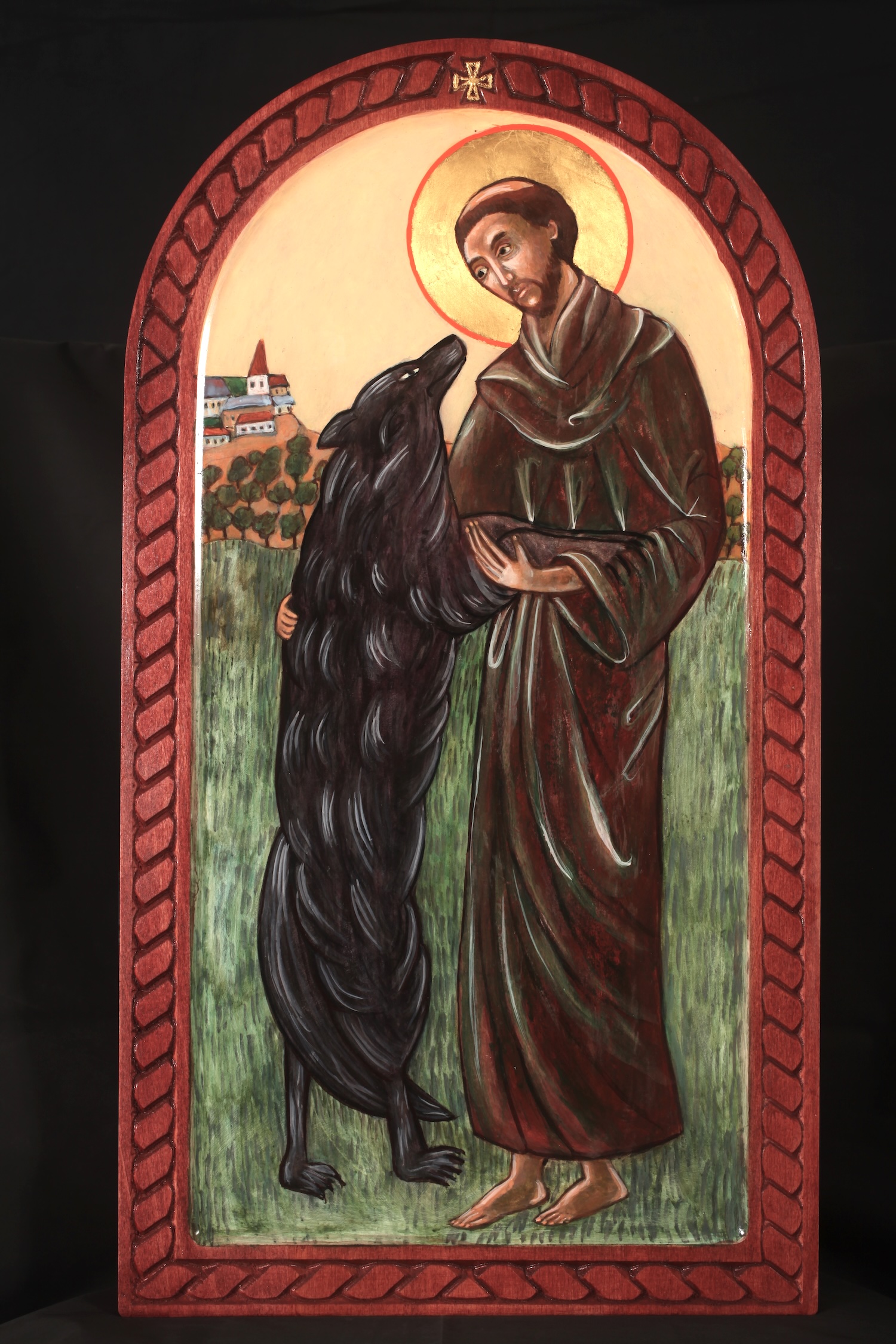
St, Francis and the Wolf of Lubbio written by Christine Hales

This is more than a book of history or devotional snippets—it is a tool for moving devotion “from head to heart.” Through the rhythm of the beads and the wisdom of the saints, readers are invited into a lived experience of prayer that feels both ancient and deeply personal.

Link to Purchase Book on Amazon

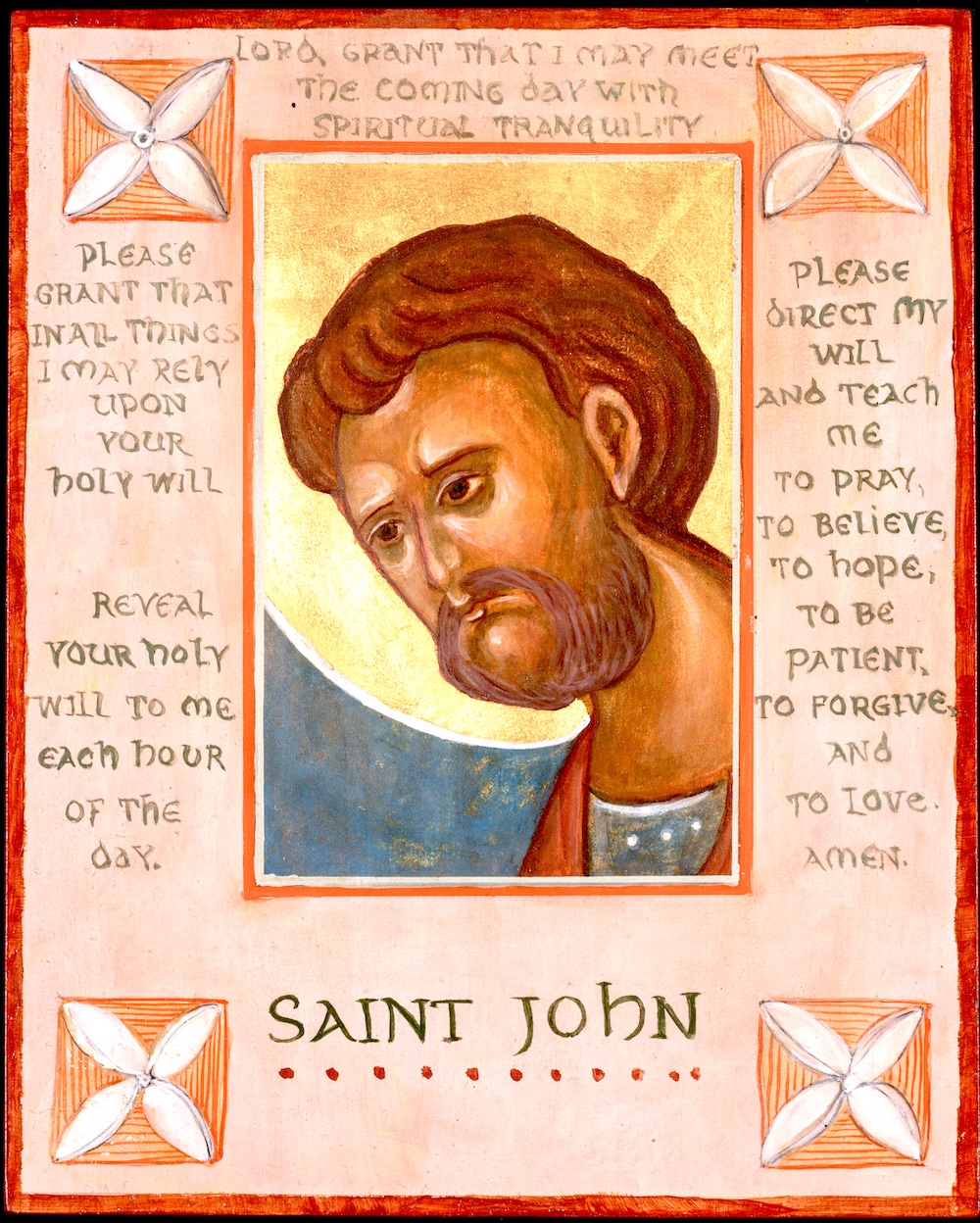
St. John Theologian Icon by Christine Hales

Art, Prayer, and the Ever-Living Presence of God

Together, these two books remind us of something essential: authentic Christian prayer is not an escape from the world but a way of seeing it more truthfully. Icons illuminate the radiant presence of Christ at the center of all things. The saints show us what life looks like when that presence is welcomed, trusted, and lived boldly across centuries and cultures.

Whether you are drawn to the serene gaze of Christ Pantocrator or to the stirring witness of those who followed him, these works offer gentle, profound companions for the spiritual journey.

They invite us—quietly but insistently—to ponder, to pray, and to be transformed.

Until next month, be blessed and be a blessing! And don’t forget, if you write an informative article about your icons or icon related information, please email me with your ideas and proposals. It would be wonderful to have articles written by more of you!

Love and prayers,

Christine Hales

Recent Posts on Saints; Stories of Saints and Icons and

All Saints Day.

My Next in- Person Icon Writing Retreats for 2026

LINKS For  Christine Simoneau Hales   2025

  1. https://newchristianicions.com   my main website
  2. Https://christinehalesicons.com  Prints of my Icons
  3. https://online.iconwritingclasses.com  my online pre-recorded icon writing classes
  4. https://www.youtube.com/channel/UCK2WoRDiPivGtz2aw61FQXA  My YouTube Channel 
  5. Facebook: https://www.facebook.com/ChristineHalesFineArt     or  https://www.facebook.com/NewChristianIcons/
  6. Instagram:   https://www.instagram.com/christinehalesicons/?hl=en
  7. American Association of Iconographers:  FB Group: https://www.facebook.com/groups/371054416651983

American Association of Iconographers Website: https://americanassociationoficonographers.com
Contact Christine: chales@halesart.com

Creating an Icon

Hello Dear Friends and Fellow Iconographers:

Sarasota, Lido Beach, September 2025

As we move into fall, it’s always a good time to reflect on the summer time that is past and imagine what we hope to accomplish this winter season.  I’ve been doing a lot of Icon writing teaching this past summer, which I have loved.  But it does come at the expense of having creative time to create icons, so I am very happy to have some time ahead of me to create new icons and experiment with different colors and techniques.  I hope to have some work to share with you by the end of the year!

One of the main ways I have of supporting students as they move from taking classes to working on their own is through Patreon.  On this platform, for a nominal monthly fee, I offer a few different levels of membership that can help new iconographers to grow, ask questions, share concerns about their icon painting techniques and receive feedback.  If you are interested, you can go to Patreon and look up Christine Hales Icons, or I will put a link for you at the end of this article.

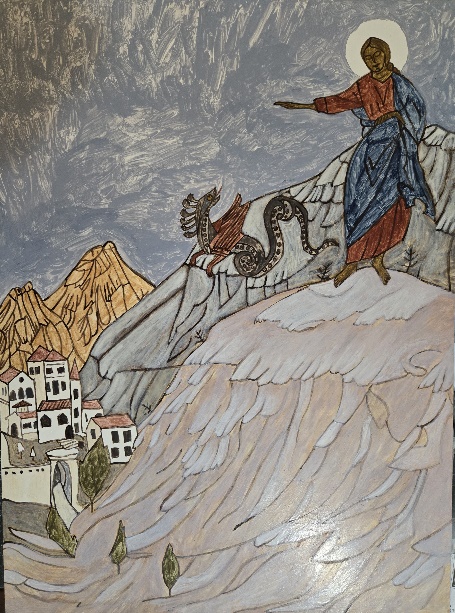
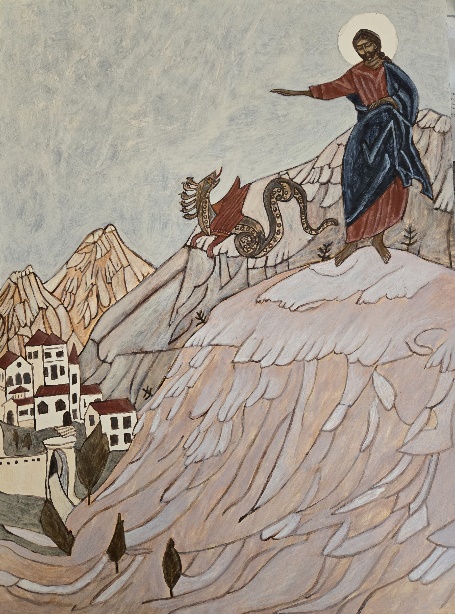
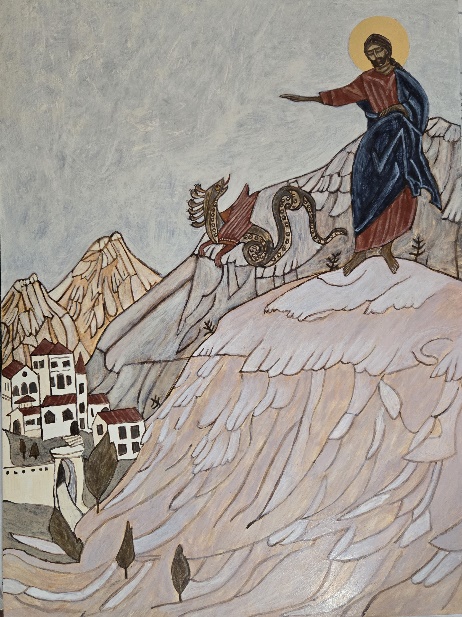
All this to say, that one of my long time students has created an original and insightful icon, “The Temptation of Christ”, which I would like to share with you this month. Sue Valentine is a minister who wanted to have the icon speak to that moment of Christ’s temptation by the devil.  Along the way, through many changes and transitions, the creating of the icon has provided a space for discussing and reflecting upon this moment in Christ’s ministry, and we worked together discerning how best to portray the meaning and message in iconographic form.

Sue has generously shared about her thoughts and process which I include here, along with some sequential images of the changes the icon went through until completion.

The Temptation of Christ Icon written by the Hand of Sue Valentine

“Jesus faced three temptations before He began His public ministry.  The final temptation is the subject of this icon.  The devil led Jesus to a high place, showed Him in an instant all the kingdoms of the world, and offered them to Jesus now, without having to suffer and die, if only Jesus would worship him.

This is a less familiar story to some, and because I wanted people to understand what they were seeing, the haiku at the bottom is an attempt to summarize the scripture for them:

“Kingdoms, if you bow.”

“Away from me, O Satan.”

“Worship God, alone.”

         Matthew 4:8-10

People struggle with the idea of whether Jesus could be tempted.  Sometimes the word is translated “test”.  But whether He was tempted or tested, for this to be a true “test”, it had to have been possible for Jesus to fail it.  What would have happened to us had He failed the test and worshipped Satan?  

Kingdoms are tempting.  Power is tempting.  The ground surrounding the kingdoms depicted in the lower left are painted with gold to depict a counterfeit of heaven’s “streets of gold”, and subtle gold highlights in the windows imply there is something desirable yet hidden within.  I decided not to make the kingdoms look more obviously attractive by applying gold to the outsides of the buildings.  Kingdoms are, after all, seductive.  But thankfully, Jesus wasn’t motivated by kingdoms. He was motivated by rescuing us.

More Progress Photos

The Homily, or Application of the Story

I felt His clarity of purpose as He responded to Satan, “Worship God, alone”, as He pointed His finger at the dragon.  I find it interesting that there is no agitation on Jesus’ face.  His eyes are closed.  He is serene.  But His conviction is clear.

Like most people, I would like to receive a reward from God without suffering, or without having to walk the whole road He has for me.  I felt that as I wrote this icon.  I struggled mightily with color choices, especially with the mountains and the inner background, and changed them many times asking the Holy Spirit to help me.  

It’s tempting to want to design our own roads.  It’s tempting to want an easy life.  But that is not the way of a disciple.  Worship of God includes acknowledging that He determines our path, including the subjects of our icons and the process we go through as we write them.”

Sue Valentine

I’m so grateful that Sue has shared this with all of us, and I hope that this can provide a model not only for discerning how to paint a particular icon, but also for allowing God to speak to us through the process of icon writing and convey that to the viewer.

With this, I put out a request to those of you with icons and their development to share with us all in next month’s newsletter. Just email me with your thoughts and photos: chales@halesart.com

I close this month’s newsletter with a prayer and quote from Psalm 106:

“For your lovingkindness is greater than the heavens, and your faithfulness reaches to the clouds. Exalt yourself above the heavens O God, and your glory over all the earth, so that those who are dear to you may be delivered, save with your right hand and answer me.”

May God grant you all peace and the ability to be peace makers, and bless the work of your hands,

Love and prayers,

Christine Simoneau Hales

My Links:

MY PATREON: CLICK HERE

  1. https://newchristianicions.com   my main website
  2. Https://christinehalesicons.com  Prints of my Icons
  3. https://online.iconwritingclasses.com  my online pre-recorded icon writing classes
  4. https://www.youtube.com/channel/UCK2WoRDiPivGtz2aw61FQXA  My YouTube Channel 
  5. Facebook: https://www.facebook.com/ChristineHalesFineArt     or  https://www.facebook.com/NewChristianIcons/
  6. Instagram:   https://www.instagram.com/christinehalesicons/?hl=en
  7. American Association of Iconographers:  FB Group: https://www.facebook.com/groups/371054416651983
  8. American Association of Iconographers Website: https://americanassociationoficonographers.com

CHRISTINE HALES ICONS ON PATREON

Icons As Theology in Color

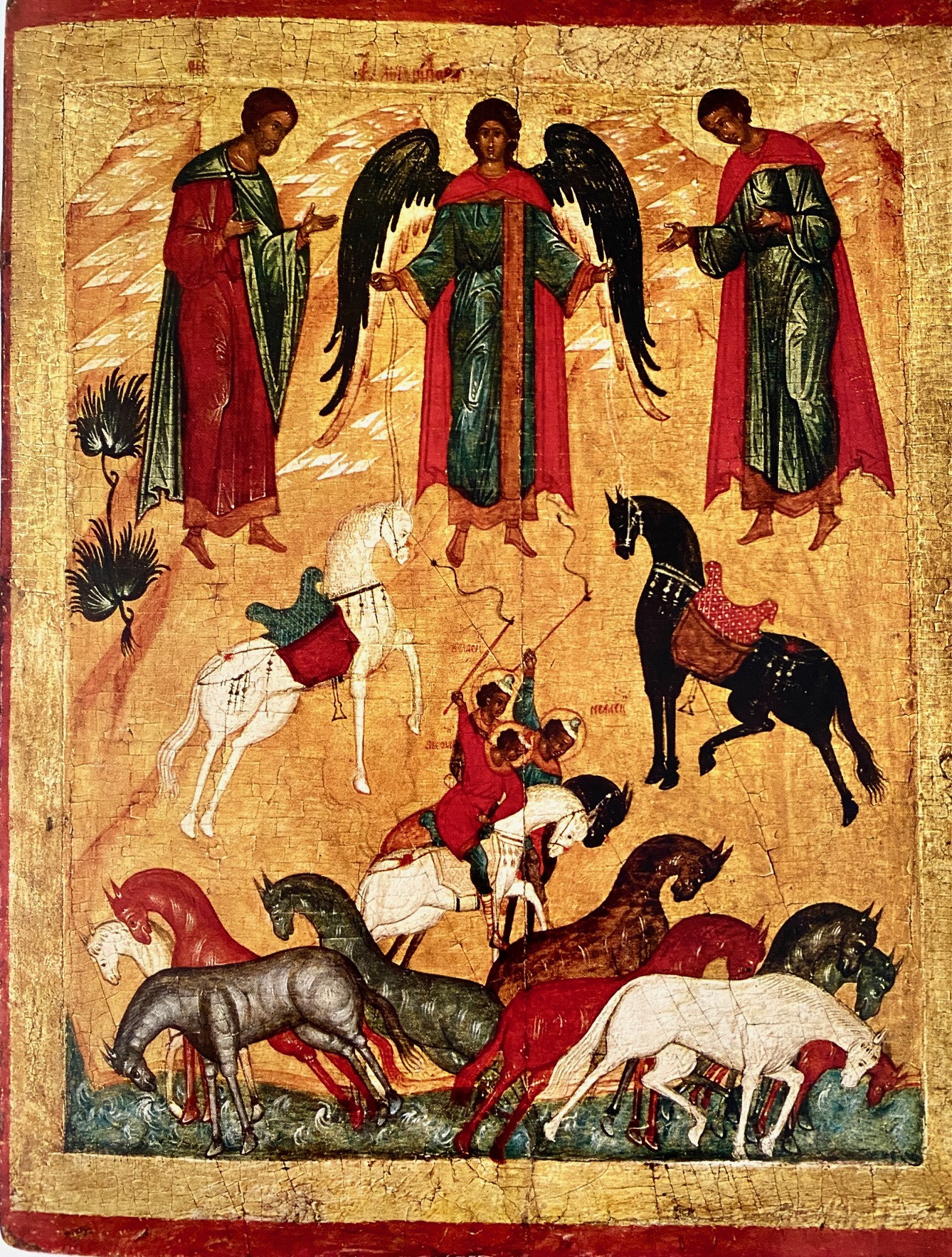
Saint George, Novgorod, 16th century

In the realm of Christian spirituality, icons stand as more than mere religious art. They are a visual form of divine communication, a sacred language that transcends time and culture. As Leonid Ouspensky notes, icons do not serve religion in a utilitarian sense but are an intrinsic part of it—one of the means through which believers encounter and commune with God. When I think of Icons as theology in color, I inevitably go to the Novgorod Icons which were created in Russia from the 14th to 17th centuries.

Sts. Florus and Laurus 16th century, Novgorod

Icons as Liturgical Art

An icon, much like sacred scripture, is a vessel of divine revelation. In the same way that words in liturgy guide the faithful toward deeper understanding, icons serve as instruments of knowledge and communion with God. They are not decorations; they are theological expressions rendered in color and form, inviting contemplation and prayer.

Tradition and the Role of the Holy Spirit

Christian tradition is often misunderstood as mere adherence to historical customs, but its essence is far more profound. As stated in theological reflections, true Tradition is the life of the Holy Spirit in the Church. It is through the Spirit that believers gain the faculty to perceive divine Truth—not merely through human reason but through the illumination of faith. Icons, shaped by this Tradition, bear witness to a spiritual reality that is ever-present and active.

The Power of Signs and Symbols

The Good Shepherd, From the Roman Catacombs

The material and spiritual worlds are not separate; rather, they are deeply intertwined. This is evident in the role of symbols, which serve as bridges between the seen and unseen. Early Christian symbols carried layers of meaning—the image of a saint in the catacombs could signify a soul in paradise, an embodiment of prayer, or even the Church itself. Through repeated sacred gestures and imagery, the faithful are invited to enter into the mystery of divine presence.

The Evolution of Christian Symbolism

Christianity has always expressed its mysteries through symbols. Early believers adapted existing signs from the surrounding world—such as the dove, peacock, and anchor—infusing them with new, transcendent meaning. As time passed, explicitly Christian symbols emerged, such as the fish (Ichthys) and the lamb, both representing Christ. These symbols, while rooted in human expression, point to eternal truths beyond words.

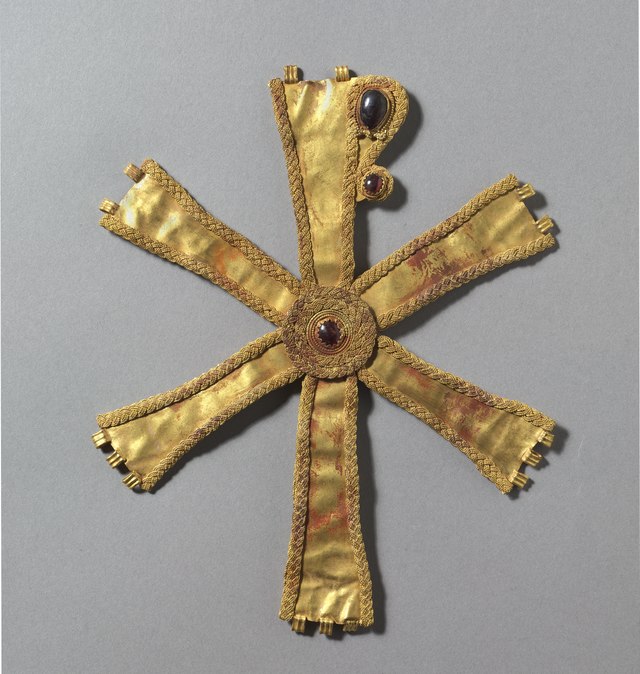
6th Century Byzantine Chi Rho Symbol

Icons: Transcendent Yet Concrete

While maintaining the depth of symbolic language, the icon introduces a unique dimension—the human element. Unlike abstract symbols, the icon makes divine mysteries visually accessible. It brings the infinite into finite form, allowing the ineffable to be expressed in a way that speaks directly to the soul. In the words of Egon Sendler, the icon transforms the abstract into something both transcendent and concrete, revealing the invisible through the visible.

Conclusion

Detail, Face of Christ Icon by the hand of Christine Hales

Icons are not simply religious images; they are theology in color, sacred windows into the divine. Through tradition, symbolism, and the work of the Holy Spirit, they continue to guide believers into a deeper relationship with God. Whether through the gaze of a saint, the presence of Christ, or the gestures of the liturgy, icons remind us that the sacred is always near, calling us into communion with the eternal.

I hope this article has been not only food for thought, but helps to build a solid foundation of theology for contemporary icon development.

“So, my dear brothers and sisters, be strong and steady, always enthusiastic about the Lord’s work, for you know that nothing you do for the Lord is ever useless.” 1 Corinthians 15:58

Until next month. Blessings,

Christine Simoneau Hales, Iconographer

LINKS For  Christine Simoneau Hales   2025

  1. https://newchristianicions.com   my main website
  2. Https://christinehalesicons.com  Prints of my Icons
  3. https://online.iconwritingclasses.com  my online pre-recorded icon writing classes
  4. https://www.youtube.com/channel/UCK2WoRDiPivGtz2aw61FQXA  My YouTube Channel
  5. Facebook: https://www.facebook.com/ChristineHalesFineArt     or  https://www.facebook.com/NewChristianIcons/
  6. Instagram:   https://www.instagram.com/christinehalesicons/?hl=en
  7. American Association of Iconographers:  FB Group:  https://www.facebook.com/groups/371054416651983

American Association of Iconographers Website: https://americanassociationoficonographers.com

Saint Peter

I’ve recently noticed the influence of Saint Peter in my life as an iconographer. Over the years, I have been commissioned to paint many icons of Saint Peter, for churches and priests, and friends. Although each one is different, I have begun to study more deeply into who Saint Peter was and what the significance of his ministry has been over the last 2000+ years of Christianity.

Commission to paint “The Confession of Saint Peter” for Saint Peter’s Church in Lakewood, Ohio,

Saint Peter’s original name was Simon Bar Jonah, which means Simon, son of Jonah.  Jesus gave him the name of Peter when Jesus called him Cephas (in Aramaic) which means rock or stone.  Human frailty.  Born in first century CE in Bethsaida vicinity, in modern day Syria. 

Peter was a fisherman with a couple of small fishing boats.  He was married, had children and lived with his Mother-in-law. In Capernum .  Luke 4:28 Jesus healed his mother-in law.

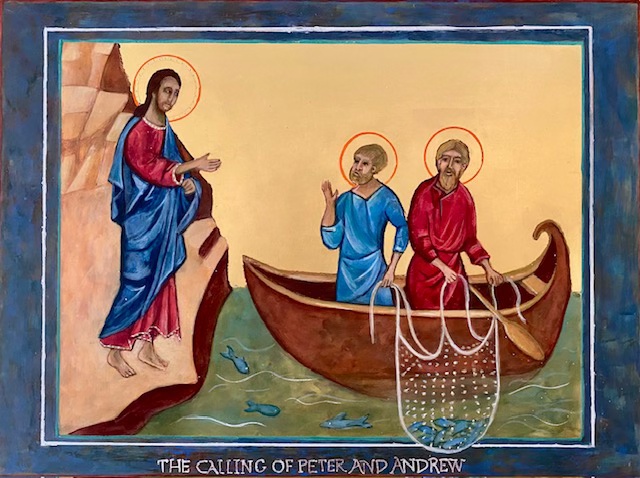
Shortly after this healing incident, Jesus stepped into Peter’s boat and asked him to row a few feet off shore so that Jesus could preach to the crowd at the Sea of Galilee.  After Jesus was finished, he told Peter to cast his net into the sea, upon which Peter then hauled out a very full net.  There were so many fish in the nets that Peter was afraid the nets would rip apart. Tin fact, the weight was so heavy that the boats began to sink.  Peter said to Jesus, “depart from me for I am a sinful man”. But Jesus said, “do not be afraid, from now on you will be a catcher of men.”

My recent “Calling of Peter and Andrew” Icon

Saint Peter was recognized as the leader of the 12 disciples, and the Roman Catholic Church regards Peter as the first of its unbroken succession of Popes.

History

St. Peter, originally Simon Bar Jonah, was a Jewish fisherman called to follow Jesus as one of His first disciples. He lived in Capernaum and worked as a fisherman with his brother St. Andrew and others. The New Testament, especially the Gospels, Acts, and letters, provides most of the information about him. Peter was married, and despite being untrained in Mosaic Law, he became a central figure in the early Church.

Peter’s personality was marked by both strengths and weaknesses. He was sometimes impulsive and unsure but displayed loyalty, leadership, and faith. He was the first to confess Jesus as the Christ and was entrusted by Jesus as the “rock” upon which the Church would be built. His denial of Jesus was followed by repentance and reaffirmation of his faith.

After Jesus’ resurrection, Peter emerged as the leader of the early Christian community, preaching at Pentecost, performing miracles, and advocating for Gentile inclusion. Despite occasional conflicts, such as with Paul over Gentile practices, Peter played a vital role in spreading Christianity and leading the Church until his eventual departure from Jerusalem and missionary work elsewhere.

Peter’s acceptance of Gentiles into the Christian faith marked a pivotal moment in early Christianity, as it symbolized the breaking down of barriers between Jews and non-Jews. Here’s a detailed explanation of this significant event:

The Conversion of Cornelius (Acts 10:1–48)

  1. Vision from God: While staying in Joppa, Peter received a vision of a sheet descending from heaven, filled with various animals considered unclean under Jewish dietary laws. A voice commanded him to “kill and eat.” When Peter objected, the voice said, “What God has made clean, you must not call unclean” (Acts 10:15). This vision occurred three times, emphasizing its importance.
  2. Summoned by Cornelius: Cornelius, a Roman centurion described as devout and God-fearing, also received a vision instructing him to send for Peter. Cornelius, though a Gentile, was respected for his prayers and acts of charity.
  3. Peter’s Journey to Caesarea: Understanding the vision’s meaning, Peter traveled to Cornelius’ home. He acknowledged that, under Jewish law, associating with Gentiles was forbidden, but he declared, “God has shown me that I should not call anyone impure or unclean” (Acts 10:28).
  4. Peter’s Sermon: Peter preached the Gospel to Cornelius and his household, proclaiming that God shows no partiality and accepts people from every nation who fear Him and do what is right. He testified about Jesus’ life, death, and resurrection.
  5. Outpouring of the Holy Spirit: While Peter was speaking, the Holy Spirit descended upon the Gentiles, just as it had upon the Jewish believers at Pentecost. This astonished the Jewish Christians who had accompanied Peter. Recognizing this as God’s work, Peter declared, “Can anyone withhold the water for baptizing these people who have received the Holy Spirit just as we have?” (Acts 10:47). He then baptized Cornelius and his household.
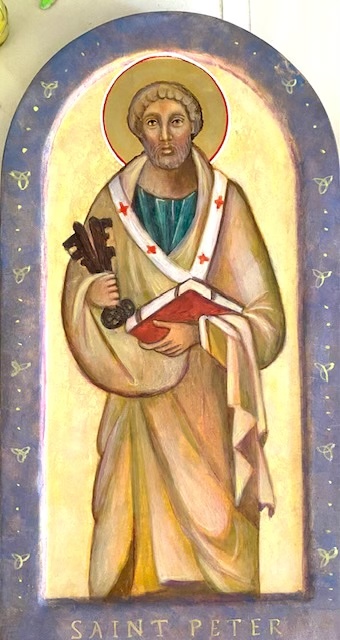
Saint Peter Icon

Significance of the Event

  • Breaking with Tradition: By baptizing Gentiles without requiring them to first undergo Jewish rites (e.g., circumcision), Peter challenged longstanding Jewish customs. This act demonstrated that salvation was available to all through faith in Christ, not adherence to Mosaic Law.
  • Divine Validation: Peter’s actions were justified by the visible descent of the Holy Spirit, signaling God’s approval of the inclusion of Gentiles into the faith.

Conflict and Resolution

  • Criticism from Jewish Christians: Upon returning to Jerusalem, Peter faced criticism from Jewish Christians for eating with Gentiles (Acts 11:1–3). In response, Peter recounted his vision and the events at Cornelius’ house, concluding, “Who was I to think that I could stand in God’s way?” (Acts 11:17). This explanation satisfied his critics, who glorified God, saying, “So then, even to Gentiles God has granted repentance that leads to life” (Acts 11:18).
  • Jerusalem Council (Acts 15): The inclusion of Gentiles later became a major issue debated at the Jerusalem Council. While Paul was the main advocate for Gentile inclusion, Peter’s testimony about Cornelius played a crucial role. He reminded the council that God had chosen him to bring the Gospel to the Gentiles and argued against imposing Jewish laws on them (Acts 15:7–11).
My New St. Peter Icon

Impact on Christianity

Peter’s acceptance of Gentiles set a precedent that allowed the Church to grow beyond its Jewish roots, becoming a universal faith open to all ethnicities and cultures. His leadership in this matter helped shape Christianity as a global movement, emphasizing grace and faith over legalistic adherence to the Law.

I hope this brief exploration into the life and contribution of Saint Peter has given you some insight and inspiration for this month! I have been reading 1 Peter and 2nd Peter in short meaningful increments and adding those to my spiritual journal each day this past month and it has brought forth many helpful insights that are applicable to current day events.

Icon Exhibition, Cathedral Church of Saint Peter, Saint Petersburg, Florida, January 12- May 1, 2025

The upcoming exhibition will include over 50 of my icons, including the Stations of the Cross, along with commentary from or about Saint Peter as a way of inviting the viewers to enter personally into each iconographic scene through the eyes of Saint Peter.

May God continue to bless the work of your hands, and give you insight and awareness of His Presence in your world.

Until next month,

Christine Simoneau Hales

Icon Museum and Study Center.

My Website. My Icon Print Website. My Patreon

A Good Source of Gessoed Icon Boards: Bob’s Icon Boards

Mystics, Healing, and Icons

Dear Fellow Iconographers:

My husband and I were honored to be inducted into the Order of Saint Luke this past summer.  The Order of Saint Luke is an international, inter-denominational organization made up of healing communities of faith, prayer, and service.  And so I have been thinking a lot about icons, miracles, mysticism and healing.  Can an Icon heal?  That’s a trick question!  Only God can heal, but an icon can bring the person into remembrance of Jesus’ healing ministry to inspire and strengthen faith in God’s desire and commitment to heal His people.

Christ in Glory created by the hands of Christine Hales

So how do we define healing?  True healing is Salvation. What is Salvation?  It can mean being saved from danger, disease, and the consequences of sin by the power of the Resurrection of Jesus Christ.  So, by these definitions, we create a field where an Icon can bring the viewer into visual relationship, remembrance and anticipation of the action of God’s grace which He freely gives us.

Not all icons need to be healing icons.  Some are created as vehicles for instruction in Biblical and Gospel truths, some for aiding in prayer and the liturgy, and inspiring God’s people through holiness, sacredness and beauty. My mission is to carry this healing charism in icons forward into our present day.  There’s quite a strong historical foundation of the healing ministry in the Christian church, beginning with our Lord Jesus. Many of the Christian mystics experienced people being healed wherever they went.

St. Fyodor of Rostov painted by the hand of Christine Hales

Mystics and Healing

The mystical spiritual tradition that has existed through the centuries is accepted by both the Eastern and Western Church.  In its simplest form, mysticism is a desire to touch or experience God in some tangible way. And when we touch God, we are transformed.

Both ancient and modern mystics practiced contemplation, insight, intuition, prayer in deep experience of worship in order to increase their direct relationship with God. In medieval times, men and women had a keen sense of God acting in the world around them through people, animals, and forces of nature. Mystics cultivate a devotion to God’s Holy Spirit and have their eyes open to God’s miracles happening around them.

Early Christian Mystics

Irenaeus, (c.130-202), one of the early church fathers, wrote: “It is impossible to number the gifts which the Church throughout the world has received from God in the name of Jesus Christ…Those who are in truth his disciples, receiving grace from Him, do in His name perform (miracles), so as to promote the welfare of other men, according to the gift each one has received from Him.”

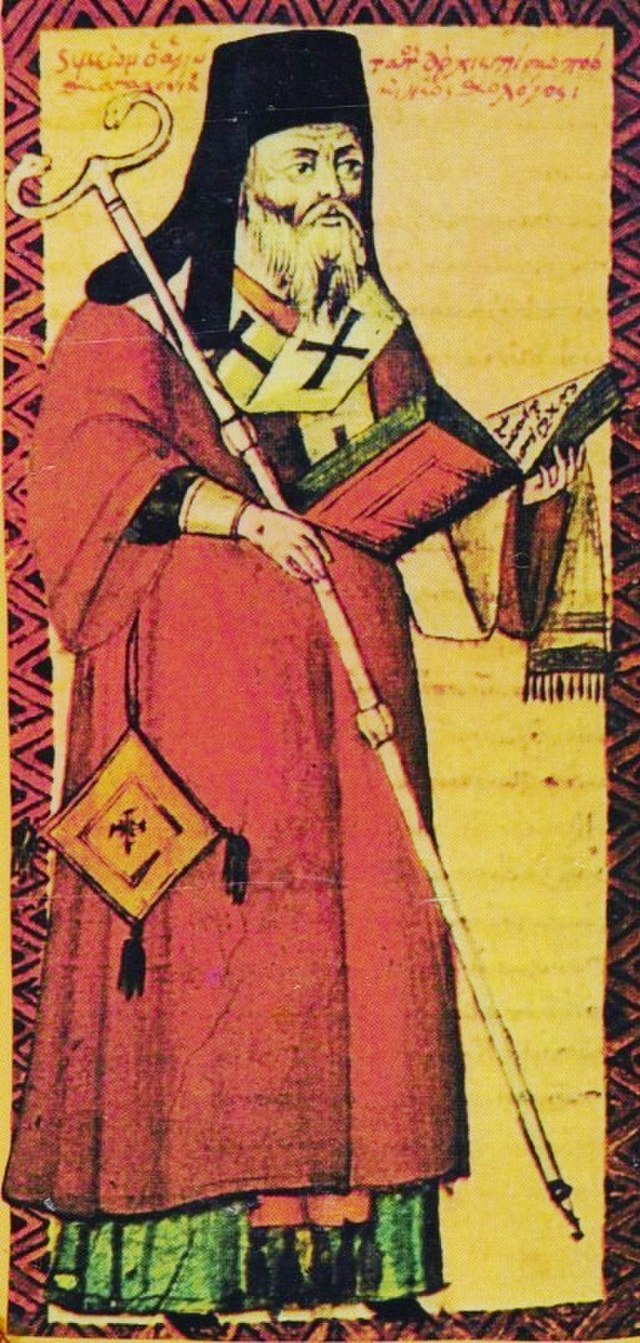
Symeon the New Theologian

Symeon the New Theologian (949-1022), emphasized the importance of having a direct personal experience with God through grace and prayed often to receive the gifts of the Spirit. “Leave the world…do not be concerned about the present life. Knock at the gates of Christ’s Kingdom for the Son will give the Spirit to whoever asks, and he who seeks will certainly find and be enriched with the fullness of all God’s gifts.”  “Pentecost to the Present”, by Jeff Oliver.

Gregory of Palamas

Gregory of Palamas (1296-1359) was a Greek Monk and theologian who, while a Bishop of Thessalonica, would defend the traditions of the Hesychasts mystical prayer practice as opposed to the more rational and intellectual approach to prayer and worship that was in fashion at the time. 

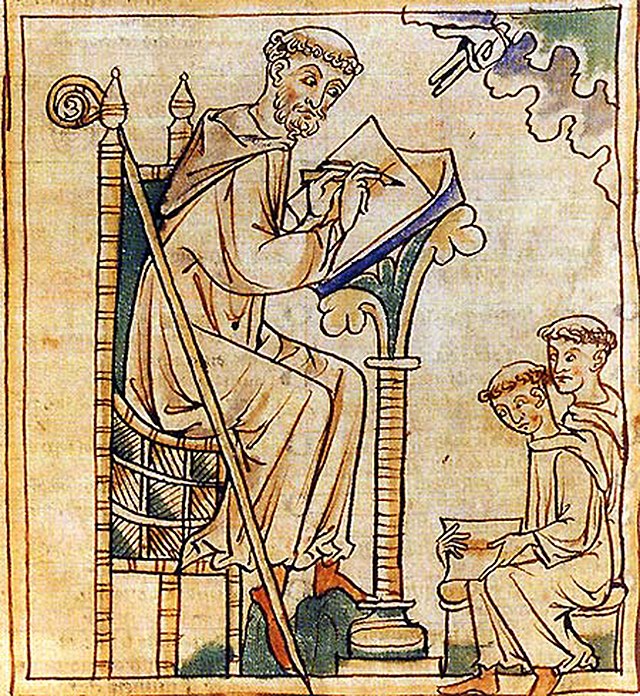
Bernard of Clairvaux

In the West, Bernard of Clairvaux (1090-1153), wrote “We have all, I think, received the Spirit unto salvation, but not to all has he been given unto fervor.  In fact, only very few appear to be filled with this Spirit of fervor, very few show any desire to obtain it.  We are content with our own cramped littleness, and make no endeavor to rejoice in or at least to aspire to the liberty of the spirit which that Spirit confers.” Bernard believed in a personal, immediate  and direct personal faith with Christ as opposed to any rational or ritualistic approach.  When the Pope commissioned Bernard to preach the enrollment for the second crusade, Bernard preached to an open field who, upon hearing him, enlisted en masse. He then passed into Germany where miracles reportedly followed: “The breathing, the touch, the prayer, the benediction of Bernard had wonderful effects.  At his voice, the most chronic conditions disappeared instantly and entire populations related with astonishment the cures to which they had been witnesses. Everywhere along his route the blind regained their sight, the deaf and dumb heard and spoke; paralytics recovered the use of their limbs; those supposed to be possessed by evil spirits were calmed and restored to reason.

Icons, Mystics, and Healing

Why am I relating these early church fathers to creating icons in the twentyfirst century?  Perhaps what we need to be emulating is not the outward form of early icons, but the Spirit that created them, and how we too can create Holy Spirit filled icons that will bless God’s people in our generation and in generations to come.  I hope these monthly articles inspire and help give direction to all who seek to bless God’s people by creating holy icons.  May we hold each other in prayer for protection and the grace of God to bless the work of our hands.

Until next month,

Christine Hales

New Christian Icons Prints of My Icons

If you would like to read a post I wrote on “All Saints Day”, here’s the link: https://wordpress.com/post/americanassociationoficonographers.com/28287

If you would like to read a post I wrote on ” Miracle Working Icons” here is the link: https://americanassociationoficonographers.com/2021/11/30/miracle-working-icons/#:~:text=How%20can%20icons%20be%20miracle,some%20of%20them:%20Russian%20Icons.&text=There%20are%20many%20kinds%20of,a%20long%20period%20of%20time.

Source: Much of the information shared above comes from Jeff Oliver’s excellent book: “Pentecost to the Present”, The Holy Spirit’s Enduring Work in the Church.

The Uncreated Light

Dear Fellow Iconographers:

Saint Fyodor of Rostov Icon depicting “Theoria”. By the hand of Christine Hales

Recently, while sharing with good friends my current Icon exhibition at All Angels Church in Sarasota, I was pleasantly reminded about the importance of the concept of the “uncreated light” within icons. Having promised to reflect more on this topic, I now share with you some thoughts and research on that very important but sometimes overlooked aspect of icon writing/painting.

The Light of Mt. Tabor: The Light of the Transfiguration and Paul’s Conversion

In the 14th century, Gregory Palamas, an Athonite monk and proponent of Hesychasm, explored the concept of the Uncreated Light. According to the Hesychast mystic tradition of Eastern Orthodox spirituality, a completely purified saint who has attained divine union experiences a vision of divine radiance, the same ‘light’ that was manifested to Jesus’ disciples on Mount Tabor at the Transfiguration and to Saint Paul at his conversion. This profound experience is referred to as theoria. The doctrine of the uncreated light is rooted in Palamas’ interpretation of the teachings of Gregory of Nyssa.

Orthodox Christians also find instances of the Uncreated Light in the Old Testament, such as the Burning Bush.

Burning Bush Icon -Moses and Mary with Christ Child. by the hand of Christine Hales

Joseph the Elder, Hesychast

Joseph the Elder, a 20th century Hesychast and Greek Orthodox monk from Mount Athos, longed for unceasing prayer but faced numerous challenges, including the difficulty of finding a spiritual father and the indifference of many monks toward constant prayer. In his yearning for divine connection, Joseph was ultimately granted a vision of the uncreated light, receiving the gift of ceaseless prayer.

“At once I was completely changed and forgot myself. I was filled with light in my heart and outside and everywhere, not being aware that I even had a body. The prayer began to say itself within me…

O Master, our sweetest Lord Jesus Christ, send forth Your grace and free me from the bonds of sin. Enlighten the darkness of my soul, so that I may apprehend Your infinite mercy, and so that I may love and thank You worthily, my sweetest Savior, Who is worthy of all love and thanks.” Amen

Egon Sendler on Iconic Light

Egon Sendler, in his book “Icon, Image of the Invisible”, explained that the light depicted in icons is distinct from natural light. Iconic light represents incarnate grace and must be received in contemplation.

“In the icon, we see a divine reality that transcends this earthly world while respecting it because it is created by God, to be transfigured in His spirit. If an icon reduces the mystery of God to mere material forms, it loses its soul and spiritual character, becoming an illusion of reality.”

Sendler emphasized that the dynamic nature of icons involves all the pictorial elements moving towards the observer, with light following this movement, creating a transfigured world and bringing the viewer into union with God..

Leonid Ouspensky from “The Meaning of Icons”

Transfiguration Icon by the hand of Christine Hales

Leonid Ouspensky, in his book entitled “The Meaning of Icons”, highlighted that Church art, particularly icons, visually testifies to the dual realities of God and the world, grace and nature.

“Through the icon, as through the Holy Scriptures, we not only learn about God but also know God. The transfiguration, an illumination of the entire man through prayer by the uncreated light of Divine Grace, manifests man as a living icon of God. The icon represents this transfiguration, depicting a man filled with the Holy Spirit’s grace.”

Ouspensky concluded that liturgical art represents both our offering to God and God’s descent into our midst, facilitating a profound meeting between God and man, grace and nature, eternity and time. Perceiving the uncreated light of God’s grace in an icon leads us toward Holy Communion with God, transcending our natural world.

Conclusion:

The concept of the Uncreated Light in Eastern Orthodox spirituality and iconography emphasizes the profound connection between the divine and the material world. Through the transformative experiences of saints like Joseph the Elder and the theological insights of figures like Gregory Palamas, Egon Sendler, and Leonid Ouspensky, we understand that icons are not merely art but manifestations of divine reality and grace, guiding believers towards a deeper communion with God.  And so, when writing, or painting icons, choosing colors that reflect the uncreated light of God’s grace becomes a subtle, but highly important imperative of icon creation.

Here are some interesting links for Iconographers:

Icon Museum and Study Center, Clinton Massachusetts

Introduction to Icons Video by Patristix

Icon Writing Pigments and other Supplies for Icon Painting

That’s all for this month. May God continue to bless the work of your hands,

Christine Simoneau Hales

New Christian Icons Icon Painting Instruction

Prints of My Icons Christine Hales’ Icon Book

Favored Concepts of Byzantine Iconographic Language

Dear Fellow Iconographers:

I’ve been reading and looking at icons quite a bit recently in an effort to understand what elements of the iconographic language I feel are important to incorporate into a more contemporary approach to writing icons.  Others will have different opinions about this, I’m sure!  But I have always learned best when I share my thoughts with others, either writing or speaking, so feel free to respond with your ideas or opinions on this as well, and thanks for your patience as I attempt to reason this out!!

The Protection of the Holy Virgin, Novgorod School, late 15th century

Depiction of buildings and space within the icon using inverse perspective.  This tends to flatten out the drawing and creates visually the understanding that this is not worldly reality but a spiritual reality we are depicting.  

I love the abstract way that folds on garments are rendered.  They both simplify and abstract the visual reality of the figure, again, pointing to the symbolic nature of the scene being depicted.

The way rhythm and movement are cleverly incorporated into the design by the repetition of curves in roofs, heads, building tops etc.

The Presentation of the Virgin, Novgorod School, fifteenth century

St. Simeon the Stylite shows the creative foreshortening of his column and renders it as a tower with stairs and a door with a balustrade at the top for him to rest upon.  He gives the blessing with his right hand and holds a scroll in the left- again, iconographic language that communicates his blessing and dedication to Holy Scripture.  It is said of him that he exercised an extraordinary spiritual authority and fought against spiritual heresies.1

  1. The Meaning of Icons, Leonid Ouspensky

St. Simeon Stylites, Russian, 16th Century

Another aspect of the iconographic language that I greatly admire is the consistent ways of highlighting faces,  They are somewhat realistic , but yet abstracted when eyes are exaggerate, simplified, and accentuated.  There is a consistency also in the way facial features are drawn.  You can see this in some of the early icon painting manuals- the one I use often is the Egon Sendler book Icons, Images of the Invisible.  Sadly, it is out of print, so is fairly expensive on the second hand book market, but I do recommend it highly if you can get one.  Hair is also stylized so as not to draw attention away from the spiritual reality being depicted.  

Of course, all this is ingenious, and why would we ever want to try to improve on it?  My take on that is that I want to make icons – or religious art- that will attract my community in this time.  Last month I published a photo of one of Stephen Antonakas’ neon art pieces of the Transfiguration.( https://americanassociationoficonographers.com/  )that I think brilliantly captures the essence of the Icon, but its very abstractness renders the actual Transfiguration story unreadable and unknowable if you are not familiar with the Scripture or the story.  However, if you do know the story, his work captures the essence in a new and different way that allows a deeper appreciation and allows us to think differently about that moment. Mark 9:2-13, Matthew 17:1-17, and Luke 9:28-36.

What is the main message of the Transfiguration?

Transfiguration Icon, Russian, Novgorod School, 15th Century

Though the disciples do not understand his meaning, the Transfiguration and Jesus’ charge to the disciples present a promise of what is to come. There is hope, because he will soon triumph over sin and death, and be raised in the fullness of glory – the glory of which they have just been given a glimpse.

So, again, compare and contrast- here is a Russian icon from the Novgorod school, fifteenth century.  Definitely light is emphasized in both the Antonakas neon sculpture as well as the icon, but it is missing the two prophets, Moses and Elijah- Moses representing the dead and Elijah, because he was taken up to heaven, represents the living, calling attention to the message of hope of the Second Coming.  Both had a secret vision from God.  “Christ appears as the Lord of the quick and the dead, coming in glory of the future age.  The Transfiguration was an anticipation of His glorious second coming, says St. Basil, the moment which opened a perspective of eternity and time.”  Meaning of Icons, Leonid Ouspensky P. 212

This beautiful icon of St. Sergius of Radoneh again emphasizes simplicity both in design and color palette.

Saint Sergius of Radoneh, Russian, 20th Century

Byzantine Iconography as a Sacred Art

According to Constantine Cavarnos in his book, ” Guide to Byzantine Iconography”, Byzantine iconography is a sacred art.  It is art that is spiritual in essence and aims.  It has seven functions: (1). to enhance the beauty of the church with a beauty that has the impress of holiness. ( 2). To instruct us in matters pertaining to the Orthodox Christian faith.  (3) To remind us of this teaching. (4) To lift us up to the prototypes, to the holy personages whom the icons depict.  (5) To arouse us to imitate the virtues of these personages. (6) To help transform us, to sanctify us.  (7) To serve as means of worshipping God and venerating His saints.”

So, in closing, I have mentioned some of the concepts that make an icon a sacred work of art.   I expect that each of you will have other favorite and important elements of the iconographic language to emphasize. I look forward to hearing from you on this topic and possibly incorporating your thoughts into future articles.

Until next month, May God bless the work of your hands, and guide your thoughts, waking and sleeping,

Christine Simoneau Hales

https://newchristianicons.com
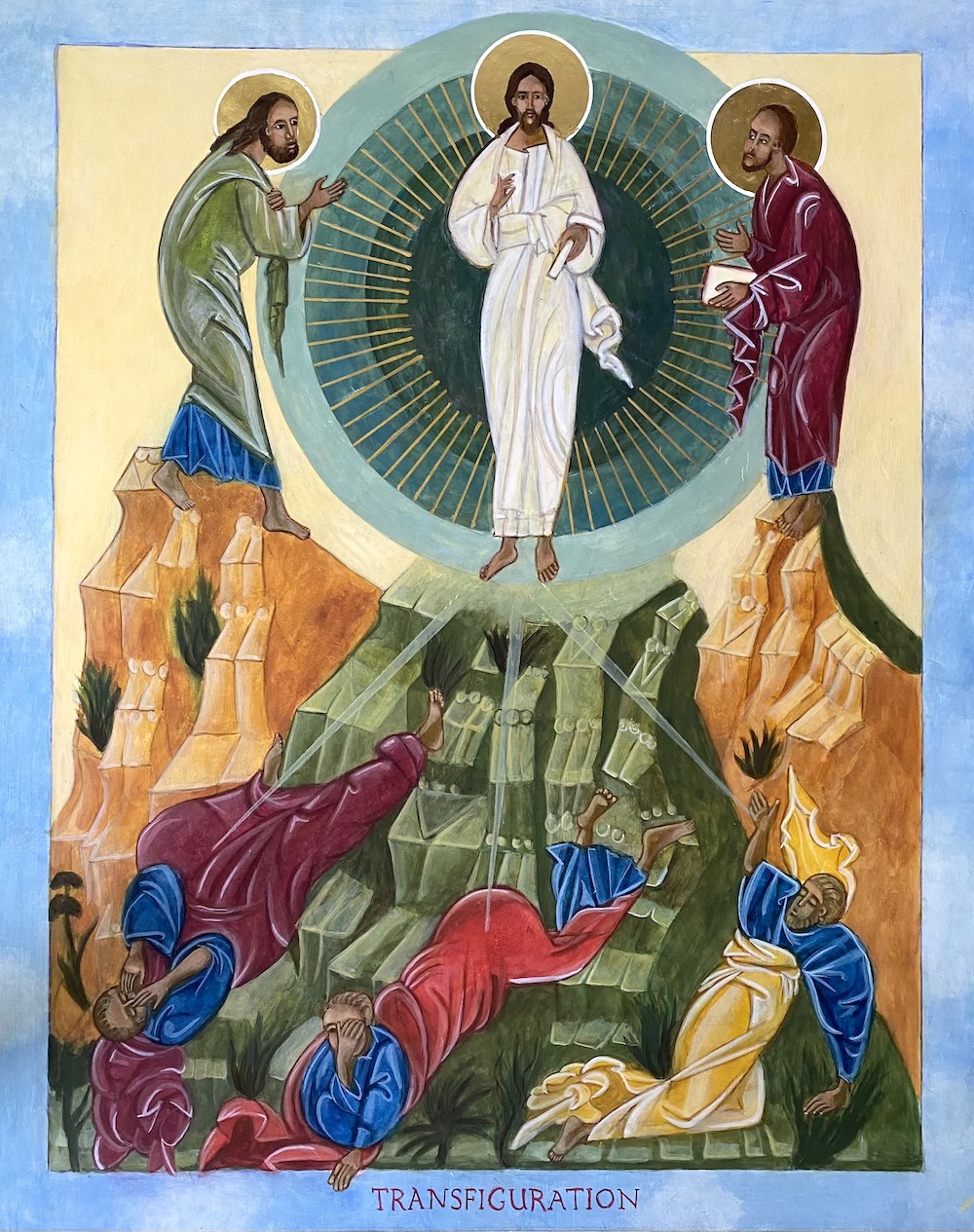
The Transfiguration Icon by Christine Hales 21st Century

My next online Icon writing class is April 9-12, visit: newchristianicons.com for more details and to register.

Collecting Icons

Nativity of Jesus Icon from St. Paraskeva Church

Why Collect Icons?

Are you an Icon collector?  Collecting Icons is similar to collecting fine art in that the beauty is often times in the eye of the beholder.  Icons carry meaning in addition to the esthetics we expect from visual art. That meaning, or content, might relate on a very personal level to the viewer and thus have a high degree of value, regardless of the aesthetic qualities.  For example, an Icon of Saint Luke will resonate with artists, Iconographers, physicians, and bachelors because Saint Luke is their patron saint.  Icons have the ability to enhance our prayer life as we venerate the saints depicted.

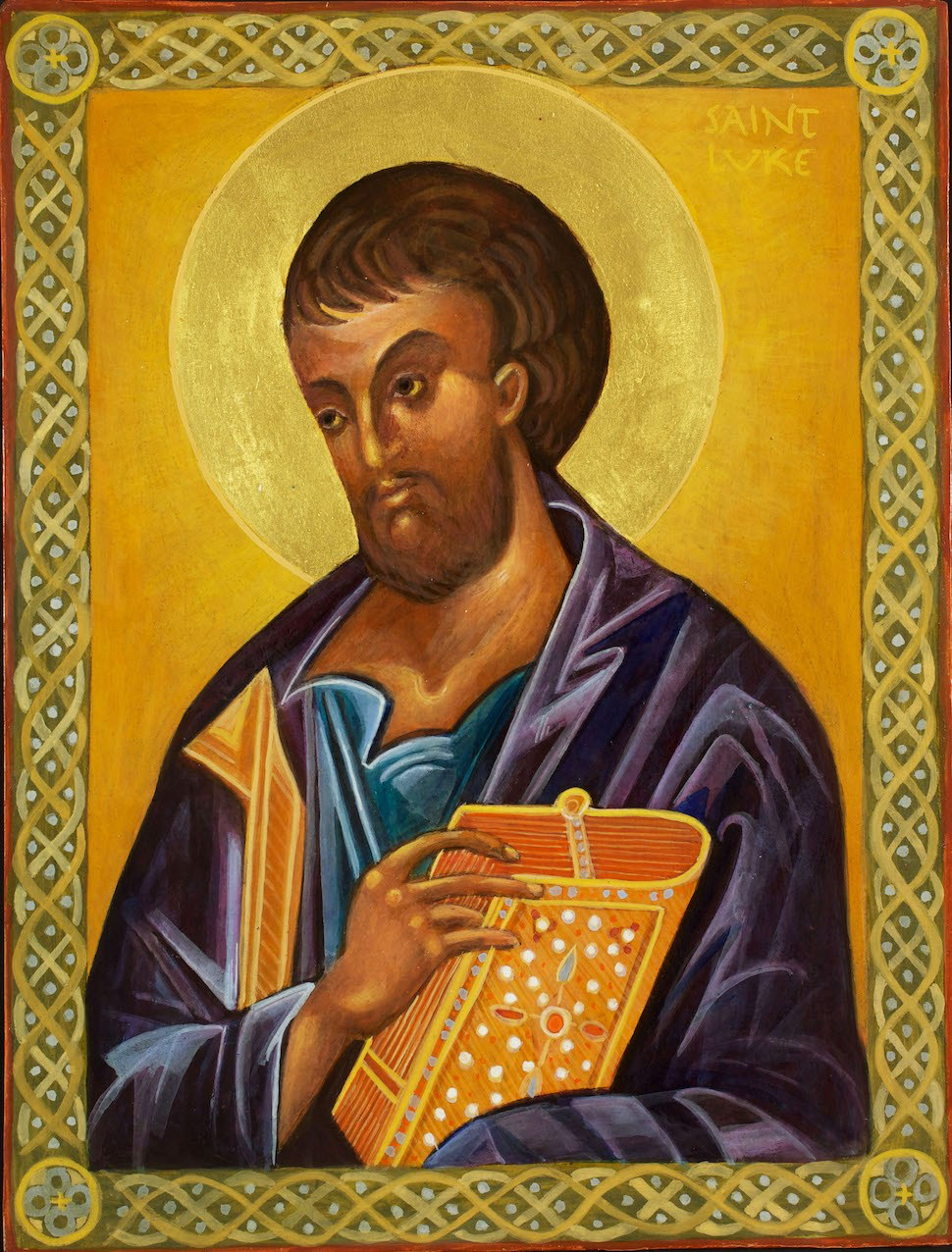
St. Luke Icon by Christine Hales


Venerating Icons

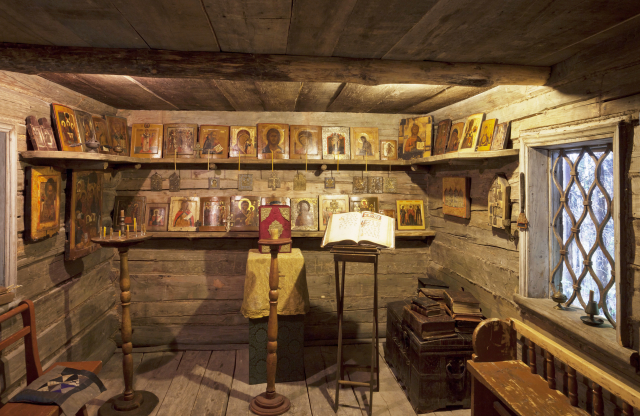
molennaya

We use the word venerate to talk about our interactions with Icons.  To venerate means to cherish, honor, exalt, be in awe of, appreciate and reverence.  In old Russia, during times of religious persecution, people who could afford it would create a beautiful corner in their homes, or a small chapel.  This would hold the Icons that this family particularly revered and understood as important parts of their family prayer lives.

Icons can deepen our prayer life with specific, focused prayer.

Icons can enhance our connection to the God we adore through specific, focused prayer.  Therefore, collecting Icons is a means of keeping our vision on God’s Kingdom in our homes, and sharing that with our families and friends.

Collecting Icons from Antiquity

Another aspect of collecting Icons is that of finding Icons from earlier centuries that have added value because of their age and provenance. One of the foremost Icon Galleries for ancient Icons is the Temple Gallery in London, UK.  It was founded in 1959 as a center for study, restoration and exhibition of ancient Icons and sacred art. With ancient Icons, their monetary value rises in accordance with their condition, provenance, size, and age.

Russian_nativity_icon

People often ask about the value about the icons they have discovered in their travels or have had handed down in their families.  TheMuseum of Russian Icons, in Clinton, Massachusetts, will do Icon evaluations on certain dates. They will also provide conservation and appraisal services upon request.  The museum has a beautiful permanent collection as well as changing exhibitions.

A Living Traditon

Nativity_Icon_Melissotopos_Olishta_19_Century
Nativity Icon Melissotopos Olishta 19 Century

Iconography is a living tradition, bringing the elements of the Christian faith to believers through the centuries.  Icons are often painted in the same way that they have been for hundreds of years.  And, as a living Tradition, Icons painted today are bringing along the traditions of the past and marrying them to contemporary faith and art practices.  Truly it is an exciting time to be collecting Icons!

May God bless your Icon creating and collecting especially this Advent Season!

Blessings and prayers,

Christine Hales

Icon Website     Icon Prints Website


Merry Christmas!

christinglory Hello Friends and Fellow Iconographers:

Beginning this month, the new Blog look is starting!  The goal is to have this blog be an information source for artists and Iconographers internationally.  I am collecting Iconographers’ website links and blogs so if you’re reading this and would like to be included or have links that you think would benefit the larger community of Iconographers, please email me with them: christine@newchristianicons.com, so they can be included.

My Icon Retreat news for this month is the Icon Retreat I’m teaching at Saint James Church on Madison Ave, New York, NY will be held Fri-Sunday February 20-22. There are still some spaces but you should book early. We will be writing the Icon of Saint Raphael the Archangel of healing, and guide for those on journeys of all kinds.raphaelunframedweb

Also, have updated my Icon website: www.newchristianicons.com– let me know how you like it!

A new Beginning Icon Writing class is starting in Hillsdale, NY at the Christian Community Church, Thursday evenings 6-9PM starting January 15. Email to register.

Just returned from seeing two pretty wonderful museums in NYC and want to share what’s on there-in case you can get there this season, or view online.

First, at MOBIAtimthumb.php, the Durer, Rembrandt, Tiepolo and Blake, exhibition of Master Prints is incredibly satisfying as an exhibition with both scope and depth.

Particularly interesting is the combination of Scripture – the written Word and the visual images. The exhibition continues through January 11, 2015 and admission is free.  A second exhibition at MOBIA is “A Bible for our Nation”timthumb-1.php– also interesting, particularly the Mohawk and Seneca translations.

The second exhibition of great interest is at the Morgan Library, 225 Madison Ave. at 36th street, “The Crusader Bible: a Gothic Masterpiece”. One of the great illuminated manuscripts in the world, believed to have been made in Paris, 1250, it has beautifully colored egg tempera illustrations of biblical scenes by seven anonymous artists.   Open until January 5, this exhibition is delightful and a rare opportunity to view this manuscript.Crusader

There’s also an exhibition of Cy Twomby’s Treatise on the Veil. I love Twombly’s work, but in the context of these more structured and time intensive arts, the Treatise  pales by comparison.