If These Walls Could Talk

The Church At Worship

Greetings Fellow Iconographers:

This month we have an article contributed by The Reverend Peter M. Antoci, Ph.D, who shares his thoughts on Icons particularly in relation to his visit to Mt. Athos. Peter is an Episcopal priest, serving in the Diocese of Washington. A college and seminary professor, his areas of teaching and research are in comparative religion, biblical studies, hermeneutics, and spirituality. Having come late to icon writing, he has prayed with the benefit of icons since his youth.

Enjoy!
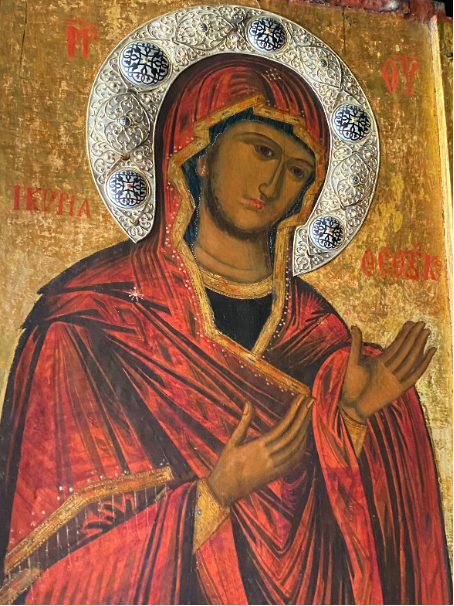
The Virgin Mary
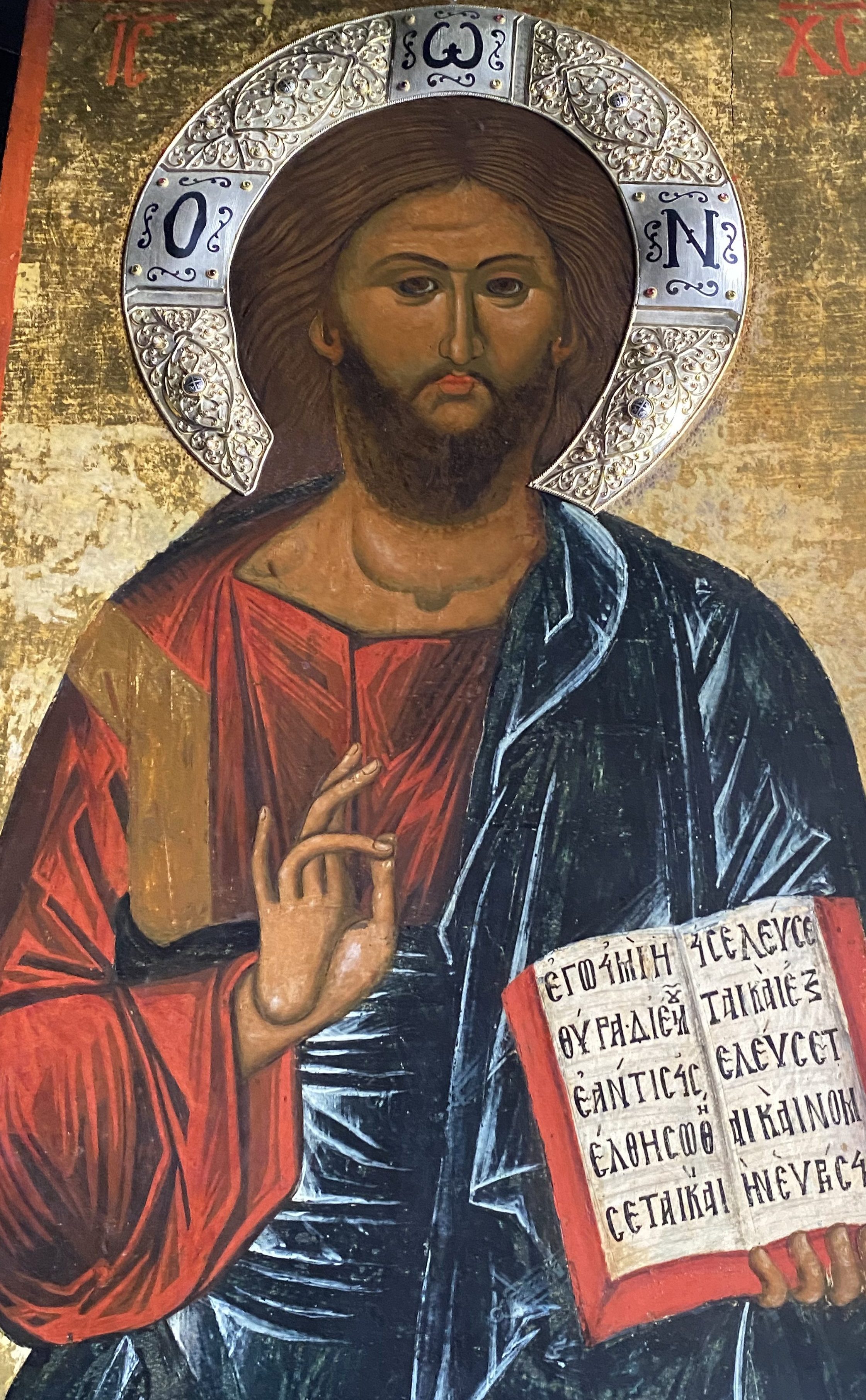
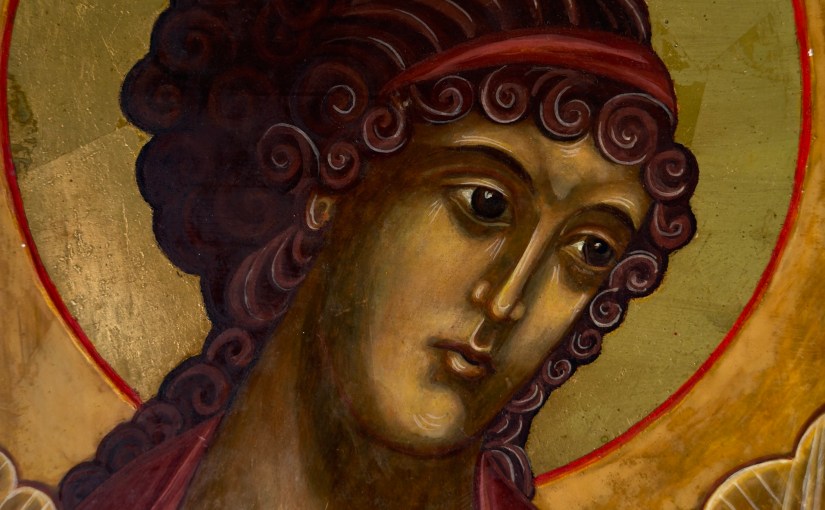
Christ Pantocrator

A Pilgrim’s Eye

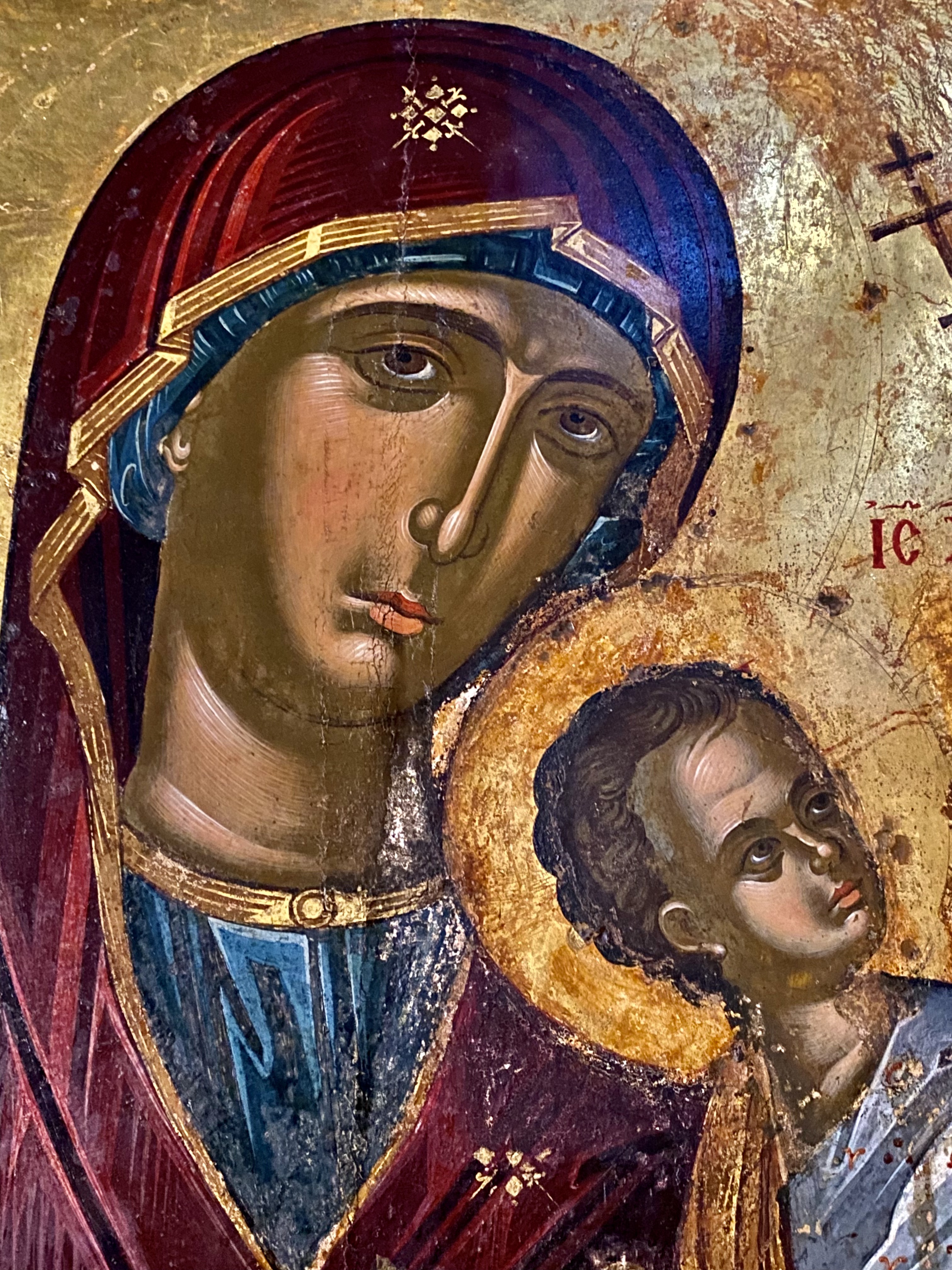
There I stood, before the two great doors of  the Katholikon, the monastic church at Vatopedi Monastery on Mount Athos. It was May 2023, and I was on pilgrimage to the Holy Mountain of Eastern Christianity. Standing before the threshold of the church, the first people I encountered were Mary the Mother of God and Christ Our Savior, one on the lefthand door and the other on the right. They welcome and bless you as you enter, offering the hospitality and refuge of God as you cross the lintel into a place of prayer. That threshold, that lintel, is both a symbolic, and a concrete, but liminal place. As a person who has prayed before icons my whole life (and come late to the practice of writing them), I am used to the notion of these windows into heaven. Athos is a mountainous peninsula, dotted with monasteries that are filled with these icon-windows, ancient, medieval, and contemporary. I was not, however, prepared to experience these icons as the doors, walls, and dome of heaven. The beauty of Athos can be found in its pristine natural ecology, as well as its pure iconographic environment. Everywhere you look, your eye alights on the Imago Dei. Of course, that has been the internal truth of Christian icons all along: they draw our hearts and minds to God through the creatures that bear his image.

Icons as Community
Esoteric as well as existential, spiritual as well as material, I carried my burdens through that doorway into a place of encounter. Of course I was not the only person doing so. There were the monks who lived there, and the pilgrims who journeyed there. We enveloped each other in our prayers, even as Christ and His Mother embraced us in this space. But there was a presence, or should I say presences, beyond us who were gathered. There were prayers being offered by others gathered here too. You see, to enter an Orthodox church is not only to enter a sacred space, but also to enter a liminal one – one that straddles two worlds, two realities: the earthly and the heavenly. However, this one space is peopled by those who have come together from both worlds. This is experienced visually by the icons that are written onto the walls of the building, which are not just frescos. In a very real sense, they are part of the architecture of the building. The walls themselves are made of prayer, because as is well known: the writing of an icon is preceded by prayer, completed in prayer, and venerated in prayer. This means that the Communion of Saints provides the structure, the built environment, of community worship itself. The walls that support the roof, as well as the prayers of the saints themselves, unceasingly join in the liturgy taking place here. Inside these walls, a liminal and eternal community emerges every time we praise God and pray for the life of the world.

Architecture As Holy Writ

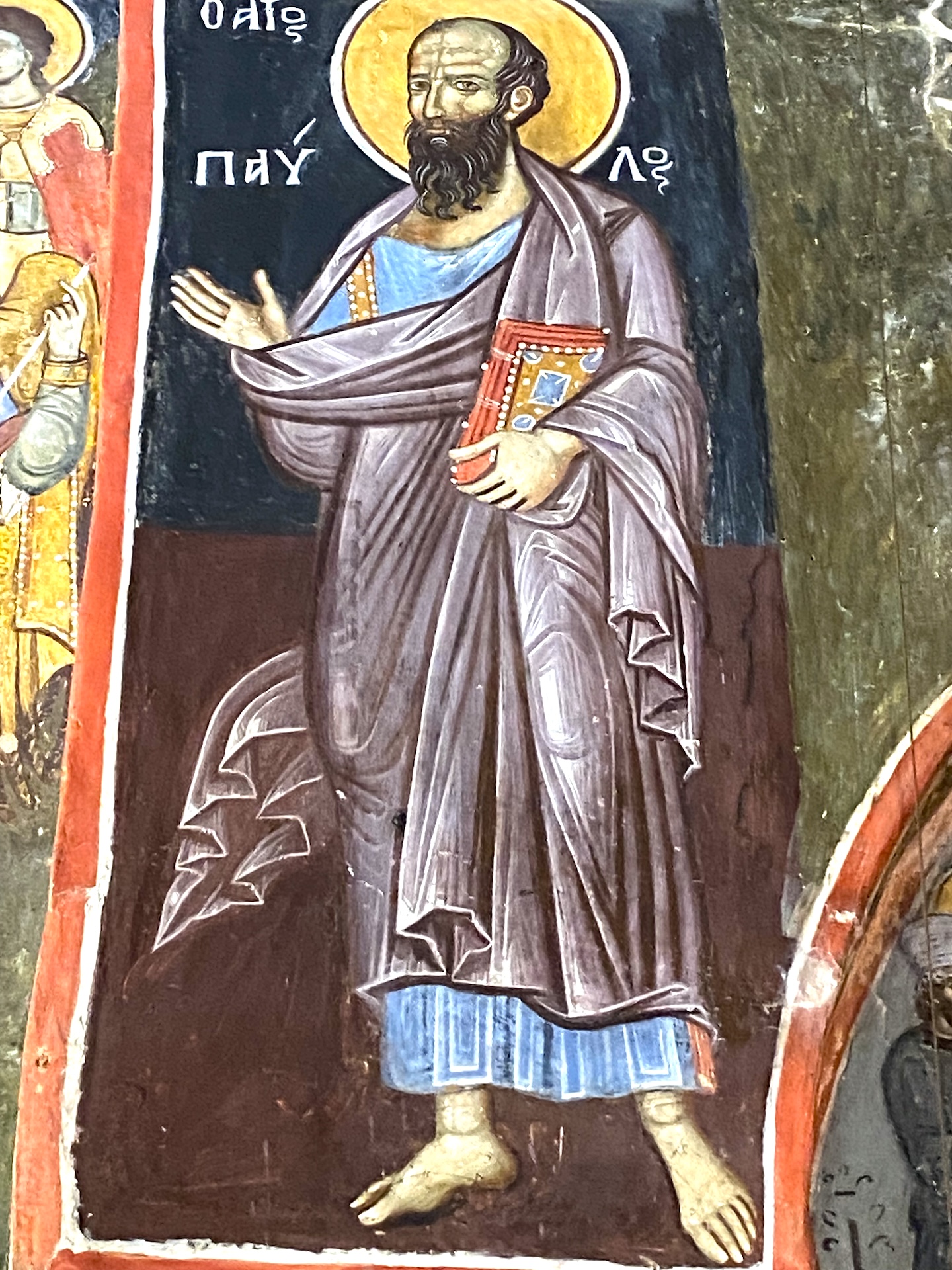
My kind and knowledgeable guide, himself an Orthodox Christian, never referred to these images as iconography. He repeatedly used the term hagiography – holy writ, the calligraphy of sanctity itself, if you will. At first, I thought this was a mistranslation. Then I thought we were speaking about two different things. Ultimately, I came to realize icons of the saints are part of the architecture, and part of the congregation! Just as they once were physically present in church, they remain physically present through these icons. Just as the earthly community gathers in the church to praise God and intercede for the world, the heavenly community joins us in real time and real space to do the same. Each saint and each worshipper is honored with incense because they are all made in the image of God. Together their prayers and our prayers are the prayers of the saints. Over and over, like waves on a shore, the liturgy repeats this offering of incense and prayer to honor every image of God inside the church, both the ones on the walls and the ones inside the walls. The curtain between us and those who have gone before us is removed, and grace is shown in all of its incarnate beauty, unbound by time. This is neither just abstract theology nor liturgical tradition. It is the revelation of The Word, God’s Self, and it is written into the architecture of the building.
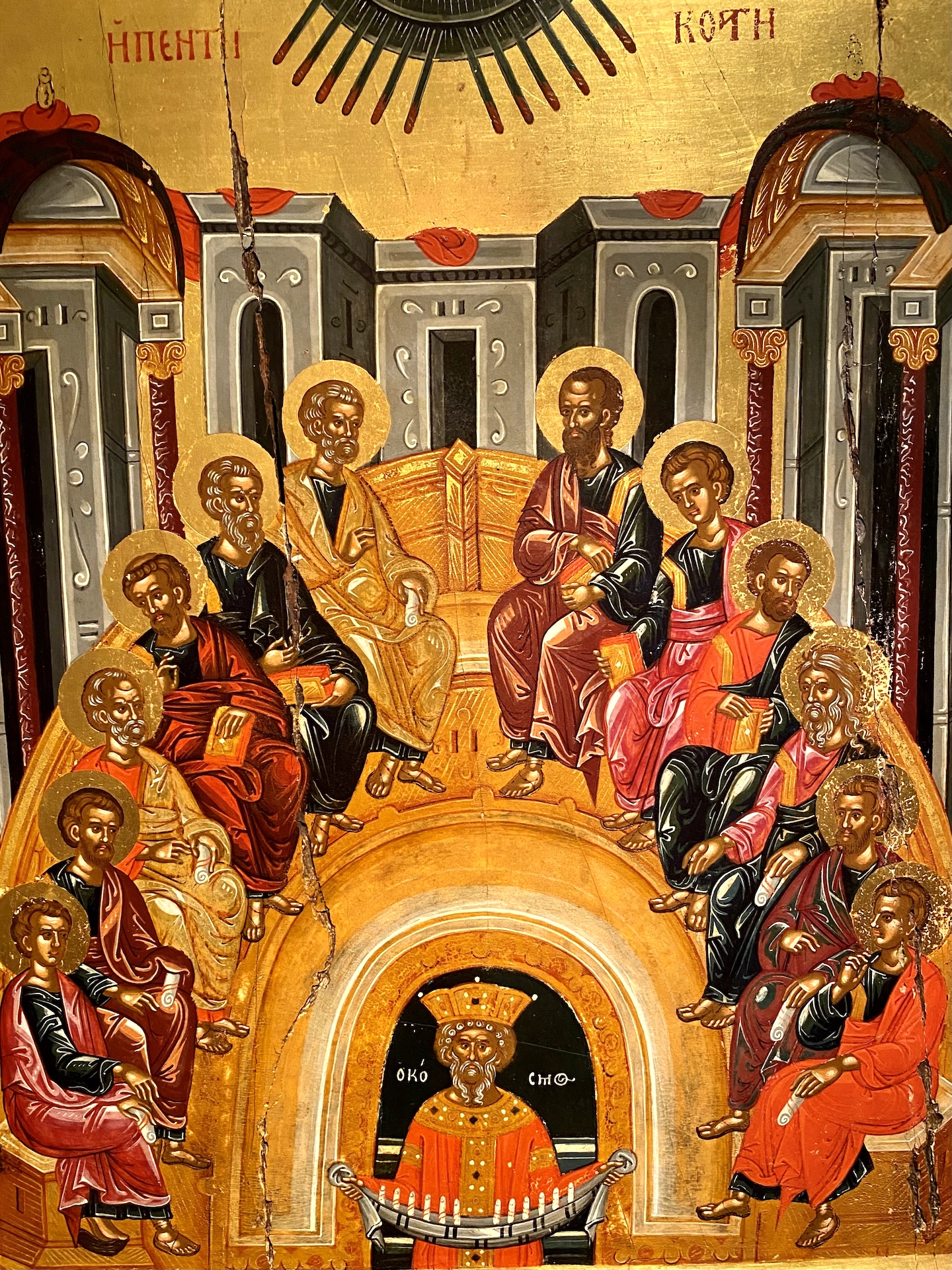
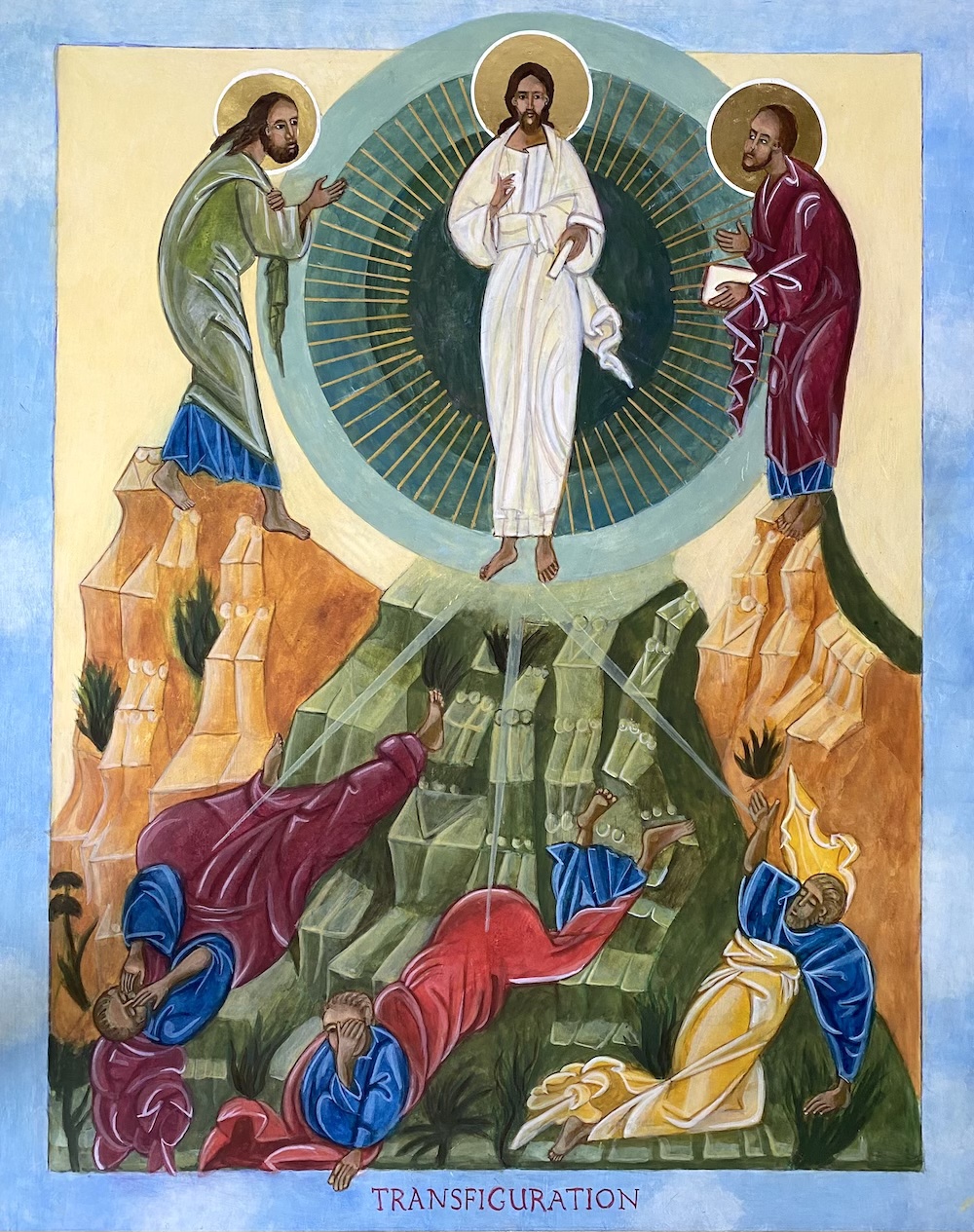
Pentecost

Unceasing Prayer

Icons place before us the saints whose lives have been

transformed through their participation in God’s grace.*

Among many other things, my pilgrimage to Athos made me keenly aware of two: the unceasing prayer of the Communion of Saints, and of the Community of Christians. Yet, upon reflection perhaps this communion/community is one reality: all those being transformed through participation in God’s grace. In November we are reminded about this Communion of the Transformed. On November 1st we call to mind saints who are well known, and saints who are perhaps known only to ourselves. Certainly, we can read about their lives in books. We can also read them in their icons. Both are hagiographic, which is to say holy writing. Whether they are books or icons, if you read from a faith perspective, you are engaging them in and through prayer. An iconographer’s process is preeminently prayerful, however you do it. Long before the creative process engages pigment and board, we read about and pray with the subject we are about to depict. The board, the pigments, the sketching, and finally the writing of the icon, are all done in conversation with the Holy Spirit, as well as the holy person who is our subject. When it is finished, tradition reminds us that we should be the first one to pray before the image, to praise God with the holy one whose eyes gaze back into our own: the image of God looking upon the image of God.
Thank you, Father Peter!

May God continue to bless the work of your hands, and May we rest assured of the value to God’s Kingdom of the Icons we create.

Until next month,

Christine Hales, Artist/Iconographer

LINKS For  Christine Simoneau Hales   2026

  1. https://newchristianicions.com my main website
  2. Https://christinehalesicons.com Prints of my Icons
  3. https://online.iconwritingclasses.com my online pre-recorded icon writing classes
  4. https://www.youtube.com/channel/UCK2WoRDiPivGtz2aw61FQXA My YouTube Channel
  5. Facebook: https://www.facebook.com/ChristineHalesFineArt or  https://www.facebook.com/NewChristianIcons/
  6. Instagram:   https://www.instagram.com/christinehalesicons/?hl=en
  7. American Association of Iconographers:  FB Group:  https://www.facebook.com/groups/371054416651983
  8. American Association of Iconographers Website: https://americanassociationoficonographers.com
  9. Individual help with Icon creation: Patreon. https://christinehalesfineart.com
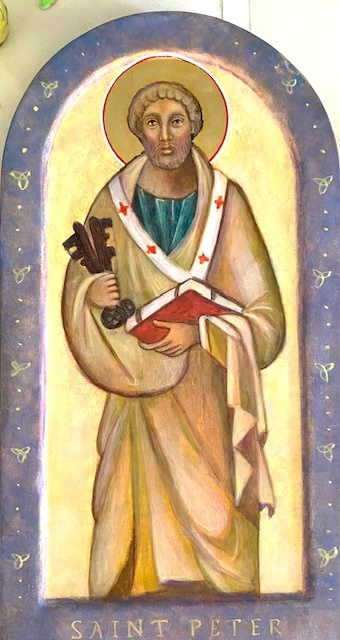
Saint Peter

I’ve recently noticed the influence of Saint Peter in my life as an iconographer. Over the years, I have been commissioned to paint many icons of Saint Peter, for churches and priests, and friends. Although each one is different, I have begun to study more deeply into who Saint Peter was and what the significance of his ministry has been over the last 2000+ years of Christianity.

Commission to paint “The Confession of Saint Peter” for Saint Peter’s Church in Lakewood, Ohio,

Saint Peter’s original name was Simon Bar Jonah, which means Simon, son of Jonah.  Jesus gave him the name of Peter when Jesus called him Cephas (in Aramaic) which means rock or stone.  Human frailty.  Born in first century CE in Bethsaida vicinity, in modern day Syria. 

Peter was a fisherman with a couple of small fishing boats.  He was married, had children and lived with his Mother-in-law. In Capernum .  Luke 4:28 Jesus healed his mother-in law.

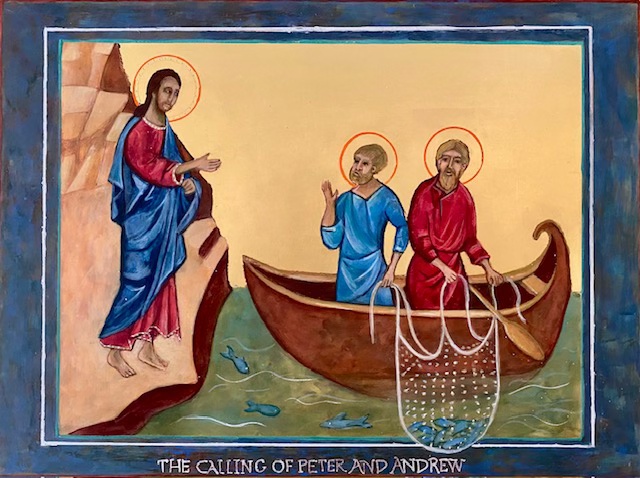
Shortly after this healing incident, Jesus stepped into Peter’s boat and asked him to row a few feet off shore so that Jesus could preach to the crowd at the Sea of Galilee.  After Jesus was finished, he told Peter to cast his net into the sea, upon which Peter then hauled out a very full net.  There were so many fish in the nets that Peter was afraid the nets would rip apart. Tin fact, the weight was so heavy that the boats began to sink.  Peter said to Jesus, “depart from me for I am a sinful man”. But Jesus said, “do not be afraid, from now on you will be a catcher of men.”

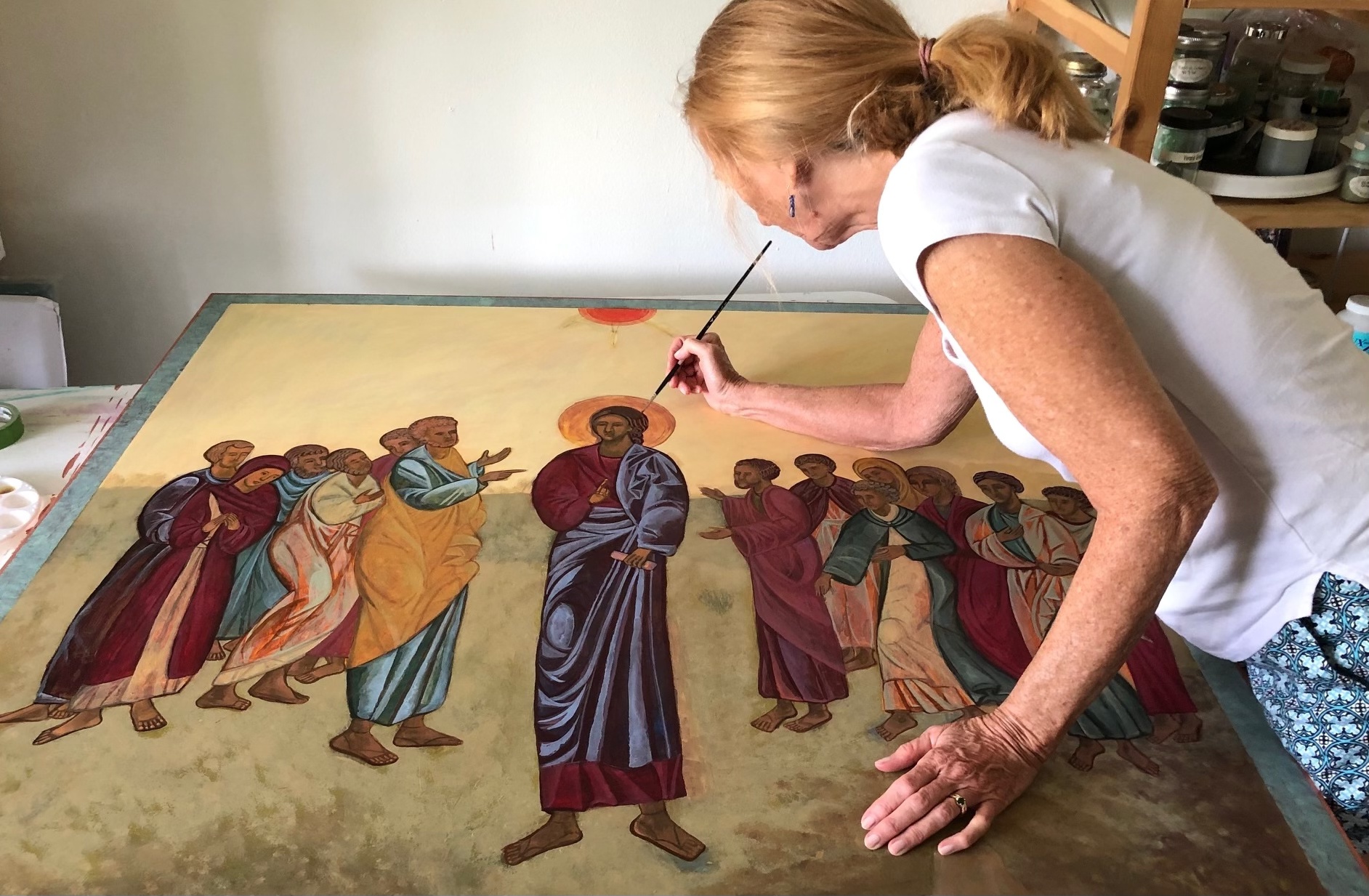
My recent “Calling of Peter and Andrew” Icon

Saint Peter was recognized as the leader of the 12 disciples, and the Roman Catholic Church regards Peter as the first of its unbroken succession of Popes.

History

St. Peter, originally Simon Bar Jonah, was a Jewish fisherman called to follow Jesus as one of His first disciples. He lived in Capernaum and worked as a fisherman with his brother St. Andrew and others. The New Testament, especially the Gospels, Acts, and letters, provides most of the information about him. Peter was married, and despite being untrained in Mosaic Law, he became a central figure in the early Church.

Peter’s personality was marked by both strengths and weaknesses. He was sometimes impulsive and unsure but displayed loyalty, leadership, and faith. He was the first to confess Jesus as the Christ and was entrusted by Jesus as the “rock” upon which the Church would be built. His denial of Jesus was followed by repentance and reaffirmation of his faith.

After Jesus’ resurrection, Peter emerged as the leader of the early Christian community, preaching at Pentecost, performing miracles, and advocating for Gentile inclusion. Despite occasional conflicts, such as with Paul over Gentile practices, Peter played a vital role in spreading Christianity and leading the Church until his eventual departure from Jerusalem and missionary work elsewhere.

Peter’s acceptance of Gentiles into the Christian faith marked a pivotal moment in early Christianity, as it symbolized the breaking down of barriers between Jews and non-Jews. Here’s a detailed explanation of this significant event:

The Conversion of Cornelius (Acts 10:1–48)

  1. Vision from God: While staying in Joppa, Peter received a vision of a sheet descending from heaven, filled with various animals considered unclean under Jewish dietary laws. A voice commanded him to “kill and eat.” When Peter objected, the voice said, “What God has made clean, you must not call unclean” (Acts 10:15). This vision occurred three times, emphasizing its importance.
  2. Summoned by Cornelius: Cornelius, a Roman centurion described as devout and God-fearing, also received a vision instructing him to send for Peter. Cornelius, though a Gentile, was respected for his prayers and acts of charity.
  3. Peter’s Journey to Caesarea: Understanding the vision’s meaning, Peter traveled to Cornelius’ home. He acknowledged that, under Jewish law, associating with Gentiles was forbidden, but he declared, “God has shown me that I should not call anyone impure or unclean” (Acts 10:28).
  4. Peter’s Sermon: Peter preached the Gospel to Cornelius and his household, proclaiming that God shows no partiality and accepts people from every nation who fear Him and do what is right. He testified about Jesus’ life, death, and resurrection.
  5. Outpouring of the Holy Spirit: While Peter was speaking, the Holy Spirit descended upon the Gentiles, just as it had upon the Jewish believers at Pentecost. This astonished the Jewish Christians who had accompanied Peter. Recognizing this as God’s work, Peter declared, “Can anyone withhold the water for baptizing these people who have received the Holy Spirit just as we have?” (Acts 10:47). He then baptized Cornelius and his household.
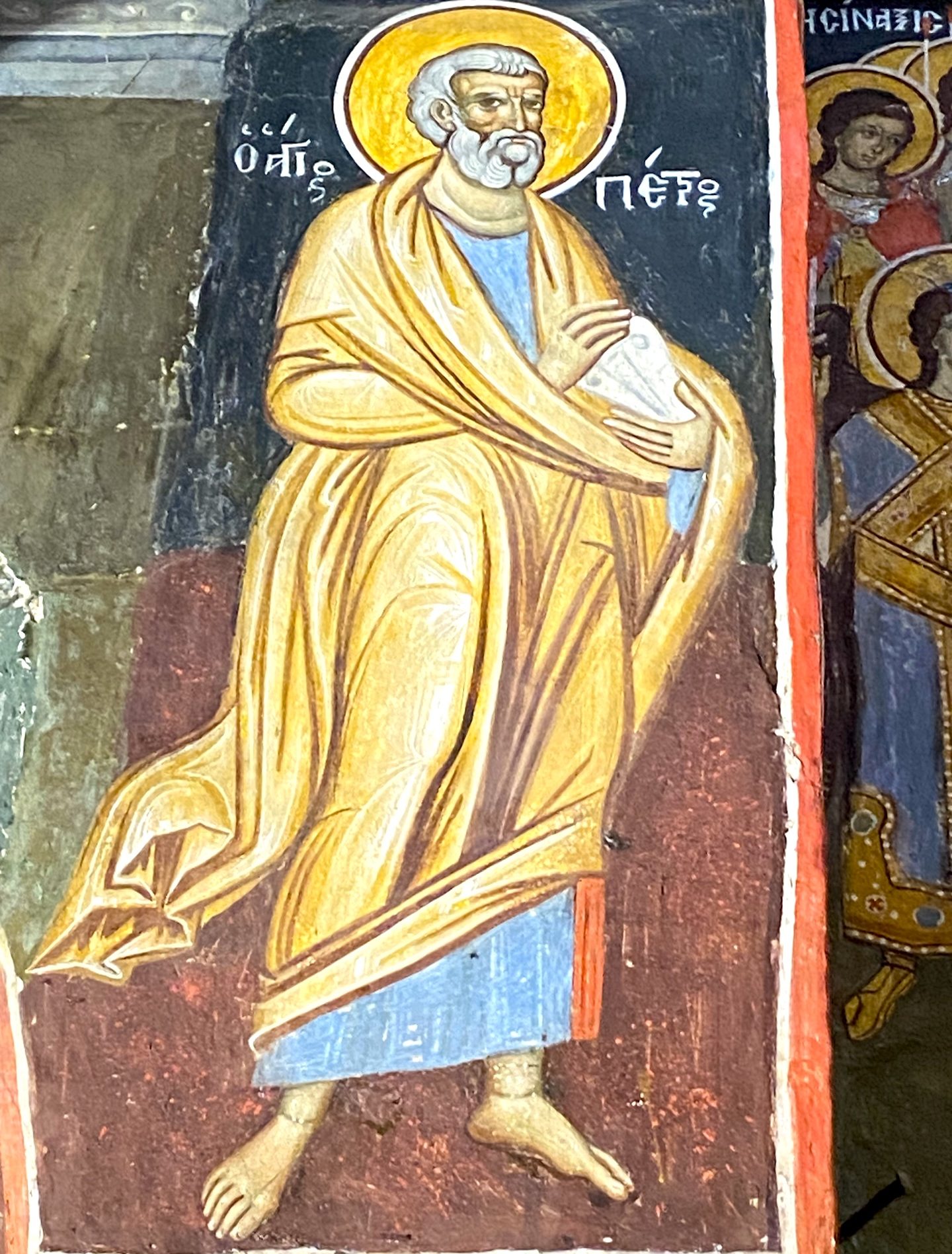
Saint Peter Icon

Significance of the Event

  • Breaking with Tradition: By baptizing Gentiles without requiring them to first undergo Jewish rites (e.g., circumcision), Peter challenged longstanding Jewish customs. This act demonstrated that salvation was available to all through faith in Christ, not adherence to Mosaic Law.
  • Divine Validation: Peter’s actions were justified by the visible descent of the Holy Spirit, signaling God’s approval of the inclusion of Gentiles into the faith.

Conflict and Resolution

  • Criticism from Jewish Christians: Upon returning to Jerusalem, Peter faced criticism from Jewish Christians for eating with Gentiles (Acts 11:1–3). In response, Peter recounted his vision and the events at Cornelius’ house, concluding, “Who was I to think that I could stand in God’s way?” (Acts 11:17). This explanation satisfied his critics, who glorified God, saying, “So then, even to Gentiles God has granted repentance that leads to life” (Acts 11:18).
  • Jerusalem Council (Acts 15): The inclusion of Gentiles later became a major issue debated at the Jerusalem Council. While Paul was the main advocate for Gentile inclusion, Peter’s testimony about Cornelius played a crucial role. He reminded the council that God had chosen him to bring the Gospel to the Gentiles and argued against imposing Jewish laws on them (Acts 15:7–11).
My New St. Peter Icon

Impact on Christianity

Peter’s acceptance of Gentiles set a precedent that allowed the Church to grow beyond its Jewish roots, becoming a universal faith open to all ethnicities and cultures. His leadership in this matter helped shape Christianity as a global movement, emphasizing grace and faith over legalistic adherence to the Law.

I hope this brief exploration into the life and contribution of Saint Peter has given you some insight and inspiration for this month! I have been reading 1 Peter and 2nd Peter in short meaningful increments and adding those to my spiritual journal each day this past month and it has brought forth many helpful insights that are applicable to current day events.

Icon Exhibition, Cathedral Church of Saint Peter, Saint Petersburg, Florida, January 12- May 1, 2025

The upcoming exhibition will include over 50 of my icons, including the Stations of the Cross, along with commentary from or about Saint Peter as a way of inviting the viewers to enter personally into each iconographic scene through the eyes of Saint Peter.

May God continue to bless the work of your hands, and give you insight and awareness of His Presence in your world.

Until next month,

Christine Simoneau Hales

Icon Museum and Study Center.

My Website. My Icon Print Website. My Patreon

A Good Source of Gessoed Icon Boards: Bob’s Icon Boards