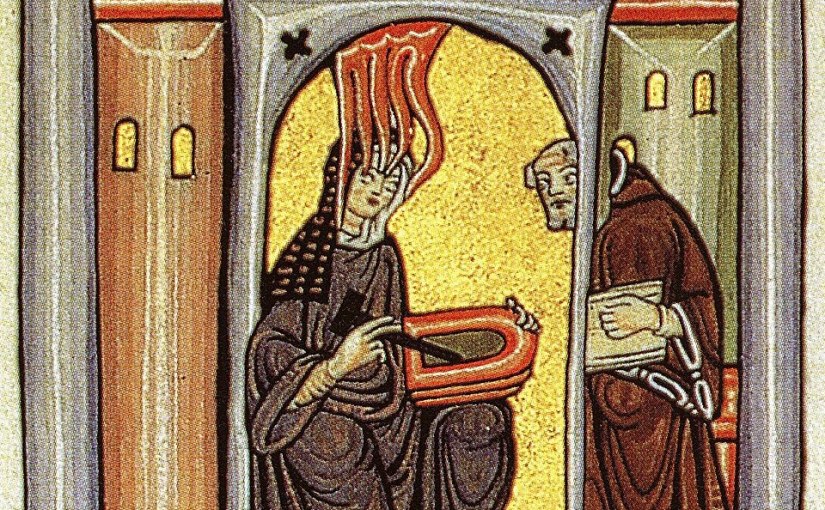
Hildegard of Bingen: A Mystic’s Vision for the Iconographer

The Middle Ages was perhaps the last period in the West to possess a truly living cosmology—a worldview in which mysticism, theology, nature, and everyday life were understood as an inseparable whole. Rather than seeing creation as something separate from God, medieval mystics lived within the conviction that all things exist in God, and God is present in all things.

As iconographers, this is precisely the vision we seek to recover. Every icon proclaims that the material world is capable of revealing the Divine. Wood, pigment, gold, and light become vehicles of grace because the Incarnation forever united heaven and earth.

Among the great mystics who embodied this vision, one stands out as an extraordinary source of inspiration: Hildegard of Bingen (1098–1179).
A Woman of Astonishing Gifts

Hildegard of Bingen was a Benedictine abbess, visionary, theologian, composer, scientist, physician, botanist, poet, artist, and philosopher. Few people in history have excelled in so many disciplines. Her remarkable intellect and creativity earned her the title “The Sibyl of the Rhine.”

Born in 1098 in present-day Germany, Hildegard was the tenth child of a noble family. Following the custom of the time, she was dedicated to the Church as a child and entered a Benedictine monastery, taking her vows at the age of fifteen. Within the monastery she received an exceptional education and devoted her life to prayer, study, and the service of God.

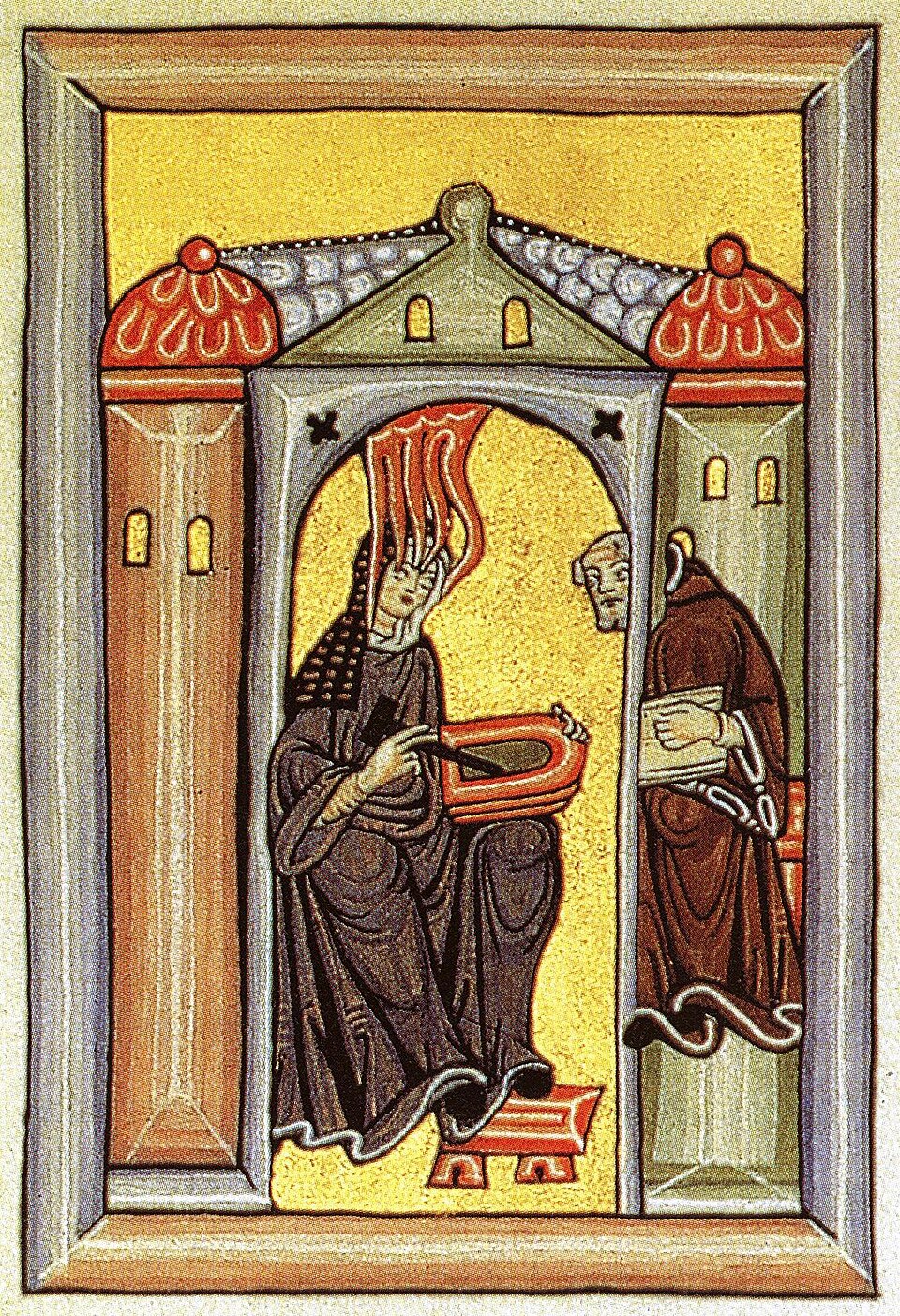
From childhood she experienced powerful visions that she understood to be revelations from God. Initially reluctant to speak publicly about them, she eventually believed she had been commanded to write them down. Because women were rarely granted authority to teach theology during the twelfth century, Hildegard sought—and received—papal approval to publish her writings and even to preach publicly.

She later founded her own convent at Rupertsberg near Bingen, where she continued to write, teach, compose music, correspond with emperors, bishops, abbots, and popes, and care for those seeking spiritual and physical healing.
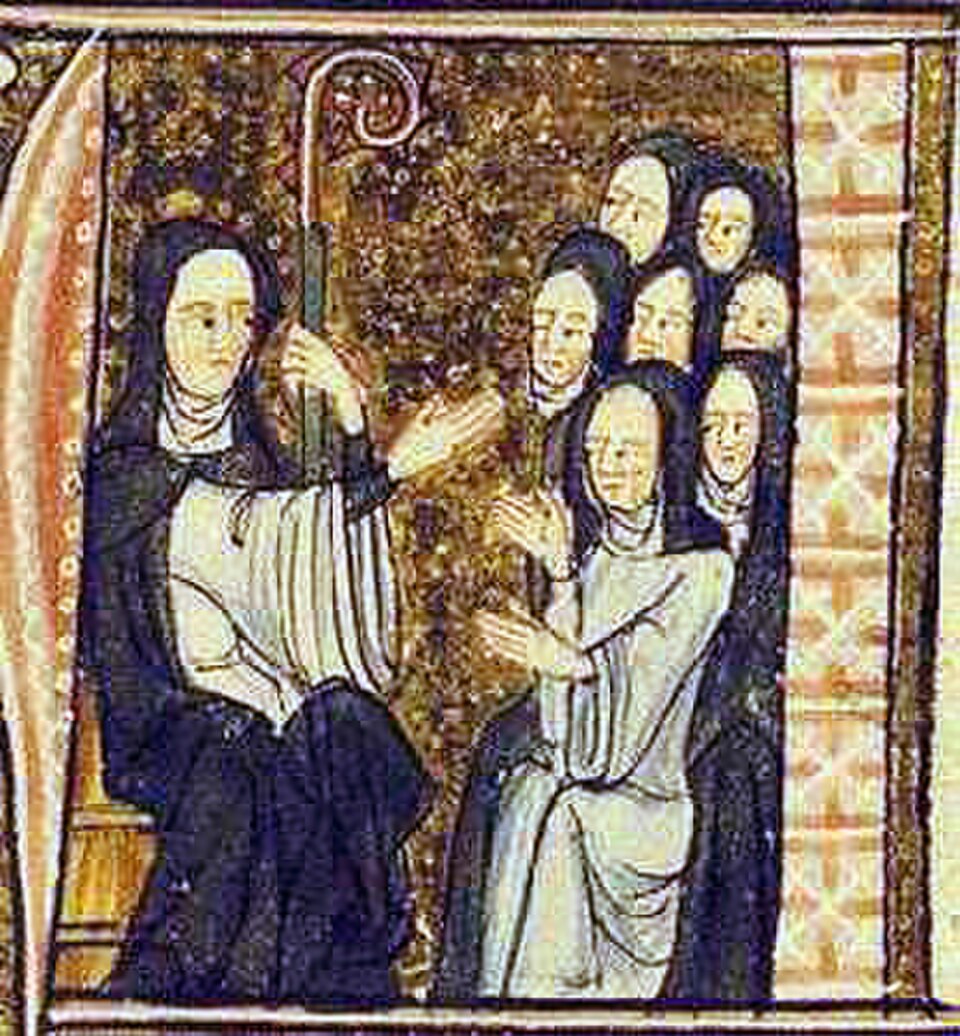
A Universal Scholar

Hildegard’s accomplishments remain astonishing nearly nine centuries later.

In theology, she wrote visionary masterpieces including Scivias (“Know the Ways of the Lord”), richly illustrated with symbolic images that communicate profound spiritual truths. These visionary illuminations continue to inspire artists and theologians alike.

In music, she composed more than seventy liturgical songs whose soaring melodies expanded the musical vocabulary of the medieval Church. Her works are still performed and recorded throughout the world.

As a physician and botanist, Hildegard authored treatises describing the healing properties of more than two hundred plants while exploring the causes and treatment of illness through a holistic understanding of body, mind, and spirit.

Her curiosity even extended to linguistics. She created an entirely original language, the Lingua Ignota (“Unknown Language”), complete with its own alphabet and vocabulary—one of history’s earliest constructed languages.

Her achievements across theology, science, medicine, music, literature, and art established her as one of the great universal scholars of the Middle Ages.

Nature Filled with Divine Light

One reason Hildegard speaks so powerfully to iconographers is her vision of creation.

She saw the natural world as radiant with God’s presence. Mountains, trees, rivers, herbs, stars, and human beings all participated in the life of the Creator. Rather than separating the spiritual from the material, Hildegard saw them as united.

Her writings frequently celebrate what she called viriditas—the “greening power” or life-giving vitality of God flowing through all creation. This image beautifully parallels the iconographer’s task. Icons reveal not merely the appearance of the visible world but its transfigured reality, illuminated by divine life.

Like the icon, Hildegard’s vision teaches us to see beneath appearances into the deeper reality of God’s presence.

Mystic and Prophet

Hildegard was not only a contemplative but also a prophet.

She fearlessly challenged corruption wherever she found it, addressing emperors, bishops, abbots, and even popes with remarkable courage. She often compared herself to the prophet Ezekiel, whose symbolic visions exposed the spiritual failures of his own generation.

For Hildegard, prophecy was never about predicting the future. It was about awakening people to truth.

Prophets, she believed, illuminate the darkness. They call people to responsibility, repentance, justice, and deeper communion with God.

Her book Scivias invites readers to “know the wise ways” rather than the foolish ones. Her other major works—including Liber Vitae Meritorum (Book of Life’s Merits), De Operatione Dei (The Book of Divine Works), Physica, and Liber Compositae Medicinae—combine theology, ethics, medicine, natural science, and spiritual wisdom into a unified vision of human flourishing.

Throughout her writings she repeatedly emphasizes one practical virtue: usefulness. The purpose of knowledge, prayer, and creativity is not self-glorification but the building up of God’s people.
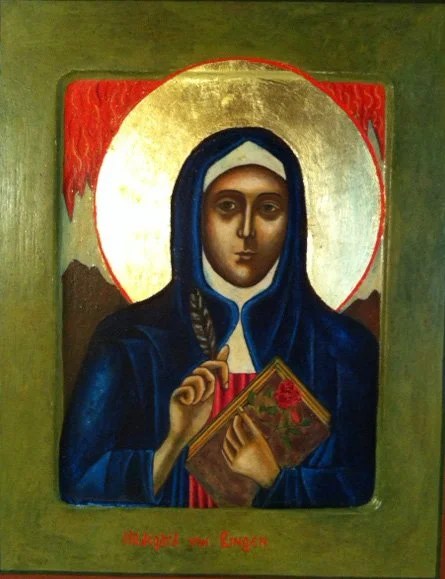
Saint Hildegard Icon written by Christine Hales

Lessons for Today’s Iconographer

Hildegard’s life offers profound encouragement for those called to write icons.

She reminds us that artistic excellence and deep spirituality are not separate pursuits but expressions of the same vocation. The iconographer must cultivate prayer, theological understanding, careful observation of creation, disciplined craftsmanship, and openness to the inspiration of the Holy Spirit.

She also teaches us that creativity flourishes when rooted in contemplation. Because Hildegard remained faithful to her mystical experiences while embracing music, medicine, science, theology, and art, she models an integrated life in which every gift serves God.

Perhaps this is why she continues to inspire Christians from many traditions. Her work points toward a unity that transcends divisions—a unity grounded in the conviction that all truth belongs to God.

In 2012, Hildegard of Bingen was declared a Doctor of the Church, becoming only the fourth woman to receive this distinction. She is also widely honored as a patron of ecology because of her profound understanding of humanity’s relationship with creation.

For iconographers, her life serves as a reminder that our work is not simply the production of sacred images. It is participation in God’s ongoing work of revealing His glory through the beauty of creation.

When we grind pigments, lay gold leaf, or prayerfully draw the face of Christ or one of His saints, we participate in the same sacramental vision that Hildegard proclaimed nearly nine hundred years ago—a world alive with Divine Light.

Viriditas, is a latin term for “greenness”, a concept Hildegard used for healing as a metaphor for the divine life force, vitality, and the healing energy that permeates all of nature and the human soul. In iconography, we could equate that concept with the concept of the uncreated light that icons capture. The light of God as distinct from the light of the sun. Viriditas was “the greening power of God.” It was in everything, including humans. This “greenness” was an expression of heaven, the creative power of life

I hope this blog is of interest and look forward to hearing your comments!

Blessings,

Christine Hales

Suggested Reading

  • Illuminations of Hildegard of Bingen, text by Hildegard of Bingen with commentary by Matthew Fox
  • Christian Mysticism by Manuela Dunn Mascetti
  • Hildegard’s own writings, including SciviasThe Book of Divine WorksPhysica, and Book of Life’s Merits

Interesting Links for Iconographers:

Betsy Porter hosts regular Zoom get togethers for all iconographers. She is an iconographer in California and a member of St. Gregory’s Church. To get on her mailing list for zoom links, visit her website: Betsy Porter

Dorothy Alexander holds an Icon writing get together for iconographers , also in California. To get on her email list, contact me – she doesn’t seem to have a website.

My Internet Accounts

  1. https://newchristianicons.com   my main website
  2. Https://christinehalesicons.com  Prints of my Icons
  3. https://online.iconwritingclasses.com  my online pre-recorded icon writing classes
  4. https://www.youtube.com/channel/UCK2WoRDiPivGtz2aw61FQXA  My YouTube Channel 
  5. Facebook: https://www.facebook.com/ChristineHalesFineArt     or  https://www.facebook.com/NewChristianIcons/
  6. Instagram:   https://www.instagram.com/christinehalesicons/?hl=en
  7. American Association of Iconographers:  FB Group:  https://www.facebook.com/groups/371054416651983
  8. American Association of Iconographers Website: https://americanassociationoficonographers.com
  9. 9. my Patreon Account: christinehalesfineart

Icons As Theology in Color

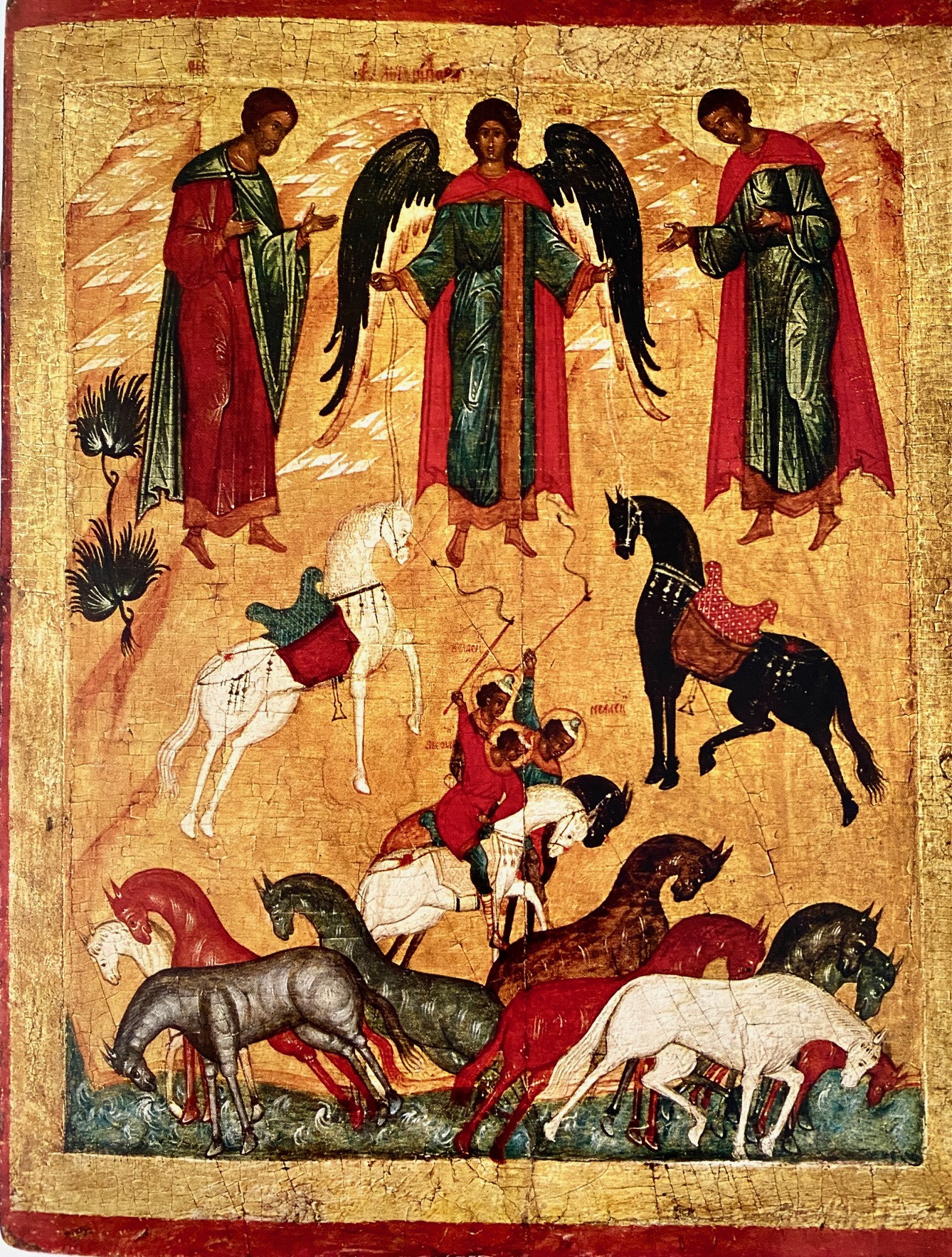
Saint George, Novgorod, 16th century

In the realm of Christian spirituality, icons stand as more than mere religious art. They are a visual form of divine communication, a sacred language that transcends time and culture. As Leonid Ouspensky notes, icons do not serve religion in a utilitarian sense but are an intrinsic part of it—one of the means through which believers encounter and commune with God. When I think of Icons as theology in color, I inevitably go to the Novgorod Icons which were created in Russia from the 14th to 17th centuries.

Sts. Florus and Laurus 16th century, Novgorod

Icons as Liturgical Art

An icon, much like sacred scripture, is a vessel of divine revelation. In the same way that words in liturgy guide the faithful toward deeper understanding, icons serve as instruments of knowledge and communion with God. They are not decorations; they are theological expressions rendered in color and form, inviting contemplation and prayer.

Tradition and the Role of the Holy Spirit

Christian tradition is often misunderstood as mere adherence to historical customs, but its essence is far more profound. As stated in theological reflections, true Tradition is the life of the Holy Spirit in the Church. It is through the Spirit that believers gain the faculty to perceive divine Truth—not merely through human reason but through the illumination of faith. Icons, shaped by this Tradition, bear witness to a spiritual reality that is ever-present and active.

The Power of Signs and Symbols

The Good Shepherd, From the Roman Catacombs

The material and spiritual worlds are not separate; rather, they are deeply intertwined. This is evident in the role of symbols, which serve as bridges between the seen and unseen. Early Christian symbols carried layers of meaning—the image of a saint in the catacombs could signify a soul in paradise, an embodiment of prayer, or even the Church itself. Through repeated sacred gestures and imagery, the faithful are invited to enter into the mystery of divine presence.

The Evolution of Christian Symbolism

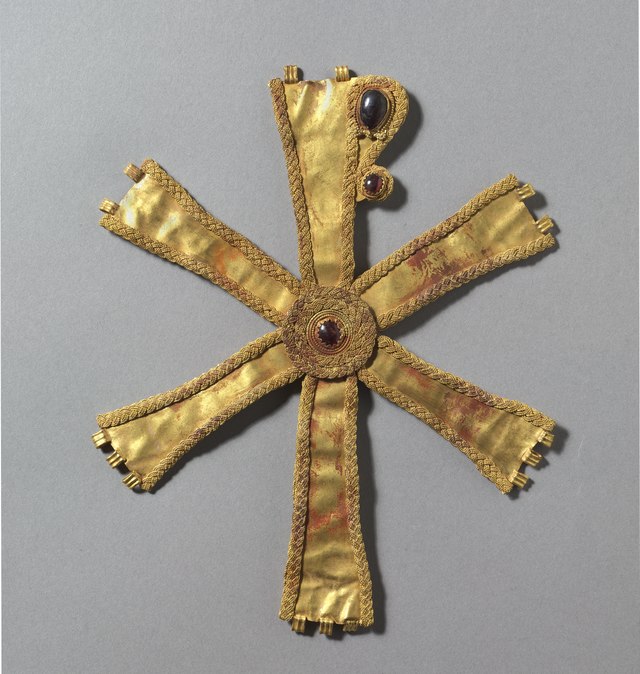
Christianity has always expressed its mysteries through symbols. Early believers adapted existing signs from the surrounding world—such as the dove, peacock, and anchor—infusing them with new, transcendent meaning. As time passed, explicitly Christian symbols emerged, such as the fish (Ichthys) and the lamb, both representing Christ. These symbols, while rooted in human expression, point to eternal truths beyond words.

6th Century Byzantine Chi Rho Symbol

Icons: Transcendent Yet Concrete

While maintaining the depth of symbolic language, the icon introduces a unique dimension—the human element. Unlike abstract symbols, the icon makes divine mysteries visually accessible. It brings the infinite into finite form, allowing the ineffable to be expressed in a way that speaks directly to the soul. In the words of Egon Sendler, the icon transforms the abstract into something both transcendent and concrete, revealing the invisible through the visible.

Conclusion

Detail, Face of Christ Icon by the hand of Christine Hales

Icons are not simply religious images; they are theology in color, sacred windows into the divine. Through tradition, symbolism, and the work of the Holy Spirit, they continue to guide believers into a deeper relationship with God. Whether through the gaze of a saint, the presence of Christ, or the gestures of the liturgy, icons remind us that the sacred is always near, calling us into communion with the eternal.

I hope this article has been not only food for thought, but helps to build a solid foundation of theology for contemporary icon development.

“So, my dear brothers and sisters, be strong and steady, always enthusiastic about the Lord’s work, for you know that nothing you do for the Lord is ever useless.” 1 Corinthians 15:58

Until next month. Blessings,

Christine Simoneau Hales, Iconographer

LINKS For  Christine Simoneau Hales   2025

  1. https://newchristianicions.com   my main website
  2. Https://christinehalesicons.com  Prints of my Icons
  3. https://online.iconwritingclasses.com  my online pre-recorded icon writing classes
  4. https://www.youtube.com/channel/UCK2WoRDiPivGtz2aw61FQXA  My YouTube Channel
  5. Facebook: https://www.facebook.com/ChristineHalesFineArt     or  https://www.facebook.com/NewChristianIcons/
  6. Instagram:   https://www.instagram.com/christinehalesicons/?hl=en
  7. American Association of Iconographers:  FB Group:  https://www.facebook.com/groups/371054416651983

American Association of Iconographers Website: https://americanassociationoficonographers.com

Iconography of Mary

The Iconography of Mary

Icon of the Virgin and Child with Saints Theodore and George, St. Catherine’s Monastery, Mt. Sinai, 6th century

That there are many different types and genres of Mary icons that attest to the need of all Christians to be able to relate to different aspects of her humanity and divinity at different times in their lives.     Some images of Mary depict her in a time of peace, apparently apart from the drudgery and strife of our every day world, but others, like the Virgin of Tenderness and Loving Kindness, evoke the loving and kind aspects of God in ordinary life.

As the Christian Church began to split into factions with emphasis on slightly different aspects of the faith, so too, the iconography of Mary, the Mother of Jesus, has different interpretations within the denominations.  To establish a common ground, I first put forth a history of Mary, both Biblical and inclusive of denominational differences when appropriate.

Mary in the Bible

Saint Luke painting the Virgin and Child with an Angel, Russian Icon

The earliest New Testament account of Mary is in the Epistle to the Galatians, which was written before the Gospels. She is referred to as “a woman” and is not named: “But when the fullness of time had come, God sent his Son, born of a woman, born under the law” (Galatians 4:4).[47]

But Mary is specifically mentioned several times in the canonical Gospels and the Acts of the Apostles:

  • The Gospel of Luke mentions Mary the most often, identifying her by name twelve times, all of these in the infancy narrative (Luke 1:27–2:34).[48]
  • The Gospel of Matthew mentions her by name five times, four of these (1:16, 18, 20: 2:12)[49] in the infancy narrative and only once (Matthew 13:55)[50] outside the infancy narrative.
  • The Gospel of Mark names her once (Mark 6:3) and mentions Jesus’ mother without naming her in Mark 3:31–32.
  • The Gospel of John refers to the mother of Jesus twice, but never mentions her name. She is first seen at the wedding of Cana (John 2:1–12. The second reference has her standing near the cross of Jesus together with Mary Magdalene, and Mary of Clopas (or Cleophas), and her own sister (possibly the same as Mary of Clopas; the wording is semantically ambiguous), along with the disciple whom Jesus loved.” (John 19:25–26). John 2:1–12  is the only text in the canonical gospels in which the adult Jesus has a conversation with Mary. He does not address her as “Mother” but as “Woman”. In the Acts of the Apostles, Mary and the brothers of Jesus are mentioned in the company of the eleven apostles who are gathered in the upper room after the Ascension of Jesus (Acts 1:14).
Crucifixion Icon, From ancient Russian Icon, Christine Hales. 2020

However, most of the details we know about the early life of Mary, and the birth of Jesus taking place in a cave come from the Proevangelism of James, a non-canonical treatise of the second century.

How did canonical imagery for the Mother of God develop?

Vladimir Mother of God Icon , 12th century, currently in Tretyakov Gallery, Moscow

In the early formation of Mary’s iconography, there were three main aspects of her mystery, that is, her pure virginity, her fertile motherhood, and her divine sanctity that contribute to attributes and characteristics visible in depictions in her icons.

As early as the fifth century churches were being dedicated to Mary in Constantinople and the term “Theotokos”,  God Bearer, Mother of God, was introduced at the Council of Ephesus in 431. After the sixth century, more and more icons of various aspects of the Blessed Mother were seen, and attributes of military power were seen as people brought icons of Mary to the battlefield for protection against invaders.  Prayers relating to Mary are found as early as the Gospel of Luke.

Hodegitria Icon, 16th century, Russia

Although there are exceptions, most of the Russian Orthodox icons of Mary can be found within four categories:   Hodegitria, “the Guide, or she who shows the way”; the Eleusa, “Virgin of Tenderness, or loving kindness”; the Oranta, Our Lady of the Sign; and the Akathist “Hymn”. 

Within these categories there exists many iterations named primarily after the town or village that housed them, such as in the Tenderness category there is the Kazan icon, Smolensk icon, Georgian icon,Jerusalem icon, and many more.

Hodegitria Icons of Mary have been brought to battlefields and paraded around cities for protection for centuries. They have been used to invoke military victory but she is never seen with a staff or any other sign of authority.  Her icon of the Hodegetria, Mother of God, was deemed the most powerful weapon against enemies in ancient Russia.

In the Eleusa category of loving kindness, popularized in the twelfth century, The Vladimir Mother of God icon was brought from Constantinople to Vladimir by Prince Andrey Bogolubsky and was believed to protect the city from marauding Mongols.

Our Lady of the Sign Icon by Christine Hales 2000

The Orans Virgin, or sometimes called “Platytera, More Spacious Than the Heavens”, depicts Mary with her arms outstretched in the prayer position, with a young Christ in the center of her figure, and this one is based on the prophesy in Isaiah 7:14.,” Therefore the Lord himself shall give you a sign; Behold, a virgin shall conceive, and bear a son, and shall call his name Immanuel.”

The Akathist (meaning hymn) virgin, is frequently seen depicting Mary as an individual alone, without the Christ child. And without Joseph, her husband.

Our Lady of Korsun created by Christine Hales

Most Greek churches dedicated to the Virgin Mary are called Panagia; the Most Holy; the standard western Christian designation of “St. Mary” is rarely used in the Orthodox East, as Mary is considered the holiest of all created beings and therefore of higher status than the saints.

In paintings, Mary is traditionally portrayed in blue, while in the Eastern Orthodox Marian iconography, her robe is a deep red. There are many more genres of Mary paintings in the Catholic church, variations that address particular prayer needs of the people. Examples of this are Our Lady, Untier of Knots, Our Lady of Perpetual Help, Our Lady of Gudalupe, Our lady of Sorrows, and many more.

Our Lady of Perpetual Help, Christine Hales

The Christian need to believe, venerate, and pray with images of Mary is a powerful one.  In a primarily patristic society, being able to relate spiritually to the most Godly of women is both a solace and source of strength.  Surely the Blessed Mother demonstrated profound strength at the Crucifixion, obedience and humility at the Annunciation, and devotion to Jesus throughout His life and death, and we can draw near to her through her icons and be comforted and strengthened by her virtues and piety.

I will close with one of the oldest known prayers venerating Mary:

            Beneath Thy Protection 

We fly to thy protection,

O Holy Mother of God;

Do not despise our petitions in our necessities,

but deliver us always from all dangers,

O Glorious and Blessed Virgin.

Christine Simoneau Hales

Our Lady of Guadalupe, detail, by Christine Hales

https://newchristianicons.com

Prints: https://christinehalesicons.com

Sources:

“The Dawn of Christian Art in Panel Paintings and Icons”, Thomas Mathews and Norman Muller.

Wikipedia

Wiki Common

Interesting Links For Iconographers:

From Dorothy Alexander, Iconographer in CA :

This is a link to summer internships for those studying a BA, MA, or Phd: