The Uncreated Light

Dear Fellow Iconographers:

Saint Fyodor of Rostov Icon depicting “Theoria”. By the hand of Christine Hales

Recently, while sharing with good friends my current Icon exhibition at All Angels Church in Sarasota, I was pleasantly reminded about the importance of the concept of the “uncreated light” within icons. Having promised to reflect more on this topic, I now share with you some thoughts and research on that very important but sometimes overlooked aspect of icon writing/painting.

The Light of Mt. Tabor: The Light of the Transfiguration and Paul’s Conversion

In the 14th century, Gregory Palamas, an Athonite monk and proponent of Hesychasm, explored the concept of the Uncreated Light. According to the Hesychast mystic tradition of Eastern Orthodox spirituality, a completely purified saint who has attained divine union experiences a vision of divine radiance, the same ‘light’ that was manifested to Jesus’ disciples on Mount Tabor at the Transfiguration and to Saint Paul at his conversion. This profound experience is referred to as theoria. The doctrine of the uncreated light is rooted in Palamas’ interpretation of the teachings of Gregory of Nyssa.

Orthodox Christians also find instances of the Uncreated Light in the Old Testament, such as the Burning Bush.

Burning Bush Icon -Moses and Mary with Christ Child. by the hand of Christine Hales

Joseph the Elder, Hesychast

Joseph the Elder, a 20th century Hesychast and Greek Orthodox monk from Mount Athos, longed for unceasing prayer but faced numerous challenges, including the difficulty of finding a spiritual father and the indifference of many monks toward constant prayer. In his yearning for divine connection, Joseph was ultimately granted a vision of the uncreated light, receiving the gift of ceaseless prayer.

“At once I was completely changed and forgot myself. I was filled with light in my heart and outside and everywhere, not being aware that I even had a body. The prayer began to say itself within me…

O Master, our sweetest Lord Jesus Christ, send forth Your grace and free me from the bonds of sin. Enlighten the darkness of my soul, so that I may apprehend Your infinite mercy, and so that I may love and thank You worthily, my sweetest Savior, Who is worthy of all love and thanks.” Amen

Egon Sendler on Iconic Light

Egon Sendler, in his book “Icon, Image of the Invisible”, explained that the light depicted in icons is distinct from natural light. Iconic light represents incarnate grace and must be received in contemplation.

“In the icon, we see a divine reality that transcends this earthly world while respecting it because it is created by God, to be transfigured in His spirit. If an icon reduces the mystery of God to mere material forms, it loses its soul and spiritual character, becoming an illusion of reality.”

Sendler emphasized that the dynamic nature of icons involves all the pictorial elements moving towards the observer, with light following this movement, creating a transfigured world and bringing the viewer into union with God..

Leonid Ouspensky from “The Meaning of Icons”

Transfiguration Icon by the hand of Christine Hales

Leonid Ouspensky, in his book entitled “The Meaning of Icons”, highlighted that Church art, particularly icons, visually testifies to the dual realities of God and the world, grace and nature.

“Through the icon, as through the Holy Scriptures, we not only learn about God but also know God. The transfiguration, an illumination of the entire man through prayer by the uncreated light of Divine Grace, manifests man as a living icon of God. The icon represents this transfiguration, depicting a man filled with the Holy Spirit’s grace.”

Ouspensky concluded that liturgical art represents both our offering to God and God’s descent into our midst, facilitating a profound meeting between God and man, grace and nature, eternity and time. Perceiving the uncreated light of God’s grace in an icon leads us toward Holy Communion with God, transcending our natural world.

Conclusion:

The concept of the Uncreated Light in Eastern Orthodox spirituality and iconography emphasizes the profound connection between the divine and the material world. Through the transformative experiences of saints like Joseph the Elder and the theological insights of figures like Gregory Palamas, Egon Sendler, and Leonid Ouspensky, we understand that icons are not merely art but manifestations of divine reality and grace, guiding believers towards a deeper communion with God.  And so, when writing, or painting icons, choosing colors that reflect the uncreated light of God’s grace becomes a subtle, but highly important imperative of icon creation.

Here are some interesting links for Iconographers:

Icon Museum and Study Center, Clinton Massachusetts

Introduction to Icons Video by Patristix

Icon Writing Pigments and other Supplies for Icon Painting

That’s all for this month. May God continue to bless the work of your hands,

Christine Simoneau Hales

New Christian Icons Icon Painting Instruction

Prints of My Icons Christine Hales’ Icon Book

Favored Concepts of Byzantine Iconographic Language

Dear Fellow Iconographers:

I’ve been reading and looking at icons quite a bit recently in an effort to understand what elements of the iconographic language I feel are important to incorporate into a more contemporary approach to writing icons.  Others will have different opinions about this, I’m sure!  But I have always learned best when I share my thoughts with others, either writing or speaking, so feel free to respond with your ideas or opinions on this as well, and thanks for your patience as I attempt to reason this out!!

The Protection of the Holy Virgin, Novgorod School, late 15th century

Depiction of buildings and space within the icon using inverse perspective.  This tends to flatten out the drawing and creates visually the understanding that this is not worldly reality but a spiritual reality we are depicting.  

I love the abstract way that folds on garments are rendered.  They both simplify and abstract the visual reality of the figure, again, pointing to the symbolic nature of the scene being depicted.

The way rhythm and movement are cleverly incorporated into the design by the repetition of curves in roofs, heads, building tops etc.

The Presentation of the Virgin, Novgorod School, fifteenth century

St. Simeon the Stylite shows the creative foreshortening of his column and renders it as a tower with stairs and a door with a balustrade at the top for him to rest upon.  He gives the blessing with his right hand and holds a scroll in the left- again, iconographic language that communicates his blessing and dedication to Holy Scripture.  It is said of him that he exercised an extraordinary spiritual authority and fought against spiritual heresies.1

  1. The Meaning of Icons, Leonid Ouspensky

St. Simeon Stylites, Russian, 16th Century

Another aspect of the iconographic language that I greatly admire is the consistent ways of highlighting faces,  They are somewhat realistic , but yet abstracted when eyes are exaggerate, simplified, and accentuated.  There is a consistency also in the way facial features are drawn.  You can see this in some of the early icon painting manuals- the one I use often is the Egon Sendler book Icons, Images of the Invisible.  Sadly, it is out of print, so is fairly expensive on the second hand book market, but I do recommend it highly if you can get one.  Hair is also stylized so as not to draw attention away from the spiritual reality being depicted.  

Of course, all this is ingenious, and why would we ever want to try to improve on it?  My take on that is that I want to make icons – or religious art- that will attract my community in this time.  Last month I published a photo of one of Stephen Antonakas’ neon art pieces of the Transfiguration.( https://americanassociationoficonographers.com/  )that I think brilliantly captures the essence of the Icon, but its very abstractness renders the actual Transfiguration story unreadable and unknowable if you are not familiar with the Scripture or the story.  However, if you do know the story, his work captures the essence in a new and different way that allows a deeper appreciation and allows us to think differently about that moment. Mark 9:2-13, Matthew 17:1-17, and Luke 9:28-36.

What is the main message of the Transfiguration?

Transfiguration Icon, Russian, Novgorod School, 15th Century

Though the disciples do not understand his meaning, the Transfiguration and Jesus’ charge to the disciples present a promise of what is to come. There is hope, because he will soon triumph over sin and death, and be raised in the fullness of glory – the glory of which they have just been given a glimpse.

So, again, compare and contrast- here is a Russian icon from the Novgorod school, fifteenth century.  Definitely light is emphasized in both the Antonakas neon sculpture as well as the icon, but it is missing the two prophets, Moses and Elijah- Moses representing the dead and Elijah, because he was taken up to heaven, represents the living, calling attention to the message of hope of the Second Coming.  Both had a secret vision from God.  “Christ appears as the Lord of the quick and the dead, coming in glory of the future age.  The Transfiguration was an anticipation of His glorious second coming, says St. Basil, the moment which opened a perspective of eternity and time.”  Meaning of Icons, Leonid Ouspensky P. 212

This beautiful icon of St. Sergius of Radoneh again emphasizes simplicity both in design and color palette.

Saint Sergius of Radoneh, Russian, 20th Century

Byzantine Iconography as a Sacred Art

According to Constantine Cavarnos in his book, ” Guide to Byzantine Iconography”, Byzantine iconography is a sacred art.  It is art that is spiritual in essence and aims.  It has seven functions: (1). to enhance the beauty of the church with a beauty that has the impress of holiness. ( 2). To instruct us in matters pertaining to the Orthodox Christian faith.  (3) To remind us of this teaching. (4) To lift us up to the prototypes, to the holy personages whom the icons depict.  (5) To arouse us to imitate the virtues of these personages. (6) To help transform us, to sanctify us.  (7) To serve as means of worshipping God and venerating His saints.”

So, in closing, I have mentioned some of the concepts that make an icon a sacred work of art.   I expect that each of you will have other favorite and important elements of the iconographic language to emphasize. I look forward to hearing from you on this topic and possibly incorporating your thoughts into future articles.

Until next month, May God bless the work of your hands, and guide your thoughts, waking and sleeping,

Christine Simoneau Hales

https://newchristianicons.com

The Transfiguration Icon by Christine Hales 21st Century

My next online Icon writing class is April 9-12, visit: newchristianicons.com for more details and to register.

Collecting Icons

Nativity of Jesus Icon from St. Paraskeva Church

Why Collect Icons?

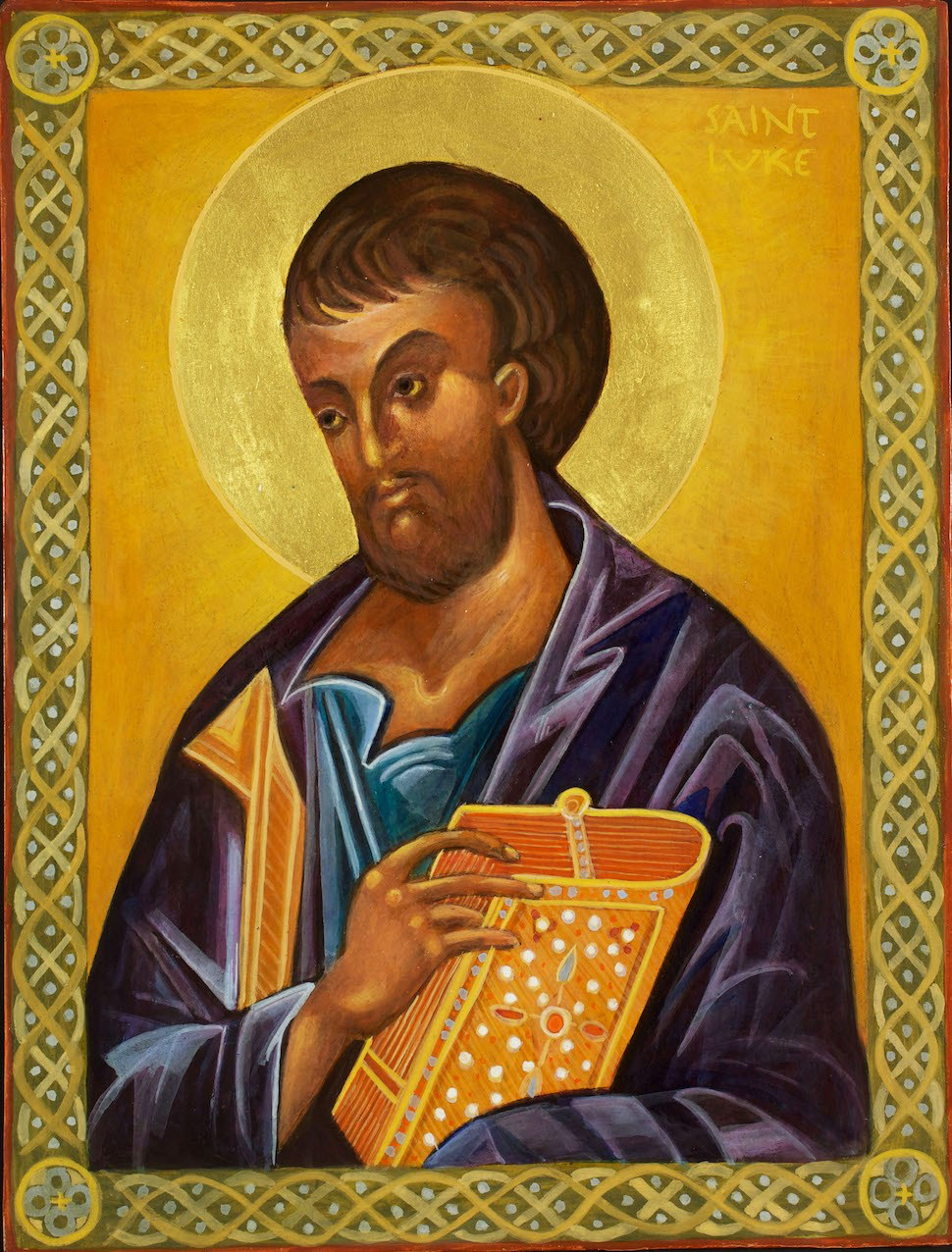
Are you an Icon collector?  Collecting Icons is similar to collecting fine art in that the beauty is often times in the eye of the beholder.  Icons carry meaning in addition to the esthetics we expect from visual art. That meaning, or content, might relate on a very personal level to the viewer and thus have a high degree of value, regardless of the aesthetic qualities.  For example, an Icon of Saint Luke will resonate with artists, Iconographers, physicians, and bachelors because Saint Luke is their patron saint.  Icons have the ability to enhance our prayer life as we venerate the saints depicted.

St. Luke Icon by Christine Hales


Venerating Icons

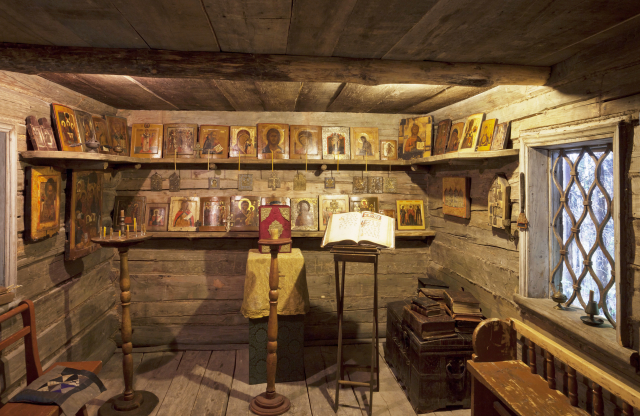
molennaya

We use the word venerate to talk about our interactions with Icons.  To venerate means to cherish, honor, exalt, be in awe of, appreciate and reverence.  In old Russia, during times of religious persecution, people who could afford it would create a beautiful corner in their homes, or a small chapel.  This would hold the Icons that this family particularly revered and understood as important parts of their family prayer lives.

Icons can deepen our prayer life with specific, focused prayer.

Icons can enhance our connection to the God we adore through specific, focused prayer.  Therefore, collecting Icons is a means of keeping our vision on God’s Kingdom in our homes, and sharing that with our families and friends.

Collecting Icons from Antiquity

Another aspect of collecting Icons is that of finding Icons from earlier centuries that have added value because of their age and provenance. One of the foremost Icon Galleries for ancient Icons is the Temple Gallery in London, UK.  It was founded in 1959 as a center for study, restoration and exhibition of ancient Icons and sacred art. With ancient Icons, their monetary value rises in accordance with their condition, provenance, size, and age.

Russian_nativity_icon

People often ask about the value about the icons they have discovered in their travels or have had handed down in their families.  TheMuseum of Russian Icons, in Clinton, Massachusetts, will do Icon evaluations on certain dates. They will also provide conservation and appraisal services upon request.  The museum has a beautiful permanent collection as well as changing exhibitions.

A Living Traditon

Nativity_Icon_Melissotopos_Olishta_19_Century
Nativity Icon Melissotopos Olishta 19 Century

Iconography is a living tradition, bringing the elements of the Christian faith to believers through the centuries.  Icons are often painted in the same way that they have been for hundreds of years.  And, as a living Tradition, Icons painted today are bringing along the traditions of the past and marrying them to contemporary faith and art practices.  Truly it is an exciting time to be collecting Icons!

May God bless your Icon creating and collecting especially this Advent Season!

Blessings and prayers,

Christine Hales

Icon Website     Icon Prints Website


Merry Christmas!

christinglory Hello Friends and Fellow Iconographers:

Beginning this month, the new Blog look is starting!  The goal is to have this blog be an information source for artists and Iconographers internationally.  I am collecting Iconographers’ website links and blogs so if you’re reading this and would like to be included or have links that you think would benefit the larger community of Iconographers, please email me with them: christine@newchristianicons.com, so they can be included.

My Icon Retreat news for this month is the Icon Retreat I’m teaching at Saint James Church on Madison Ave, New York, NY will be held Fri-Sunday February 20-22. There are still some spaces but you should book early. We will be writing the Icon of Saint Raphael the Archangel of healing, and guide for those on journeys of all kinds.raphaelunframedweb

Also, have updated my Icon website: www.newchristianicons.com– let me know how you like it!

A new Beginning Icon Writing class is starting in Hillsdale, NY at the Christian Community Church, Thursday evenings 6-9PM starting January 15. Email to register.

Just returned from seeing two pretty wonderful museums in NYC and want to share what’s on there-in case you can get there this season, or view online.

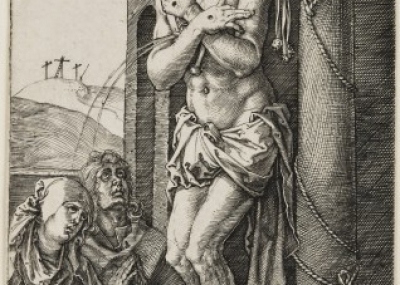
First, at MOBIAtimthumb.php, the Durer, Rembrandt, Tiepolo and Blake, exhibition of Master Prints is incredibly satisfying as an exhibition with both scope and depth.

Particularly interesting is the combination of Scripture – the written Word and the visual images. The exhibition continues through January 11, 2015 and admission is free.  A second exhibition at MOBIA is “A Bible for our Nation”timthumb-1.php– also interesting, particularly the Mohawk and Seneca translations.

The second exhibition of great interest is at the Morgan Library, 225 Madison Ave. at 36th street, “The Crusader Bible: a Gothic Masterpiece”. One of the great illuminated manuscripts in the world, believed to have been made in Paris, 1250, it has beautifully colored egg tempera illustrations of biblical scenes by seven anonymous artists.   Open until January 5, this exhibition is delightful and a rare opportunity to view this manuscript.Crusader

There’s also an exhibition of Cy Twomby’s Treatise on the Veil. I love Twombly’s work, but in the context of these more structured and time intensive arts, the Treatise  pales by comparison.