

A Life Anchored in Grace, Obedience, and the Miraculous

The Blessed Virgin Mary is believed by many to be the greatest of Christian saints, after her Son, she is exalted by divine grace above angels and men. holds a place of profound honor in Christian faith and tradition. Known as the Mother of God, Queen of Heaven, and spiritual guide to all believers, her life offers us a powerful model of obedience, grace, and unwavering faith in difficult times. Since today is the Feast of the Visitation- one of my favorite icons- I thought it would be good to share some random thoughts about Mary and her significance to our faith.
I’ve been reading a book about Mary, The Life of the Blessed Virgin Mary: From the Visions of Blessed Anne Catherine Emmerich, as part of my spiritual discipline for May and want to share some of the insights in this month’s blog. Since I have previously written a blog about Mary (see the link below), I didn’t try to replicate the insights in that one here. Mary is such a central figure in Christian icons, her visual presence stretching from the earliest Christian art in the catacombs to contemporary icons and I hope to add more nuance to our appreciation and ability to relate to her unique role in salvation history and Icons of Mary.

Symbols and Icons
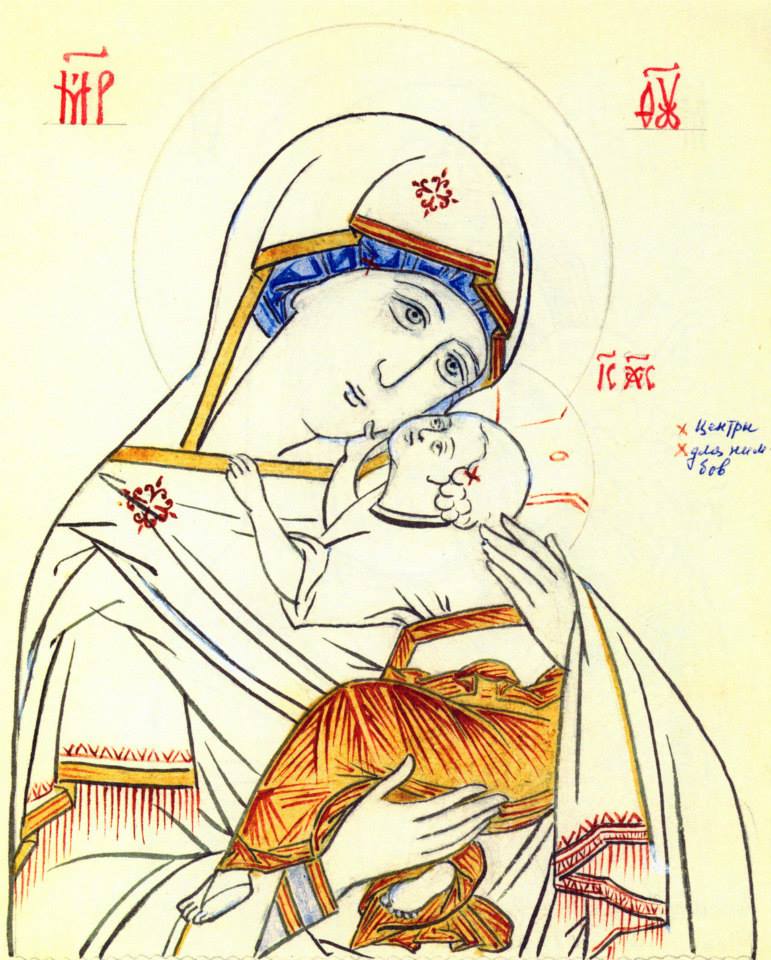
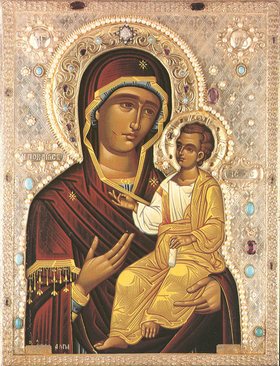
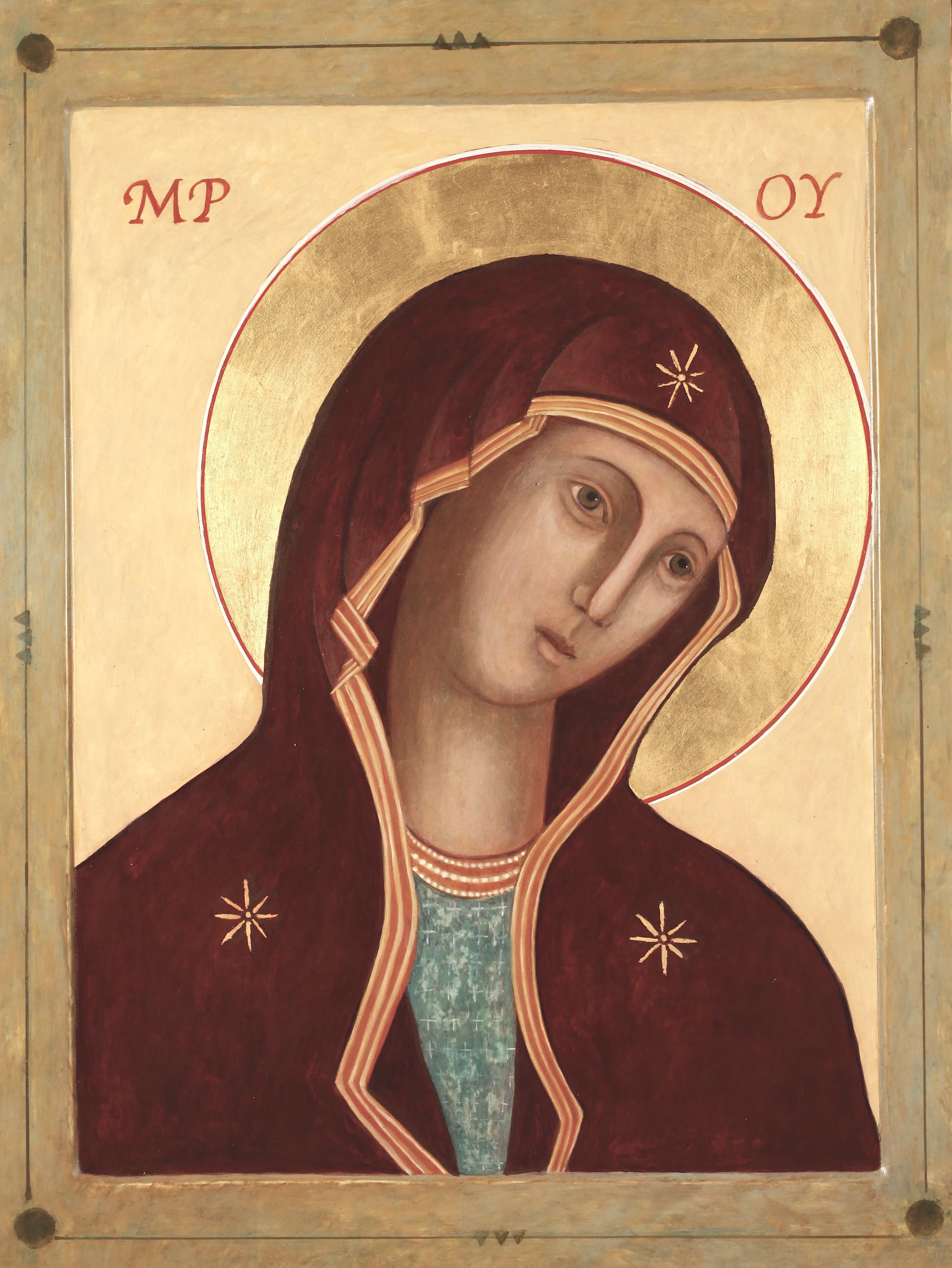
In Orthodox iconography, Mary’s veil is deep red, the color of divinity, while the clothes under the veil are either green or blue, the colors of humanity. This is the opposite of the usual depiction of Christ’s robes’ colors. In western religious art depictions of Mary, her robes usually are a light blue. It’s always important to include the names of saints in icons, and icons of Mary usually have the letters “MP OY”, an abbreviation of the Greek: “Mater Theos” – the Mother of God to identify her. The lily represents her purity and virginity while the rose stands for her love and beauty. These symbols invite the viewer to reflect on Mary’s unique holiness and place within God’s plan for man’s salvation.
Mary’s Character Strengths
Mary’s faith and devotion are clearly seen in some of the pivotal moments of Christianity. In the Annunciation icon, the angel Gabriel announces to Mary that she will bear the Son of God, highlighting her acceptance of God’s will, her humility, and deep courage. The Nativity shows the birth of Christ, the fulfillment of God’s promise, and the Flight into Egypt reveals Mary’s protective care in seeking safety for her son. Probably the most poignant is Mary’s presence at the Crucifixion, where her strength and sorrow are deeply felt. These icons not only narrate biblical events but also emphasize Mary’s prayerful and devoted character. Mary’s humility is evident in her acceptance of her Divine mission; her strength is shown in the trials she endures, and her holiness shines forth as the holy and blessed woman chosen to bear the Messiah. Mary, known as the Theotokos, or Mother of God, is a title that affirms Jesus’ divine nature. Throughout history, artists have returned to images of Mary and her son to express the deep bond between humanity and divinity.
Theological Themes
While dogmas such as the Immaculate Conception, the Assumption, Mary’s perpetual virginity, and her role as Mother of God are complex, Mary’s icons offer us a way to engage with these truths visually and these icons help believers grasp profound theological ideas with personal reflection and inspiration.
Icons of Mary continue illuminate her theological roles, demonstrate her virtues and connect her life story to the faith of believers past and present. I have seen many new icons of Mary, such as Mary, Untier of Knots, at least I believe it is a new prototype. If you have created an icon of Mary that you have created and would like to share it with us, please email it to me along with a description and I will add it to this post. Sharing our work with each other can often lead to fresh insights for ourselves and others.
Miracles and Apparitions

The Virgin Mary is associated with numerous miracles and apparitions, often attributed to her intercession with God. These include miraculous healings, apparitions like those at Lourdes and Fatima, and the transformation of water into wine at Cana, among others
The Blessed Virgin Mary has been reported to appear to people in various locations, often offering messages of hope, repentance, and love. These apparitions are often followed by reports of miraculous physical and spiritual healings.
Lourdes, France, is a well-known example, with over 7,000 reported cases of miraculous healings and 70 scientifically validated by the Lourdes Medical Bureau. Mary is also associated with spiritual healing, helping people find solace and guidance in their faith. Some stories highlight the transformative power of Mary’s intercession on people’s spiritual lives, leading to conversion and deeper faith.
Sites of Miraculous Apparitions
Lourdes, France: This is perhaps the most famous site associated with Marian healing miracles. After St. Bernadette Soubirous reported visions of the Virgin Mary in 1858, a spring of water with purported healing properties was discovered there. The Catholic Church established the Lourdes Medical Bureau to investigate reported cures, and out of over 7,000 recorded instances of unexplained healing, 70 have been officially recognized as medically inexplicable miracles. The strict criteria for such recognition include that the healing is instantaneous, complete, permanent, and scientifically inexplicable.
Fatima, Portugal: Following apparitions of Mary to three shepherd children in 1917, various miracles were reported, including healings associated with a spring of water discovered after the apparitions. In one case, a woman whose illness Our Lady promised would be cured if she converted experienced healing. The “Miracle of the Sun,” a widely witnessed astronomical phenomenon, is also associated with the apparitions.
Attribution of Miracles: It’s crucial to understand that the Catholic Church attributes miracles to God’s power, often interceded through Mary’s prayers, not as something Mary performs independently.
Scientific and Theological Perspectives: The Catholic Church utilizes a rigorous process involving medical and theological experts to investigate reported miracles, seeking to discern if they are truly inexplicable by natural means and align with Catholic teachings.
Significance: Recognized miracles are viewed as signs of God’s love and mercy that can strengthen faith, not as a requirement for Catholic doctrine or devotion.
It is important to note that accounts of miraculous healings attributed to Mary are deeply rooted in faith and devotion. While some claims have undergone rigorous investigation and medical validation, the ultimate belief in their miraculous nature rests on faith in God.
I hope that these reflections may encourage you to explore the beauty and spiritual richness found in Marian art and discover anew the profound significance of Mary, Mother of God, and share them with this post or another post in the future!
Blessings and prayers,
Christine Simoneau Hales, Iconographer
Below is my previous blog post about Mary.
INTERSTING LINKS FOR ICONOGRAPHERS
Orthodox Arts Journal Article About the Work and life of Father Zinon
The Meaning of Icons, Father Maximos Constas
My Links:LINKS For Christine Simoneau Hales 2025
American Association of Iconographers Website: https://americanassociationoficonographers.com
https://newchristianicions.com my main website
Https://christinehalesicons.com Prints of my Icons
https://online.iconwritingclasses.com my online pre-recorded icon writing classes
https://www.youtube.com/channel/UCK2WoRDiPivGtz2aw61FQXA My YouTube Channel
Facebook: https://www.facebook.com/ChristineHalesFineArt or https://www.facebook.com/NewChristianIcons/
Instagram: https://www.instagram.com/christinehalesicons/?hl=en
American Association of Iconographers: FB Group: https://www.facebook.com/groups/371054416651983






 American Association of Iconographers