Creating an Icon

Hello Dear Friends and Fellow Iconographers:

Sarasota, Lido Beach, September 2025

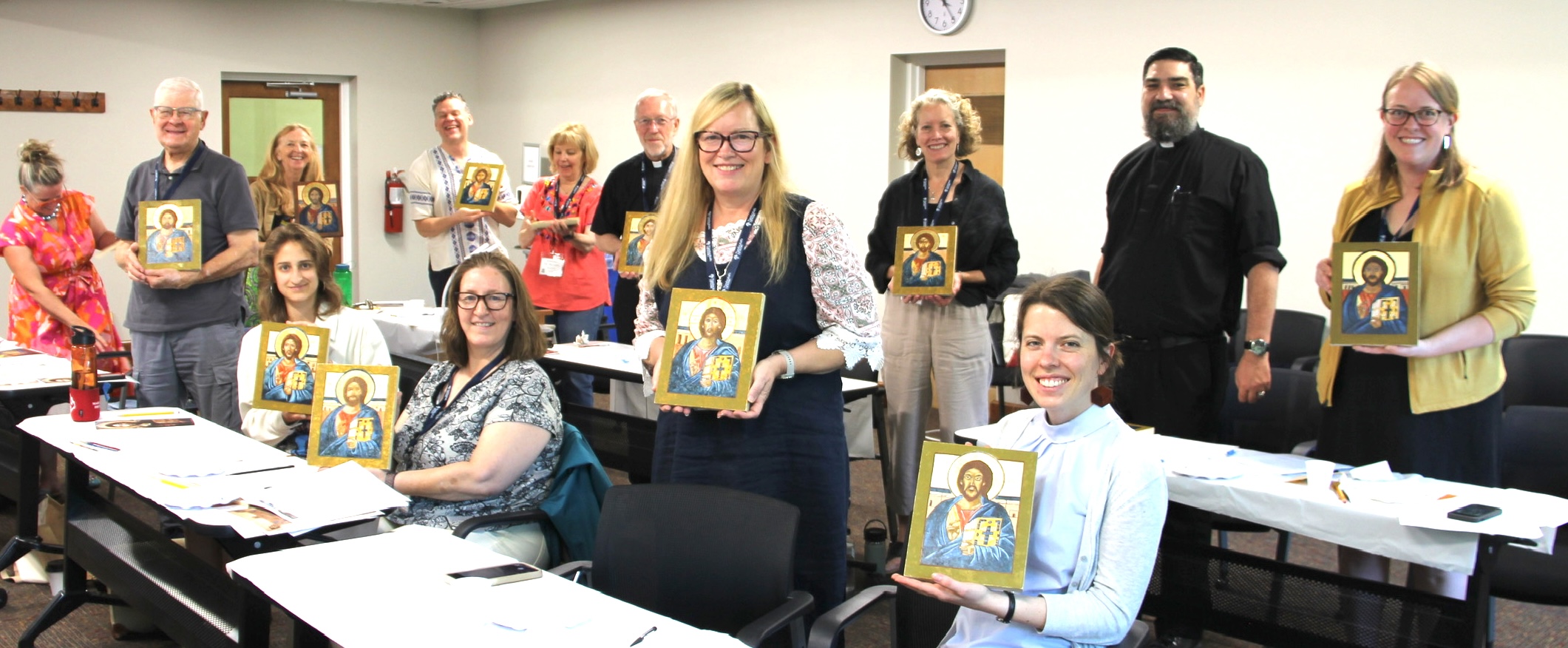
As we move into fall, it’s always a good time to reflect on the summer time that is past and imagine what we hope to accomplish this winter season.  I’ve been doing a lot of Icon writing teaching this past summer, which I have loved.  But it does come at the expense of having creative time to create icons, so I am very happy to have some time ahead of me to create new icons and experiment with different colors and techniques.  I hope to have some work to share with you by the end of the year!

One of the main ways I have of supporting students as they move from taking classes to working on their own is through Patreon.  On this platform, for a nominal monthly fee, I offer a few different levels of membership that can help new iconographers to grow, ask questions, share concerns about their icon painting techniques and receive feedback.  If you are interested, you can go to Patreon and look up Christine Hales Icons, or I will put a link for you at the end of this article.

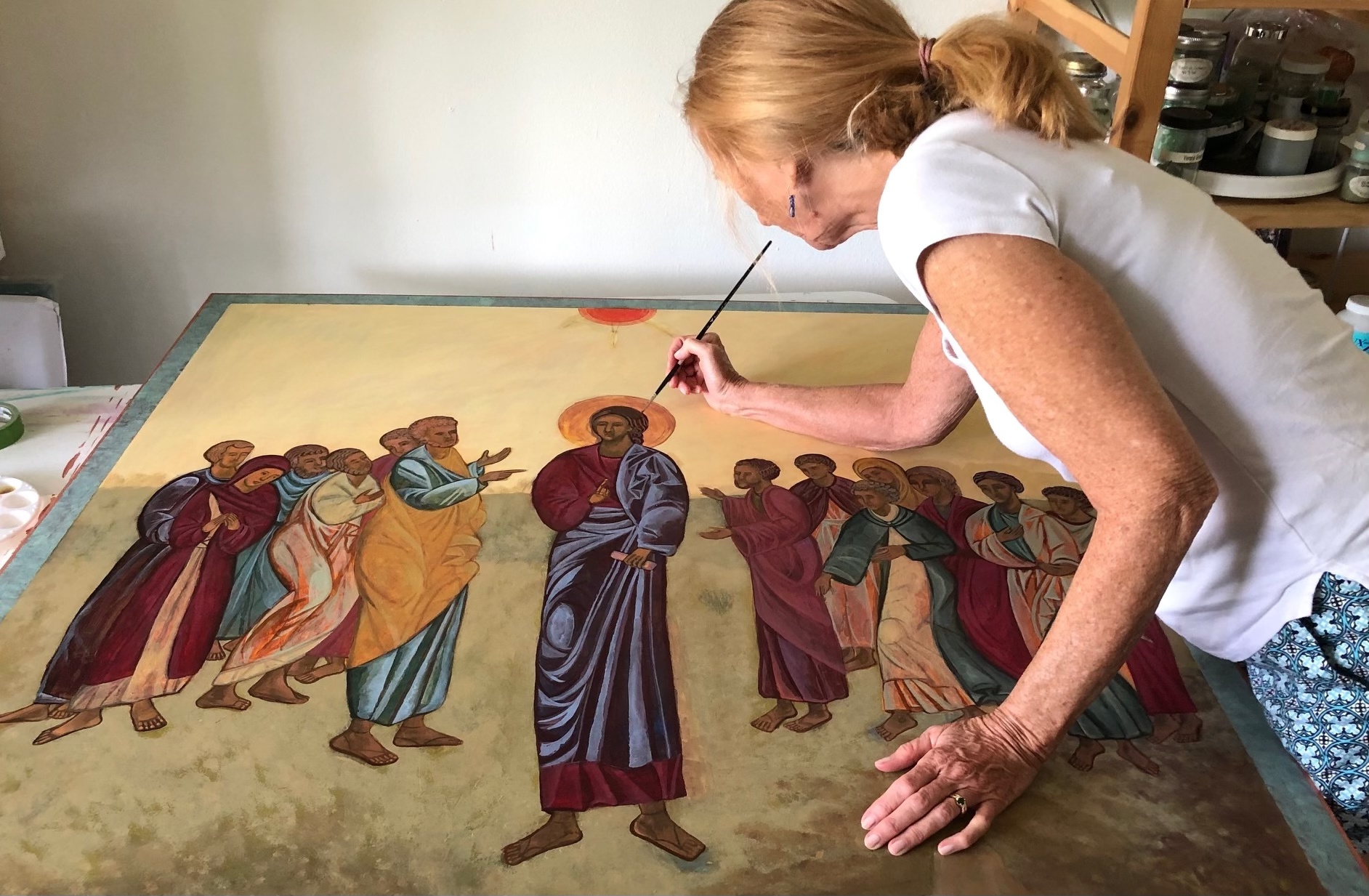
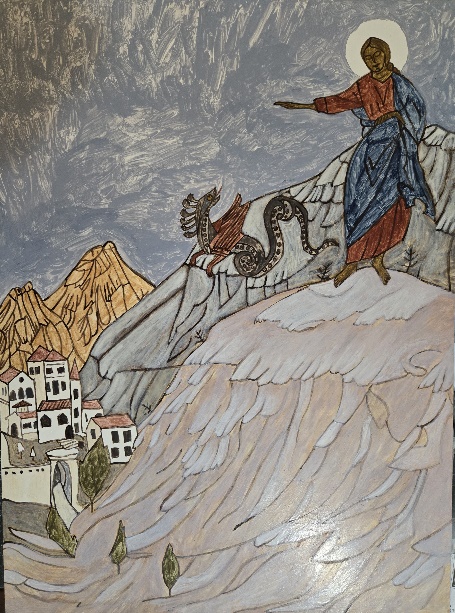
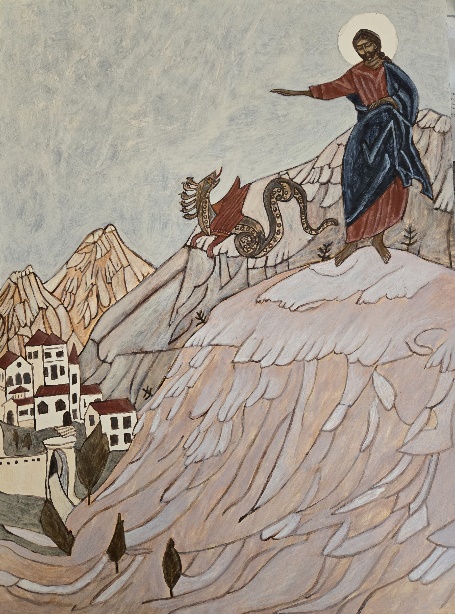
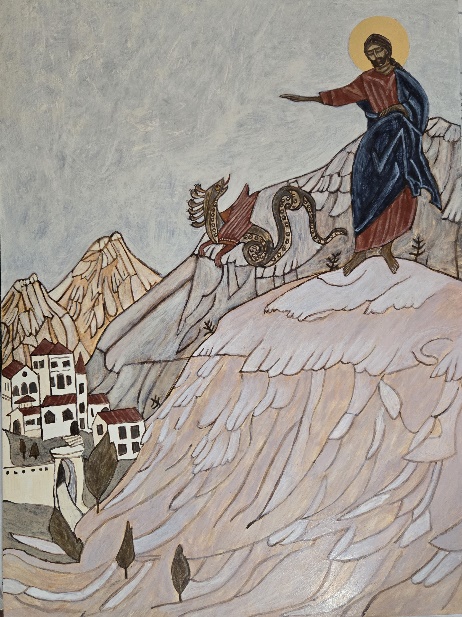
All this to say, that one of my long time students has created an original and insightful icon, “The Temptation of Christ”, which I would like to share with you this month. Sue Valentine is a minister who wanted to have the icon speak to that moment of Christ’s temptation by the devil.  Along the way, through many changes and transitions, the creating of the icon has provided a space for discussing and reflecting upon this moment in Christ’s ministry, and we worked together discerning how best to portray the meaning and message in iconographic form.

Sue has generously shared about her thoughts and process which I include here, along with some sequential images of the changes the icon went through until completion.

The Temptation of Christ Icon written by the Hand of Sue Valentine

“Jesus faced three temptations before He began His public ministry.  The final temptation is the subject of this icon.  The devil led Jesus to a high place, showed Him in an instant all the kingdoms of the world, and offered them to Jesus now, without having to suffer and die, if only Jesus would worship him.

This is a less familiar story to some, and because I wanted people to understand what they were seeing, the haiku at the bottom is an attempt to summarize the scripture for them:

“Kingdoms, if you bow.”

“Away from me, O Satan.”

“Worship God, alone.”

         Matthew 4:8-10

People struggle with the idea of whether Jesus could be tempted.  Sometimes the word is translated “test”.  But whether He was tempted or tested, for this to be a true “test”, it had to have been possible for Jesus to fail it.  What would have happened to us had He failed the test and worshipped Satan?  

Kingdoms are tempting.  Power is tempting.  The ground surrounding the kingdoms depicted in the lower left are painted with gold to depict a counterfeit of heaven’s “streets of gold”, and subtle gold highlights in the windows imply there is something desirable yet hidden within.  I decided not to make the kingdoms look more obviously attractive by applying gold to the outsides of the buildings.  Kingdoms are, after all, seductive.  But thankfully, Jesus wasn’t motivated by kingdoms. He was motivated by rescuing us.

More Progress Photos

The Homily, or Application of the Story

I felt His clarity of purpose as He responded to Satan, “Worship God, alone”, as He pointed His finger at the dragon.  I find it interesting that there is no agitation on Jesus’ face.  His eyes are closed.  He is serene.  But His conviction is clear.

Like most people, I would like to receive a reward from God without suffering, or without having to walk the whole road He has for me.  I felt that as I wrote this icon.  I struggled mightily with color choices, especially with the mountains and the inner background, and changed them many times asking the Holy Spirit to help me.  

It’s tempting to want to design our own roads.  It’s tempting to want an easy life.  But that is not the way of a disciple.  Worship of God includes acknowledging that He determines our path, including the subjects of our icons and the process we go through as we write them.”

Sue Valentine

I’m so grateful that Sue has shared this with all of us, and I hope that this can provide a model not only for discerning how to paint a particular icon, but also for allowing God to speak to us through the process of icon writing and convey that to the viewer.

With this, I put out a request to those of you with icons and their development to share with us all in next month’s newsletter. Just email me with your thoughts and photos: chales@halesart.com

I close this month’s newsletter with a prayer and quote from Psalm 106:

“For your lovingkindness is greater than the heavens, and your faithfulness reaches to the clouds. Exalt yourself above the heavens O God, and your glory over all the earth, so that those who are dear to you may be delivered, save with your right hand and answer me.”

May God grant you all peace and the ability to be peace makers, and bless the work of your hands,

Love and prayers,

Christine Simoneau Hales

My Links:

MY PATREON: CLICK HERE

  1. https://newchristianicions.com   my main website
  2. Https://christinehalesicons.com  Prints of my Icons
  3. https://online.iconwritingclasses.com  my online pre-recorded icon writing classes
  4. https://www.youtube.com/channel/UCK2WoRDiPivGtz2aw61FQXA  My YouTube Channel 
  5. Facebook: https://www.facebook.com/ChristineHalesFineArt     or  https://www.facebook.com/NewChristianIcons/
  6. Instagram:   https://www.instagram.com/christinehalesicons/?hl=en
  7. American Association of Iconographers:  FB Group: https://www.facebook.com/groups/371054416651983
  8. American Association of Iconographers Website: https://americanassociationoficonographers.com

CHRISTINE HALES ICONS ON PATREON

Illuminating the Spirit: A Summer Reading Guide for Iconographers

Books and Inspiration to Enrich Your Icon Writing Practice

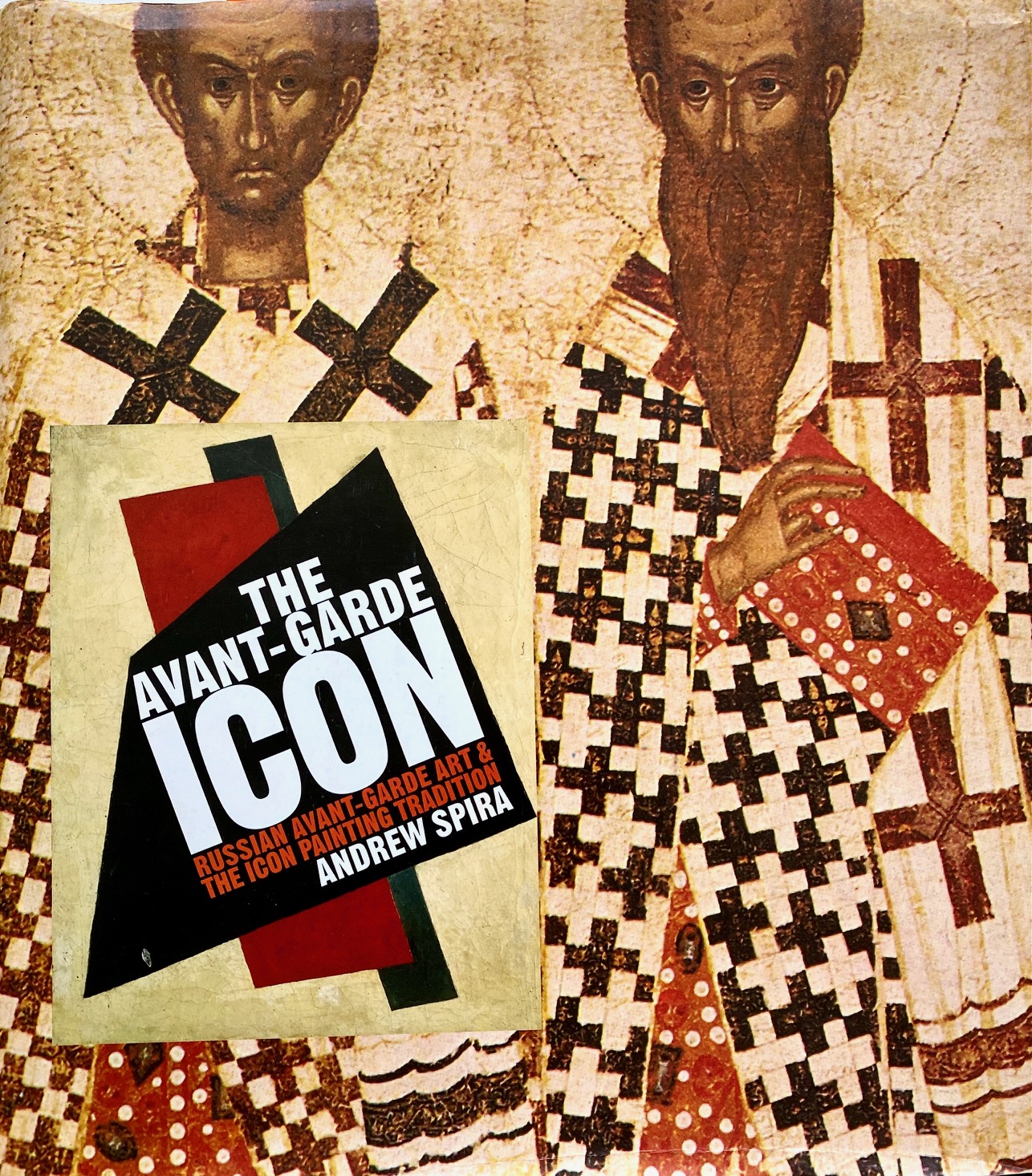
Summer unfurls like a painted scroll—light streaming through open windows, quiet hours stretching across the day, and, for the iconographer, a rare invitation to rest, reflect, and replenish the wellspring of inspiration. Whether you are a seasoned writer of icons, a beginner who has just dipped their brush into the egg tempera, or simply a lover of sacred art, the summer months offer an ideal time to step back from the demands of daily creation and immerse yourself in the wisdom, history, and spirituality that underpin the venerable and holy tradition of iconography.

Why Read in Summer? The Sacred Pause

In the stillness of summer, reading becomes a sacred pause—a time to deepen your understanding of icons not just as objects of devotion, but as living prayers in color and line. Iconographers often speak of their art as an act of contemplation: every stroke is a prayer, every layer a meditation. So too can reading be a contemplative act, enriching the mind and spirit while opening new vistas for creativity.

Foundational Texts: Revisiting the Roots

  • The Meaning of Icons by Leonid Ouspensky and Vladimir Lossky. This classic introduces the theological, spiritual, and artistic foundations of iconography. Through its pages, readers are led to understand the icon as a window to the divine, a theology in pigment, and a bridge between heaven and earth.
  • Icons and Saints of the Eastern Orthodox Church by Alfredo Tradigo. Tradigo’s compact yet richly illustrated guide offers both historical context and practical wisdom. Each page is a pilgrimage through time, introducing saints, feasts, and the symbolic language of orthodox sacred art.
  • Icons as Communion by George Kordis. Kordis brings the ancient tradition into the present, with notes and observations on the drawing stages in icon painting. Amazon Link
  • Orthodox Icon Patterns, Patterns and sketches for Iconographers: This is the revised version of Patterns & Sketches for Iconographers, with added content and additional patterns. A valuable resource for iconographers, this book contains a wide variety of patterns and sketches. Content including; icon patterns of the Nativity, the Theotokos, archangels, male and female saints, as well as halo patterns and 2 beautiful crucifixion crosses. Buildings and fabric/ background designs and icon borders. Each pattern is accompanied by color recommendations which are meant as a general guide allowing for adjustments due to differences in color names between pigments used with egg tempera and acrylic paints.  (There is also a Volume II if you like this one.). Amazon Link

Summer reading need not always be heavy with theory or thick with history. Sometimes, lighter fare—biographies, memoirs, and even novels—can kindle the imagination and nurture the soul of the artist. You might consider adding a few of these to your summer list:

  • Praying with Icons by Jim Forest. Accessible and warmly written, Forest’s reflections on the role of icons in prayer lift the heart and draw the reader into a deeper appreciation of how icons shape and are shaped by the life of faith.
  • The Mystical Language of Icons by Solrunn Ness.  Nes explores in depth a number of famous icons, including those of the Greater Feasts, the Mother of God, and a number of the better-known saints, enriching her discussion with references to Scripture, early Christian writings, and liturgy. She also leads readers through the process and techniques of icon painting, showing each step with photographs, and includes more than fifty of her own original works of art. Amazon Link
  • And if you would enjoy a deep dive into the life of the Blessed Mother Mary, I recommend “The Life of the Blessed Virgin” from the visions of Ann Catherine Emmerich, Incredibly revealing and edifying background of Our Lady, her parents and ancestors, St. Joseph, plus other people who figured into the coming of Christ. also available on Amazon: Amazon Link
  • And also “True Devotion to Mary” by Louis de Montfort: Considered by many to be the greatest single book of Marian spirituality ever written, True Devotion to Mary is St Louis de Montfort’s classic statement on the spiritual way to Jesus Christ though the Blessed Virgin Mary. Amazon Link
  • And last, but not least, is my own book on Icon writing, “Eyes of Fire, How Icons Saved My Life As an Artist”, with an appendix full of directions as well as an explanation of how modern art has been influenced by icons and how some of those principles can be used in present day icon creation.  Amazon Link

As the art historian Roger Lipsky says in his book, “An Art of Our Own, the Spiritual in Twentieth Century Art”, “One of the tasks of the spiritual in art is to prove again and again that vision is possible; that this world, thick and convincing, is neither the only world nor the highest, and that our ordinary awareness is neither the only awareness nor the highest of which we are capable.”

And so my purpose in sharing this list of inspirational summer reading is to encourage you to engage with the ‘pause” of the longer summer days, and ponder on the beauty of nature and be open to glimpses of eternity that a fresh perspective can often foster. And then let this “higher”perspective inform your icon practice in the coming year,. In the words of Aidan Hart, in his book, “Beauty, Spirit, Matter, Icons in the Modern World, “The Icon invites us to see the world as God sees it.” With nature all around of us. may God bless us with His perspective and insights to carry forward into our work.

Until next month,

Christine Simoneau Hales, Iconographer/artist

My Websites:

  1. https://newchristianicions.com   my main website
  2. Https://christinehalesicons.com  Prints of my Icons
  3. https://online.iconwritingclasses.com  my online pre-recorded icon writing classes
  4. https://www.youtube.com/channel/UCK2WoRDiPivGtz2aw61FQXA  My YouTube Channel 
  5. Facebook: https://www.facebook.com/ChristineHalesFineArt     or  https://www.facebook.com/NewChristianIcons/
  6. Instagram:   https://www.instagram.com/christinehalesicons/?hl=en
  7. American Association of Iconographers:  FB Group: https://www.facebook.com/groups/371054416651983
  8. American Association of Iconographers Website: https://americanassociationoficonographers.com

The Blessed Virgin:

A Life Anchored in Grace, Obedience, and the Miraculous

Serbian Annunciation Icon, 14th c.

The Blessed Virgin Mary is believed by many to be the greatest of Christian saints, after her Son, she is exalted by divine grace above angels and men. holds a place of profound honor in Christian faith and tradition. Known as the Mother of God, Queen of Heaven, and spiritual guide to all believers, her life offers us a powerful model of obedience, grace, and unwavering faith in difficult times.  Since today is the Feast of the Visitation- one of my favorite icons- I thought it would be good to share some random thoughts about Mary and her significance to our faith.

I’ve been reading a book about Mary, The Life of the Blessed Virgin Mary: From the Visions of Blessed Anne Catherine Emmerich, as part of my spiritual discipline for May and want to share some of the insights in this month’s blog. Since I have previously written a blog about Mary (see the link below), I didn’t try to replicate the insights in that one here.  Mary is such a central figure in Christian icons, her visual presence stretching from the earliest Christian art in the catacombs to contemporary icons and I hope to add more nuance to our appreciation and ability to relate to her unique role in salvation history and Icons of Mary.

Smolensk Mother of God

Symbols and Icons

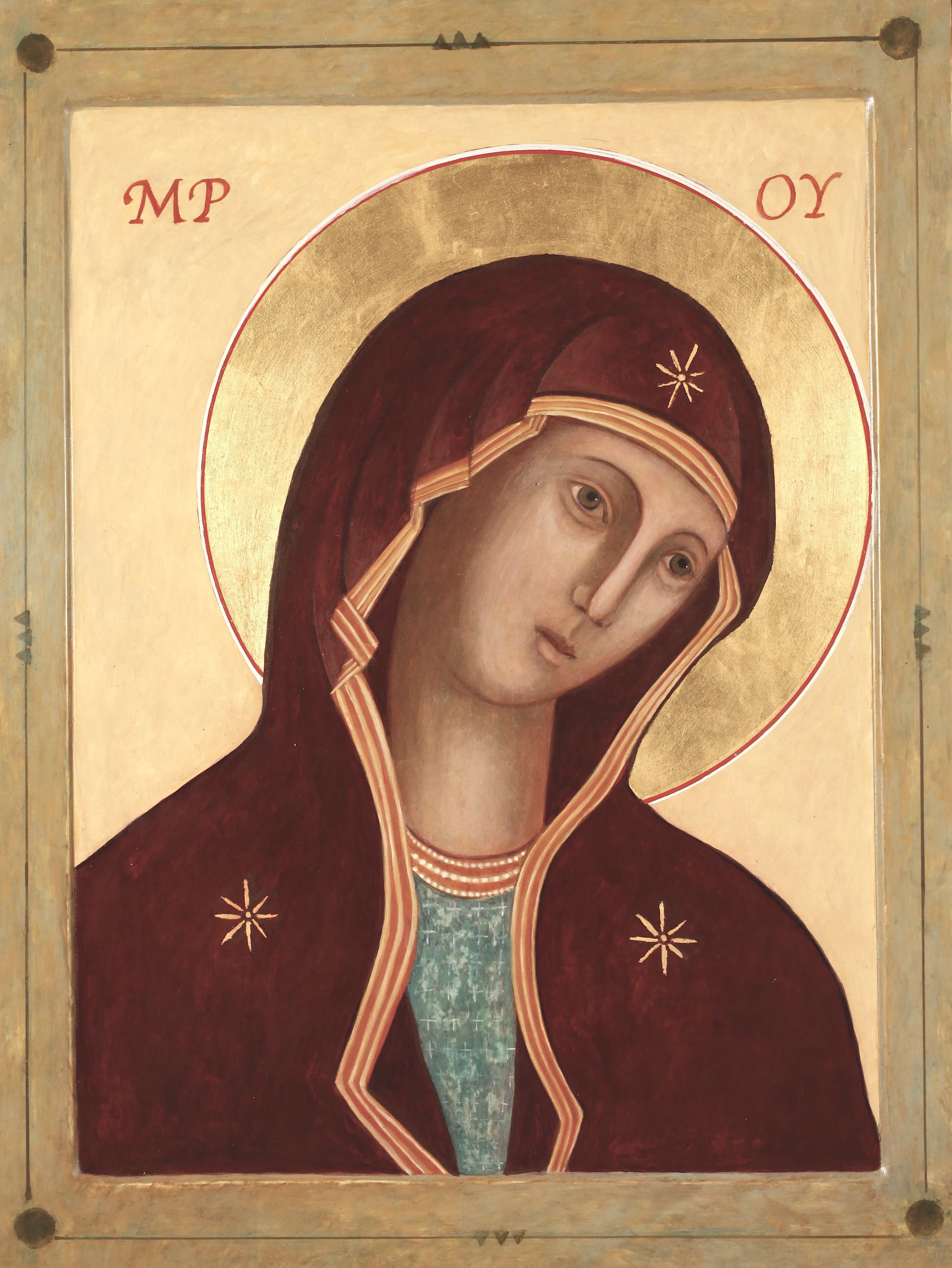
In Orthodox iconography, Mary’s  veil is deep red, the color of divinity, while the clothes under the veil are either green or blue, the colors of humanity. This is the opposite of the usual depiction of Christ’s robes’ colors. In western religious art depictions of Mary, her robes usually are a light blue.  It’s always important to include the names of saints in icons, and icons of Mary usually have the letters “MP OY”, an abbreviation of the Greek: “Mater Theos” – the Mother of God to identify her. The lily represents her purity and virginity while the rose stands for her love and beauty. These symbols invite the viewer to reflect on Mary’s unique holiness and place within God’s plan for man’s salvation.

Mary’s Character Strengths

Mary’s faith and devotion are clearly seen in some of the pivotal moments of Christianity.  In the Annunciation icon, the angel Gabriel announces to Mary that she will bear the Son of God, highlighting her acceptance of God’s will, her humility, and deep courage. The Nativity shows the birth of Christ, the fulfillment of God’s promise, and the Flight into Egypt reveals Mary’s protective care in seeking safety for her son. Probably the most poignant is Mary’s presence at the Crucifixion, where her strength and sorrow are deeply felt.  These icons not only narrate biblical events but also emphasize Mary’s prayerful and devoted character.  Mary’s humility is evident in her acceptance of her Divine mission; her strength is shown in the trials she endures, and her holiness shines forth as the holy and blessed woman chosen to bear the Messiah.  Mary, known  as the Theotokos, or Mother of God, is a title that affirms Jesus’ divine nature. Throughout history, artists have returned to images of Mary and her son to express the deep bond between humanity and divinity.

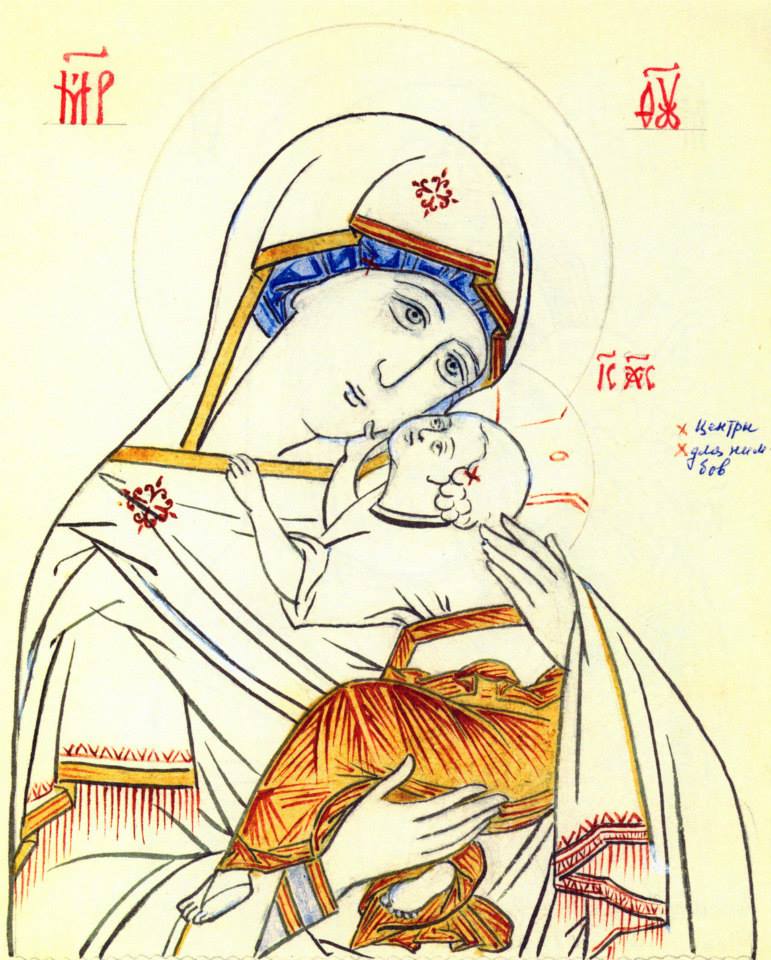
Madonna and Christ Child Drawing by Nun Juliana

Theological Themes

While dogmas such as the Immaculate Conception, the Assumption, Mary’s perpetual virginity, and her role as Mother of God are complex, Mary’s icons offer us a way to engage with these truths visually and these icons help believers grasp profound theological ideas with personal reflection and inspiration.

Icons of Mary continue illuminate her theological roles, demonstrate her virtues and connect her life story to the faith of believers past and present. I have seen many new icons of Mary, such as Mary, Untier of Knots, at least I believe it is a new prototype.  If you have created an icon of Mary that you have created and would like to share it with us, please email it to me along with a description and I will add it to this post. Sharing our work with each other can often lead to fresh insights for ourselves and others.

Miracles and Apparitions

Icon of Our Lady of Guadalupe written by Christine Hales

The Virgin Mary is associated with numerous miracles and apparitions, often attributed to her intercession with God. These include miraculous healings, apparitions like those at Lourdes and Fatima, and the transformation of water into wine at Cana, among others

The Blessed Virgin Mary has been reported to appear to people in various locations, often offering messages of hope, repentance, and love. These apparitions are often followed by reports of miraculous physical and spiritual healings. 

Lourdes, France, is a well-known example, with over 7,000 reported cases of miraculous healings and 70 scientifically validated by the Lourdes Medical Bureau. Mary is also associated with spiritual healing, helping people find solace and guidance in their faith.  Some stories highlight the transformative power of Mary’s intercession on people’s spiritual lives, leading to conversion and deeper faith. 

Sites of Miraculous Apparitions

Lourdes, France: This is perhaps the most famous site associated with Marian healing miracles. After St. Bernadette Soubirous reported visions of the Virgin Mary in 1858, a spring of water with purported healing properties was discovered there. The Catholic Church established the Lourdes Medical Bureau to investigate reported cures, and out of over 7,000 recorded instances of unexplained healing, 70 have been officially recognized as medically inexplicable miracles. The strict criteria for such recognition include that the healing is instantaneous, complete, permanent, and scientifically inexplicable.

Fatima, Portugal: Following apparitions of Mary to three shepherd children in 1917, various miracles were reported, including healings associated with a spring of water discovered after the apparitions. In one case, a woman whose illness Our Lady promised would be cured if she converted experienced healing. The “Miracle of the Sun,” a widely witnessed astronomical phenomenon, is also associated with the apparitions.

Attribution of Miracles: It’s crucial to understand that the Catholic Church attributes miracles to God’s power, often interceded through Mary’s prayers, not as something Mary performs independently.

Theotokos Iverskaya

Scientific and Theological Perspectives: The Catholic Church utilizes a rigorous process involving medical and theological experts to investigate reported miracles, seeking to discern if they are truly inexplicable by natural means and align with Catholic teachings.

Significance: Recognized miracles are viewed as signs of God’s love and mercy that can strengthen faith, not as a requirement for Catholic doctrine or devotion. 

It is important to note that accounts of miraculous healings attributed to Mary are deeply rooted in faith and devotion. While some claims have undergone rigorous investigation and medical validation, the ultimate belief in their miraculous nature rests on faith in God.

I hope that these reflections may encourage you to explore the beauty and spiritual richness found in Marian art and discover anew the profound significance of Mary, Mother of God, and share them with this post or another post in the future!

Blessings and prayers,

Christine Simoneau Hales, Iconographer

Atakhist Mary Icon written by Christine Hales

Below is my previous blog post about Mary.

INTERSTING LINKS FOR ICONOGRAPHERS

Orthodox Arts Journal Article About the Work and life of Father Zinon

The Meaning of Icons, Father Maximos Constas

My Links:LINKS For  Christine Simoneau Hales   2025

American Association of Iconographers Website: https://americanassociationoficonographers.com

https://newchristianicions.com   my main website

Https://christinehalesicons.com  Prints of my Icons

https://online.iconwritingclasses.com  my online pre-recorded icon writing classes

https://www.youtube.com/channel/UCK2WoRDiPivGtz2aw61FQXA  My YouTube Channel

Facebook: https://www.facebook.com/ChristineHalesFineArt     or  https://www.facebook.com/NewChristianIcons/

Instagram:   https://www.instagram.com/christinehalesicons/?hl=en

American Association of Iconographers:  FB Group:  https://www.facebook.com/groups/371054416651983

Icons For Lent

If ever there were icons that personified the phrase, “Icons as theology in Color” it would be Lenten and Easter Icons.

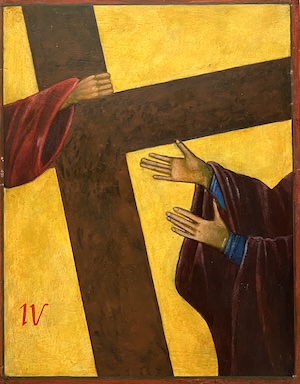
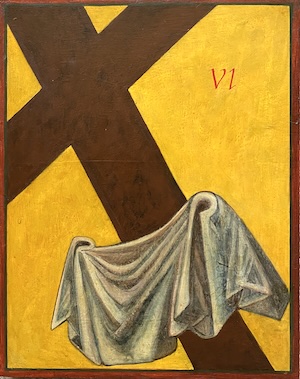
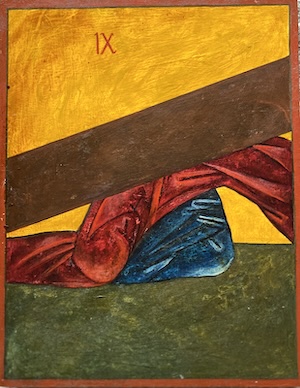
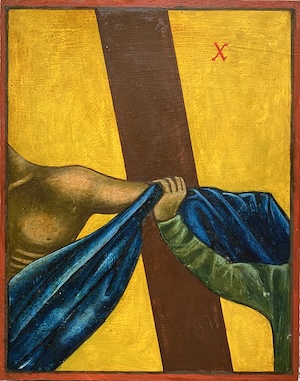
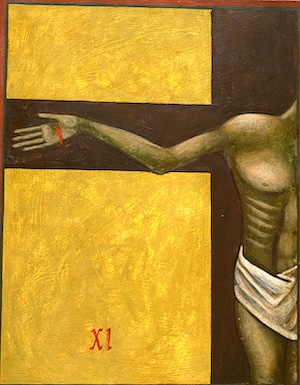
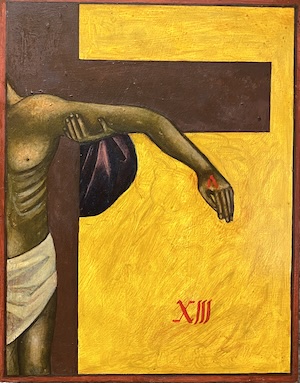
We could start with the Stations of the Cross Icons.

I wrote these icons many years ago in a small village in the Hudson Valley New York.  I had been asked by my priest at the beginning of Lent to write these icons and have them finished by Good Friday!!!  Those of you who have written icons know how impossible a task that seemed! And so it was, that I embarked on that somber and deep journey of walking with Christ as I created each icon with prayer and sometimes tears.  I do want to mention that I was studying icon writing at that time with a nun at the New Skete Monastery in upstate New York, Sister Patricia Reed.  When I would go up to work with her, I often watched her as she created her Stations of the Cross icons for the All Saints Cathedral in Albany New York.  So, I asked for her help and she kindly gave me color photographs of her stations, which I used to create these icons here.  That was a big help, and it is part of the traditions of icon writing, that the designs are handed down from generation to generation, from teacher to pupil, thus ensuring a correct understanding and transmitting the means and methods of icon writing from master to student.

These currently hang in the chapel of the Cathedral of Saint Peter in Saint Petersburg, Florida. The tradition of walking the path of Christ’s Passion dates back to the earliest Christian pilgrims, who visited the sites in Jerusalem believed to be where Jesus walked to his crucifixion. By the 13th and 14th centuries, the Franciscans—who had been granted custody of Christian holy places—popularized this devotion in Europe by constructing “stations” that mirrored the Via Dolorosa. Over time, different numbers of stations were used, until Pope Clement XII fixed the total at fourteen in 1731.

During the late Middle Ages, devotion to the Stations of the Cross was tied to the idea of indulgences, leading some Protestants to reject the practice. Nonetheless, Francis of Assisi and his order played a pivotal role in promoting veneration of Christ’s Passion, establishing shrines and receiving papal recognition as custodians of the holy sites. By the 15th and 16th centuries, the Franciscans built outdoor Stations of the Cross across Europe, often placing them in small chapels or along paths leading to churches.

The titles of each Station, and the Scripture relating to it are as follows:

Station One. The accusing hand condemns Jesus to crucifixion.  Matthew 27:31

Station Two. Jesus Picks up His cross.  The strong diagonals give a powerful sense of unrest, explosive energy.  John 19:6

Station Three. Jesus Falls For the First Time from the weight of the Cross. John 19: 1-3

Station Four. Jesus Meets His Blessed Mother. Luke 2: 34-36 …and a sword shall pierce your heart…

Station Five. The Cross is laid on Simon of Cyrene. Luke 23:26-27. Bent over double, the cross almost crushes Jesus.

Station Six  Saint Veronica wipes the face of Jesus. Isaiah 53:2-3

Station Seven: Jesus Falls for the Second Time This time the diagonal of the cross is pointing forward- this is the halfway point of the Passion

Station Eight: The Women of Jerusalem mourn our Lord Luke 23:28-29

Station Nine:  Jesus Falls for the Third Time.  Isaiah 53:4-6

Station Ten: Jesus is Stripped of His Garments. Luke 23: 34-35

Station Eleven : Jesus is nailed to the Cross. Luke 23:33

Station Twelve:  Jesus Dies On The Cross        Luke 23:44-47. Into your hands I commend my spirit… The rectangle is broken- split apart, showing visually the magnitude  of this event forever changes the world.

Station Thirteen: Jesus is Taken Down from the Cross.   Matthew 27: 54-55.  The position of the hand shows that he is dead.

Station Fourteen:  Jesus is Laid in the Tomb.  Matthew 27:59-62

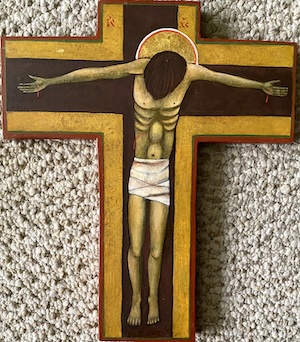
With these, you may notice that no faces are visible, and the flesh color is neither white, black or any particular ethnicity. This is because these icons are meant to be a universal visual language to be “read” and related to by all humans, because God’s plan is to save all people.

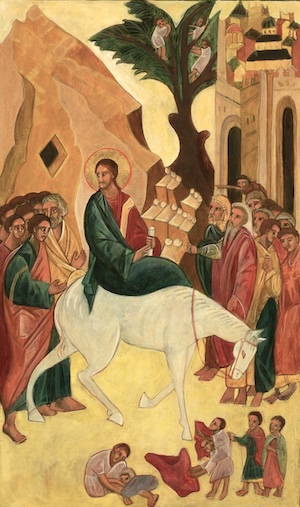
Some other of my icons that relate to Lent and Easter that are also currently at the Cathedral of Saint Peter- until after May 1, are :

Entry into Jerusalem. Written by Christine Hales
Crucifixion. Christine Hales
Lamentation. Christine Hales
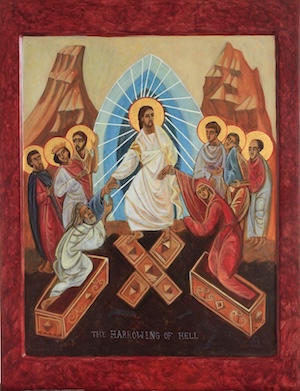
Harrowing of Hell. Christine Hales

Thinking about the Cross and Icons, I came across this writing of St. Theodore the Studite, an Abbot in a monastery in Bithynia in the late 800’s: “THE CROSS AND THE ICON. “Should the cross be venerated more than the icon?” the heretics ask. “Should it be venerated equally, or in a lesser degree?”

“Since there is a natural order in these things, I think you are speaking superfluously. If by ‘the cross’ you mean the original cross, how could it not have priority in veneration? For on it, the impassable Word suffered, and it has such power that by its mere shadow it burns up the demons and drives them far away from those who bear its seal. But if you mean the representation of the cross, your question is not intelligent. The effects receive differing honor just as much as the causes differ, since whatever is received for some use is less honored than that for the sake of which it was received. Thus the cross is received for the sake of Christ, because it was formerly an instrument of condemnation, but was later hallowed, when it was accepted for the use of the divine passion.” St. Theodore the Studite, On The Holy Icons.

Having just given a talk and written an article attempting to explain the period of iconoclasm, I include the above quote as an eloquent explanation not only of the veneration of the Cross, but also of the obvious distinctions between veneration due to the original source and that due a replication of it.

I’ll close this month’s blog with a prayer and a blessing for God to bless each of you especially during this Holy Season of Lent and Easter:

“Gracious Father, whose blessed Son Jesus Christ came down from heaven to be the true bread which gives life to the world; Evermore give us this bread, that He may live in us, and we in him; who lives and reigns with you and the Holy Spirit, One God, now and forever. Amen.” From the Book of Common Prayer.

With love and prayers,

Christine Hales

Some Interesting Links for Iconographers

Sacred Geometry with Donald Duck! A fun explanation for beginners

Interview with Todor Mitrovic, Orthodox Arts Journal

Christian Iconography Shows Us the Pattern of Reality: Jonathan Pageau, St. Tikhon’s Seminary

My Links:

LINKS For  Christine Simoneau Hales   2025

  1. https://newchristianicions.com   my main website
  2. Https://christinehalesicons.com  Prints of my Icons
  3. https://online.iconwritingclasses.com  my online pre-recorded icon writing classes
  4. https://www.youtube.com/channel/UCK2WoRDiPivGtz2aw61FQXA  My YouTube Channel
  5. Facebook: https://www.facebook.com/ChristineHalesFineArt     or  https://www.facebook.com/NewChristianIcons/
  6. Instagram:   https://www.instagram.com/christinehalesicons/?hl=en
  7. American Association of Iconographers:  FB Group:  https://www.facebook.com/groups/371054416651983

American Association of Iconographers Website: https://americanassociationoficonographers.com
Icons As Theology in Color

Saint George, Novgorod, 16th century

In the realm of Christian spirituality, icons stand as more than mere religious art. They are a visual form of divine communication, a sacred language that transcends time and culture. As Leonid Ouspensky notes, icons do not serve religion in a utilitarian sense but are an intrinsic part of it—one of the means through which believers encounter and commune with God. When I think of Icons as theology in color, I inevitably go to the Novgorod Icons which were created in Russia from the 14th to 17th centuries.

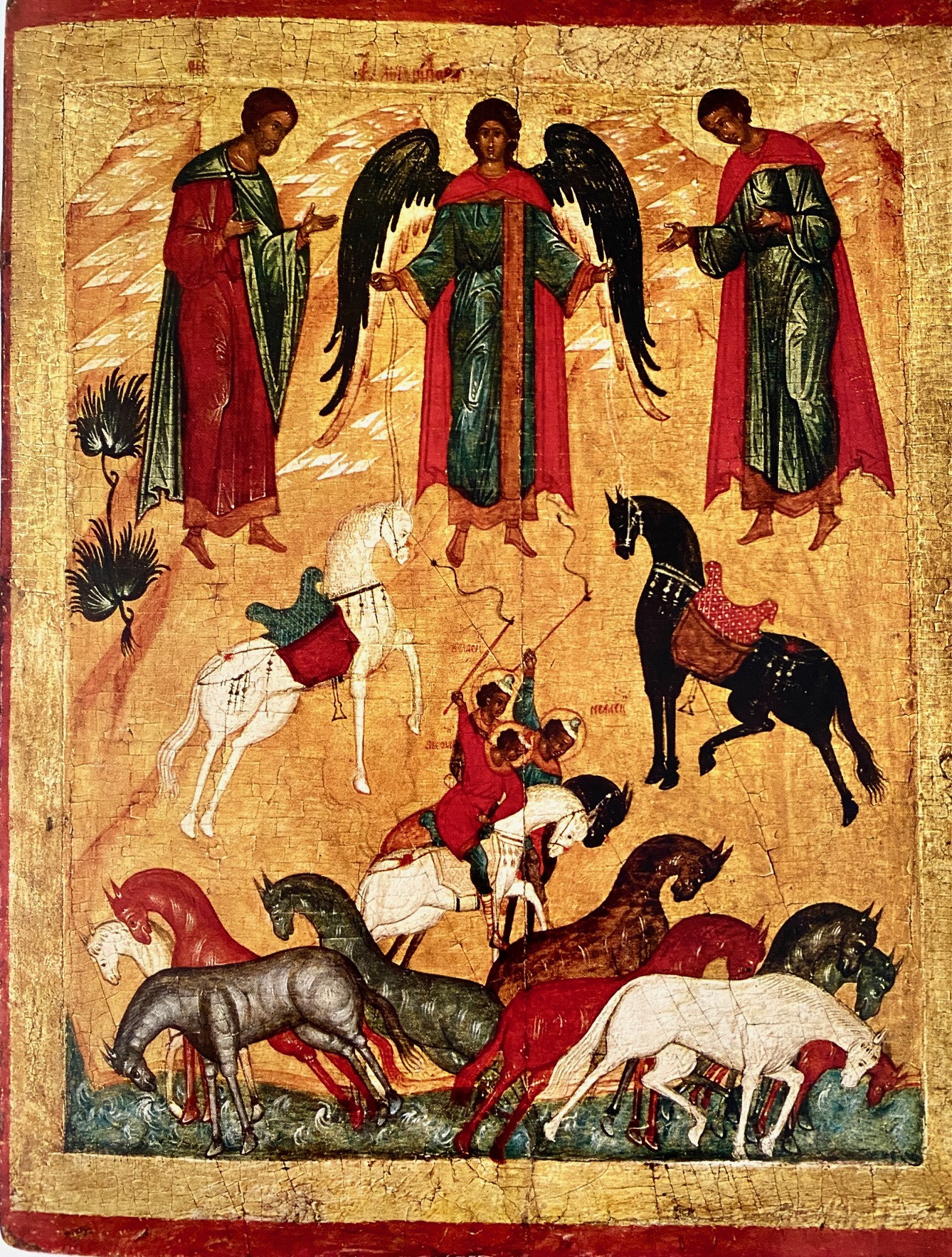
Sts. Florus and Laurus 16th century, Novgorod

Icons as Liturgical Art

An icon, much like sacred scripture, is a vessel of divine revelation. In the same way that words in liturgy guide the faithful toward deeper understanding, icons serve as instruments of knowledge and communion with God. They are not decorations; they are theological expressions rendered in color and form, inviting contemplation and prayer.

Tradition and the Role of the Holy Spirit

Christian tradition is often misunderstood as mere adherence to historical customs, but its essence is far more profound. As stated in theological reflections, true Tradition is the life of the Holy Spirit in the Church. It is through the Spirit that believers gain the faculty to perceive divine Truth—not merely through human reason but through the illumination of faith. Icons, shaped by this Tradition, bear witness to a spiritual reality that is ever-present and active.

The Power of Signs and Symbols

The Good Shepherd, From the Roman Catacombs

The material and spiritual worlds are not separate; rather, they are deeply intertwined. This is evident in the role of symbols, which serve as bridges between the seen and unseen. Early Christian symbols carried layers of meaning—the image of a saint in the catacombs could signify a soul in paradise, an embodiment of prayer, or even the Church itself. Through repeated sacred gestures and imagery, the faithful are invited to enter into the mystery of divine presence.

The Evolution of Christian Symbolism

Christianity has always expressed its mysteries through symbols. Early believers adapted existing signs from the surrounding world—such as the dove, peacock, and anchor—infusing them with new, transcendent meaning. As time passed, explicitly Christian symbols emerged, such as the fish (Ichthys) and the lamb, both representing Christ. These symbols, while rooted in human expression, point to eternal truths beyond words.

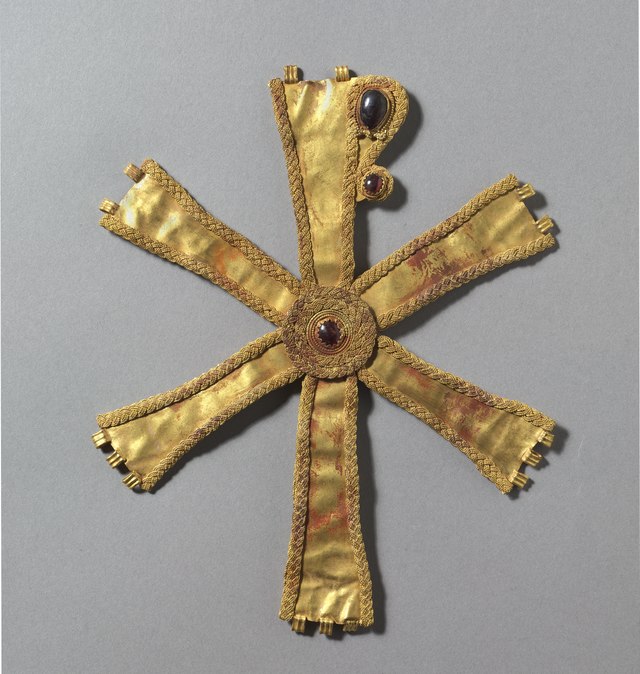
6th Century Byzantine Chi Rho Symbol

Icons: Transcendent Yet Concrete

While maintaining the depth of symbolic language, the icon introduces a unique dimension—the human element. Unlike abstract symbols, the icon makes divine mysteries visually accessible. It brings the infinite into finite form, allowing the ineffable to be expressed in a way that speaks directly to the soul. In the words of Egon Sendler, the icon transforms the abstract into something both transcendent and concrete, revealing the invisible through the visible.

Conclusion

Detail, Face of Christ Icon by the hand of Christine Hales

Icons are not simply religious images; they are theology in color, sacred windows into the divine. Through tradition, symbolism, and the work of the Holy Spirit, they continue to guide believers into a deeper relationship with God. Whether through the gaze of a saint, the presence of Christ, or the gestures of the liturgy, icons remind us that the sacred is always near, calling us into communion with the eternal.

I hope this article has been not only food for thought, but helps to build a solid foundation of theology for contemporary icon development.

“So, my dear brothers and sisters, be strong and steady, always enthusiastic about the Lord’s work, for you know that nothing you do for the Lord is ever useless.” 1 Corinthians 15:58

Until next month. Blessings,

Christine Simoneau Hales, Iconographer

LINKS For  Christine Simoneau Hales   2025

  1. https://newchristianicions.com   my main website
  2. Https://christinehalesicons.com  Prints of my Icons
  3. https://online.iconwritingclasses.com  my online pre-recorded icon writing classes
  4. https://www.youtube.com/channel/UCK2WoRDiPivGtz2aw61FQXA  My YouTube Channel
  5. Facebook: https://www.facebook.com/ChristineHalesFineArt     or  https://www.facebook.com/NewChristianIcons/
  6. Instagram:   https://www.instagram.com/christinehalesicons/?hl=en
  7. American Association of Iconographers:  FB Group:  https://www.facebook.com/groups/371054416651983

American Association of Iconographers Website: https://americanassociationoficonographers.com

Mystics, Healing, and Icons

Dear Fellow Iconographers:

My husband and I were honored to be inducted into the Order of Saint Luke this past summer.  The Order of Saint Luke is an international, inter-denominational organization made up of healing communities of faith, prayer, and service.  And so I have been thinking a lot about icons, miracles, mysticism and healing.  Can an Icon heal?  That’s a trick question!  Only God can heal, but an icon can bring the person into remembrance of Jesus’ healing ministry to inspire and strengthen faith in God’s desire and commitment to heal His people.

Christ in Glory created by the hands of Christine Hales

So how do we define healing?  True healing is Salvation. What is Salvation?  It can mean being saved from danger, disease, and the consequences of sin by the power of the Resurrection of Jesus Christ.  So, by these definitions, we create a field where an Icon can bring the viewer into visual relationship, remembrance and anticipation of the action of God’s grace which He freely gives us.

Not all icons need to be healing icons.  Some are created as vehicles for instruction in Biblical and Gospel truths, some for aiding in prayer and the liturgy, and inspiring God’s people through holiness, sacredness and beauty. My mission is to carry this healing charism in icons forward into our present day.  There’s quite a strong historical foundation of the healing ministry in the Christian church, beginning with our Lord Jesus. Many of the Christian mystics experienced people being healed wherever they went.

St. Fyodor of Rostov painted by the hand of Christine Hales

Mystics and Healing

The mystical spiritual tradition that has existed through the centuries is accepted by both the Eastern and Western Church.  In its simplest form, mysticism is a desire to touch or experience God in some tangible way. And when we touch God, we are transformed.

Both ancient and modern mystics practiced contemplation, insight, intuition, prayer in deep experience of worship in order to increase their direct relationship with God. In medieval times, men and women had a keen sense of God acting in the world around them through people, animals, and forces of nature. Mystics cultivate a devotion to God’s Holy Spirit and have their eyes open to God’s miracles happening around them.

Early Christian Mystics

Irenaeus, (c.130-202), one of the early church fathers, wrote: “It is impossible to number the gifts which the Church throughout the world has received from God in the name of Jesus Christ…Those who are in truth his disciples, receiving grace from Him, do in His name perform (miracles), so as to promote the welfare of other men, according to the gift each one has received from Him.”

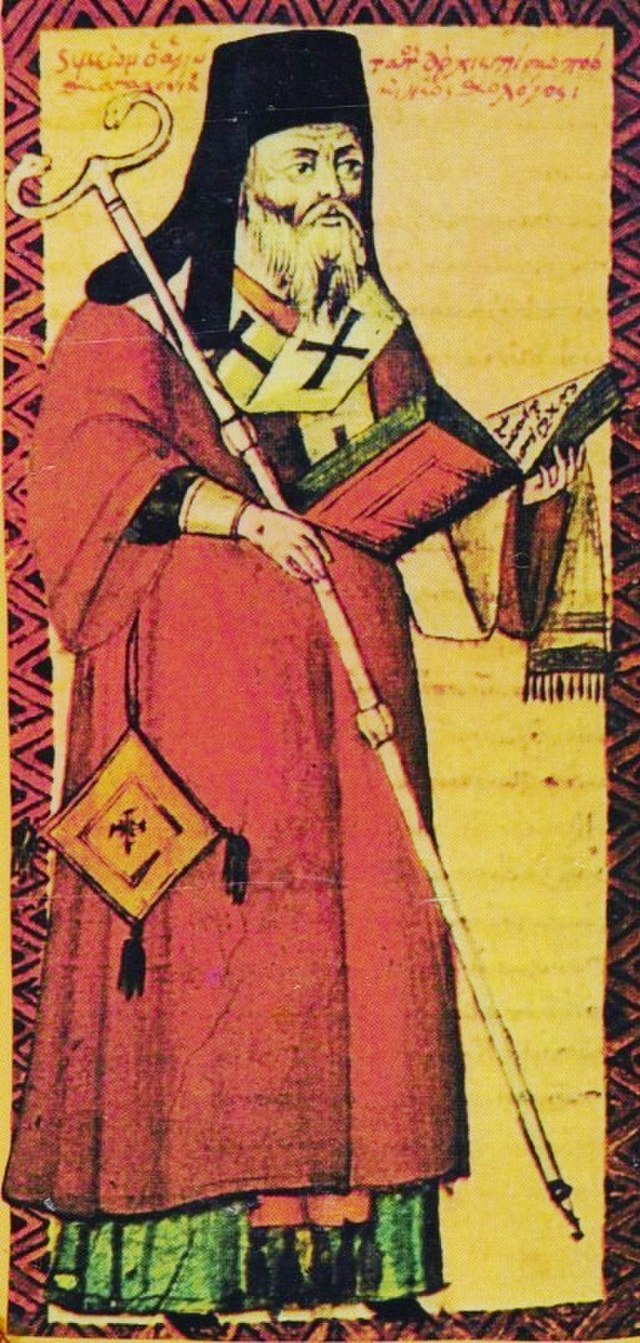
Symeon the New Theologian

Symeon the New Theologian (949-1022), emphasized the importance of having a direct personal experience with God through grace and prayed often to receive the gifts of the Spirit. “Leave the world…do not be concerned about the present life. Knock at the gates of Christ’s Kingdom for the Son will give the Spirit to whoever asks, and he who seeks will certainly find and be enriched with the fullness of all God’s gifts.”  “Pentecost to the Present”, by Jeff Oliver.

Gregory of Palamas

Gregory of Palamas (1296-1359) was a Greek Monk and theologian who, while a Bishop of Thessalonica, would defend the traditions of the Hesychasts mystical prayer practice as opposed to the more rational and intellectual approach to prayer and worship that was in fashion at the time. 

Bernard of Clairvaux

In the West, Bernard of Clairvaux (1090-1153), wrote “We have all, I think, received the Spirit unto salvation, but not to all has he been given unto fervor.  In fact, only very few appear to be filled with this Spirit of fervor, very few show any desire to obtain it.  We are content with our own cramped littleness, and make no endeavor to rejoice in or at least to aspire to the liberty of the spirit which that Spirit confers.” Bernard believed in a personal, immediate  and direct personal faith with Christ as opposed to any rational or ritualistic approach.  When the Pope commissioned Bernard to preach the enrollment for the second crusade, Bernard preached to an open field who, upon hearing him, enlisted en masse. He then passed into Germany where miracles reportedly followed: “The breathing, the touch, the prayer, the benediction of Bernard had wonderful effects.  At his voice, the most chronic conditions disappeared instantly and entire populations related with astonishment the cures to which they had been witnesses. Everywhere along his route the blind regained their sight, the deaf and dumb heard and spoke; paralytics recovered the use of their limbs; those supposed to be possessed by evil spirits were calmed and restored to reason.

Icons, Mystics, and Healing

Why am I relating these early church fathers to creating icons in the twentyfirst century?  Perhaps what we need to be emulating is not the outward form of early icons, but the Spirit that created them, and how we too can create Holy Spirit filled icons that will bless God’s people in our generation and in generations to come.  I hope these monthly articles inspire and help give direction to all who seek to bless God’s people by creating holy icons.  May we hold each other in prayer for protection and the grace of God to bless the work of our hands.

Until next month,

Christine Hales

New Christian Icons Prints of My Icons

If you would like to read a post I wrote on “All Saints Day”, here’s the link: https://wordpress.com/post/americanassociationoficonographers.com/28287

If you would like to read a post I wrote on ” Miracle Working Icons” here is the link: https://americanassociationoficonographers.com/2021/11/30/miracle-working-icons/#:~:text=How%20can%20icons%20be%20miracle,some%20of%20them:%20Russian%20Icons.&text=There%20are%20many%20kinds%20of,a%20long%20period%20of%20time.

Source: Much of the information shared above comes from Jeff Oliver’s excellent book: “Pentecost to the Present”, The Holy Spirit’s Enduring Work in the Church.

Iconography of Mary

The Iconography of Mary

Icon of the Virgin and Child with Saints Theodore and George, St. Catherine’s Monastery, Mt. Sinai, 6th century

That there are many different types and genres of Mary icons that attest to the need of all Christians to be able to relate to different aspects of her humanity and divinity at different times in their lives.     Some images of Mary depict her in a time of peace, apparently apart from the drudgery and strife of our every day world, but others, like the Virgin of Tenderness and Loving Kindness, evoke the loving and kind aspects of God in ordinary life.

As the Christian Church began to split into factions with emphasis on slightly different aspects of the faith, so too, the iconography of Mary, the Mother of Jesus, has different interpretations within the denominations.  To establish a common ground, I first put forth a history of Mary, both Biblical and inclusive of denominational differences when appropriate.

Mary in the Bible

Saint Luke painting the Virgin and Child with an Angel, Russian Icon

The earliest New Testament account of Mary is in the Epistle to the Galatians, which was written before the Gospels. She is referred to as “a woman” and is not named: “But when the fullness of time had come, God sent his Son, born of a woman, born under the law” (Galatians 4:4).[47]

But Mary is specifically mentioned several times in the canonical Gospels and the Acts of the Apostles:

  • The Gospel of Luke mentions Mary the most often, identifying her by name twelve times, all of these in the infancy narrative (Luke 1:27–2:34).[48]
  • The Gospel of Matthew mentions her by name five times, four of these (1:16, 18, 20: 2:12)[49] in the infancy narrative and only once (Matthew 13:55)[50] outside the infancy narrative.
  • The Gospel of Mark names her once (Mark 6:3) and mentions Jesus’ mother without naming her in Mark 3:31–32.
  • The Gospel of John refers to the mother of Jesus twice, but never mentions her name. She is first seen at the wedding of Cana (John 2:1–12. The second reference has her standing near the cross of Jesus together with Mary Magdalene, and Mary of Clopas (or Cleophas), and her own sister (possibly the same as Mary of Clopas; the wording is semantically ambiguous), along with the disciple whom Jesus loved.” (John 19:25–26). John 2:1–12  is the only text in the canonical gospels in which the adult Jesus has a conversation with Mary. He does not address her as “Mother” but as “Woman”. In the Acts of the Apostles, Mary and the brothers of Jesus are mentioned in the company of the eleven apostles who are gathered in the upper room after the Ascension of Jesus (Acts 1:14).
Crucifixion Icon, From ancient Russian Icon, Christine Hales. 2020

However, most of the details we know about the early life of Mary, and the birth of Jesus taking place in a cave come from the Proevangelism of James, a non-canonical treatise of the second century.

How did canonical imagery for the Mother of God develop?

Vladimir Mother of God Icon , 12th century, currently in Tretyakov Gallery, Moscow

In the early formation of Mary’s iconography, there were three main aspects of her mystery, that is, her pure virginity, her fertile motherhood, and her divine sanctity that contribute to attributes and characteristics visible in depictions in her icons.

As early as the fifth century churches were being dedicated to Mary in Constantinople and the term “Theotokos”,  God Bearer, Mother of God, was introduced at the Council of Ephesus in 431. After the sixth century, more and more icons of various aspects of the Blessed Mother were seen, and attributes of military power were seen as people brought icons of Mary to the battlefield for protection against invaders.  Prayers relating to Mary are found as early as the Gospel of Luke.

Hodegitria Icon, 16th century, Russia

Although there are exceptions, most of the Russian Orthodox icons of Mary can be found within four categories:   Hodegitria, “the Guide, or she who shows the way”; the Eleusa, “Virgin of Tenderness, or loving kindness”; the Oranta, Our Lady of the Sign; and the Akathist “Hymn”. 

Within these categories there exists many iterations named primarily after the town or village that housed them, such as in the Tenderness category there is the Kazan icon, Smolensk icon, Georgian icon,Jerusalem icon, and many more.

Hodegitria Icons of Mary have been brought to battlefields and paraded around cities for protection for centuries. They have been used to invoke military victory but she is never seen with a staff or any other sign of authority.  Her icon of the Hodegetria, Mother of God, was deemed the most powerful weapon against enemies in ancient Russia.

In the Eleusa category of loving kindness, popularized in the twelfth century, The Vladimir Mother of God icon was brought from Constantinople to Vladimir by Prince Andrey Bogolubsky and was believed to protect the city from marauding Mongols.

Our Lady of the Sign Icon by Christine Hales 2000

The Orans Virgin, or sometimes called “Platytera, More Spacious Than the Heavens”, depicts Mary with her arms outstretched in the prayer position, with a young Christ in the center of her figure, and this one is based on the prophesy in Isaiah 7:14.,” Therefore the Lord himself shall give you a sign; Behold, a virgin shall conceive, and bear a son, and shall call his name Immanuel.”

The Akathist (meaning hymn) virgin, is frequently seen depicting Mary as an individual alone, without the Christ child. And without Joseph, her husband.

Our Lady of Korsun created by Christine Hales

Most Greek churches dedicated to the Virgin Mary are called Panagia; the Most Holy; the standard western Christian designation of “St. Mary” is rarely used in the Orthodox East, as Mary is considered the holiest of all created beings and therefore of higher status than the saints.

In paintings, Mary is traditionally portrayed in blue, while in the Eastern Orthodox Marian iconography, her robe is a deep red. There are many more genres of Mary paintings in the Catholic church, variations that address particular prayer needs of the people. Examples of this are Our Lady, Untier of Knots, Our Lady of Perpetual Help, Our Lady of Gudalupe, Our lady of Sorrows, and many more.

Our Lady of Perpetual Help, Christine Hales

The Christian need to believe, venerate, and pray with images of Mary is a powerful one.  In a primarily patristic society, being able to relate spiritually to the most Godly of women is both a solace and source of strength.  Surely the Blessed Mother demonstrated profound strength at the Crucifixion, obedience and humility at the Annunciation, and devotion to Jesus throughout His life and death, and we can draw near to her through her icons and be comforted and strengthened by her virtues and piety.

I will close with one of the oldest known prayers venerating Mary:

            Beneath Thy Protection 

We fly to thy protection,

O Holy Mother of God;

Do not despise our petitions in our necessities,

but deliver us always from all dangers,

O Glorious and Blessed Virgin.

Christine Simoneau Hales

Our Lady of Guadalupe, detail, by Christine Hales

https://newchristianicons.com
Prints: https://christinehalesicons.com
Sources:

“The Dawn of Christian Art in Panel Paintings and Icons”, Thomas Mathews and Norman Muller.

Wikipedia

Wiki Common

Interesting Links For Iconographers:

From Dorothy Alexander, Iconographer in CA :

This is a link to summer internships for those studying a BA, MA, or Phd: