
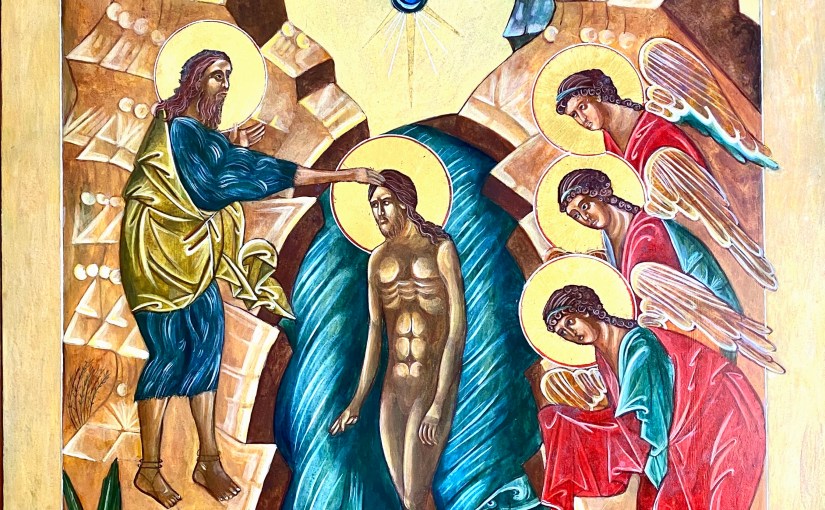
“He must increase, but I must decrease.” — John 3:30
There are few saints whose lives speak so directly to the vocation of the iconographer as Saint John the Baptist.
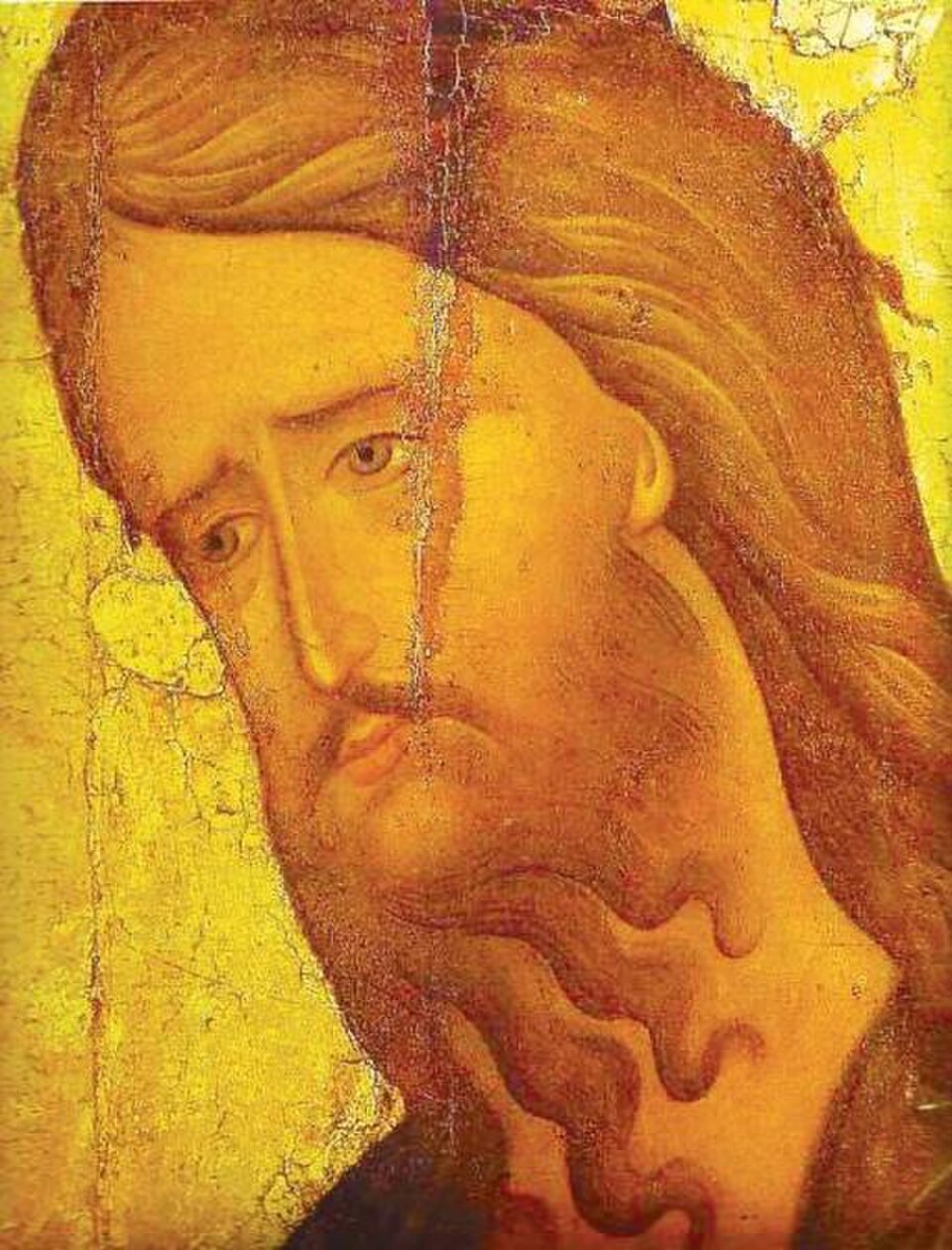
The icon does not exist to arouse emotion for emotion’s sake, nor does it seek to impress the viewer with the personality or skill of the artist. Rather, the icon seeks to direct the whole person—emotion, intellect, imagination, and spirit—toward transfiguration. It points beyond itself to the reality it represents.
In this, Saint John the Baptist becomes a profound model for those of us who write icons. His entire life was oriented toward one purpose: to prepare the way for Christ and to point others toward Him.
John never sought to become the light. He came as a witness to the Light.
And perhaps this is one of the deepest lessons of iconography: the iconographer is not the destination. We are called to become witnesses.
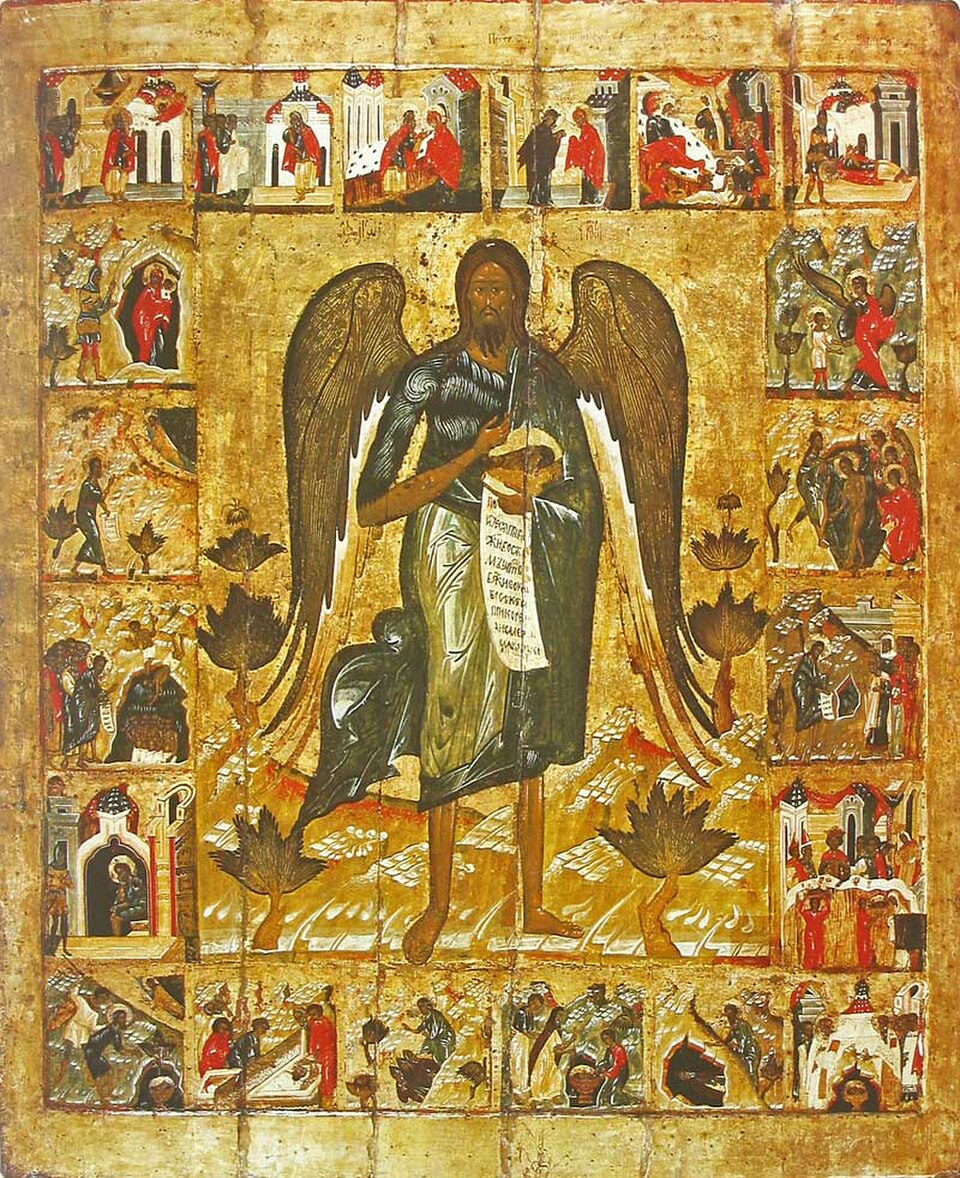
The Forerunner
The story of John begins before his birth.
In the first chapter of Luke’s Gospel, the Archangel Gabriel appears to Zechariah, a priest serving in the Temple, and announces that his wife Elizabeth, who had been unable to have children, would bear a son. He would be named John, and his vocation would be extraordinary:
“He will turn many of the children of Israel to the Lord their God.”
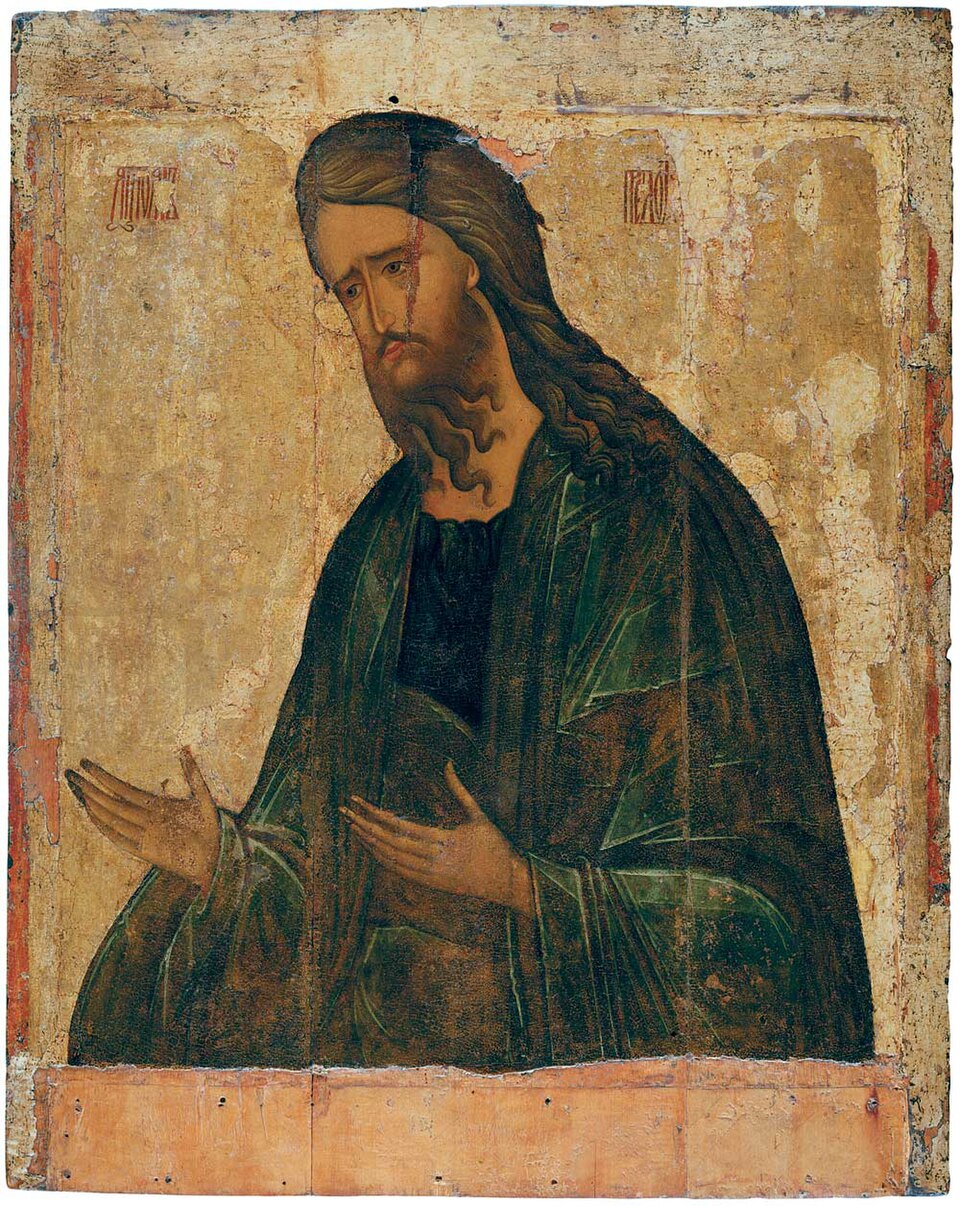
Six months later, Gabriel appears to the Virgin Mary and announces that she will conceive Jesus, the Son of the Most High. When Mary wonders how this can be, Gabriel tells her that Elizabeth has also conceived a son, concluding with the words:
“For nothing will be impossible with God.”
Mary immediately goes to Elizabeth.
When Elizabeth hears Mary’s greeting, the child in her womb leaps for joy. Elizabeth is filled with the Holy Spirit and recognizes the mystery unfolding before her: Mary is carrying “the mother of my Lord.”
Even before his birth, John is already fulfilling his vocation. He recognizes Christ before he can see Him. This is a beautiful image for the iconographer.
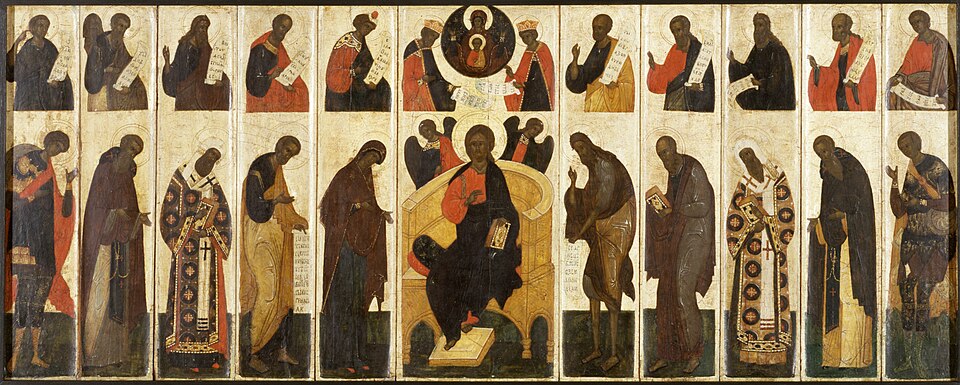
The iconographer, too, is called to learn to recognize Christ—not merely as an historical figure, but as the living Lord. Before we can point others toward Him through our work, we must continually learn to perceive Him ourselves. John’s first response to Christ is not words, but movement: he leaps toward Him.
Hidden in the Wilderness
After John’s birth, Luke tells us: “The child grew and became strong in spirit, and he was in the wilderness until the day of his manifestation to Israel.”
John’s life contains a long period of hiddenness.
Like Christ Himself, John spends years away from public attention before beginning his ministry. When he finally appears, he emerges from the wilderness as a prophetic voice calling the people to repentance:
“Prepare the way of the Lord, make his paths straight.”
This wilderness is not merely a geographical place. It is also a spiritual image.
For the iconographer, there must be a wilderness—a place of silence, prayer, study, discipline, and hidden preparation. Much of the work of iconography happens where no one sees it: preparing the board, transferring the drawing, grinding pigments, laying bole, gilding, mixing egg tempera, correcting mistakes, and patiently building layer upon layer.
There is nothing glamorous about this hidden work. And yet, it is precisely here that the iconographer is formed.
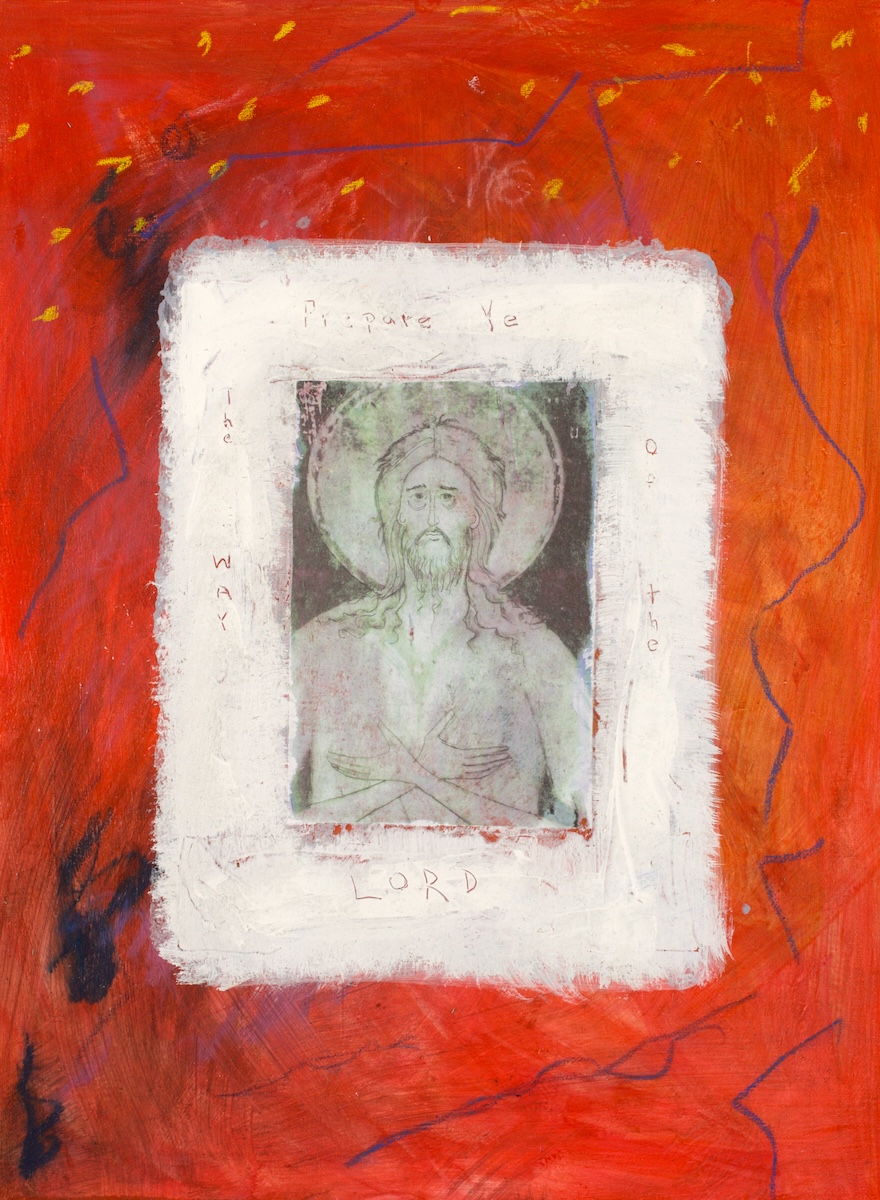
John’s authority did not come from self-promotion. It came from a life formed in the wilderness and surrendered to God.
“I Am Not the Christ”
When John begins preaching, people wonder whether he might be the Messiah. John is emphatic: he is not. When asked who he is, he identifies himself simply as: “The voice of one crying out in the wilderness: ‘Make straight the way of the Lord.’” This is essential to understanding John—and essential to understanding the icon.
John does not call attention to himself. His entire identity is relational. He exists in order to announce the One who is coming. The iconographer faces the same temptation that every artist faces: the desire to be seen, admired, recognized, and praised. But sacred art asks something different of us.
The iconographer must continually ask: Does this work point beyond me? Does my drawing serve the subject?
Does my color serve the theology?
Does my technique serve prayer?
Does the icon invite the viewer toward Christ, or does it draw attention to the artist?
John gives us the answer:
“He must increase, but I must decrease.” These words could almost serve as a rule of life for the iconographer.
The Voice and the Word
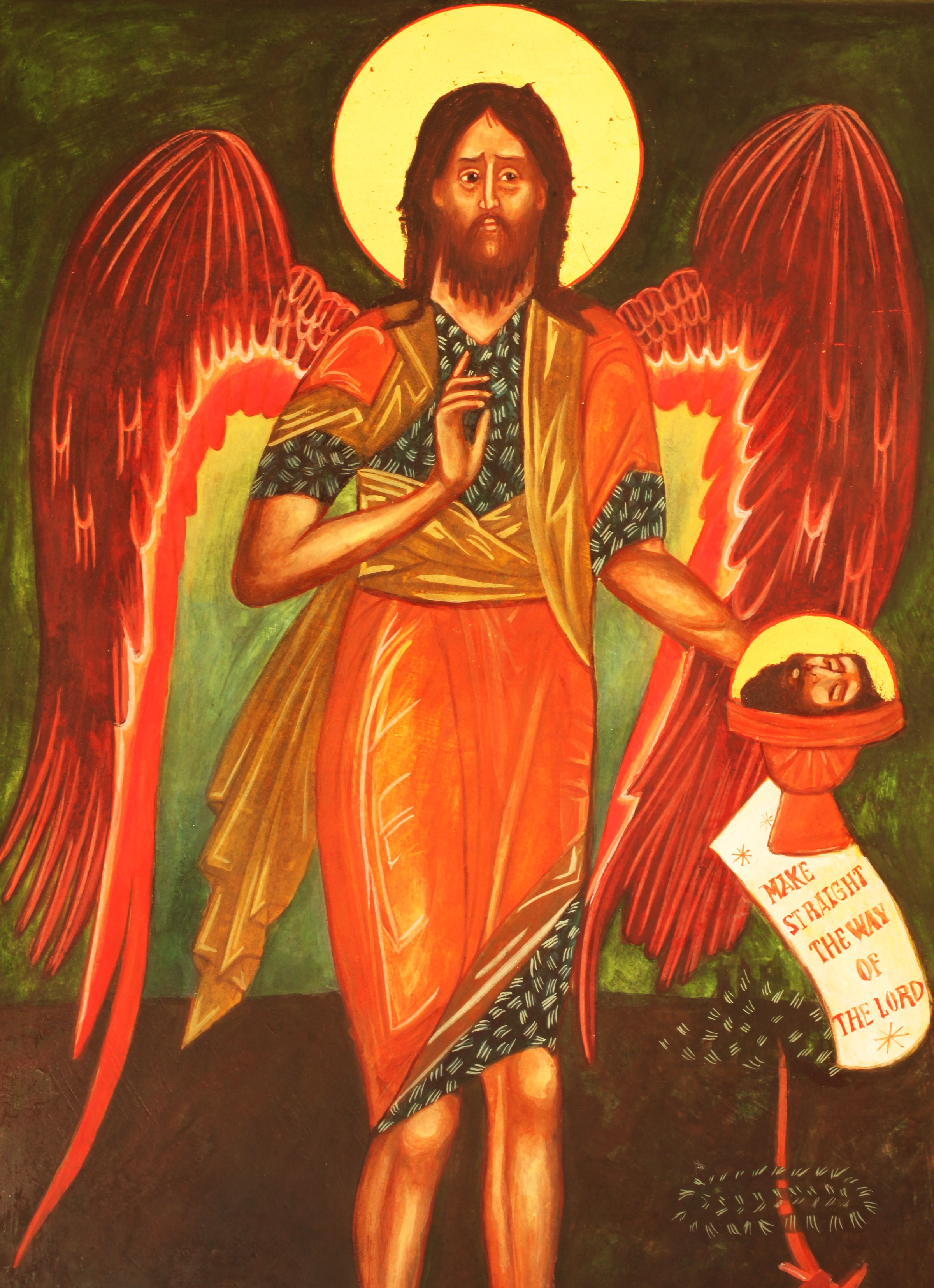
John’s Gospel gives us another profound distinction: John “was not the light,” but came “to bear witness to the light.” The distinction is crucial. John is a voice. Christ is the Word. John is the witness. Christ is the Light. John prepares the way. Christ is the Way.
The icon participates in this same mystery. It is not God Himself, nor is it merely an illustration about God. It is a visible witness to an invisible reality.
Because of the Incarnation, the invisible God has made Himself visible in Christ. The iconographer works within this mystery of visibility: pigment, line, gold, wood, and form become instruments through which the Church proclaims the reality of the Incarnate Word.
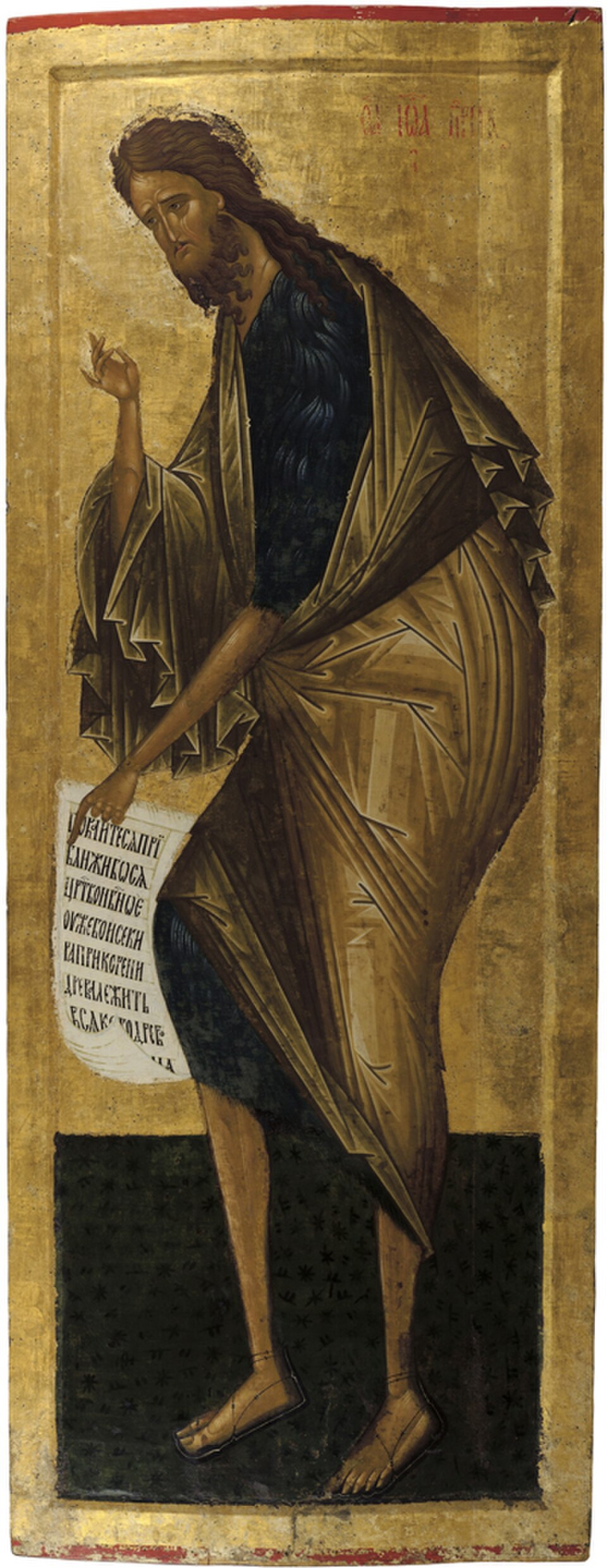
The icon, like John, says: Look beyond me.
The purpose of the icon is not to make us feel something merely for the sake of feeling, but to draw us beyond ourselves—to open our hearts and minds to the presence of God.
Are we pointing toward Christ?
The iconographer has a sacred responsibility. We study the Scriptures. We study the saints. We study the prototypes and the tradition. We learn the materials and techniques. We practice drawing and color. We labor to understand the theological language of the icon.
But all of this is ultimately ordered toward one thing:
Communion with God.
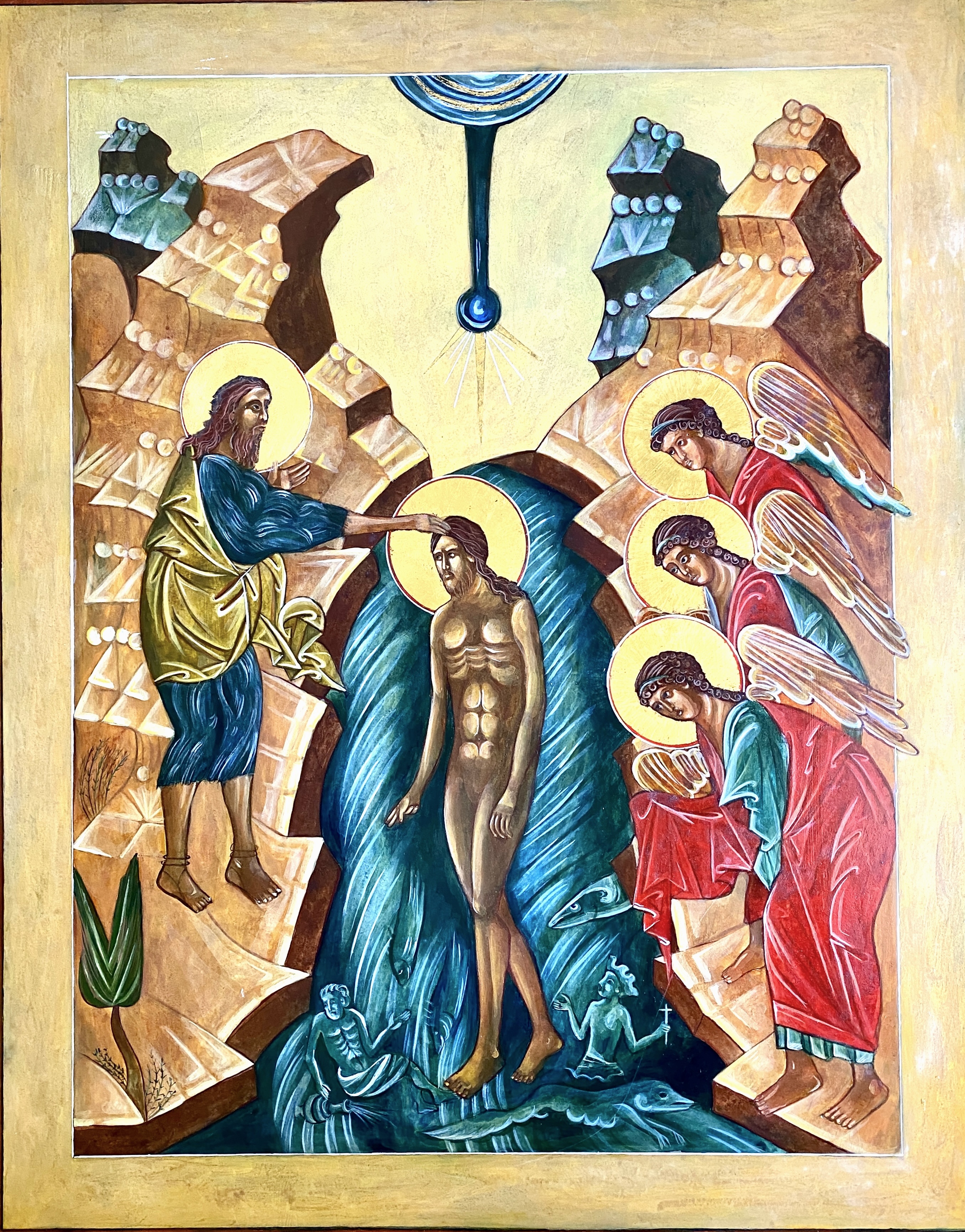
The icon can become a means through which the viewer encounters the mystery of divine love. Through the saints, we are shown what transfigured humanity can look like. Through Christ, we are shown the source of that transformation.
May every icon we write become, in some small way, a voice crying in the wilderness—a witness to the Light, preparing the way for another to encounter Christ.
May God continue to bless the work of your hands! Please keep my work and ministry in your prayers, as you are in mine!
God bless each and every one of you!
Christine Simoneau Hales, Iconographer
My Internet links:
LINKS For Christine Simoneau Hales 2026
- https://newchristianicions.com My main website with lots of info and my teaching schedule for 2027
- Https://christinehalesicons.com Prints of my Icons
- https://online.iconwritingclasses.com My online, self paced, pre-recorded icon writing classes that I recorded during covid. A great resource to keep you connected to icon writing!
- https://www.youtube.com/channel/UCK2WoRDiPivGtz2aw61FQXA My YouTube Channel. Please subscribe or hit the like button if you like the videos!
- Facebook: https://www.facebook.com/ChristineHalesFineArt or https://www.facebook.com/NewChristianIcons/
- Instagram: https://www.instagram.com/christinehalesicons/?hl=en
- American Association of Iconographers: FB Group: https://www.facebook.com/groups/371054416651983
- American Association of Iconographers Website: https://americanassociationoficonographers.com


.jpg)