Mystics, Healing, and Icons

Dear Fellow Iconographers:

My husband and I were honored to be inducted into the Order of Saint Luke this past summer.  The Order of Saint Luke is an international, inter-denominational organization made up of healing communities of faith, prayer, and service.  And so I have been thinking a lot about icons, miracles, mysticism and healing.  Can an Icon heal?  That’s a trick question!  Only God can heal, but an icon can bring the person into remembrance of Jesus’ healing ministry to inspire and strengthen faith in God’s desire and commitment to heal His people.

Christ in Glory created by the hands of Christine Hales

So how do we define healing?  True healing is Salvation. What is Salvation?  It can mean being saved from danger, disease, and the consequences of sin by the power of the Resurrection of Jesus Christ.  So, by these definitions, we create a field where an Icon can bring the viewer into visual relationship, remembrance and anticipation of the action of God’s grace which He freely gives us.

Not all icons need to be healing icons.  Some are created as vehicles for instruction in Biblical and Gospel truths, some for aiding in prayer and the liturgy, and inspiring God’s people through holiness, sacredness and beauty. My mission is to carry this healing charism in icons forward into our present day.  There’s quite a strong historical foundation of the healing ministry in the Christian church, beginning with our Lord Jesus. Many of the Christian mystics experienced people being healed wherever they went.

St. Fyodor of Rostov painted by the hand of Christine Hales

Mystics and Healing

The mystical spiritual tradition that has existed through the centuries is accepted by both the Eastern and Western Church.  In its simplest form, mysticism is a desire to touch or experience God in some tangible way. And when we touch God, we are transformed.

Both ancient and modern mystics practiced contemplation, insight, intuition, prayer in deep experience of worship in order to increase their direct relationship with God. In medieval times, men and women had a keen sense of God acting in the world around them through people, animals, and forces of nature. Mystics cultivate a devotion to God’s Holy Spirit and have their eyes open to God’s miracles happening around them.

Early Christian Mystics

Irenaeus, (c.130-202), one of the early church fathers, wrote: “It is impossible to number the gifts which the Church throughout the world has received from God in the name of Jesus Christ…Those who are in truth his disciples, receiving grace from Him, do in His name perform (miracles), so as to promote the welfare of other men, according to the gift each one has received from Him.”
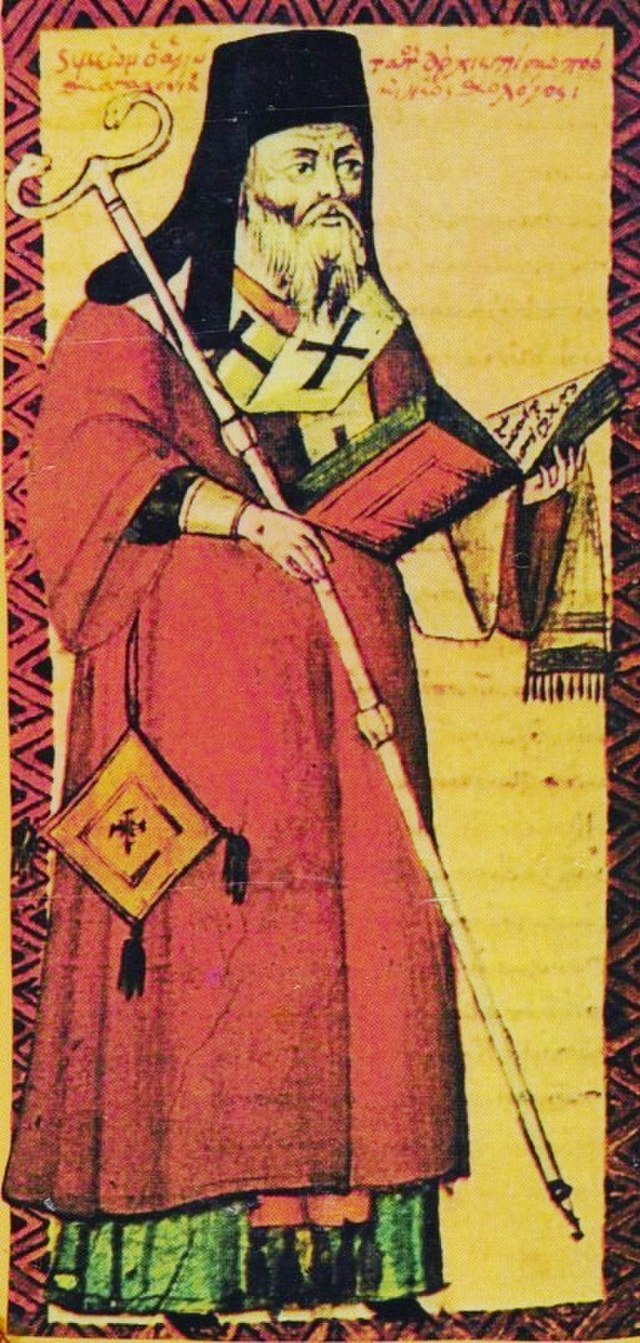
Symeon the New Theologian

Symeon the New Theologian (949-1022), emphasized the importance of having a direct personal experience with God through grace and prayed often to receive the gifts of the Spirit. “Leave the world…do not be concerned about the present life. Knock at the gates of Christ’s Kingdom for the Son will give the Spirit to whoever asks, and he who seeks will certainly find and be enriched with the fullness of all God’s gifts.”  “Pentecost to the Present”, by Jeff Oliver.
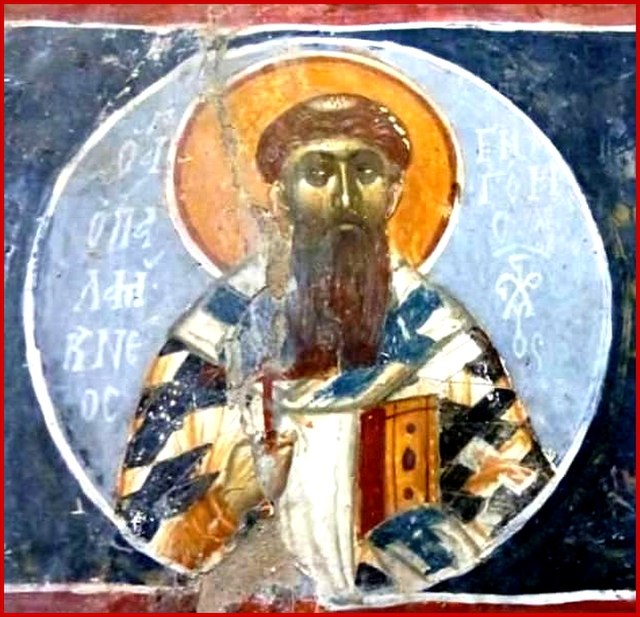
Gregory of Palamas

Gregory of Palamas (1296-1359) was a Greek Monk and theologian who, while a Bishop of Thessalonica, would defend the traditions of the Hesychasts mystical prayer practice as opposed to the more rational and intellectual approach to prayer and worship that was in fashion at the time. 
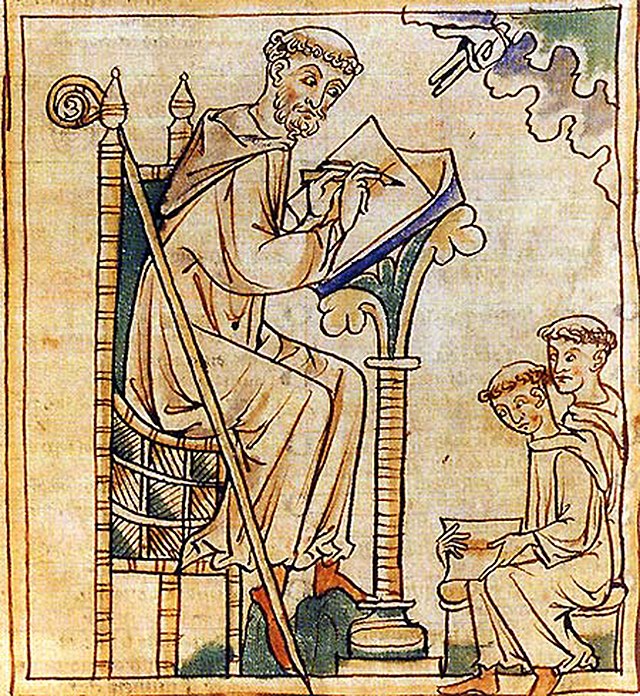
Bernard of Clairvaux

In the West, Bernard of Clairvaux (1090-1153), wrote “We have all, I think, received the Spirit unto salvation, but not to all has he been given unto fervor.  In fact, only very few appear to be filled with this Spirit of fervor, very few show any desire to obtain it.  We are content with our own cramped littleness, and make no endeavor to rejoice in or at least to aspire to the liberty of the spirit which that Spirit confers.” Bernard believed in a personal, immediate  and direct personal faith with Christ as opposed to any rational or ritualistic approach.  When the Pope commissioned Bernard to preach the enrollment for the second crusade, Bernard preached to an open field who, upon hearing him, enlisted en masse. He then passed into Germany where miracles reportedly followed: “The breathing, the touch, the prayer, the benediction of Bernard had wonderful effects.  At his voice, the most chronic conditions disappeared instantly and entire populations related with astonishment the cures to which they had been witnesses. Everywhere along his route the blind regained their sight, the deaf and dumb heard and spoke; paralytics recovered the use of their limbs; those supposed to be possessed by evil spirits were calmed and restored to reason.

Icons, Mystics, and Healing

Why am I relating these early church fathers to creating icons in the twentyfirst century?  Perhaps what we need to be emulating is not the outward form of early icons, but the Spirit that created them, and how we too can create Holy Spirit filled icons that will bless God’s people in our generation and in generations to come.  I hope these monthly articles inspire and help give direction to all who seek to bless God’s people by creating holy icons.  May we hold each other in prayer for protection and the grace of God to bless the work of our hands.

Until next month,

Christine Hales

New Christian Icons Prints of My Icons

If you would like to read a post I wrote on “All Saints Day”, here’s the link: https://wordpress.com/post/americanassociationoficonographers.com/28287

If you would like to read a post I wrote on ” Miracle Working Icons” here is the link: https://americanassociationoficonographers.com/2021/11/30/miracle-working-icons/#:~:text=How%20can%20icons%20be%20miracle,some%20of%20them:%20Russian%20Icons.&text=There%20are%20many%20kinds%20of,a%20long%20period%20of%20time.

Source: Much of the information shared above comes from Jeff Oliver’s excellent book: “Pentecost to the Present”, The Holy Spirit’s Enduring Work in the Church.
Building Blocks

Christian Art After the Iconoclasm. 1000-1400 AD

Bayeux Tapestry

As Iconographers, I think we all realize that the Byzantine culture was influential in creating a nuanced visual language that was able to convey important principles of religious art .  Can we today consider and contemplate how the Byzantine style developed in order to create a visual language that can bring Christian concepts to our culture today?

An important influence of the development of Christian art in the 11th century was the schism, or split, in Christianity in 1054, which resulted in the Eastern Orthodox Church and the Western Roman Catholic Church. In the next centuries, each division of the church would develop its own culture and approach to worship, prayer, liturgy, and art.

Let’s Take a Look First at the Eastern Church’s Artistic Development

Santa Maria Church, Barcelona, Spain

The expansion of  monasticism was the main force behind the unprecedented artistic and cultural activity of the eleventh and twelfth century. In 963 AD, Athanasius of Trebizond founded the first monastery on Mt Athos, Greece.  Legend has it that early hermits were visited by The Virgin Mary who gave the place her blessing and there are many icons that convey this story and remembrance of the visitation .

In 988, Russia adopted Christianity and in 1017, Prince Yaroslavl the Wise erected the  Cathedral of St. Sophia in Kiev.  A Byzantium team of artists and iconographers, Russian and Greek, decorated the cathedral with beautiful frescoes and mosaics.

Biblia de Burgos, 12th Century

1054 began the schism between the Holy thrones of Rome and Constantinople, resulting in a wide divergence stylistically in religious art making that reflected differences in theological values between the two cultures.  The Eastern Church continued to develop the Icon, keeping the flat pictorial space of Egyptian art, and the simplicity of rendering human forms borrowed from the Greco Roman tradition of the early centuries.

In 1130, A miracle working icon, Our Lady of Vladimir Icon of the Virgin Mary was brought to Kiev. This icon has lasted through the centuries and today is a symbol of Love and Tenderness.

Our Lady of Vladimir

The Paleologue dynasty in Constantinople, 1259-1453, was the last resurgence of Byzantium. The attempt to have a rebirth of Byzantium after the sack of Constantinople in 1204, resulted in the rebuilding and decoration  of many churches, including Chora Church, which is considered one of the highest artistic achievements of that era.

Gregory Palamas, (1296-1359), was the Archbishop of Thessalonica and an eminent theologian  who supported Hesychasm, a mystical movement in Eastern monasticism that promoted fervent prayer, silence, and contemplation.  

Transfiguration by Theophanes

In 1378,  according to legend, Theophanes the Greek came to Russian from Byzantium, and painted the Church of the Transfiguration in Novgorod and many others, along with his student, Andrei Rubylev. This period of icon painting is considered by many to be one of the greatest achievements of Russian Iconography.

St. Sergius of Radonezh was a great Russian saint who promoted Russia’s spiritual revival.  He dedicated his monastery to the Holy Trinity and preached unity in love.  He taught brotherly love and divine service and commissioned the Holy Trinity Icon to be painted by Andrei Rubylev. Rubylev and St. Sergius were in large part responsible for Russia becoming one of the great centers of spiritual enlightenment in this time. St. Sergius passed away in 1392.

Holy Trinity. by Andrei Rubylev

In the West….

Religious art in 10th century Europe, also known as Romanesque art, was symbolic, vibrant, and hierarchical. It was characterized by its emphasis on the suffering of Christ and other sacred figures, and depicted saints and religious leaders as larger and more important than ordinary people. Artists also used animals, flowers, and fruits to convey religious messages and ideas. Some common symbols used in medieval Christian iconography include: Fire, light rays, or wind to symbolize the Almighty God; Lamb or fish: symbolize Jesus Christ and his love; Crucifix: Depicts Chrstianityand eternal life; a dove symbolizes the holy spirit from heaven or an individual’s soul, and lilies in a vase or water to portray the purity and spirituality of the Virgin Mary.

One of the most spectacular achievements of medieval artists in the west was their desire to emphasize heavenly light in their creation of places of worship.  Beginning with the 12thcentury, heavy, dark, Romanesque architecture began to be replaced by Gothic vaulted ceilings and flying buttresses that made it possible to bring more light into the churches than ever before. Light for a Christian had great significance because of the extensive Biblical associations of the nature of God with Light.

Cimabue, Trinita Madona

 After the sack of Constantinople in 1204 by Christian armies of the Fourth Crusade, precious objects from Byzantium made their way to Italian soil and profoundly influenced the art produced there, especially the brightly colored gold-ground panels that proliferated during the thirteenth century. 

Romanesque Art, one of the first innovative and coherent styles to spread across the western Church,was greatly influenced by the Byzantine art that preceded it.

 European countries of Italy, France, England, and Spain responded to this stylistic innovation that was more in keeping with shifts in cultural values.

The main purpose for the development of Romanesque art was to visually record biblical events and to chronicle important figures, like influential leaders and saints in a more naturalistic way, hoping to bring the viewer into closer contact with God.  

The Bridge Between Eastern and Western Art

At the end of the thirteenth century and beginning of the fourteenth, three great masters appeared who changed the course of painting from the more abstract Byzantine style, to a more naturalistic one:

Cimabue, Italian, (1240-1302) painted religious paintings that were heavily influenced by Byzantine models, yet he was also innovative and eventually broke away from the Byzantine style of religious painting.  For this reason, his work is considered to be a transitional bridge between icon painting and the more naturalistic developments of Renaissance painting.

Ognissanti Madonna, Giotto

Giotto di Bondone, (d. 1337), is believed to have been a pupil of Cimabue, and to have decorated churches in Padua, Florence, Naples, Assisi, and Rome. His volumetric figures are in sharp contrast to the linear, stylized  shapes of Eastern religious art of the same period. In his work, the flatness of icons began to disappear in favor of a new kind of pictorial space that achieved the illusion of depth visible in the natural world. With Giotto, considered by many to be the father of modern European painting, the flat world of thirteenth-century Italian painting was transformed into an analogue for the real world. Giotto’s figures are volumetric rather than linear, and the emotions they express are varied and convincingly human rather than stylized. He created a new kind of pictorial space with an almost measurable depth that prefigured the pictorial developments of the Renaissance.. 

Duccio, (1278 – 1318), is considered to be the father of Sienese painting. Together with Giotto he is considered to be one of the founders of Western art.  His religious paintings introduce lyricism and a refined color sense into the Byzantine tradition he inherited. He became interested in portraying human emotions and a more naturalistic space- both in conflict with Byzantine art principles.  His purpose was to bridge the gap between the spiritual world of the figures he painted and the real world of the viewer by an illusionistic rendering of objects and space- the first of its kind in Western painting, and not a style embraced by Eastern iconography until later centuries.

Maesta. Duccio

Overlapping  of Panel Painting with Icon Painting

Through the fourteenth century in Europe, the primary support for portable paintings was the wooden panel. The lengthy and complex preparation of the panels  had already been the way of icon creation as well, hailing from the very early centuries of Christianity. Many of these methods of icon board preparation are continued in the practice of icon painting today. They are described in detail in Cennini’s Il Libro dell Arte.

So, to summarize, the schism of the Church into an Eastern and a Western Church resulted in different approaches to creating a visual language that would best convey concepts of God, Bible stories and saints. Western culture evolved from a more theocratic culture to a humanistic one with, in my opinion, disastrous results. I think I am more drawn to the Byzantine visual language because of its ability to convey purity, focus on God, and demonstrate a clear difference between God’s world and the naturalistic world we live in.  And I think this ability to transcend the moment and connect with the Divine reality is crucial to humans coping with an increasingly stressful world today. The question is: Can we create a visual spiritual language that will engage modern men and women in a meaningful way?  How will we do that?  What do we learn from the simplified account of religious art development above?  I believe that each of us will be inspired by God to create a variety of approaches, for it is of great importance to the modern world that we do.

Until next month, when we take a look at…The Renaissance and Icon Painting!! Glory to God whose power, working within us, can do infinitely more that we can ask or imagine.

Christine Simoneau Hales

My website: New Christian Icons. My Youtube Channel

Coptic Icons

Coptic Icon of Saint Michael
Archangel Ethiopian Icon, C. 19th century

Recently, while teaching an online icon writing class on the Transfiguration, the subject of Coptic icons came up.  Each of us spoke admiringly about them, the color schemes, the simplified human forms, and the fact that they are  attractive in many ways.  But we soon realized that we didn’t really know much about them.

Coptic Ethiopian Icon

So, here I have done some research that I now share, and I hope that many of you  with more knowledge will share your thoughts and Coptic icon images on the FB (American Association of Iconographers FB group) page too.

Here’s what I have been able to discover:

In 30 BC, Egypt became a Roman province, and over the next several years, immigrants from Greece, Rome, Libya, and Syria brought their artmaking traditions  and methods to apply to the  art of this time.  According to tradition, the Coptic Church was founded by Mark the Evangelist c. AD 42, and regards itself as the subject of many prophecies in the Old Testament. The first Christians in Egypt were common people who spoke Egyptian Coptic.

Saint Anthony and Saint Paul the Hermit c. 14th C.

The Church of Alexandria was the first Church of Africa, and through it, the  influence of Coptic art spread to Sudan and Ethiopia. Some forms of the Coptic cross are known as the Ethiopian cross and many Churches in Ethiopia show the influence of the Coptic art.

Coptic Cross
Coptic Cross

The early Coptic icons of the third century Egypt, used encaustic paints and later, influenced by the Byzantine tradition, egg tempera.  The Coptic style favors enlarged eyes, frontal figures, and an under emphasis of natural proportions in figures. The figures of saints display eyes and ears larger in proportion to the rest of the face and a smaller mouth, as well as enlarged heads, signifying a spiritual relationship with God and devotion to prayer. Martyrs’ faces were peaceful. Early Coptic icons were influenced in style of painting by the Egyptian Fayum memorial portraits used on Egyptian sarcophagi.

Fayum Portrait

These Fayum portraits from the Egyptian Sarcophagi were painted in the Greco-Roman style of painting and became the basis of both Coptic and Byzantine iconography. Beautiful portraits, they have simple, graceful forms, and employ a simple color palette, using what we now refer to as the Greek Palette- mixtures of red ochre, yellow ochre, white and black.  Although the same painting style was used on each portrait, artists were able to achieve a great variety of resemblances to the persons being depicted.

John the Baptist Coptic Icon
John the Baptist Before the 19th C.

In 641 Muslims conquered Egypt and made it a province of an Islamic Empire whose capital was Damascus.  The religious history that followed is a complicated mixture of acceptance for Christians, and then later in the 9th century, relations were more difficult. The period from the 7th to 13 century was more promising, allowing for Christian Coptic art to flourish once again and to further develop the Coptic style. There was even something of a Renaissance of Coptic art in the 13th century with many Coptic illustrated manuscripts, much like the illuminated manuscripts of the western Church.

After this, for political reasons, there was a sharp decline in productivity of Coptic Art,until the 18th century  when the West re-discovered the attraction of Coptic Icons.

In today’s world there are several Coptic Iconographers who are continuing to develop the Coptic style of iconography.  I am including here links to Dr. Stephan Rene’s website from which a much more nuanced understanding of Coptic iconography can be found, and two other links that may be useful for a more complete perspective.

Saint Paul Icon, 17th C.

Again, please do add to the FB group page more information or images if you would like to share your experience with Coptic Icons with others. I hope this has inspired you to think about different styles of icon writing and how culture and politics can affect the art of their time.

Dr. Stephan Rene’s Website: https://copticiconography.com/2019/12/24/reflections-on-discipleship-and-coptic-iconography/

UK Coptic Icons. https://www.ukcopticicons.com

Until next month,

My very best wishes for God to continue to bless the work of your hands, 

Always,

Christine Simoneau Hales

https://newchristianicons.com

Macedonian Renaissance

Understanding the development and history of icons is so important to creating icons today, don’t you think?  Icons met the spiritual needs of entire cultures and civilizations through the centuries. In order to reach the people of a specific time period, slightly different approaches and applications in sacred art making were required and evolved.

The Crucifixion Icon 11th Century

For this newsletter, I will focus on what is sometimes called the Macedonian Renaissance.  Sometimes called the second flowering of Byzantium due to its occurrence in the same culture but after the disruption of the period of iconoclasm.  It’s interesting to note the effects of conflicts politics and religion and then trade routes on the development of the art of the icon.

Historical Context for the Macedonian Renaissance

The First flowering of the Byzantine empire began in 330 A.D., when the first Christian ruler of the Roman empire, Constantine the Great, transferred the ancient imperial capital from Rome to the city of Byzantium. Located on the easternmost territory of the European continent, it was a major intersection of east-west trade. Constantine’s conversion to Christianity and legalization of the practice of the Christian faith changed the dynamics of religious art and cultural in a profound way.

Iconoclasm

However, beginning in 726 AD and ending in 843 AD began the period of iconoclastic dispute over the use of images in the Byzantine Culture.  This roughly one hundred year period of iconoclasm, 726-843 AD, is what separated the First flowering of the Byzantine empire from the second.  The Macedonian Renaissance began when the Empress Theodosia reinstituted the practice of icon veneration in 843 AD. Although her husband was in favor of iconoclasm, upon his death, Theodora once again legalized iconography and the use of images in worship.  Now it was not only legal to create icons for veneration, but greatly encouraged. 

It should be noted that during the period of iconoclasm there were several outspoken theologians, especially John of Damascus, whose defense of icons eloquently cleared up the confusion on nuances of veneration vs. worship of holy images.  However, one of the effects of this destructive period was the weakening of the wealth, prestige, and power of monasteries. A central feature of Byzantine culture was Orthodox Christianity. Byzantine society was very religious, and it held certain values in high esteem, including a respect for order and traditional hierarchies.

As you remember, In the Byzantine world, Iconoclasm refers to a theological debate involving both the Byzantine church and state over theological issues as well as economic ones. This controversy spanned roughly a century and resulted in the large scale destruction of icons and monasteries.

Empress Theodora

Icons and religious art resumed only after the successful defense and reinstitution accorded to icons by Empress Theodora in 843. The art of the Macedonian Renaissance carried forward the icon’s classical roots stemming from the Late Roman period, in terms of  decorative and artistic styles. This period produced a shift from the ban on the painting of religious figures to the painting of icons that would reflect the more classical and naturalistic influences of art on the culture. This new style of art may have inspired Italian artists such as Cimabue and Giotto at the dawn of the Italian Renaissance in the late fifteenth and early sixteenth century.

A Cultural Shift

The second half of the 9th century saw a lavish program of redecoration of churches, such as the creation of mosaics and icons in the Hagia Sophia in Istanbul. Two main developments helped drive the revival in culture and education in the empire: this was the greater involvement of the church in education, and the other was the concentration of cultural life in Constantinople due to the movement of people from an agricultural culture to city and mercantile life.

Ladder to Heaven Icon, 11th century, Mt. Sinai

Many of the icons on Mt. Sinai are from this period. This new style of painting icons is characterized by a lighter, more pastel color palette.  Iconographers also continued the painterly  quality already established  during the earlier Greco/Roman influenced icons of the early Christian era. However, by the end of the tenth century, the lines become more rigid, and harsh, with a stylized rendition of the folds of garments.  This rigidity carried over into the ethos of icon painting. Now no deviations from pervious icons was to be allowed or considered correct.

It was at this time that the concept of a “prototype” became established.  The divine grace of a new icon was thought to be transmitted by how closely it resembled the earliest icon of that person.  The idea being that “once the image of a saint had been established, that image would be endlessly repeated….“Although the artist was allowed some freedom of expression, detailed requirements for the depiction of the saints has been laid down by the Seventh Ecumenical Council of Nicea in 787.  The specifications were fixed from the descriptions in the biographies of  saints and laid out in a book called “The Herminia”, which all icon painters followed.  The idea was that there should be so little deviation in the depiction of the saints that the viewer should be able to recognize the icon without having to read the inscription.  After all, few people of that time could read.”  Laurel Glen, “The Art of the Icon”

Mother of God, Orans. Hagia Sophia. 11th Century

During the Macedonian Renaissance, Icons became more decorative, halos with decorative gilding techniques were added.  A greater attention to detail , borrowed from the illuminated manuscripts, prevailed.  These icons also achieved more of a narrative than the very early icons. A good example of this is the Nativity icon, where the story of Christ’s birth is charmingly told, reading from left to right, and top to bottom of the icon.  (The top icon is from the 16th century, Russia)

At the top are the angels worshipping and then proclaiming the birth of Christ to the shepherds.  Next level down on the left are the three wise men, on the right are the shepherds, in the center is Mary and the Christ child in a cave/stable with a horse and ox amongst them. On the bottom left you find Joseph being tempted to doubt by the devil, and on the bottom right are the women attendants, bathing the Christ child.  Below is another example of the Nativity Icon but from the 11th century:

The subject, figures, and narrative are the same as in the above icon of the Nativity, but in this earlier icon, while the composition is different, the story is recognizable as the same icon but of a later century.

End of An Era

Towards the end of the 12th century, icon painters became influenced not only by illuminated manuscripts, but also by frescos.  This resulted in more saturated colors and more solidity of form.  As icon painters began to spread westward, mosaics became major influencers of style and form.  This heralded the beginning of the end of the second flowering of Byzantium, but also a wonderful period of innovation and beauty in the icon.  As icon painters moved westward, the Greek and Russian painting styles began to emerge. And that story is for another newsletter!

Interesting Links:

Orthodox Church of America: Article on the icon of the Nativity

 Sister Vassa gives a talk (just under 10 minutes) on Iconoclasm:

Icon Boards: St. Elizabeth Icon Studio- Price and size List Also Bob Higgins makes beautiful gessoed icon boards: rahiggins55@gmail.com

That’s all for this month, may God bless the work of your hands,

Christine Hales

New Christian Icons My Dec. 5-8 online icon writing class of the Nativity

Saint Patrick

St Patrick, kidnapped
St Patrick kidnapped into slavery

“He who forms the mountains, who creates the wind, and who reveals His thoughts to mankind, who turns dawn to darkness, and treads on the heights of the earth– the LORD God Almighty is His name.” –Amos 4:13

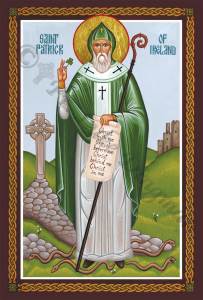
Saint Patrick of Ireland

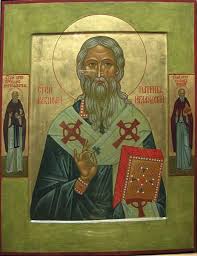
Saint Patrick Icon

As a young boy, Patrick was kidnapped by brutal pirates and carried away to Ireland where he was sold as a slave.  For the next six years he was a shepherd in Northern Ireland.  This is where he learned to pray. “In a single day I would say as many as a hundred prayers, and at night only slightly fewer.” The Confession of St. Patrick.

“I arise today

in a mighty strength

calling upon the Trinity,

believing in the Three Persons

saying they are One

thanking my creator.”

In the experience of slavery and exile, the young boy  discovered God . In the midst of this terrible alienation brought on  by his exile from family and country, Patrick experienced a deep abiding connection that enabled him to feel strengthened by God.

St. Patrick baptizing the Irish
St. Patrick baptizing the Irish drawing by Christine Hales

He is a legend in Irish history and spirituality.  Patrick’s story of being kidnapped by Irish pirates eventually gave rise to a remarkable inner transformation that led him  eventually to return to Ireland, serving the Irish people by bringing God’s love to them.

Like St. Francis, Patrick chose a lifestyle of poverty, preferring to single-mindedly focus on the Divine connection within.  “For I know full well that poverty and adversity suit me better than riches and delights.”

Saint Patrick Icon

One often sees Icons of St. Patrick holding a shamrock, an illustration of how he used the humble clover leaf to illustrate the Trinity- three in one- to the largely pagan population Ireland.  Pre-Christian Ireland was where God sent Patrick.  His spiritual story is told in “The Confession of St. Patrick”, along with many Scriptural references that relate to his experiences.

Patrick was born in Britain about  385, and began his mission  in Ireland during the early 400’s.He became fluent in the Irish dialect during his period of slavery, and despite much hostility and danger, he was very effective in bringing the Gospel to Ireland.

Saint Patrick founded many churches and monasteries across Ireland.

Saint Patrick Icon
Saint Patrick Icon

Holy Bishop Patrick,

Faithful shepherd of Christ’s royal flock,

You filled Ireland with the radiance of the Gospel:

 The mighty strength of the Trinity!

Now that you stand before the Savior,

Pray that He may preserve us in faith and love!

Icon notes for March:

The American Association of Iconographers now has a Facebook Page which you are welcome to join.  The rules of the page are that postings may be submitted by any member and the content needs to be of interest and benefit to Iconographers.

Video of Iconographer George Kordis beginning a Christ Pantocrator dome:

Blessings and Prayers,

Christine Hales

New Christian Icons

Icon Painting Classes Schedule for 2018


https://www.googletagmanager.com/gtag/js?id=UA-114937457-1

window.dataLayer = window.dataLayer || [];
function gtag(){dataLayer.push(arguments);}
gtag(‘js’, new Date());

gtag(‘config’, ‘UA-114937457-1’);

SaveSave

SaveSave

SaveSave

SaveSave

SaveSave