The History and Development of Christian Icons. Part III

This is the third in a four-part series of articles that examine the historical evolution of Christian icons that I have written for the Anglican Digest.  This article appears in the fall issue.  In this article we will explore the significance of a symbolic visual language of icons in contrast to a more realistic one that began to develop from the late Byzantine period through the beginnings of the Italian Renaissance paintings. 

Saint Epifani, Mosaic, 1030

This stylistic change is very important.  It helps to define the difference between holy icons and the religious painting that grew out of the Renaissance.  This difference became ever more pronounced as time went on, and the shift from symbolic to realistic imagery and storytelling can be compared to the difference between a parable and a narrative story.  The parable can have more eternal, universal and varied meanings, while realism points to a particular moment in time, a specific meaning.  Eastern church traditions preserved the integrity and spiritual function of icons, while Western Europe began to explore art’s potential to engage both the senses and the intellect.

Church Art From the 11-15th Centuries

Duccio, 1230, Maesta

From the 11th to the 15th centuries, art saw significant development, transitioning from medieval styles to the Renaissance.  The rise of Romanesque and Gothic art occurred in the Middle Ages, with Romanesque art taking shape in the eleventh century, initially developing in France then spreading to Spain, England, Flanders, Germany, Italy, and other regions. 

Annunciation, St. Sophia’s Cathedral, Kiev. 1050

One of the most spectacular achievements of medieval artists which was their desire to pursue heavenly light in their creation of the worship space.  The importance of this play of light had its beginnings in the 12th century when the heavy, dark Romanesque architecture began to be replaced by Gothic development of pointed arches, vaulted ceilings, and flying buttresses- all of which made it possible to admit more light into the sanctuary than would have been possible before.

Light for Christian culture had great significance because of the extensive Biblical associations of light with God himself, beginning with Genesis, “Let there be light”, and in the writings of Saint John the Divine.  At this point, the Bible had become an important source of ideas about beauty, both esthetically and also in a moral sense.  Illuminated Manuscripts flourished.

Icons and Art of the Eastern European Church

The developments of Church art in the East can be understood in several stages, or periods of Byzantine Culture: The Macedonian period, from 867-1056, the Komnenian period from1081-1185,and the Palaeologan Period 1259-1453.  These political and cultural periods influenced the style of icons as we will see.

Macedonian Period (867-1056)

Macedonian Workshop at Paraskevi

Macedonian art grew with advancements in learning and significant church construction and restoration following the period of Iconoclasm. (see my previous article). The artistic achievements of the Macedonian dynasty reflected grace, drawn from the fourth century, with the strength and beauty of earlier Hellenistic traditions. This blend of qualities infused religious art and icons with a distinctive dignity, refinement, and balance. These characteristics became synonymous with Byzantine design, aligning harmoniously with religious themes.

Komnenian Period (1081-1185)

Mosaïque des Comnène, Sainte-Sophie (Istambul, Turquie)

The Komnenoi were great patrons of the arts, and with their support Byzantine artists continued to move in the direction of greater humanism and emotion, of which the Virgin of Vladimir  is an important example. Ivory sculpture and other expensive mediums of art gradually gave way to frescoes and icons, gaining widespread popularity across the Empire. Although the art produced in the Byzantine Empire was marked by periodic revivals of a classical aesthetic, it was above all marked by the development of a new aesthetic defined by its abstract or anti-naturalistic character. If classical art was marked by the attempt to create representations that mimicked reality as closely as possible, Byzantine art seems to have abandoned this attempt in favor of a more symbolic approach.

Palaeologan Period (1259-1453)

Fresco from Leshovsky Monastery, 1347

Paelogan Byzantine artists developed icons, which became a popular medium for artistic expression, and were characterized by a less austere attitude. This appreciation for purely decorative qualities of painting and meticulous attention to details is sometimes referred to a Palaeologan Mannerism. Russian icon painting began by entirely adopting and imitating Byzantine art, as did the art of other Orthodox nations, and has remained extremely conservative in iconography. 

The fall of Constantinople in 1453 was a significant event in the history of the Byzantine Empire, and it had a profound impact on the art world. Many Byzantine artists migrated to Italy, where they played a vital role in shaping the  Italian Renaissance. of the Byzantine Empire in the preceding centuries.

The splendour of Byzantine art was always in the mind of early medieval Western artists and patrons, and many of the most important movements in the period were conscious attempts to produce art fit to stand next to both classical Roman and contemporary Byzantine art.

Religious Painting and Icons in the Western Church

The influence of Byzantine art on Italian art was significant, with Byzantine artists bringing their techniques and knowledge to Italy, especially the use of gold leaf and mosaics.

Three Italian painters of the 14th century, Cimabue, Duccio, and Giotto, are generally considered the link between the earlier iconic style of painting with its flattened pictorial space, and simple, abstract compositions and little if any naturalistic details, and the Renaissance.  In their work you will see that transition and the theme of the early development of naturalism that is the precursor to the Renaissance and the end of iconographic perspective.

Cimabue 1240-1302

Cimabue Maesta, di Santia Trinita

The paintings of Cimabue were heavily influenced by Byzantine iconography, and gradually they began to break away from that tradition into a more naturalistic rendering of human forms and space. His work is a transitional step in the development of western painting bridging the Medieval and Renaissance periods.  His work clearly influenced the styles of other Italian artists at the time such as Duccio di Buoninsegna and showcases the ongoing evolution of Italian art.

Duccio  1250-1391.  Sienna, Italy

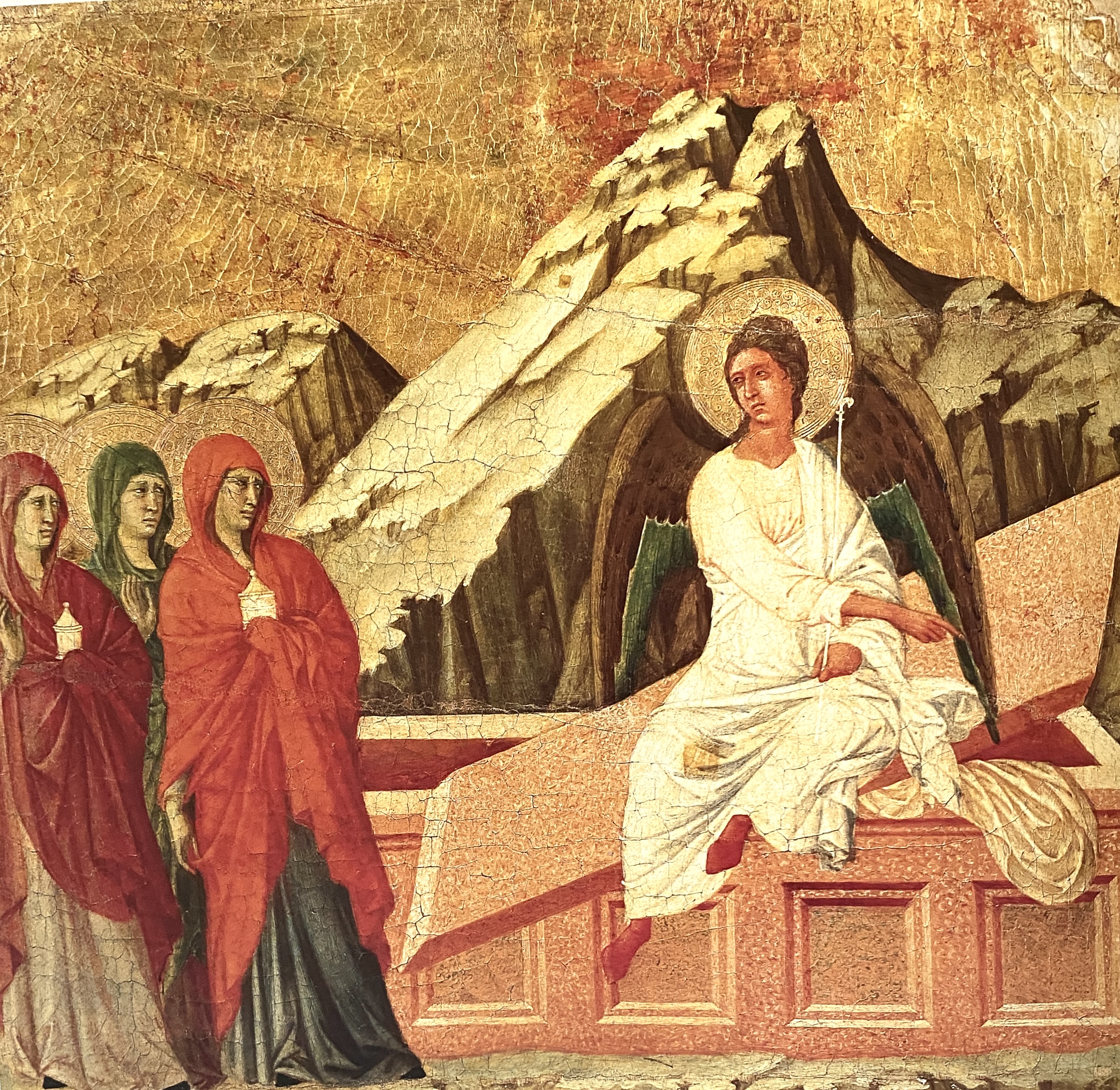
Duccio, The Three Mary’s at the Tomb

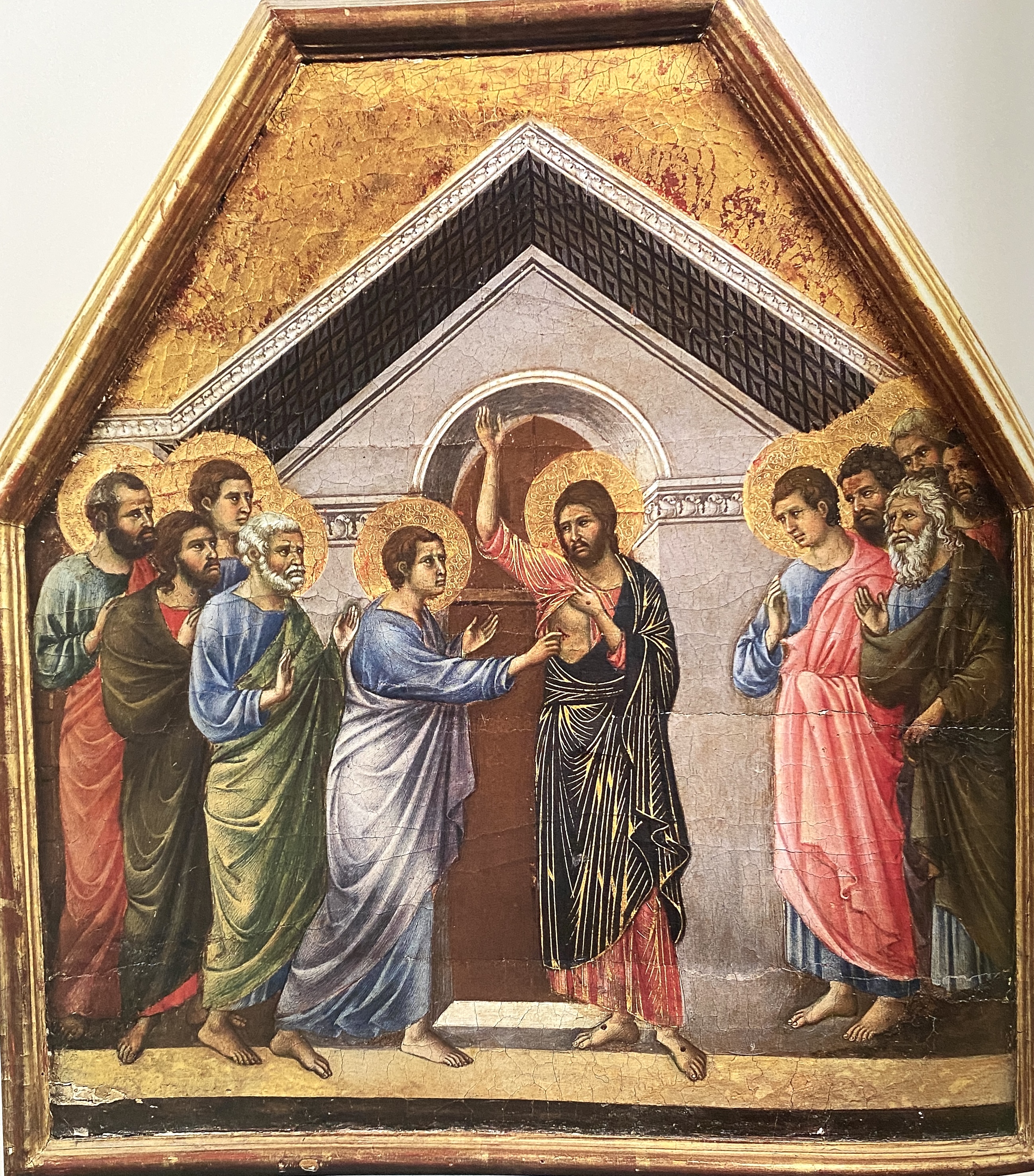
 Duccio , as the founder of the Sienese school of painting,was the predominant painter of the 14th century.He ran a large workshop which shaped generations of Sienese artists.   His religious paintings brought a lyrical expressiveness and intense spiritual gravity to the Italo-Byzantine tradition.  In a small devotional panel of the Madonna and Child, Duccio bridged the gap between the spiritual world of the figures and the real world of the viewer in very much the same way that Icons do.   His holy figures were majestic, his pupils were influential in Florentine art, and his greatest work was the double-sided altarpiece, the ‘Maestà’, made between 1308-11.  Both Duccio and Cimabue began their careers producing iconic altarpiece paintings in the flat, two dimensional style of Byzantine icons, and ended their careers with more naturalistic paintings.  Both were enlivened and inspired by the Franciscan spirituality of their time.

Giotto di Bondone, Italian,   1267-1337

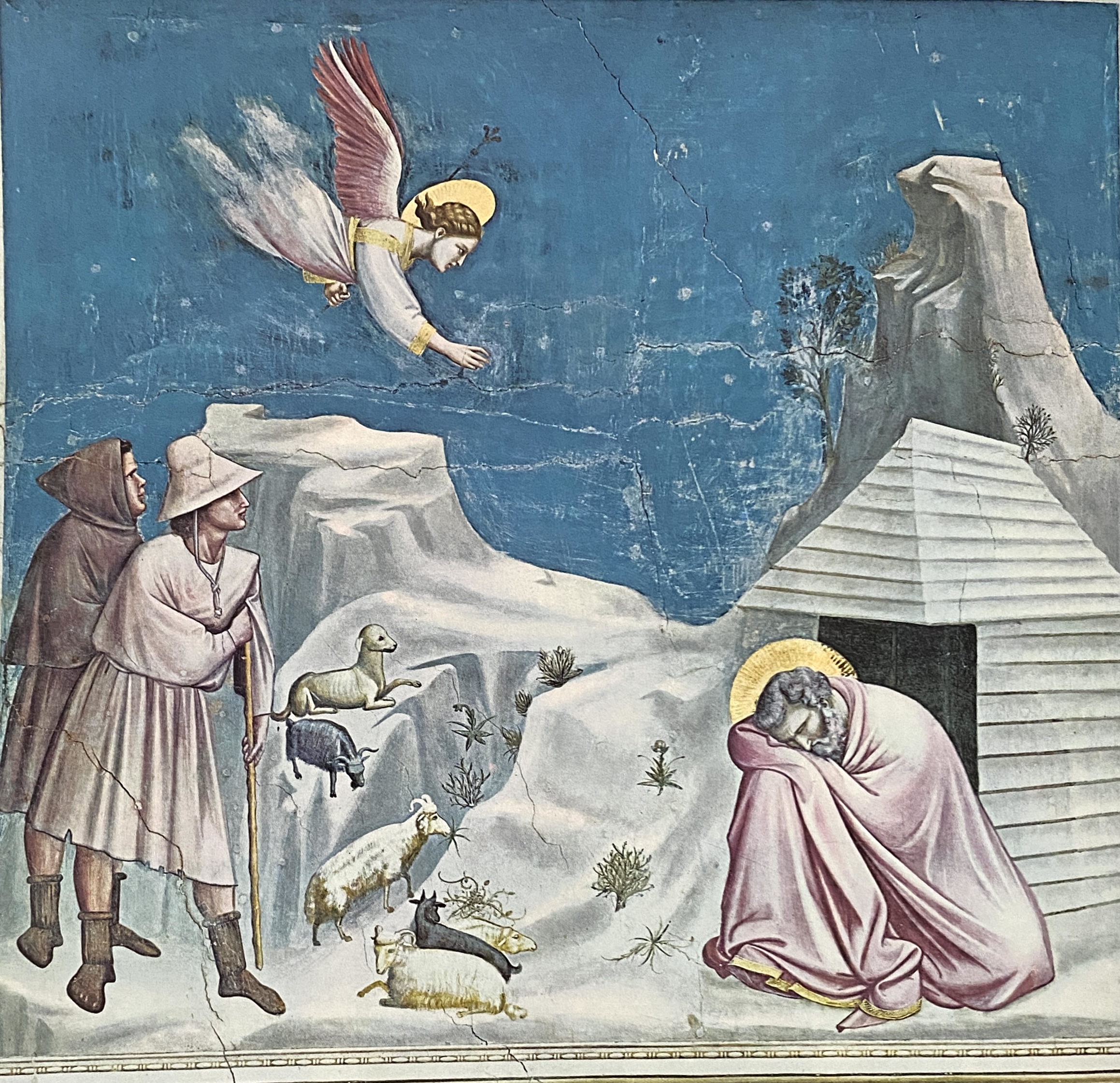
Giotto, The Dream of Joachim, 1330

Giotto was a Florentine painter and architect who is revered as the father of Western painting. It is believed that he was a pupil of Cimabue, and to have decorated chapels in Assisi, Rome, Padua, Florence, and Naples with frescoes and panel paintings in egg tempera. 

Giotto’s figures are volumetric rather than linear, with varied human emotions expressed in a human style rather than the stylized faces of Byzantine icons.  He also created a new kind of pictorial space with an almost measurable depth, transforming the flat world of thirteenth century painting in a more naturalistic view of the real world.  For this, he is considered the father of modern European painting.

The great accomplishment of Giotto’s painting was to make the events of the Gospel and the lives of the holy saints both credible, beautiful, and appealing to the ordinary people of his day.

Conclusion

These artists were followed by the Renaissance in the 14th-16th centuries. Renaissance art, particularly in Italy, focused on realism, classical themes, and a renewed interest in the human form. It moved away from symbolism and abstraction in favor of naturalistic rendering of light, form and nature. In the next and final article in this series, I will explain the effect this development has had on religious painting and contrast Renaissance painting with Icons.  Why is the Renaissance such a strong dividing line in religious art? Because it ushered in a humanistic world view as opposed to the theocratic world view prevalent before. The focus of our culture has gradually progressed from honoring God as creator to revering man’s creations, the truth of science over religious principles, and eventually to a nihilism in our culture that doesn’t recognize any power greater than ourselves.  And that is why as an artist, I have chosen Icons as my art form, desiring to promote and demonstrate visually, God’s universe over man’s universe! 

I hope you have enjoyed this article! Perfect for an end of summer, beginning of fall reading!

Here is a lovely video that talks about Siennese Icon Painting

May God continue to bless the work of your hands. Please join with me in prayer for the world :

“God is our refuge and strength, an ever present help in trouble. Therefore we will not fear, though the earth give way and the mountains fall into the heart of the sea, though its waters roar and foam and the mountains quake with their surging…..”Be still and know that I am God. I will be exalted in all the earth.” Psalm 46:1-3, 10.

Christine Simoneau Hales

https://newchristianicons.com

Illuminating the Spirit: A Summer Reading Guide for Iconographers

Books and Inspiration to Enrich Your Icon Writing Practice

Summer unfurls like a painted scroll—light streaming through open windows, quiet hours stretching across the day, and, for the iconographer, a rare invitation to rest, reflect, and replenish the wellspring of inspiration. Whether you are a seasoned writer of icons, a beginner who has just dipped their brush into the egg tempera, or simply a lover of sacred art, the summer months offer an ideal time to step back from the demands of daily creation and immerse yourself in the wisdom, history, and spirituality that underpin the venerable and holy tradition of iconography.

Why Read in Summer? The Sacred Pause

In the stillness of summer, reading becomes a sacred pause—a time to deepen your understanding of icons not just as objects of devotion, but as living prayers in color and line. Iconographers often speak of their art as an act of contemplation: every stroke is a prayer, every layer a meditation. So too can reading be a contemplative act, enriching the mind and spirit while opening new vistas for creativity.

Foundational Texts: Revisiting the Roots

  • The Meaning of Icons by Leonid Ouspensky and Vladimir Lossky. This classic introduces the theological, spiritual, and artistic foundations of iconography. Through its pages, readers are led to understand the icon as a window to the divine, a theology in pigment, and a bridge between heaven and earth.
  • Icons and Saints of the Eastern Orthodox Church by Alfredo Tradigo. Tradigo’s compact yet richly illustrated guide offers both historical context and practical wisdom. Each page is a pilgrimage through time, introducing saints, feasts, and the symbolic language of orthodox sacred art.
  • Icons as Communion by George Kordis. Kordis brings the ancient tradition into the present, with notes and observations on the drawing stages in icon painting. Amazon Link
  • Orthodox Icon Patterns, Patterns and sketches for Iconographers: This is the revised version of Patterns & Sketches for Iconographers, with added content and additional patterns. A valuable resource for iconographers, this book contains a wide variety of patterns and sketches. Content including; icon patterns of the Nativity, the Theotokos, archangels, male and female saints, as well as halo patterns and 2 beautiful crucifixion crosses. Buildings and fabric/ background designs and icon borders. Each pattern is accompanied by color recommendations which are meant as a general guide allowing for adjustments due to differences in color names between pigments used with egg tempera and acrylic paints.  (There is also a Volume II if you like this one.). Amazon Link

Summer reading need not always be heavy with theory or thick with history. Sometimes, lighter fare—biographies, memoirs, and even novels—can kindle the imagination and nurture the soul of the artist. You might consider adding a few of these to your summer list:

  • Praying with Icons by Jim Forest. Accessible and warmly written, Forest’s reflections on the role of icons in prayer lift the heart and draw the reader into a deeper appreciation of how icons shape and are shaped by the life of faith.
  • The Mystical Language of Icons by Solrunn Ness.  Nes explores in depth a number of famous icons, including those of the Greater Feasts, the Mother of God, and a number of the better-known saints, enriching her discussion with references to Scripture, early Christian writings, and liturgy. She also leads readers through the process and techniques of icon painting, showing each step with photographs, and includes more than fifty of her own original works of art. Amazon Link
  • And if you would enjoy a deep dive into the life of the Blessed Mother Mary, I recommend “The Life of the Blessed Virgin” from the visions of Ann Catherine Emmerich, Incredibly revealing and edifying background of Our Lady, her parents and ancestors, St. Joseph, plus other people who figured into the coming of Christ. also available on Amazon: Amazon Link
  • And also “True Devotion to Mary” by Louis de Montfort: Considered by many to be the greatest single book of Marian spirituality ever written, True Devotion to Mary is St Louis de Montfort’s classic statement on the spiritual way to Jesus Christ though the Blessed Virgin Mary. Amazon Link
  • And last, but not least, is my own book on Icon writing, “Eyes of Fire, How Icons Saved My Life As an Artist”, with an appendix full of directions as well as an explanation of how modern art has been influenced by icons and how some of those principles can be used in present day icon creation.  Amazon Link

As the art historian Roger Lipsky says in his book, “An Art of Our Own, the Spiritual in Twentieth Century Art”, “One of the tasks of the spiritual in art is to prove again and again that vision is possible; that this world, thick and convincing, is neither the only world nor the highest, and that our ordinary awareness is neither the only awareness nor the highest of which we are capable.”

And so my purpose in sharing this list of inspirational summer reading is to encourage you to engage with the ‘pause” of the longer summer days, and ponder on the beauty of nature and be open to glimpses of eternity that a fresh perspective can often foster. And then let this “higher”perspective inform your icon practice in the coming year,. In the words of Aidan Hart, in his book, “Beauty, Spirit, Matter, Icons in the Modern World, “The Icon invites us to see the world as God sees it.” With nature all around of us. may God bless us with His perspective and insights to carry forward into our work.

Until next month,

Christine Simoneau Hales, Iconographer/artist

My Websites:

  1. https://newchristianicions.com   my main website
  2. Https://christinehalesicons.com  Prints of my Icons
  3. https://online.iconwritingclasses.com  my online pre-recorded icon writing classes
  4. https://www.youtube.com/channel/UCK2WoRDiPivGtz2aw61FQXA  My YouTube Channel 
  5. Facebook: https://www.facebook.com/ChristineHalesFineArt     or  https://www.facebook.com/NewChristianIcons/
  6. Instagram:   https://www.instagram.com/christinehalesicons/?hl=en
  7. American Association of Iconographers:  FB Group: https://www.facebook.com/groups/371054416651983
  8. American Association of Iconographers Website: https://americanassociationoficonographers.com

How Important Is Drawing?

Often when I teach icon writing classes, I am asked to critique students’ previous icons, and almost always, my comments revolve around drawing more.  Re-draw the composition, or the faces, or the figures. And so, for this blog post I am including some random ideas for improving your icon drawing.  

Drawing by Nun Juliana

First, I’d like to share about an iconographer whose drawings I particularly admire- Nun Juliana. Mother Juliana was a Russian icon painter who was a prominent figure in the renewal of sacred arts in Russia during the second half of the 20th century. 

Drawing by Nun Juliana

She was also a teacher of iconography, discussing the meaning of the subject matter, technique, materials, and style. Mother Juliana’s work was part of a rediscovery and renewal of sacred arts that has reached world wide proportions.

Today Mother Juliana is considered a saint by the Orthodox Church and is credited with preserving the tradition of icon painting in Russia and beyond through her work and those she taught. 

During the first decades of Soviet rule in Russia holy images, especially icons, were subjected to harsh persecution. It was a period of unrestrained, militant atheism during which, together with the closing of churches and monasteries, great numbers of icons were destroyed. From this it is easy to comprehend the difficulties faced by those who wished to preserve the traditions of Russian icon painting. 

Drawing by Nun Juliana

The nun Juliana, known to the world as Maria Nikolajevna Sokolova, preserved the living tradition of ancient Russian icon painting, transmitting it to her successors during one of the most difficult periods in the history of the Russian Church. This is the basis of her significance for modern icon painters.

Drawing by Christine Hales

Egon Sendler’s states in his foundational book, “The Icon, Images of the Invisible”, that “The drawing is of great importance because it gives structure and movement to the icon and determines the surfaces to be painted.  The ancient iconographers religiously kept the sketches of their icons so they could use them again in their later works.  These collections of drawings were called podlinik, pattern books.”

We know that in the Byzantine method, a relational system of proportions was employed, thus giving a consistency to the visual images that allow the viewer to concentrate on the meanings of the icon. This system of relational proportions was probably inherited by Egyptian artists who also used a simple grid system to standardize proportions of figures.

Egyptian Grid Drawing

Byzantine compositional drawing develops a relationship with rhythm and space in the icon that enables the viewer and the icon to meet- the dynamic elements of the icon are intentionally created to engage the viewer and bring them into a relational experience with the subject of the icon.

Without depth, the vertical method of composition is used in Byzantine compositional drawing, for example, objects which are behind in the icon are placed above in the composition, and those in front are placed on the lower section of the composition. The Nativity icon is a very good example of this principle.

Nativity Icon by Christine Hales

The last set of ideas I wish to share with you derive from Iconographer George Kordis in his book, “Icon as Communion”.  In speaking of the artistic principles of Byzantine art this is what he says, “This is what we recognize as Byzantine art, and it bears the following characteristic features:  

  1. The absence of artistic depth (there is no movement behind the artistic surface.)
  2. The essential role and fundamental importance of color in rendering form: forms are defined through color and not through the use of black or shadow..
  3. The essential role and fundamental importance of line, which determines how color is applied…
  4. The plasticity of artistic form (the juxtaposition of light and dark) in order to give the feeling of movement outward from the artistic surface toward the beholder.
  5. The pursuit of rhythm (the sense of movement that relates the figure to the viewer, uniting the two.)
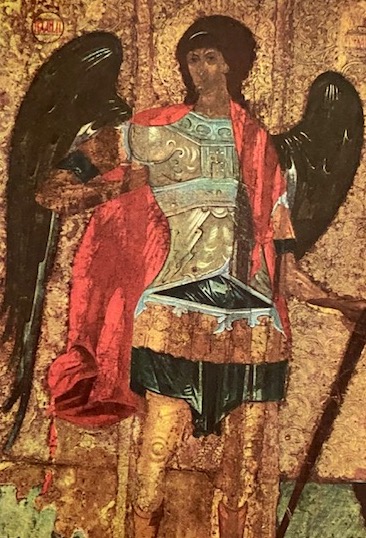
Archangel Michael Drawing in Moscow

Obviously this article is presenting the tip of the iceberg!  Hopefully these thoughts stimulate your creative process and help your icons become the best representation of God’s kingdom possible.   Although I am familiar with all of these principles, I find that I need to read them often to keep them constantly in mind when I draw.

Below are some interesting links from Iconographer Dorothy Alexander:

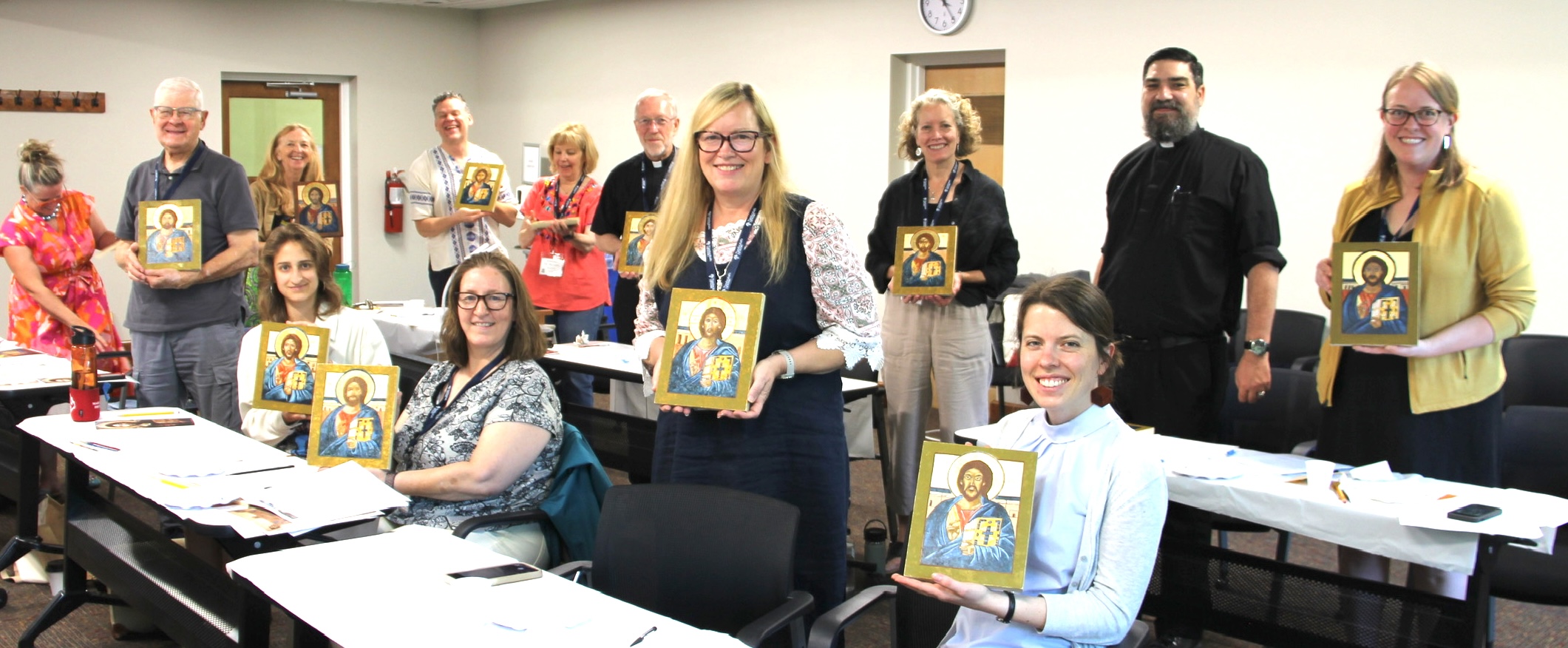
Here is a link to the Icon retreats I am teaching this year: Icon Retreats

And here is link describing the Artist in Residence program I am participating in at the Cathedral of Saint Peter, Saint Petersburg, Florida.

Until next month,

Blessings,

Christine Simoneau Hales

New Christian Icons

Building Blocks

Christian Art After the Iconoclasm. 1000-1400 AD

Bayeux Tapestry

As Iconographers, I think we all realize that the Byzantine culture was influential in creating a nuanced visual language that was able to convey important principles of religious art .  Can we today consider and contemplate how the Byzantine style developed in order to create a visual language that can bring Christian concepts to our culture today?

An important influence of the development of Christian art in the 11th century was the schism, or split, in Christianity in 1054, which resulted in the Eastern Orthodox Church and the Western Roman Catholic Church. In the next centuries, each division of the church would develop its own culture and approach to worship, prayer, liturgy, and art.

Let’s Take a Look First at the Eastern Church’s Artistic Development

Santa Maria Church, Barcelona, Spain

The expansion of  monasticism was the main force behind the unprecedented artistic and cultural activity of the eleventh and twelfth century. In 963 AD, Athanasius of Trebizond founded the first monastery on Mt Athos, Greece.  Legend has it that early hermits were visited by The Virgin Mary who gave the place her blessing and there are many icons that convey this story and remembrance of the visitation .

In 988, Russia adopted Christianity and in 1017, Prince Yaroslavl the Wise erected the  Cathedral of St. Sophia in Kiev.  A Byzantium team of artists and iconographers, Russian and Greek, decorated the cathedral with beautiful frescoes and mosaics.

Biblia de Burgos, 12th Century

1054 began the schism between the Holy thrones of Rome and Constantinople, resulting in a wide divergence stylistically in religious art making that reflected differences in theological values between the two cultures.  The Eastern Church continued to develop the Icon, keeping the flat pictorial space of Egyptian art, and the simplicity of rendering human forms borrowed from the Greco Roman tradition of the early centuries.

In 1130, A miracle working icon, Our Lady of Vladimir Icon of the Virgin Mary was brought to Kiev. This icon has lasted through the centuries and today is a symbol of Love and Tenderness.

Our Lady of Vladimir

The Paleologue dynasty in Constantinople, 1259-1453, was the last resurgence of Byzantium. The attempt to have a rebirth of Byzantium after the sack of Constantinople in 1204, resulted in the rebuilding and decoration  of many churches, including Chora Church, which is considered one of the highest artistic achievements of that era.

Gregory Palamas, (1296-1359), was the Archbishop of Thessalonica and an eminent theologian  who supported Hesychasm, a mystical movement in Eastern monasticism that promoted fervent prayer, silence, and contemplation.  

Transfiguration by Theophanes

In 1378,  according to legend, Theophanes the Greek came to Russian from Byzantium, and painted the Church of the Transfiguration in Novgorod and many others, along with his student, Andrei Rubylev. This period of icon painting is considered by many to be one of the greatest achievements of Russian Iconography.

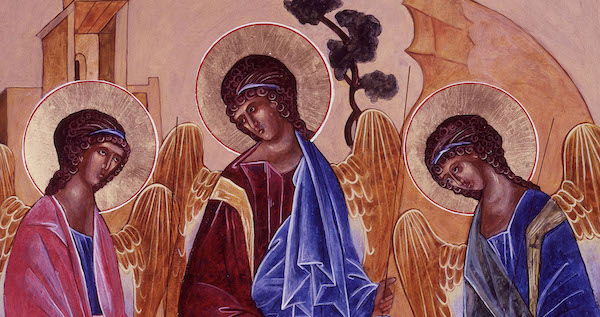
St. Sergius of Radonezh was a great Russian saint who promoted Russia’s spiritual revival.  He dedicated his monastery to the Holy Trinity and preached unity in love.  He taught brotherly love and divine service and commissioned the Holy Trinity Icon to be painted by Andrei Rubylev. Rubylev and St. Sergius were in large part responsible for Russia becoming one of the great centers of spiritual enlightenment in this time. St. Sergius passed away in 1392.

Holy Trinity. by Andrei Rubylev

In the West….

Religious art in 10th century Europe, also known as Romanesque art, was symbolic, vibrant, and hierarchical. It was characterized by its emphasis on the suffering of Christ and other sacred figures, and depicted saints and religious leaders as larger and more important than ordinary people. Artists also used animals, flowers, and fruits to convey religious messages and ideas. Some common symbols used in medieval Christian iconography include: Fire, light rays, or wind to symbolize the Almighty God; Lamb or fish: symbolize Jesus Christ and his love; Crucifix: Depicts Chrstianityand eternal life; a dove symbolizes the holy spirit from heaven or an individual’s soul, and lilies in a vase or water to portray the purity and spirituality of the Virgin Mary.

One of the most spectacular achievements of medieval artists in the west was their desire to emphasize heavenly light in their creation of places of worship.  Beginning with the 12thcentury, heavy, dark, Romanesque architecture began to be replaced by Gothic vaulted ceilings and flying buttresses that made it possible to bring more light into the churches than ever before. Light for a Christian had great significance because of the extensive Biblical associations of the nature of God with Light.

Cimabue, Trinita Madona

 After the sack of Constantinople in 1204 by Christian armies of the Fourth Crusade, precious objects from Byzantium made their way to Italian soil and profoundly influenced the art produced there, especially the brightly colored gold-ground panels that proliferated during the thirteenth century. 

Romanesque Art, one of the first innovative and coherent styles to spread across the western Church,was greatly influenced by the Byzantine art that preceded it.

 European countries of Italy, France, England, and Spain responded to this stylistic innovation that was more in keeping with shifts in cultural values.

The main purpose for the development of Romanesque art was to visually record biblical events and to chronicle important figures, like influential leaders and saints in a more naturalistic way, hoping to bring the viewer into closer contact with God.  

The Bridge Between Eastern and Western Art

At the end of the thirteenth century and beginning of the fourteenth, three great masters appeared who changed the course of painting from the more abstract Byzantine style, to a more naturalistic one:

Cimabue, Italian, (1240-1302) painted religious paintings that were heavily influenced by Byzantine models, yet he was also innovative and eventually broke away from the Byzantine style of religious painting.  For this reason, his work is considered to be a transitional bridge between icon painting and the more naturalistic developments of Renaissance painting.

Ognissanti Madonna, Giotto

Giotto di Bondone, (d. 1337), is believed to have been a pupil of Cimabue, and to have decorated churches in Padua, Florence, Naples, Assisi, and Rome. His volumetric figures are in sharp contrast to the linear, stylized  shapes of Eastern religious art of the same period. In his work, the flatness of icons began to disappear in favor of a new kind of pictorial space that achieved the illusion of depth visible in the natural world. With Giotto, considered by many to be the father of modern European painting, the flat world of thirteenth-century Italian painting was transformed into an analogue for the real world. Giotto’s figures are volumetric rather than linear, and the emotions they express are varied and convincingly human rather than stylized. He created a new kind of pictorial space with an almost measurable depth that prefigured the pictorial developments of the Renaissance.. 

Duccio, (1278 – 1318), is considered to be the father of Sienese painting. Together with Giotto he is considered to be one of the founders of Western art.  His religious paintings introduce lyricism and a refined color sense into the Byzantine tradition he inherited. He became interested in portraying human emotions and a more naturalistic space- both in conflict with Byzantine art principles.  His purpose was to bridge the gap between the spiritual world of the figures he painted and the real world of the viewer by an illusionistic rendering of objects and space- the first of its kind in Western painting, and not a style embraced by Eastern iconography until later centuries.

Maesta. Duccio

Overlapping  of Panel Painting with Icon Painting

Through the fourteenth century in Europe, the primary support for portable paintings was the wooden panel. The lengthy and complex preparation of the panels  had already been the way of icon creation as well, hailing from the very early centuries of Christianity. Many of these methods of icon board preparation are continued in the practice of icon painting today. They are described in detail in Cennini’s Il Libro dell Arte.

So, to summarize, the schism of the Church into an Eastern and a Western Church resulted in different approaches to creating a visual language that would best convey concepts of God, Bible stories and saints. Western culture evolved from a more theocratic culture to a humanistic one with, in my opinion, disastrous results. I think I am more drawn to the Byzantine visual language because of its ability to convey purity, focus on God, and demonstrate a clear difference between God’s world and the naturalistic world we live in.  And I think this ability to transcend the moment and connect with the Divine reality is crucial to humans coping with an increasingly stressful world today. The question is: Can we create a visual spiritual language that will engage modern men and women in a meaningful way?  How will we do that?  What do we learn from the simplified account of religious art development above?  I believe that each of us will be inspired by God to create a variety of approaches, for it is of great importance to the modern world that we do.

Until next month, when we take a look at…The Renaissance and Icon Painting!! Glory to God whose power, working within us, can do infinitely more that we can ask or imagine.

Christine Simoneau Hales

My website: New Christian Icons. My Youtube Channel

Iconoclasm

Iconoclasm in Church Art (600-1000)

Image from Class Chuludov Psalter, 9th Century, scene of Iconoclasm

Key Issues of Iconoclasm

Iconoclasm, the destruction or rejection of religious images, was a major controversy that profoundly impacted the Byzantine Empire from the 7th to the 9th centuries. The debate centered around the Second Commandment, which forbids idolatry, raising the question of whether holy images competed with God or enhanced Christians’ experience and knowledge of God. This controversy tore apart the Byzantine Empire, pitting the iconodules, who venerated icons as a logical progression of Christian art, against the iconoclasts, who believed that any image in a church was idolatry.

The East-West Divide

Sts. Theodore of Amasea and George conquering their enemies; 9th century, Mt. Sinai

In the Western Christian church, where Latin had become the church’s language, the Greek distinction between latria(worship for only God) and dulia (a lesser form of veneration) was not easily understood or accepted. Eventually, however, the Western church allowed images for veneration. Despite sharing one Christian faith, Latin Christendom and Byzantium developed distinct spiritual, intellectual, and institutional traditions, shaping cultural identities that persist today as two distinct divisions of the Church.

Byzantium Under Justinian and Theodora

Theodora, Mosaic, 9th century

In Byzantium, the Emperor Justinian (527-565 AD) and his wife Theodora implemented caesaropapism, ensuring that the emperor controlled both political and religious affairs. This mosaic shows Empress Theodora holding a chalice, with figures standing frontally and almost floating in space, signifying a stylistic break from the Greco-Roman tradition. This new style was associated with the divine world, rather than the naturalistic world. Theodora was murdered for opposing the removal of the Jesus icon on the Chalke Gate of the Great Palace of Constantinople during the iconoclasm movement.

The Iconoclast Controversy

Christ Mosaic, Hagia Sophia

According to traditional accounts, Iconoclasm began when Emperor Leo III removed an icon of Christ from the Chalke Gate of the imperial palace in Constantinople in 726 or 730, sparking widespread destruction of images and persecution of their defenders. In the East, Caliph Yazid issued a decree in 723 banning all holy images in Christian churches. In the West, Emperor Leo banned icons in all public places in 726. Pope Gregory III responded in 731, excommunicating those who denied the sanctity of icons or violated sacred images.

Opposition and Resolution

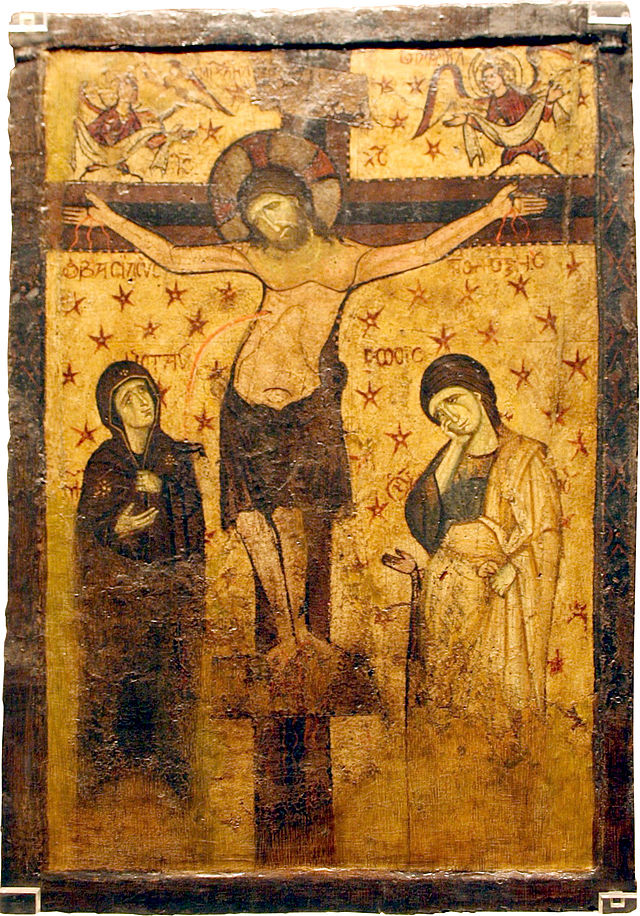
Crucifixion, Byzantine Museum, Athens. Circa 9-13th centuries.

St. Theodore the Studite (b. 759, Constantinople) was a leading opponent of iconoclasm, which disturbed relations between the Byzantine and Roman churches. The period of iconoclasm lasted until 797, with proponents of icons like Saint John of Damascus and the edicts of the Seventh Ecumenical Council supporting the veneration of icons. John of Damascus, an Arab Christian monk and theological doctor, was a prominent figure in the 8th-century Iconoclastic Controversy.

Cultural Impact and the Great Schism

Byzantine Iconoclasm, initiated by Emperor Leo III and continued by his successors, included widespread destruction of religious images and persecution of supporters. The period saw growing divergence and tension between the East and West, though the Church remained unified. The Western Church supported the use of religious images, while the Eastern Church was more divided.

Seventh Ecumenical Council Icon

The Great Schism of 1054 was caused by doctrinal differences, the rejection of universal Papal authority by Eastern patriarchs, and sociopolitical differences. This schism created lasting divisions that affect the study and practice of iconography today.

Modern Perspectives on Iconography

Iconoclasm, Clasm Chuldov Psalter, 9th Century

Today, a schism still exists between Western and Eastern iconographers regarding the nature and purpose of icons. Former Archbishop of Canterbury, Lord Rowan Williams, explained the significance of icons in his talk “Idol, Image, and Icon.” He described an idol as an empty illusion, whereas an image bridges the gap between absence and presence. Icons, made and used in prayer, open us up to God and embody the tension between divine presence and absence. They challenge and transform the viewer, claiming our attention and inviting us to experience the sacred.

Conclusion

Iconoclasm was a pivotal controversy in the history of the Byzantine Empire and the Christian Church, shaping the development of religious art and theological thought. Its legacy continues to influence the study and practice of iconography today, highlighting the enduring tension between tradition and innovation in religious expression.

I’m hoping to achieve Peace in our lifetime, with all those who call themselves Christians actively spreading the Doctrine of brotherly love to all of our neighbors.

INTERESTING LINKS:

Lord Rowan Williams, former Archbishop of Canterbury, Lecture at Birmingham University: Idols, Images, and Icons.

Wax Tempera and Modern Icons

May God continue to bless the eyes of your hearts with His love, until next month,

Christine Simoneau Hales, New Christian Icons

Upcoming Icon Painting Classes