“Make Me An Instrument Of Your Peace”

Painting Saint Francis: A Contemplative Reflection

Dear Friends,

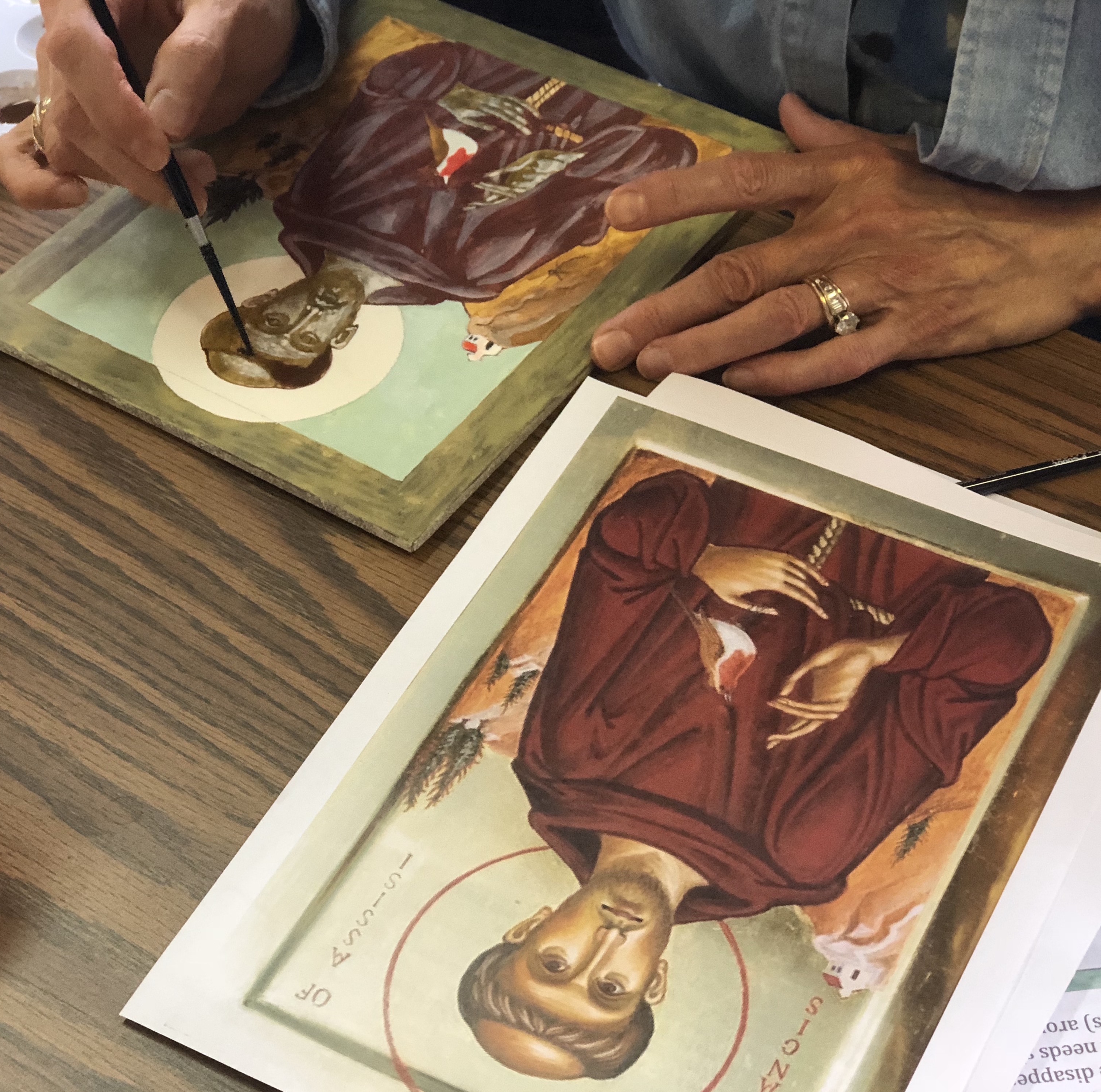
As I begin work on an icon of Saint Francis and the Wolf of Gubbio for my upcoming class at Holy Cross Monastery, I find myself reflecting less on the historical details of Francis’s life and more on the spiritual movement within it—the slow transformation of a human heart toward God.
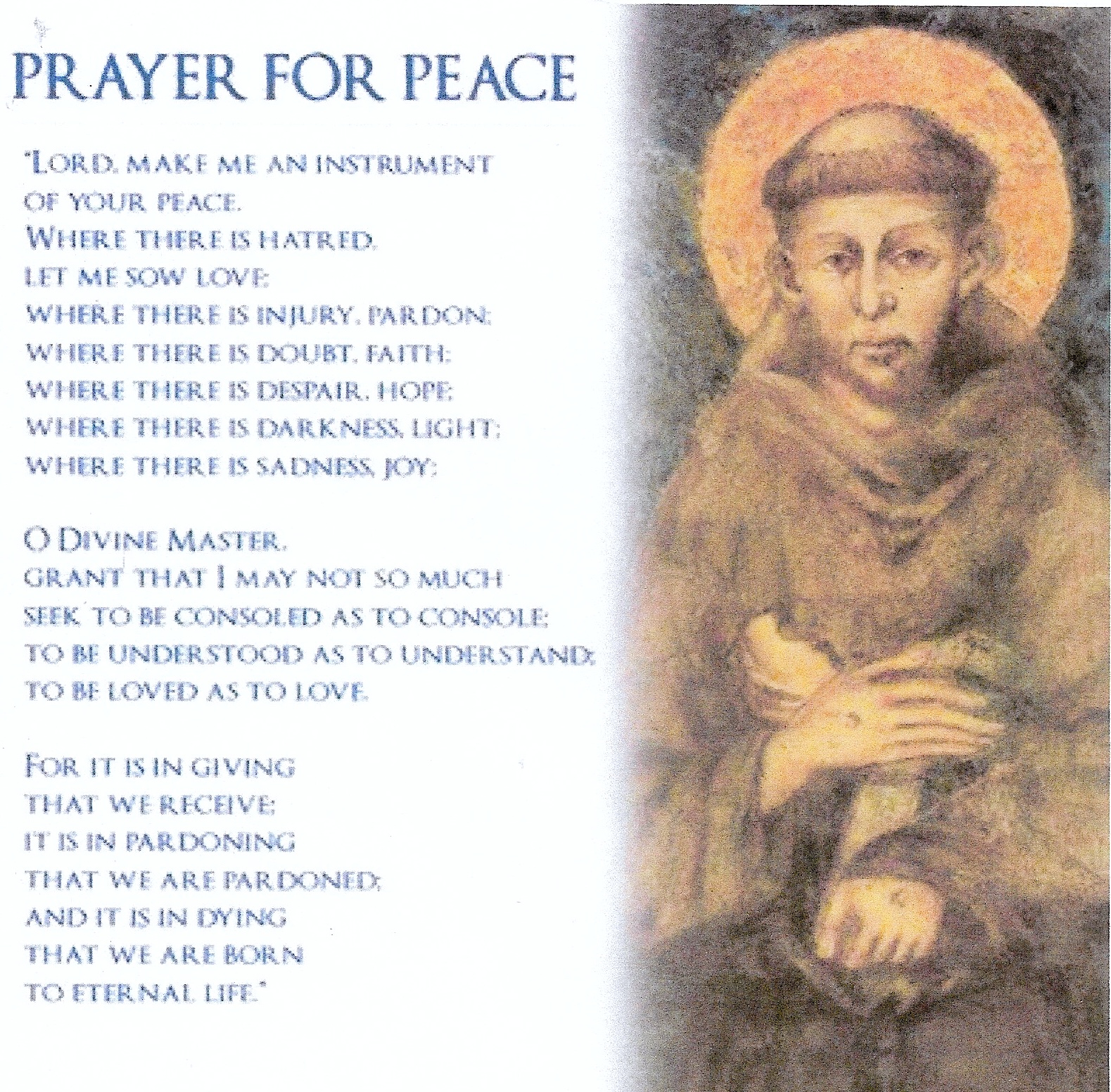
Prayer Attributed to Saint Francis, Image of Saint Francis by Cimabue

Icons often teach us long before they are finished. While preparing the board, laying the ground, and beginning the first lines of the drawing, I realize that Saint Francis’s life itself unfolds like an icon written in stages.

Francis did not begin as a saint. He began as many of us do—comfortable, admired, and confident in worldly success. Yet illness, disappointment, and prayer opened a space within him where God could speak. His conversion was not sudden perfection but a gradual awakening.
St. Francis
St. Francis Icon Hales

Again and again, Francis encountered Christ in unexpected places: in solitude, in poverty, in the suffering face of the leper, and finally before the crucifix at San Damiano. When he heard the words, “Repair my house,” he responded with simplicity. He did not yet understand their full meaning; he simply acted in faith.

This is deeply iconographic.

When we begin an icon, we do not see the finished image clearly. We proceed step by step—layer upon layer—trusting that illumination will come through obedience to the process. Francis lived in this same spirit of obedience. By renouncing wealth and security, he allowed his life to become transparent to divine light.

Francis teaches us that holiness is not escape from the world but reconciliation with it. Seeing all creation as brother and sister, he recognized the presence of God shining through every living thing. Peace with nature flowed from peace with God.
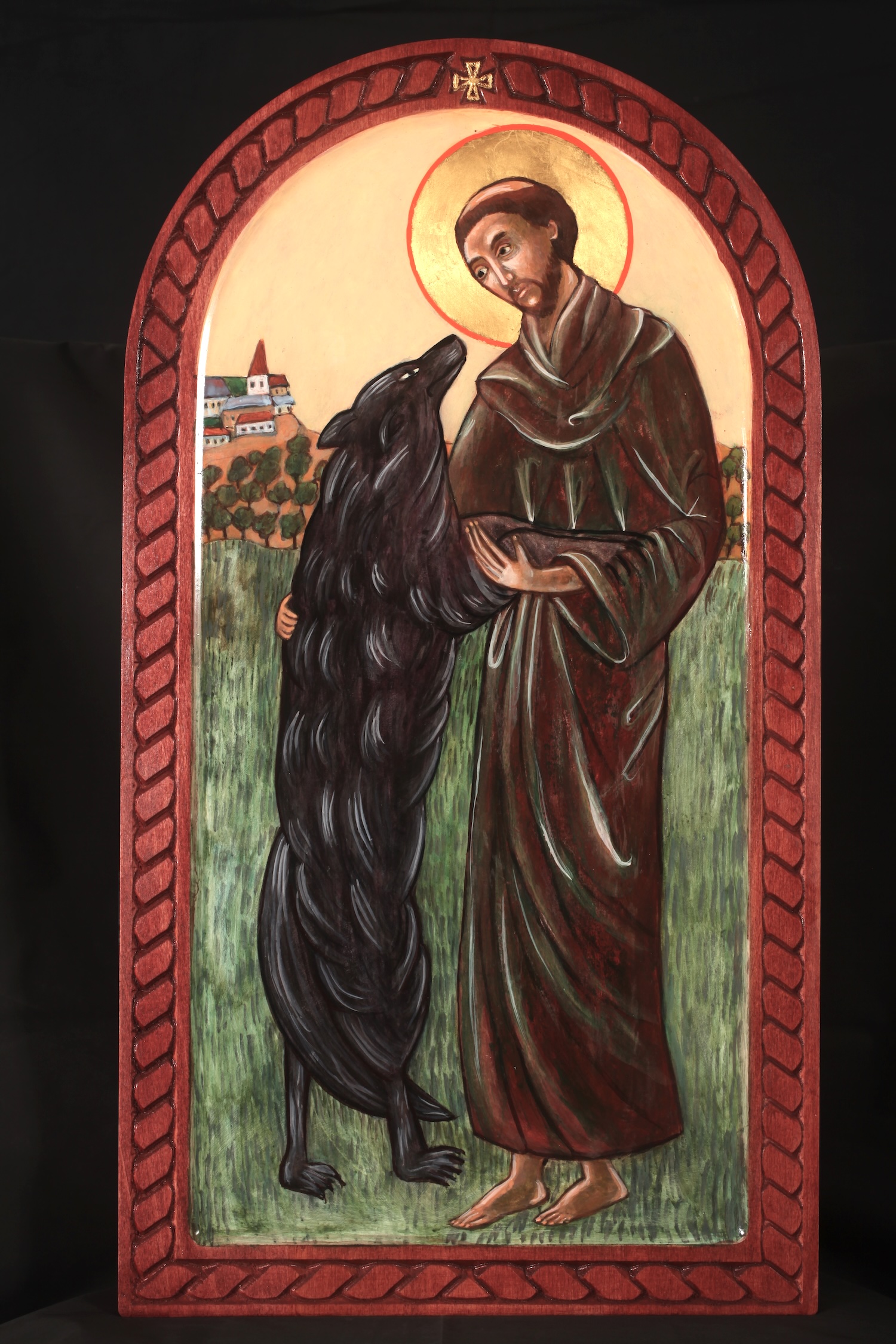
St. Francis and thee Wolf
St. Francis and the Wolf by Christine Hales

The story of the Wolf of Gubbio expresses this beautifully. Francis did not conquer the wolf; he restored relationship. Violence ceased when fear gave way to compassion. The icon reminds us that peace begins in the conversion of the human heart.

As iconographers—and as Christians—we are invited into the same work. We repair the house of God first within ourselves. Through prayer, humility, and attention, the hard surfaces of the heart are gradually burnished until they reflect Christ’s light.

While painting Saint Francis, I am reminded that the icon is not only an image of a saint. It is also a question addressed to each of us:

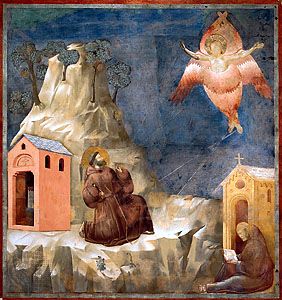
St. Francis Receiving the Stigmata by Giotto
St. Francis Receiving the Stigmata, by Giotto

Where is God asking me to bring peace?
What must I release in order to follow Christ more freely?
How might my own life become a window into divine love?

May Saint Francis intercede for us, teaching us to walk gently, to live simply, and to recognize all creation as a sacred gift.

With gratitude and peace,

Christine Simoneau Hales, Iconographer

LINKS For  Christine Simoneau Hales   2026

  1. https://newchristianicions.com   my main website
  2. Https://christinehalesicons.com  Prints of my Icons
  3. https://online.iconwritingclasses.com  my online pre-recorded icon writing classes
  4. https://www.youtube.com/channel/UCK2WoRDiPivGtz2aw61FQXA  My YouTube Channel 
  5. Facebook: https://www.facebook.com/ChristineHalesFineArt     or  https://www.facebook.com/NewChristianIcons/
  6. Instagram:   https://www.instagram.com/christinehalesicons/?hl=en
  7. American Association of Iconographers:  FB Group:  https://www.facebook.com/groups/371054416651983
  8. American Association of Iconographers Website: https://americanassociationoficonographers.com

Rainy Spring!

Alan Crite Icon by Christine Hales
Allan Crite Icon by Christine Hales

Greetings Fellow Iconographers!

This spring has been rainy and cold here in upstate New York.  Normal for Spring, but what seems to be in short supply are warm sunny days in-between!  Good weather to begin some new Icons, that’s what I say!

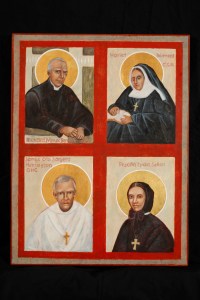
Four Anglo/Catholic Saints
Four Anglo/Catholic Saints written by Christine Hales

My newest Icons were all shipped off to their new homes: Two to Seattle, The one with the Four Anglo/Catholic Saints, Father James Otis Sargent Huntington, OHC founder of the Order of the Holy Cross, Fr. Richard Meux Benson, SSJE, Mother Harriet Monsell, CSJB, and Priscilla Lydia Sellon.  Also to Seattle went the Icon of Allan Rohan Crite, known as the Dean of Liturgical painting in Boston.  Each of these people were inspiring in the way God moved through them in the worlds they lived in, to affect and change the status quo around them.  Showing them to my five year old granddaughter prompted her to ask “Can I be a Saint?”.  What a good question! So sweet!

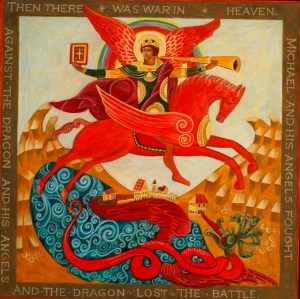
The other new one is my recent St. Michael  Fighting the Dragon which is now in Miami.

St. Michael in Battle Icon
St. Michael in Battle by Christine Hales

I particularly like the way the Scripture quotation in this one calls us to remember who won/wins the heavenly battle!

The Canons in Creating Icons

One of the things I deal with often with students and clients is the question “what is it that makes an Icon a good contemporary  Icon?”  While it’s impossible to come up with a concise definition, there are some guidelines that apply. In this month’s blog, I want to speak a little about the Canons of Iconography.

Icons are sacred, or holy pictures in that they represent either a Gospel story or a Saint and are intended to draw us into the world of heaven as we look at them. They are created by an Iconographer who lives a prayerful, fasting lifestyle and who prays while they paint the Icon. It therefore is the bearer of prayers and beauty to the viewer.

On Canonicity in Icons, the following is an excerpt from  a “Road to Emmaus” interview with well-known French Iconographer, Emilie Van Taack. She was a faithful student of Leonid Ouspensky

…There is only one rule, Rule 82, decreed by the Council in Trulo, part of the Sixth Ecumenical Council. This is the iconographic canon, in which it is stated that icon painter must follow older painter, that they must be in this stream of tradition, but exactly how they are to do this is not described. What is stated is that an icon must show both the humility of the Man Jesus and His glory as God; that is, it must manifest the Incarnation. In an icon of the Lord, you must be able to see that this man who is preseneted is not only man, but also God. You must see the Person of Christ. The Council made this rule because at this period there were still some symbolic representations, like in the early Church, representing Christ by a fish, or as a sheperd, or as a lamb – not the hypostatic representation of the Person of Jesus Christ. The Council said that all of these symbolic representations are like the shadows of the Old Testament. Since we have been illumined by the truth of the New Testament, we no longer use these old and outdated symbols, but we must present Christ Himself. Who incarnated into a human body and can be represented in the body. This is the only canon, the only rule of the Church. 

In defining what is “canonical” in icon painting, we have, of course, many beautiful old canonical icons to refer to. But canonicity is difficult to define. I cannot tell you what is canonical, because icons themselves define the canons. It is a circle, and we must accept it like this. By looking at these beautiful icons, studying them, copying them, little by little they help you to see yourself this image of Christ, and then you will be able to paint it without looking to the old, because you will have it in your own heart. This is a saving situation, because in this way we cannot possess the canon: it is a free gift that God gives or takes back as He wills.”

The above is an excerpt from Anna Dumoulin’s Iconography website.  (Daughter of  Father Andrew Tregubov)

Here are some Icon writing Resources I’ve come across this past month that you might enjoy:

A short video by Iconographer Gilles Wessman that shows stages of writing an Icon of Anne&Joachim.

Water gilding sort video by Ian Knowles – gives a quick overview of the process,

Article about supports for Icon writing– egg tempera painting and new absorbent ground.

 An article about Fr. Gregory Kroug.

Christ Icon by Gregory Krug

Also, please note that there is now on this site an Icon Resources page .  Please email me with suggestions about links to add there in the future.

I’d like to close here with a quote from Father Andrew Tregubov taken from the book, published by St. Vladimir’s Seminary Press,  “Light of Christ”  Father Tregubov compiled on the works of contemporary Iconographer Gregory Kroug:

“One of the wonders of our Creator is that everything in His creation is unique.  The ” Great Artificer” touches the tiniest creature with a very special personal touch, expressing His love for it.  He never comes to us in an impersonal way, but instead reveals Himself in the context of a real personal relationship . The Icons , in the same way, are never made for the Church in general but for individual persons who pray before them and venerate them.  God, in His boundless love, already knows all people, even those in the future; and He inspires the Iconographer in such a way that the Icon will truly be His personal revelation for those who will see it.”

May your Icon writing be blessed,

Christine Hales

Icon Website                Icon Writing Classes Website             Fine Art Website