
Reflections for Iconographers
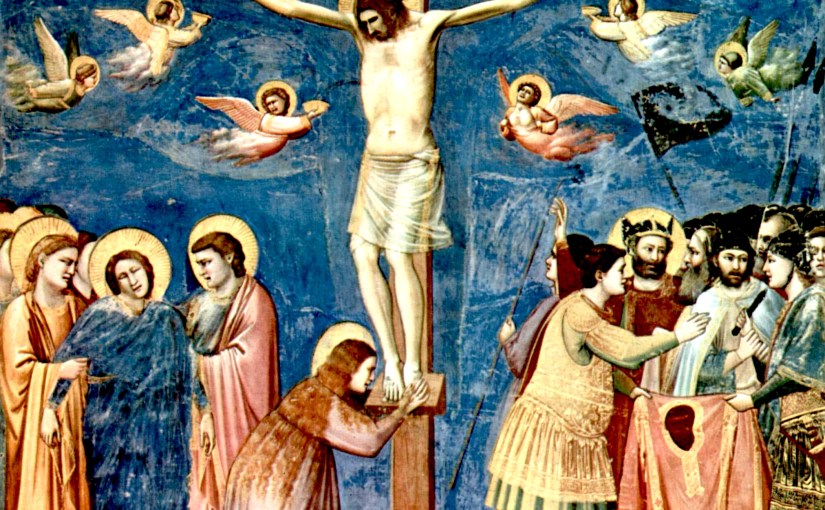
When I finally have time to pray and reflect on the direction my iconography is leading me, I often discover that artistic questions are also spiritual questions. Recently, my thoughts have returned again and again to Giotto, the great Italian painter of the late 13th and early 14th centuries.
If I listen carefully to that still, small voice guiding my work, I sense an invitation to understand Giotto more deeply — not only visually, but spiritually. His art seems to stand at a threshold: faithful to the sacred language of icons while opening new ways for humanity and incarnation to be seen in Christian art.
I share these reflections in the hope that they may inspire you — whether through Giotto himself or through whatever artistic path God is unfolding within your own practice.
The Artistic World Giotto Inherited
Giotto did not emerge in isolation. The world into which he was born brought together four powerful artistic traditions:
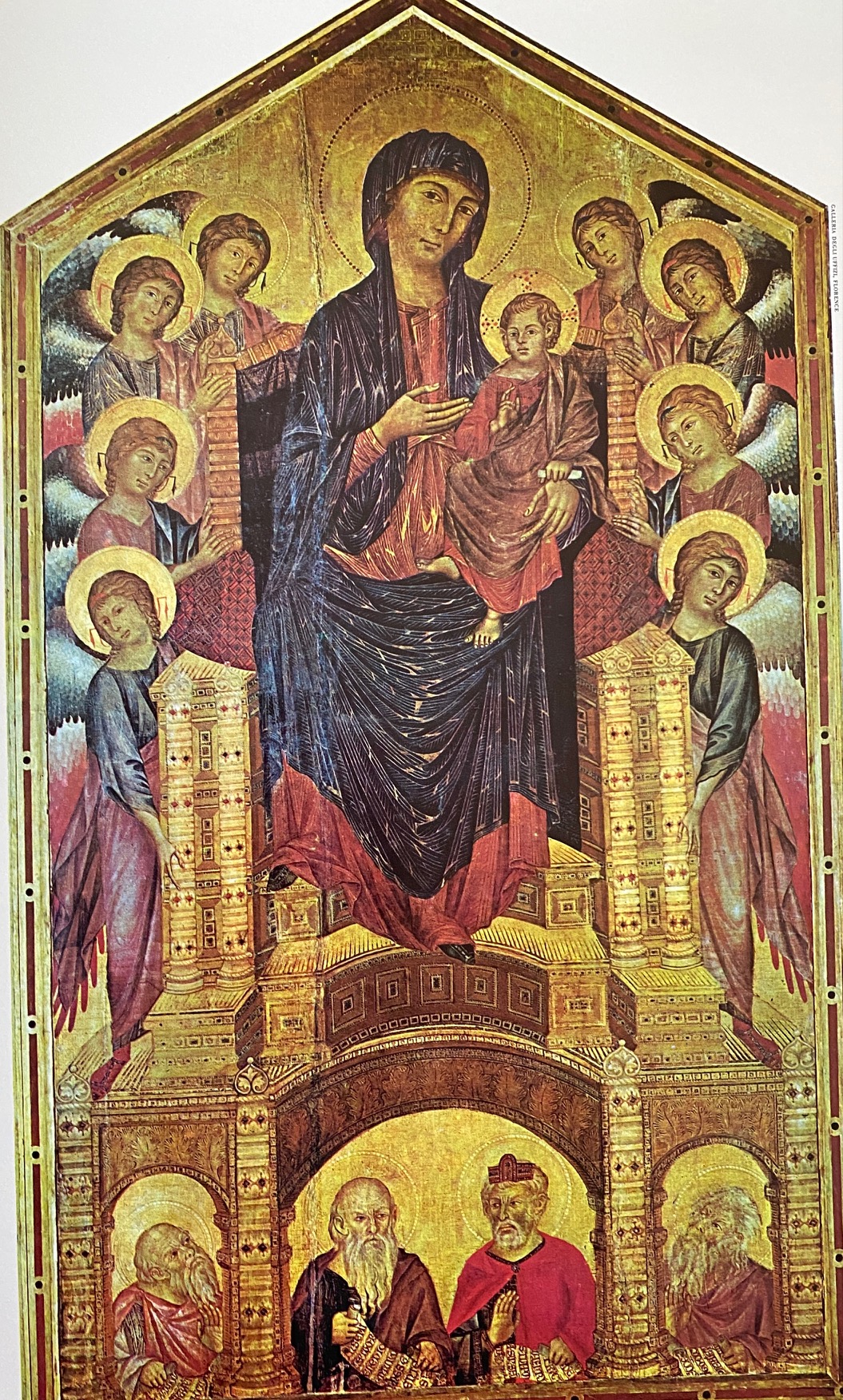
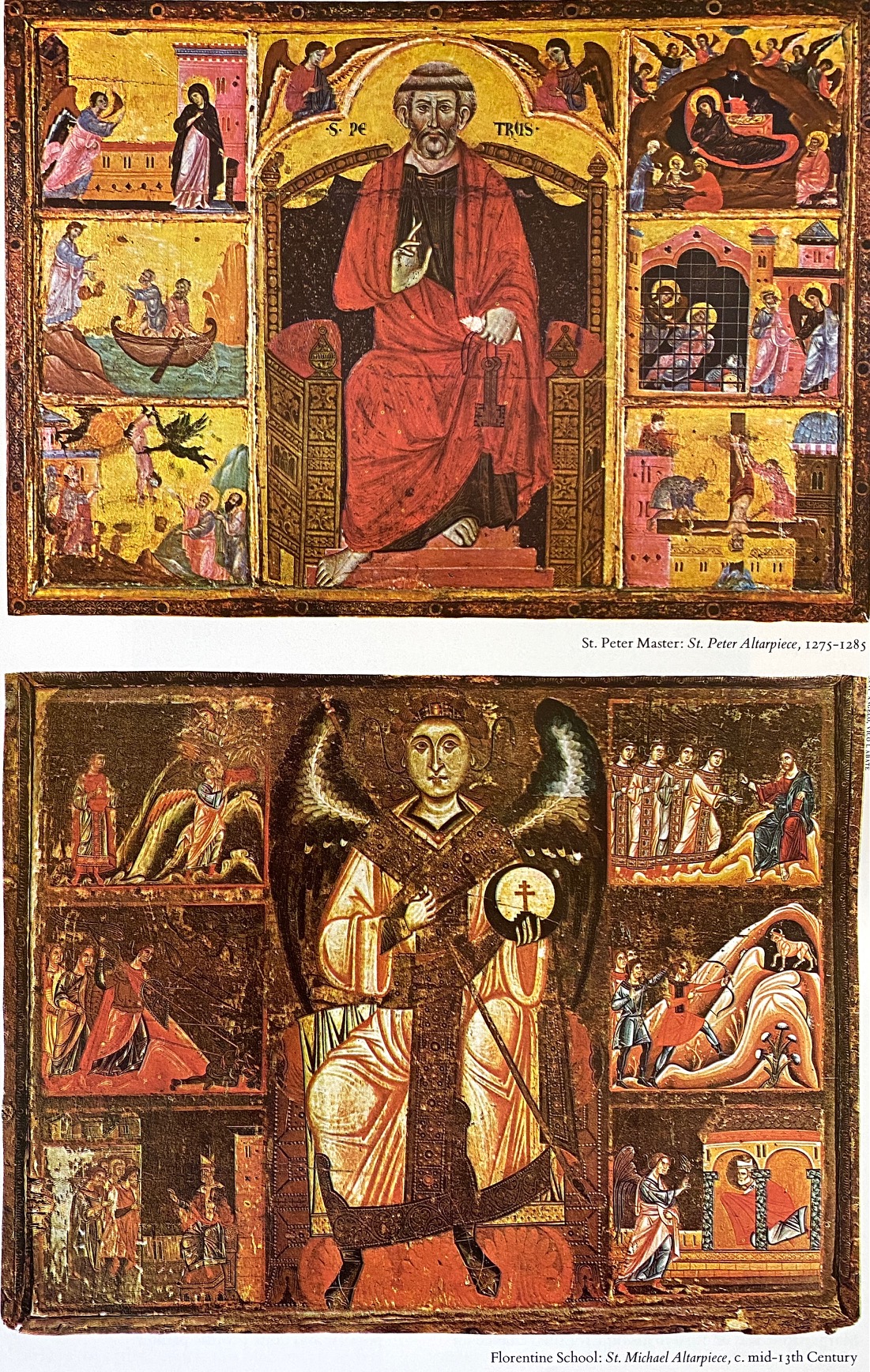
Byzantine Art arrived from the Christian East. Its forms were austere, hierarchical, and spiritually focused. Figures appeared frontal, solemn, and often flattened against gold backgrounds, emphasizing transcendence over earthly realism. The icon was never merely decorative — it was theological vision made visible.
Romanesque Art blended classical Roman inheritance with native European expression. Geometry, symbolic animals, and decorative motifs dominated, reinforcing sacred order rather than individual psychology.
Gothic Art began introducing greater emotional expression and observation of the natural world. Figures gained movement, narrative clarity, and human presence.
Classical Influence quietly persisted beneath all these styles, preserving an awareness of volume, structure, and bodily presence inherited from antiquity.
Giotto stood precisely at the convergence of these traditions.
From Icons to Narrative Devotion
By the late 12th century, Italian religious art was already evolving. Devotional imagery moved through a clear progression:
- monumental crucifixes,
- Marian icons,
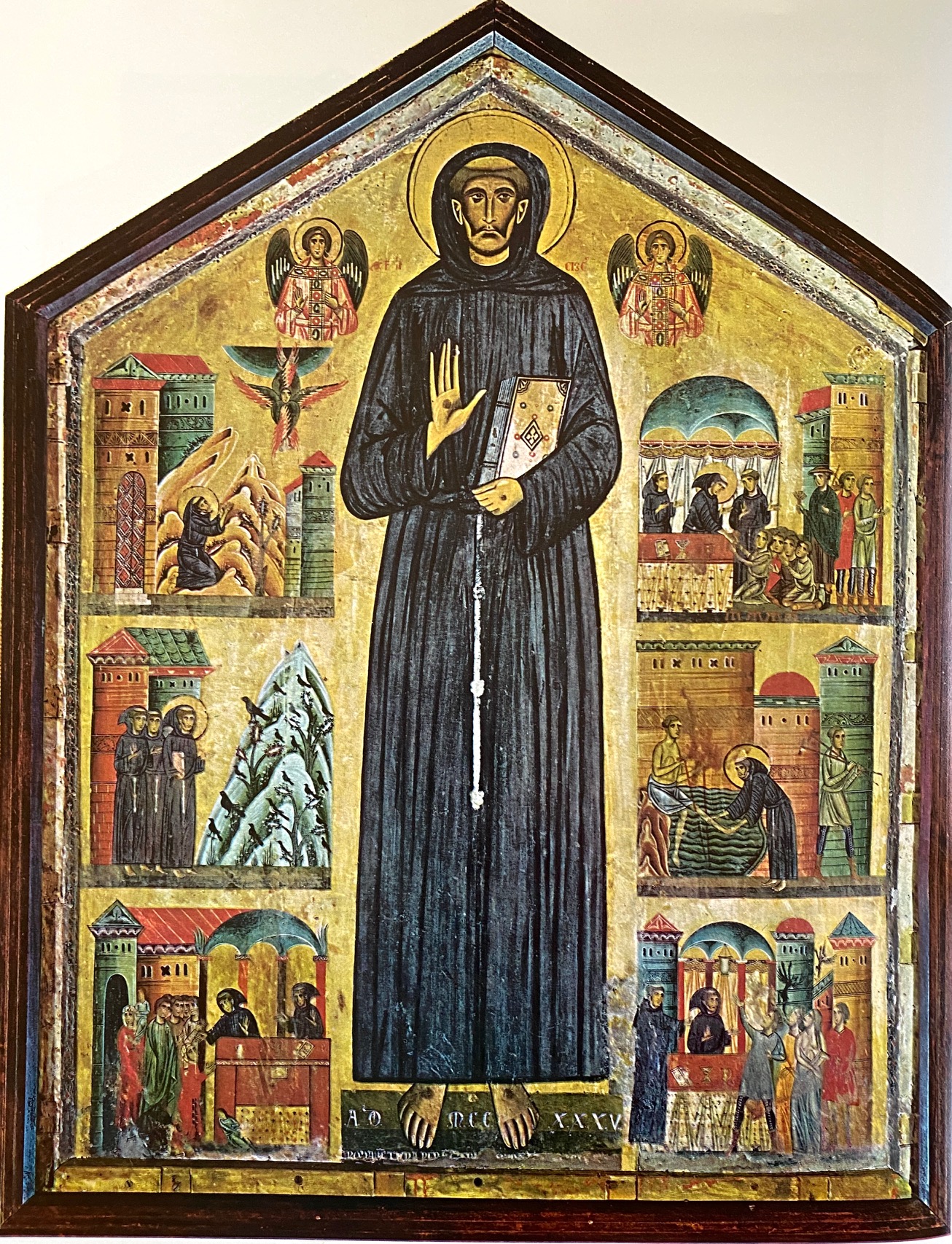
- and eventually painted panels narrating the lives of saints.
These panels, commissioned for churches, chapels, and altars, often included narrative side scenes recounting a saint’s life in vivid detail. They functioned much like extended icons — inviting contemplation through story as well as presence.
Here we begin to see the seeds of Giotto’s transformation.
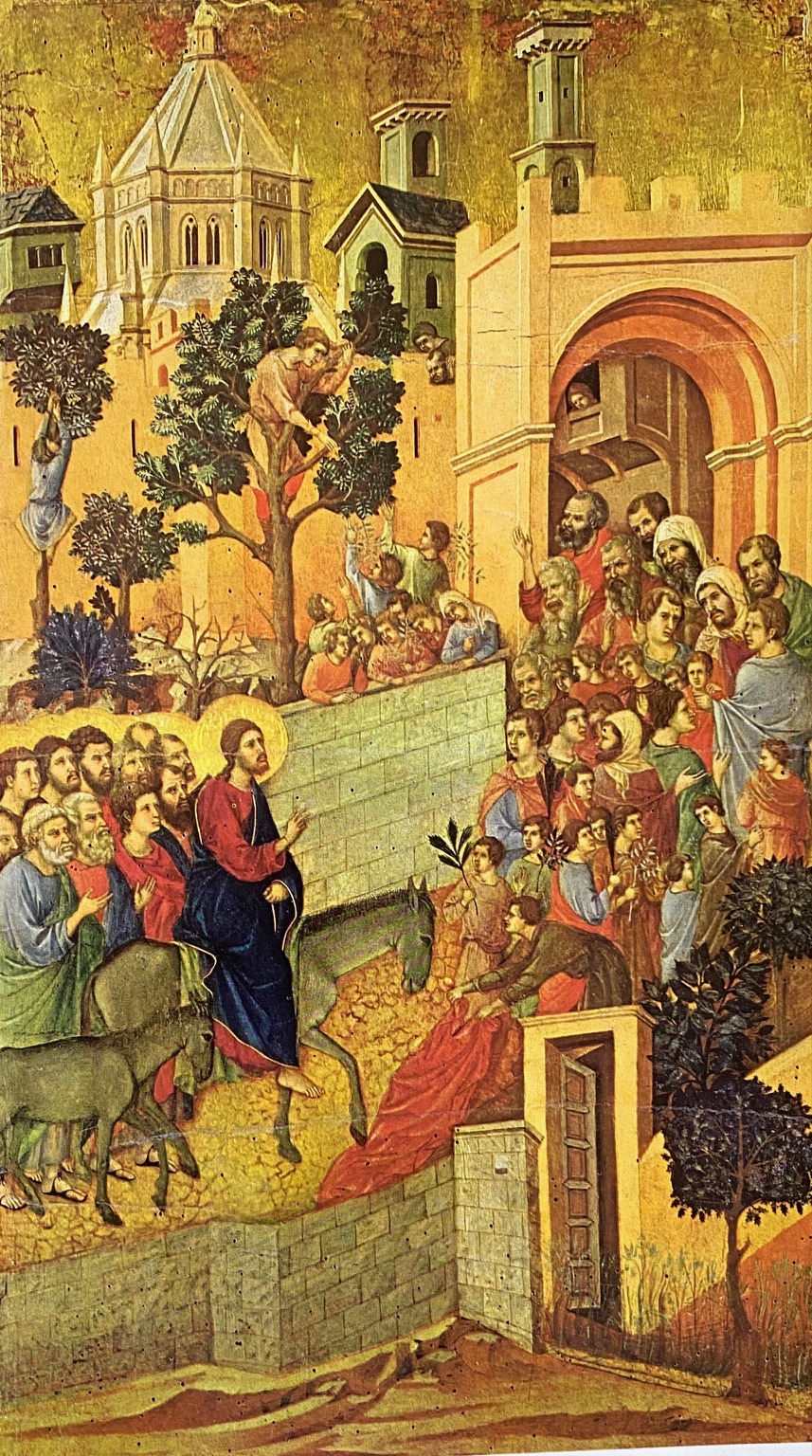
Giotto’s Breakthrough
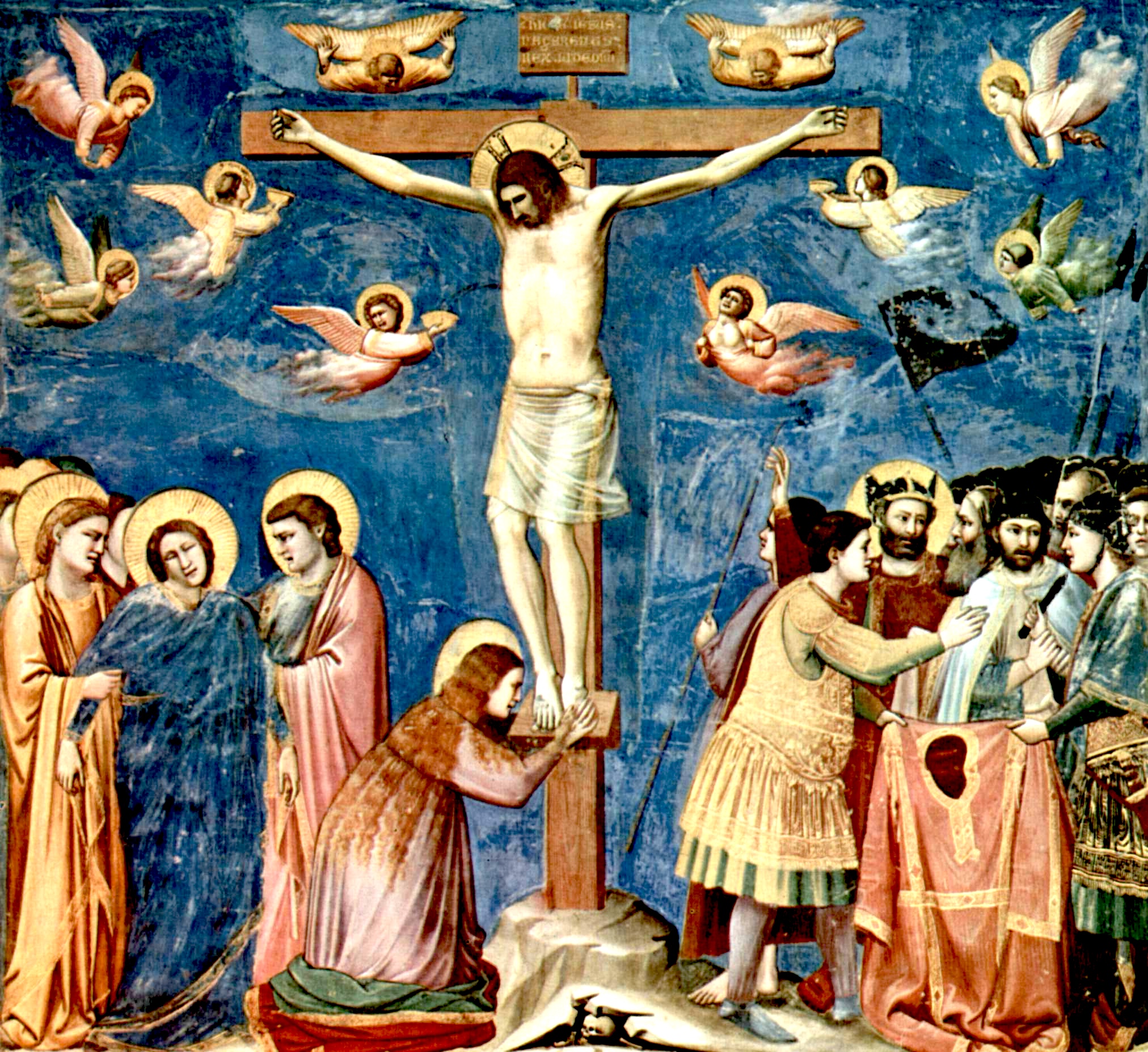
Early masters such as Pietro Cavallini were already experimenting with greater naturalism when Giotto arrived in Rome. Yet Giotto accomplished something profoundly new.
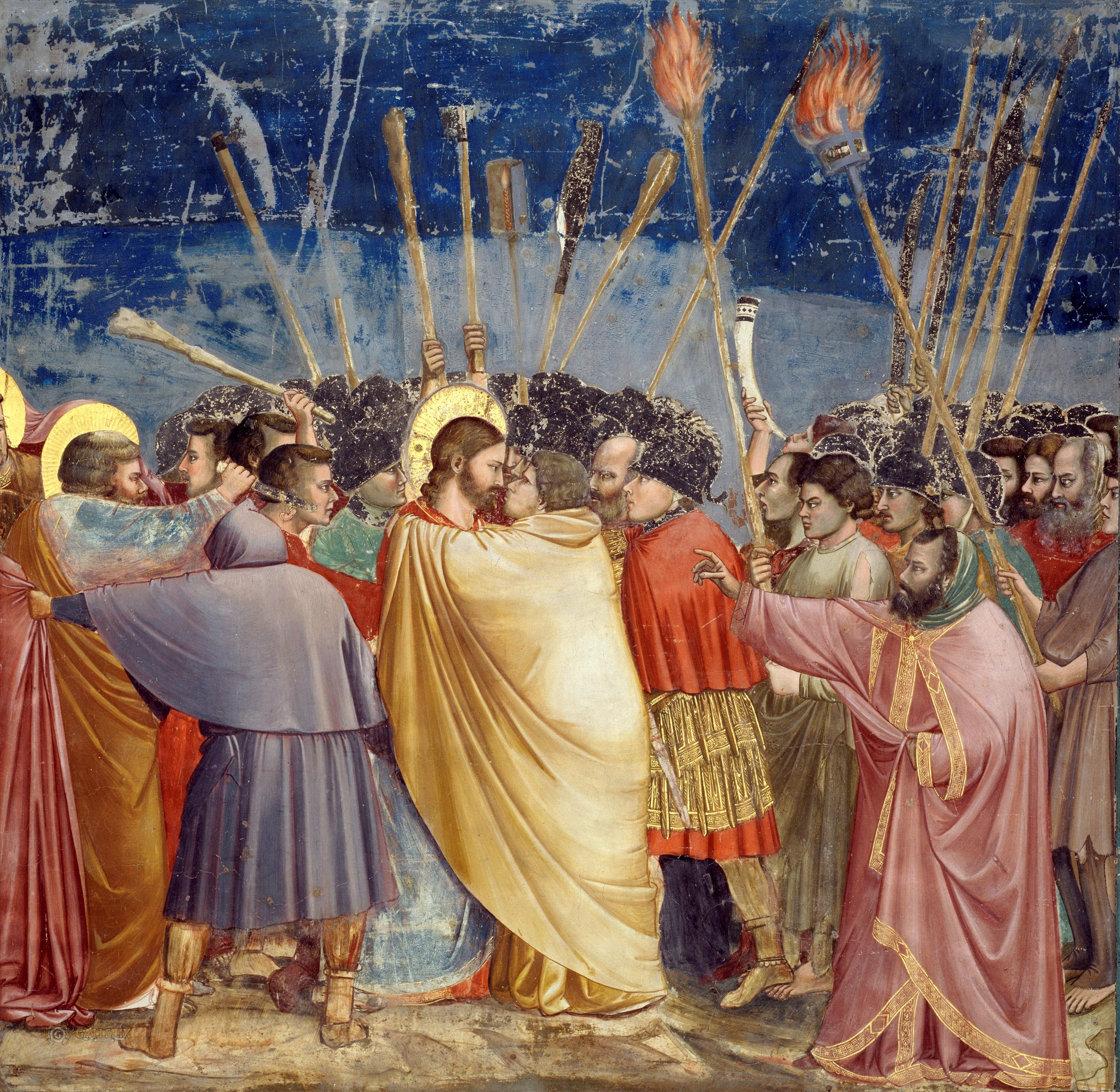
He carried forward the theological seriousness of Byzantine iconography while reintroducing human weight, emotion, and spatial reality.
His greatest works moved beyond panel icons into large narrative fresco cycles. Figures became monumental and grounded. Saints occupied believable space. Gestures conveyed relationship and interior life.
Giotto did not abandon the sacred purpose of images — he deepened it.
Where the icon proclaims eternity breaking into time, Giotto allowed viewers to experience salvation history unfolding within human experience itself.
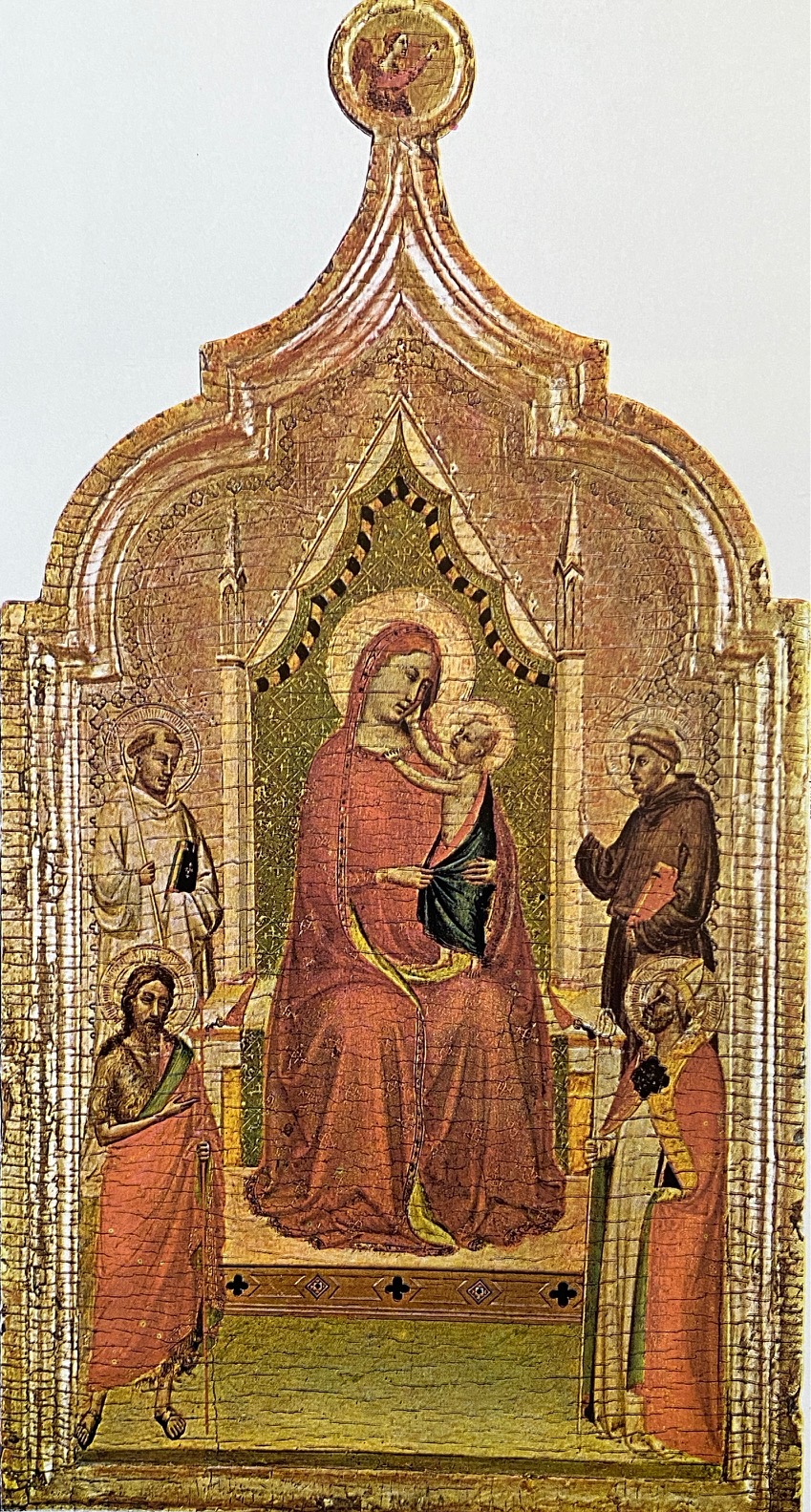
The Circle Around Giotto
Giotto’s influence quickly shaped the next generation.
Bernardo Daddi, a younger contemporary, absorbed Giotto’s solidity of form while retaining the refined decorative elegance associated with the Siennese school.
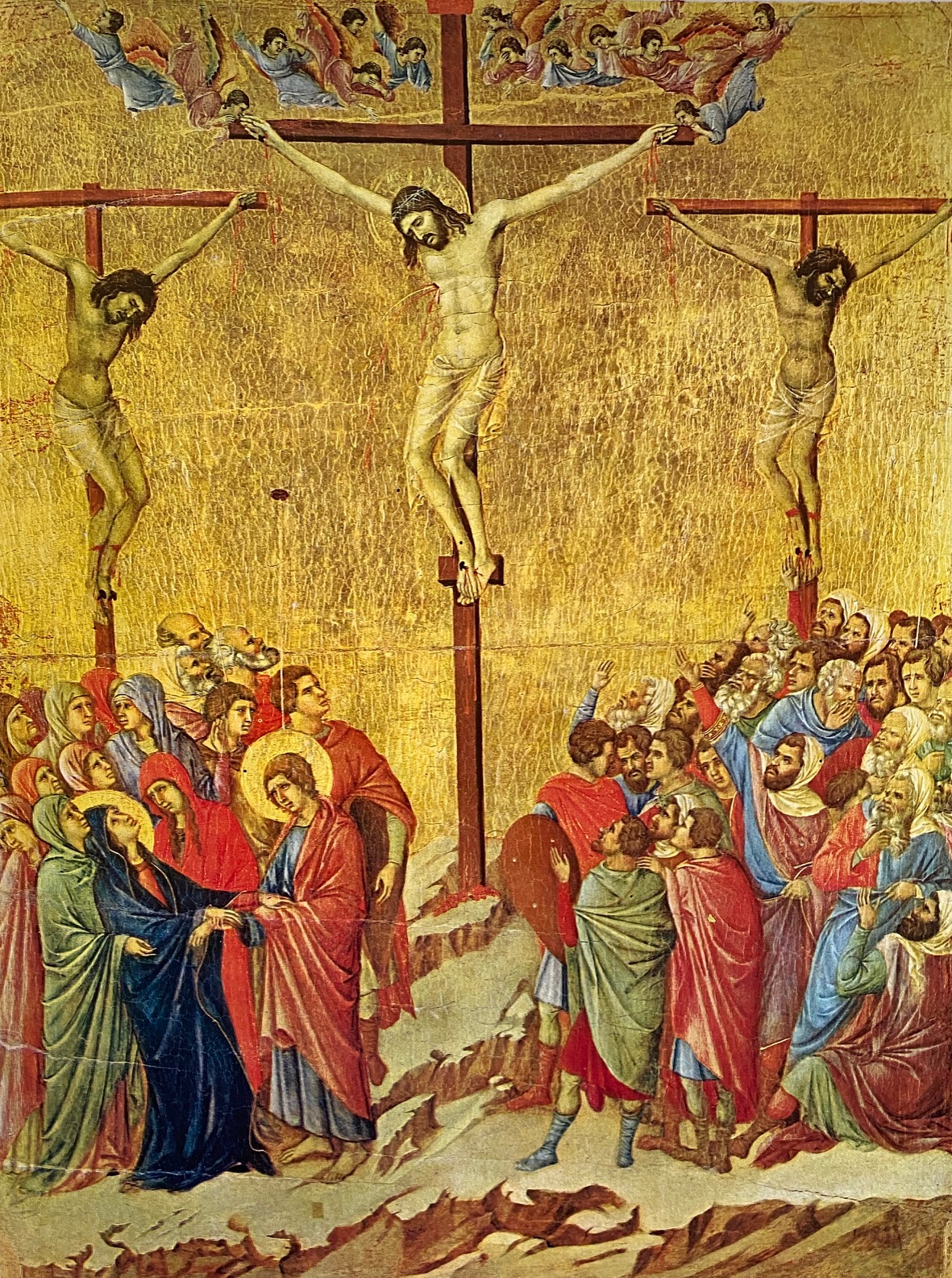
Meanwhile, Duccio of Siena brought Byzantine inheritance into a lyrical and expressive direction. His rhythmic lines and luminous colors communicate joy and hope within sacred narratives. Though deeply indebted to icon tradition, Duccio expanded emotional storytelling within devotional painting.
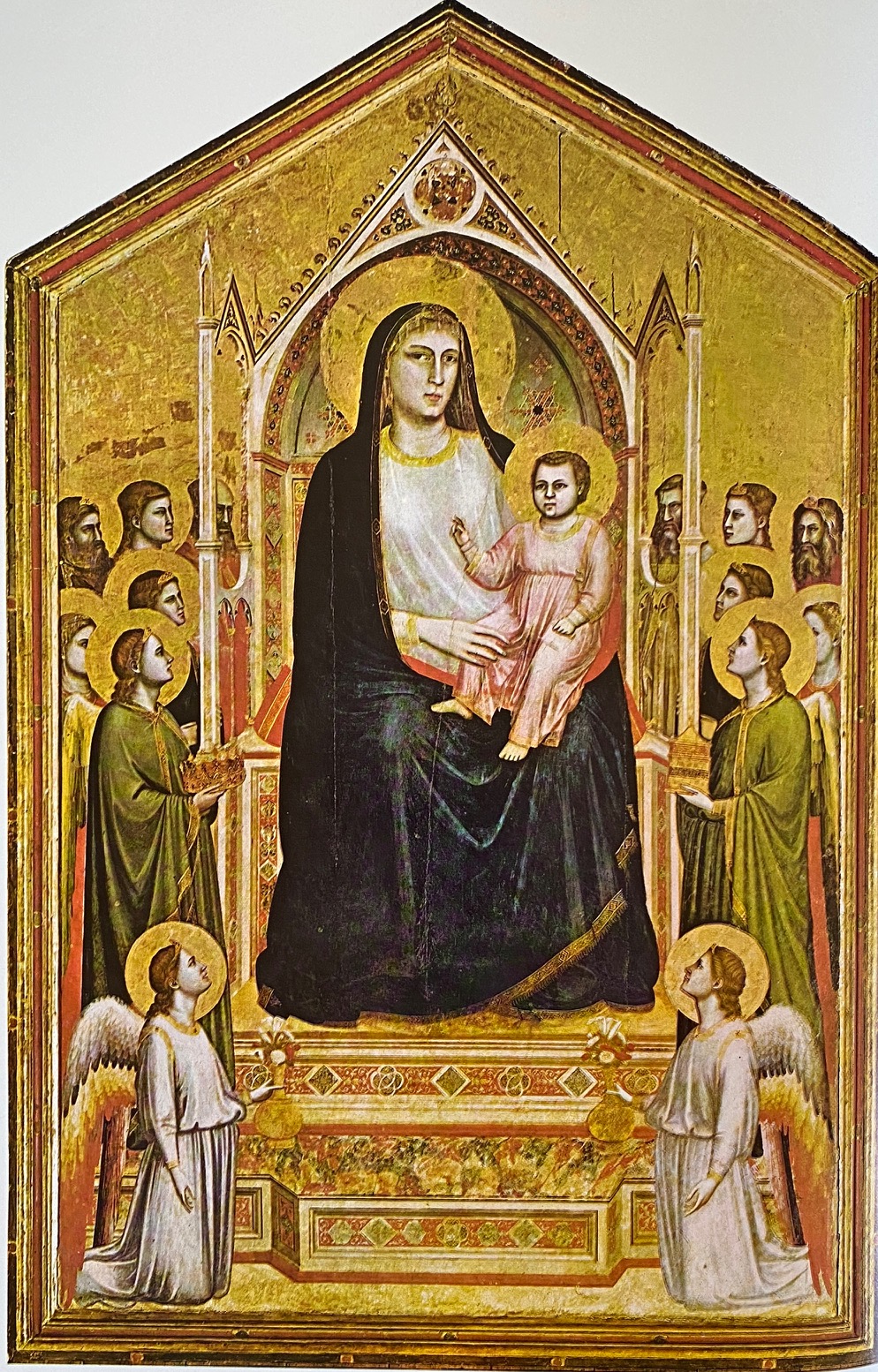
Together, these artists demonstrate that tradition is never static. The iconographic vision was not abandoned; it was translated for new spiritual needs.
Technique, Craft, and the Artist’s Life
The technical continuity of this period is preserved in the remarkable treatise by Cennino Cennini, The Craftsman’s Handbook. Written in the early 15th century and deeply influenced by Giotto’s legacy, the text reveals the working life of medieval painters.
Cennini describes everything from preparing pigments and panels to fresco technique and gilding. What emerges is not merely instruction but a worldview: the artist as disciplined craftsman serving sacred purpose.
For iconographers today, this continuity is striking. Many of us still grind pigments, prepare panels, and apply gold in ways recognizable to these early masters. The physical practice itself becomes prayer.
Giotto and the Iconographer Today
Why does Giotto matter to iconographers?
Because he reminds us that fidelity to tradition does not mean immobility.
Icons reveal the transfigured world — humanity illuminated by divine light. Giotto’s achievement was to show that the Incarnation also sanctifies human emotion, gesture, and lived experience.
He stands not as a rejection of iconography but as one of its great interpreters.
For those of us writing icons today, his work asks an important question:
How do we remain faithful to the theological vision of the icon while speaking meaningfully to the spiritual eyes of our own time?
A Personal Reflection
As I continue my own journey in iconography, I find myself increasingly grateful for artists like Giotto who listened deeply to both tradition and inspiration. Their courage encourages us to remain attentive to where the Holy Spirit may be guiding our work.
Perhaps your inspiration will not come from Giotto. Perhaps it will arise from a saint, a text, a teacher, or a quiet discovery in your studio.
But when that inspiration arrives, it is worth following.
Sacred art has always grown this way — through prayer, attention, and faithful response.
And in that sense, the icon tradition is not behind us.
It is still unfolding.
Blessings and prayers,
Christine Hales
Sources: “The World of Giotto”, C. 1267-1337, Time-Life Books, Sarel Eimerl
My Internet links: LINKS For Christine Simoneau Hales 2026
American Association of Iconographers Website: https://americanassociationoficonographers.com
https://newchristianicions.com my main website
Https://christinehalesicons.com Prints of my Icons
https://online.iconwritingclasses.com my online pre-recorded icon writing classes
https://www.youtube.com/channel/UCK2WoRDiPivGtz2aw61FQXA My YouTube Channel
Facebook: https://www.facebook.com/ChristineHalesFineArt or https://www.facebook.com/NewChristianIcons/
Instagram: https://www.instagram.com/christinehalesicons/?hl=en
American Association of Iconographers: FB Group: https://www.facebook.com/groups/371054416651983

 American Association of Iconographers