


Reflections on Constantine Cavarnos’ Guide to Byzantine Iconography
This month I would like to share several reflections drawn from Constantine Cavarnos’ important work, Guide to Byzantine Iconography. For those of us laboring in our studios today, the questions he raises remain foundational:
How do we create new icons for contemporary Christians while faithfully preserving the original intentions of the earliest sacred images?
The Formation of Hieratic Types
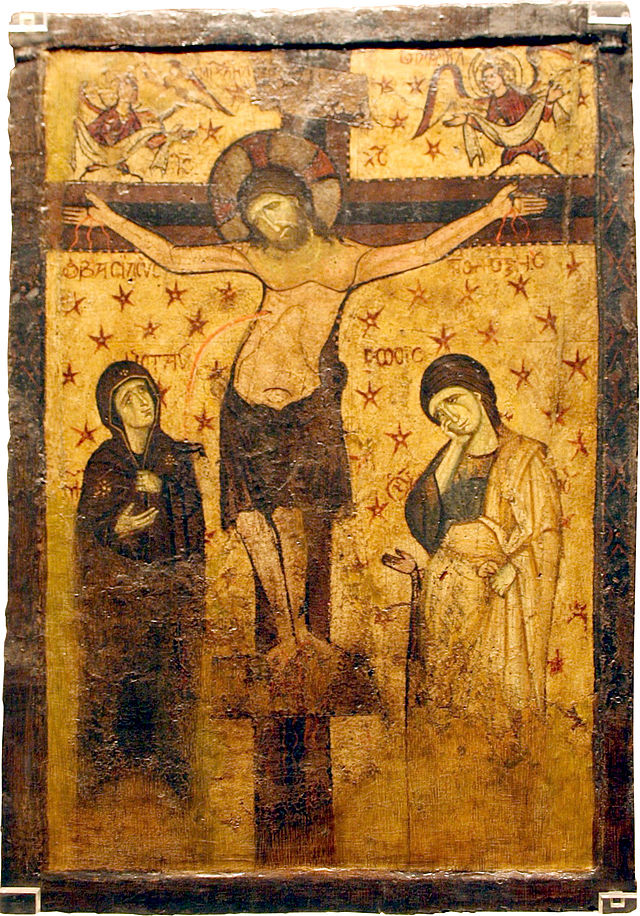
In the early centuries of Christian art, the Church Fathers recognized the necessity of establishing hieratic types—sacred prototypes that would serve as authoritative visual theology. These were not merely artistic conventions. They formed a coherent, didactic, allegorical system intended to guide both iconographers and the faithful.

Cavarnos writes:
“The purpose of depicting these consecrated types was to contribute to the edification of the faithful… Through them, the Church recommends to the faithful a hidden, spiritual teaching.”
The earliest biblical scenes—many preserved in the frescoes of the Roman catacombs (2nd–4th centuries)—already demonstrate this theological intentionality. The selection of subjects was not arbitrary. It was shaped by the symbolism of the Gospels and Apostolic writings, and guided by the Spirit within the life of the Church.
The Long Refinement of the Archetypes

Photios Kontoglou expresses this development with particular clarity:
“The archetypes of Byzantine Iconography are the result of centuries of spiritual life, Christian experience, genius, and work. The iconographers who developed them regarded their work as awesome, like the dogmas of the true Faith, and they worked with humility and piety, on types that had been handed down to them by earlier iconographers, avoiding all inopportune and inappropriate changes. Through long elaboration, these various representations were freed from everything superfluous and inconstant, and attained the greatest and most perfect expression and power.”
This passage is worth lingering over. The archetypes were not invented in a moment of individual inspiration. They were purified over centuries—stripped of the accidental, the sentimental, and the merely fashionable—until they achieved distilled spiritual clarity.
What remains is not stylistic rigidity, but theological precision.
Why We Copy Pre-Renaissance Icons

Most of us were trained with the guidance: copy icons from before the Renaissance. Cavarnos and Kontoglou help us understand why.
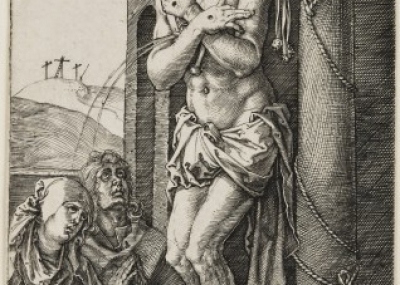
From the Renaissance onward, Western art increasingly emphasized naturalism, individual expression, and worldly concerns—even within Christian subject matter. The center of gravity shifted toward human emotion and physical realism.
By contrast, the Byzantine tradition preserved the ancient archetypes. Because it maintained continuity with the established types, it retained its spiritual luminosity and theological integrity. The icon remained what it was intended to be: not a window into psychological narrative, but a window into eternity.
To copy pre-Renaissance icons, then, is not antiquarianism. It is fidelity to a theological vision refined by centuries of ecclesial experience.

Our Responsibility in the Studio
For those of us creating icons today, the task is both humble and demanding:
- To revive the archetypes with reverence.
- To avoid unnecessary innovation.
- To allow the forms to shape us rather than imposing ourselves upon them.
- To participate in a tradition that is larger than our individual artistic impulse.
If the early iconographers regarded their work as “awesome, like the dogmas of the true Faith,” then so must we.
May these reflections strengthen and give wings to your holy practice. May our work, grounded in the consecrated types, continue to edify the faithful and communicate the hidden, spiritual teaching entrusted to the Church.
Until next month,
Christine Hales
Artist / Iconographer
Interesting Links For Iconographers:
International juried exhibition of contemporary sacred art The Light of the Logos (Svetlost Logosa), which will take place 1–16 September 2026 at the Kolarac Endowment Gallery in Belgrade, Serbia. OPEN CALL FOR APPLICATIONS: https://kaleidoskop-media.com/svetlost-logosa/open-call-the-light-of-the-logos-2026. Short video from last year’s edition: https://youtu.be/pP7KpbV_6lU
From Dorothy Alexander, Santa Barbra CA, An Orthodox Liturgical Arts Retreat is being offered at Echo Park, CA (7.26 – 8/1/26). 1) Mosaic and Repoussé/Sgraffito and 2) Egg Tempera Iconography. Micah Andrews is a mosaic master and we are also blessed to have Dr. Victoria Brennan presenting and teaching. Contact Dorothy Alexander by email or text for more information, dotalexander@westmont.edu, or (805) 708-0453.
LINKS For Christine Simoneau Hales 2026
- https://newchristianicions.com my main website
- Https://christinehalesicons.com Prints of my Icons
- https://online.iconwritingclasses.com my online pre-recorded icon writing classes
- https://www.youtube.com/channel/UCK2WoRDiPivGtz2aw61FQXA My YouTube Channel
- Facebook: https://www.facebook.com/ChristineHalesFineArt or https://www.facebook.com/NewChristianIcons/
- Instagram: https://www.instagram.com/christinehalesicons/?hl=en
- American Association of Iconographers: FB Group: https://www.facebook.com/groups/371054416651983
- American Association of Iconographers Website: https://americanassociationoficonographers.com






 American Association of Iconographers