Illuminating the Spirit: A Summer Reading Guide for Iconographers

Books and Inspiration to Enrich Your Icon Writing Practice

Summer unfurls like a painted scroll—light streaming through open windows, quiet hours stretching across the day, and, for the iconographer, a rare invitation to rest, reflect, and replenish the wellspring of inspiration. Whether you are a seasoned writer of icons, a beginner who has just dipped their brush into the egg tempera, or simply a lover of sacred art, the summer months offer an ideal time to step back from the demands of daily creation and immerse yourself in the wisdom, history, and spirituality that underpin the venerable and holy tradition of iconography.

Why Read in Summer? The Sacred Pause

In the stillness of summer, reading becomes a sacred pause—a time to deepen your understanding of icons not just as objects of devotion, but as living prayers in color and line. Iconographers often speak of their art as an act of contemplation: every stroke is a prayer, every layer a meditation. So too can reading be a contemplative act, enriching the mind and spirit while opening new vistas for creativity.

Foundational Texts: Revisiting the Roots

  • The Meaning of Icons by Leonid Ouspensky and Vladimir Lossky. This classic introduces the theological, spiritual, and artistic foundations of iconography. Through its pages, readers are led to understand the icon as a window to the divine, a theology in pigment, and a bridge between heaven and earth.
  • Icons and Saints of the Eastern Orthodox Church by Alfredo Tradigo. Tradigo’s compact yet richly illustrated guide offers both historical context and practical wisdom. Each page is a pilgrimage through time, introducing saints, feasts, and the symbolic language of orthodox sacred art.
  • Icons as Communion by George Kordis. Kordis brings the ancient tradition into the present, with notes and observations on the drawing stages in icon painting. Amazon Link
  • Orthodox Icon Patterns, Patterns and sketches for Iconographers: This is the revised version of Patterns & Sketches for Iconographers, with added content and additional patterns. A valuable resource for iconographers, this book contains a wide variety of patterns and sketches. Content including; icon patterns of the Nativity, the Theotokos, archangels, male and female saints, as well as halo patterns and 2 beautiful crucifixion crosses. Buildings and fabric/ background designs and icon borders. Each pattern is accompanied by color recommendations which are meant as a general guide allowing for adjustments due to differences in color names between pigments used with egg tempera and acrylic paints.  (There is also a Volume II if you like this one.). Amazon Link

Summer reading need not always be heavy with theory or thick with history. Sometimes, lighter fare—biographies, memoirs, and even novels—can kindle the imagination and nurture the soul of the artist. You might consider adding a few of these to your summer list:

  • Praying with Icons by Jim Forest. Accessible and warmly written, Forest’s reflections on the role of icons in prayer lift the heart and draw the reader into a deeper appreciation of how icons shape and are shaped by the life of faith.
  • The Mystical Language of Icons by Solrunn Ness.  Nes explores in depth a number of famous icons, including those of the Greater Feasts, the Mother of God, and a number of the better-known saints, enriching her discussion with references to Scripture, early Christian writings, and liturgy. She also leads readers through the process and techniques of icon painting, showing each step with photographs, and includes more than fifty of her own original works of art. Amazon Link
  • And if you would enjoy a deep dive into the life of the Blessed Mother Mary, I recommend “The Life of the Blessed Virgin” from the visions of Ann Catherine Emmerich, Incredibly revealing and edifying background of Our Lady, her parents and ancestors, St. Joseph, plus other people who figured into the coming of Christ. also available on Amazon: Amazon Link
  • And also “True Devotion to Mary” by Louis de Montfort: Considered by many to be the greatest single book of Marian spirituality ever written, True Devotion to Mary is St Louis de Montfort’s classic statement on the spiritual way to Jesus Christ though the Blessed Virgin Mary. Amazon Link
  • And last, but not least, is my own book on Icon writing, “Eyes of Fire, How Icons Saved My Life As an Artist”, with an appendix full of directions as well as an explanation of how modern art has been influenced by icons and how some of those principles can be used in present day icon creation.  Amazon Link

As the art historian Roger Lipsky says in his book, “An Art of Our Own, the Spiritual in Twentieth Century Art”, “One of the tasks of the spiritual in art is to prove again and again that vision is possible; that this world, thick and convincing, is neither the only world nor the highest, and that our ordinary awareness is neither the only awareness nor the highest of which we are capable.”
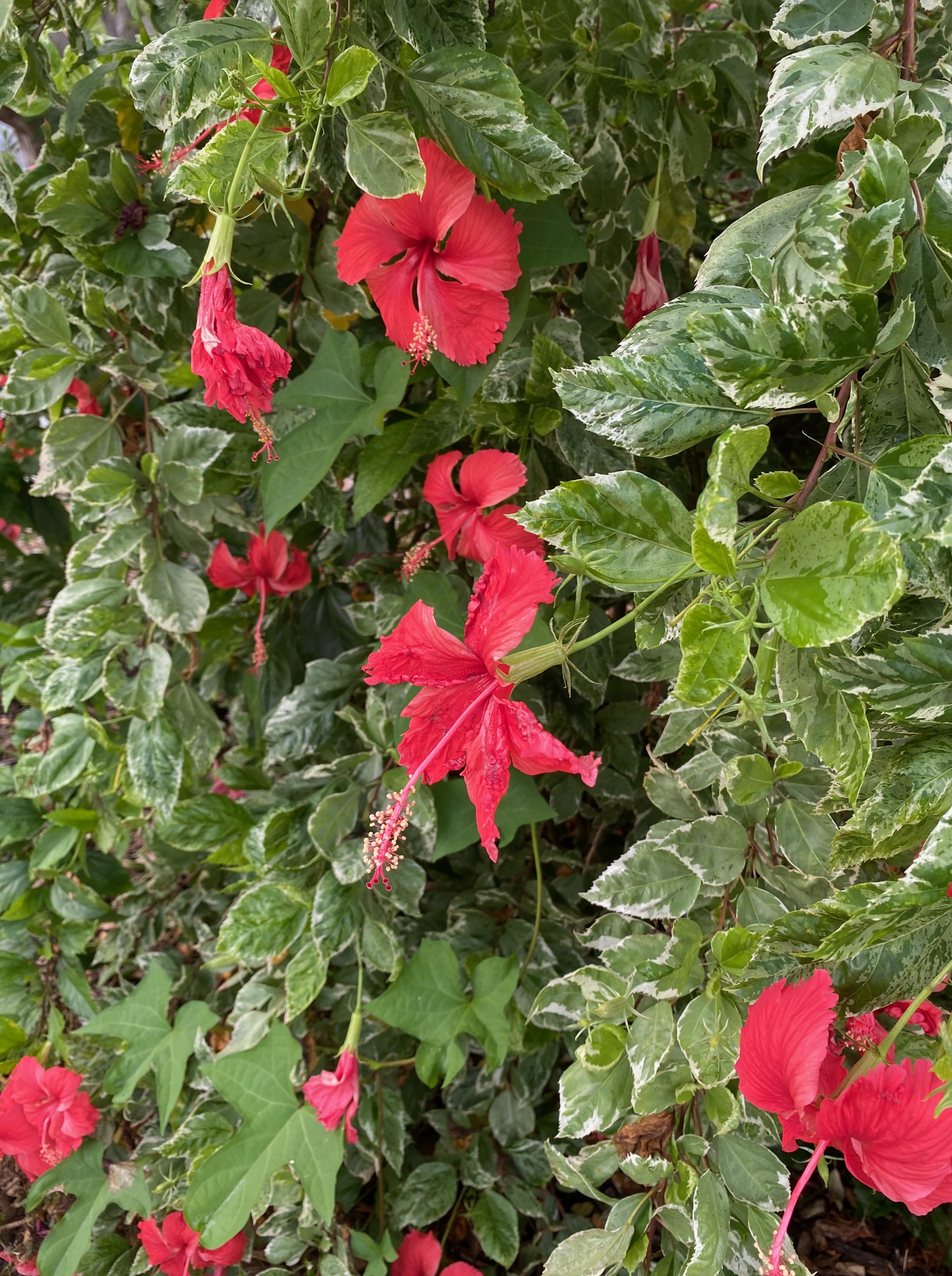
And so my purpose in sharing this list of inspirational summer reading is to encourage you to engage with the ‘pause” of the longer summer days, and ponder on the beauty of nature and be open to glimpses of eternity that a fresh perspective can often foster. And then let this “higher”perspective inform your icon practice in the coming year,. In the words of Aidan Hart, in his book, “Beauty, Spirit, Matter, Icons in the Modern World, “The Icon invites us to see the world as God sees it.” With nature all around of us. may God bless us with His perspective and insights to carry forward into our work.

Until next month,

Christine Simoneau Hales, Iconographer/artist

My Websites:

  1. https://newchristianicions.com   my main website
  2. Https://christinehalesicons.com  Prints of my Icons
  3. https://online.iconwritingclasses.com  my online pre-recorded icon writing classes
  4. https://www.youtube.com/channel/UCK2WoRDiPivGtz2aw61FQXA  My YouTube Channel 
  5. Facebook: https://www.facebook.com/ChristineHalesFineArt     or  https://www.facebook.com/NewChristianIcons/
  6. Instagram:   https://www.instagram.com/christinehalesicons/?hl=en
  7. American Association of Iconographers:  FB Group: https://www.facebook.com/groups/371054416651983
  8. American Association of Iconographers Website: https://americanassociationoficonographers.com
Making Pigments, A Fine Summer Project!

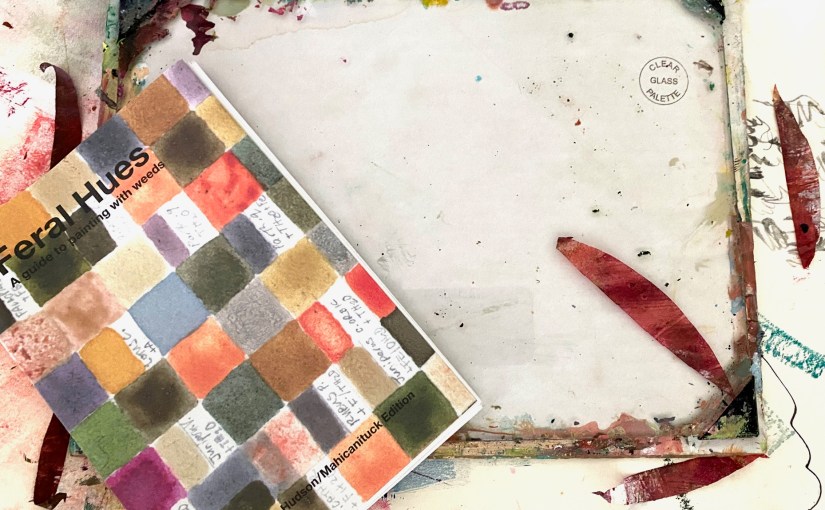
Lately I’ve become very excited about making some of my own pigments. It all started with my discovery of a book written by Ellie Irons “Feral Hues”, A Guide to Painting with Weeds. It’s a lovely book, packed with examples, color samples, pigment charts and insights into gathering, experiencing, and creating pigments from weeds, or common plant that currently grow in the Hudson Valley- my former home. https://www.publicationstudio.biz/books/feral-hues-a-guide-to-painting-with-weeds/

The Feral Hues Book on My Studio Table

The colors are so delicate and resonate with a natural authenticity that I realized I wanted to include something like this in my icon writing practice.  I often enjoy experimenting and incorporating new techniques in my painting practice and this idea of connecting more with the natural world around me seems like a new facet of praying and painting. It’s inspiring to engage with nature and makes me happy to think of how this duplicates artist practices from the ancient world.

So I have done some research, which I provide here, along with some links to YouTube videos demonstrating different approaches to pigment making from natural sources to maybe inspire you to collect some natural materials from your environment this summer to incorporate in your icons or icon sketches.  I would love it if any of you make your own pigments, or just experiment with doing so, would send photos and descriptions to me and I will post them all at the end of summer!

The Historical Context of Icon Pigments

The making of pigments for icons is deeply rooted in tradition. Orthodox Christian iconographers of the Byzantine and Russian schools, for instance, inherited their pigment recipes and with these traditions, making pigments is not merely a technical exercise—it is experienced as a sacred act, performed with prayer and reverence.

Early iconographers relied on the natural world to supply their colorants: minerals, plants, earths, and even insects. Over time, as trade routes expanded, so too did the palette, with rare minerals and exotic substances making their way into the hands of skilled artisans.

Today, we can enjoy the sense of connection with nature, authenticity and spiritual resonance inherent in the process.  But first, a short video to define qualities and properties of different pigments.

Raw Materials: The Source of Color

Pigments for icons originate from a remarkable array of materials, each with its own story:

  • Minerals: Lapis lazuli (yielding ultramarine blue), malachite (green), cinnabar (vermilion red), and ochres (yellows, reds, browns) are classic examples. These minerals are prized for their intensity, permanence, and rich symbolism.
  • Earth Pigments: Natural earths provide warm tones, such as siennas and umbers. Their subtlety and stability are essential for creating flesh tones and backgrounds.
  • Plant and Animal Sources: While less common, certain reds (like carmine) are derived from insects, and greens can be obtained from plant extracts. However, these tend to be less stable over time.

The Process of Making Pigments

Pigment-making is a precise and often labor-intensive process, requiring patience and a thorough understanding of both material and method. Let us walk through the general stages:

1. Sourcing and Preparing Raw Materials

Sourcing is the first challenge. Authentic pigments demand high-quality, uncontaminated raw materials. Stones must be carefully selected for color and purity. Once acquired, the raw material—be it a mineral or earth—is cleaned of any impurities. For stones, this can involve washing, sorting, and initial crushing.

2. Grinding and Levigation

The heart of pigment-making lies in the grinding. The raw material is broken down, traditionally using a mortar and pestle, into ever finer particles. This step is crucial: the fineness of the pigment determines its brilliance, texture, and how it mixes with the binder.

Levigation follows: the ground material is suspended in water, and the heavier, coarser particles are allowed to settle while the finer, more suitable material remains in suspension. This is then collected, dried, and stored.

3. Washing and Purification

Some pigments require further washing to remove soluble salts or other contaminants that could affect long-term stability. For certain minerals, repeated washing and filtering are essential to preserve both color and integrity.

4. Testing for Quality

Not all ground minerals make suitable pigments. Quality tests—rubbing a small amount onto a glazed tile, exposing it to light, mixing it with a test binder—help the iconographer judge hue, granulation, opacity, and permanence.

Spiritual and Symbolic Dimensions

For the iconographer, making pigments is more than craft; it is a spiritual discipline. Every act—from choosing the finest lapis lazuli or malachite to breaking and grinding local river stones is done prayerfully, often accompanied by the recitation of psalms or other devotions. In the tradition, the humility demanded by such painstaking labor is itself a form of worship, aligning the artist with the saints and ancestors who have gone before.

Making Pigments From Flowers

Color holds profound symbolic meaning in the icon. Gold, for example, does not symbolize worldly wealth, but rather the uncreated light of God. Red conveys divine life and resurrection; blue, mystery and transcendence; green, renewal. The careful selection and preparation of each pigment ensures the icon communicates not just beauty, but theological truth.

Challenges and Considerations in Modern Practice

While modern chemistry offers synthetic pigments of impressive intensity and consistency, many iconographers still prefer natural pigments for their authenticity and spiritual resonance. However, challenges abound:

  • Availability: Some minerals, like true lapis lazuli, are rare and expensive.
  • Ethical Sourcing: Ensuring that materials are procured responsibly and sustainably is increasingly important.
  • Health and Safety: Some traditional pigments, such as lead white or cinnabar, are toxic. Proper protective measures are essential.
  • Conservation: Icons must be made with materials that will endure, and so a careful balance between tradition and innovation is often sought.

Conclusion

The making of pigments for icons is a testament to the union of art, science, and faith. It is a craft that honors the natural world, reveres tradition, and aspires toward the sacred. In every grain of crushed stone, in every brushstroke of egg tempera, lies a profound continuity with the past—a legacy of devotion and excellence. Obviously, if we are painting with egg tempera, then egg will be our binder. But if you read some of the comments, there are other natural binders as well.

For those who practice the art of icon writing, making pigments can be a transformative journey. It is an invitation to slow down, to engage deeply with one’s materials, and to approach the act of creation as a form of prayer. In honoring the old ways, iconographers not only preserve a heritage, but also manifest, through color and light, the inexpressible mysteries of the spirit.

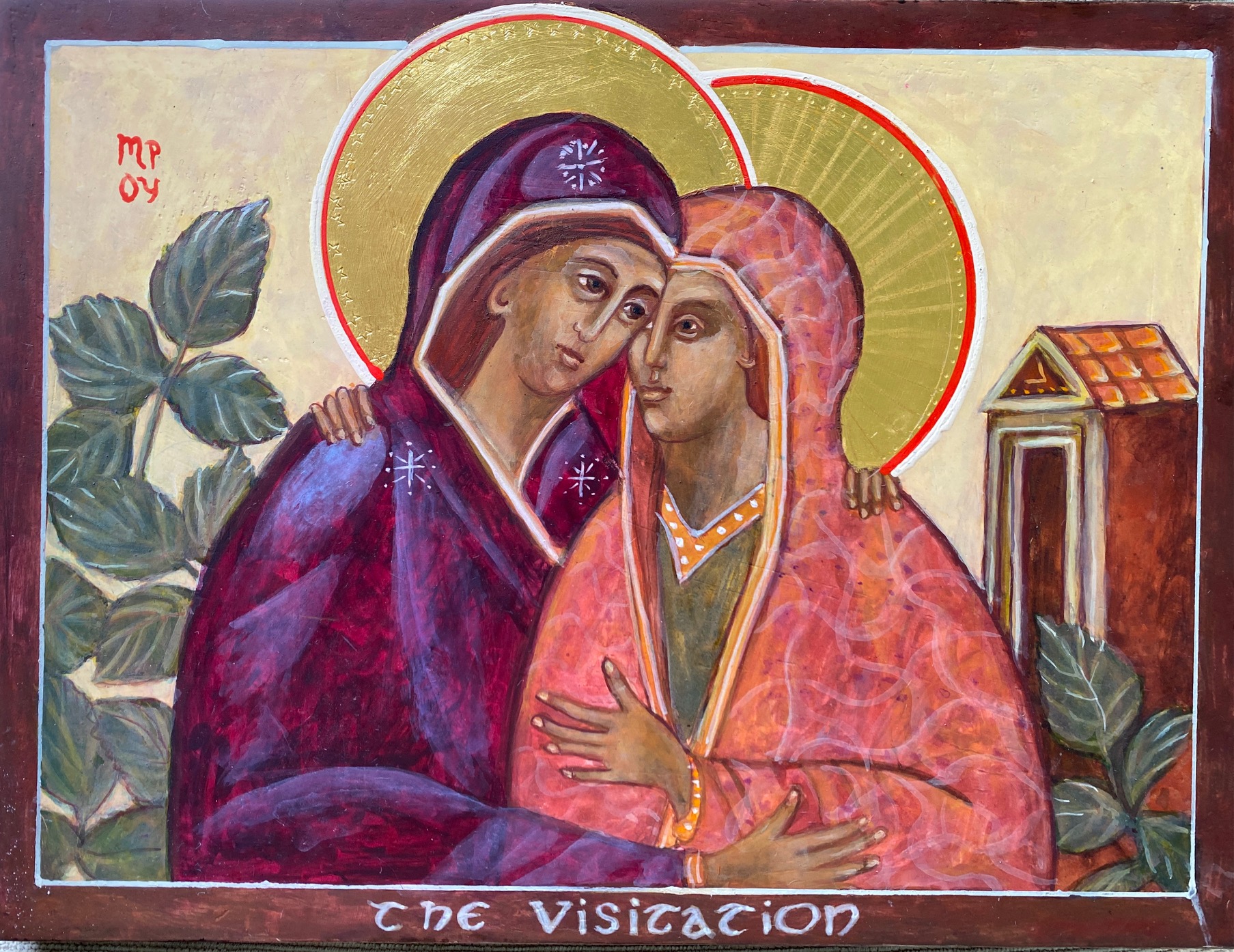
One of my new Icons, “The Visitation”. Christine Hales

I hope that you are enjoying reading this blog and invite those who have an interesting article or review that would contribute to iconography practice to email those to me for possible inclusion in future blogs.

May God continue to bless the work of your hands,

And may the grace of our Lord Jesus Christ, and the love of God, and the fellowship of the Holy Spirit be with us all forever.

Christine

Christine Simoneau Hales

Interesting Links for Iconographers:

These links were provided by Dorothy Alexander, an Iconographer and friend from California:

Here are most of my links:

LINKS For  Christine Simoneau Hales   2025

  1. https://newchristianicions.com   my main website
  2. Https://christinehalesicons.com  Prints of my Icons
  3. https://online.iconwritingclasses.com  my online pre-recorded icon writing classes
  4. https://www.youtube.com/channel/UCK2WoRDiPivGtz2aw61FQXA  My YouTube Channel
  5. Facebook: https://www.facebook.com/ChristineHalesFineArt     or  https://www.facebook.com/NewChristianIcons/
  6. Instagram:   https://www.instagram.com/christinehalesicons/?hl=en
  7. American Association of Iconographers:  FB Group:  https://www.facebook.com/groups/371054416651983

American Association of Iconographers Website: https://americanassociationoficonographers.com

Building Blocks

Christian Art After the Iconoclasm. 1000-1400 AD

Bayeux Tapestry

As Iconographers, I think we all realize that the Byzantine culture was influential in creating a nuanced visual language that was able to convey important principles of religious art .  Can we today consider and contemplate how the Byzantine style developed in order to create a visual language that can bring Christian concepts to our culture today?

An important influence of the development of Christian art in the 11th century was the schism, or split, in Christianity in 1054, which resulted in the Eastern Orthodox Church and the Western Roman Catholic Church. In the next centuries, each division of the church would develop its own culture and approach to worship, prayer, liturgy, and art.

Let’s Take a Look First at the Eastern Church’s Artistic Development

Santa Maria Church, Barcelona, Spain

The expansion of  monasticism was the main force behind the unprecedented artistic and cultural activity of the eleventh and twelfth century. In 963 AD, Athanasius of Trebizond founded the first monastery on Mt Athos, Greece.  Legend has it that early hermits were visited by The Virgin Mary who gave the place her blessing and there are many icons that convey this story and remembrance of the visitation .

In 988, Russia adopted Christianity and in 1017, Prince Yaroslavl the Wise erected the  Cathedral of St. Sophia in Kiev.  A Byzantium team of artists and iconographers, Russian and Greek, decorated the cathedral with beautiful frescoes and mosaics.

Biblia de Burgos, 12th Century

1054 began the schism between the Holy thrones of Rome and Constantinople, resulting in a wide divergence stylistically in religious art making that reflected differences in theological values between the two cultures.  The Eastern Church continued to develop the Icon, keeping the flat pictorial space of Egyptian art, and the simplicity of rendering human forms borrowed from the Greco Roman tradition of the early centuries.

In 1130, A miracle working icon, Our Lady of Vladimir Icon of the Virgin Mary was brought to Kiev. This icon has lasted through the centuries and today is a symbol of Love and Tenderness.

Our Lady of Vladimir

The Paleologue dynasty in Constantinople, 1259-1453, was the last resurgence of Byzantium. The attempt to have a rebirth of Byzantium after the sack of Constantinople in 1204, resulted in the rebuilding and decoration  of many churches, including Chora Church, which is considered one of the highest artistic achievements of that era.

Gregory Palamas, (1296-1359), was the Archbishop of Thessalonica and an eminent theologian  who supported Hesychasm, a mystical movement in Eastern monasticism that promoted fervent prayer, silence, and contemplation.  

Transfiguration by Theophanes

In 1378,  according to legend, Theophanes the Greek came to Russian from Byzantium, and painted the Church of the Transfiguration in Novgorod and many others, along with his student, Andrei Rubylev. This period of icon painting is considered by many to be one of the greatest achievements of Russian Iconography.

St. Sergius of Radonezh was a great Russian saint who promoted Russia’s spiritual revival.  He dedicated his monastery to the Holy Trinity and preached unity in love.  He taught brotherly love and divine service and commissioned the Holy Trinity Icon to be painted by Andrei Rubylev. Rubylev and St. Sergius were in large part responsible for Russia becoming one of the great centers of spiritual enlightenment in this time. St. Sergius passed away in 1392.

Holy Trinity. by Andrei Rubylev

In the West….

Religious art in 10th century Europe, also known as Romanesque art, was symbolic, vibrant, and hierarchical. It was characterized by its emphasis on the suffering of Christ and other sacred figures, and depicted saints and religious leaders as larger and more important than ordinary people. Artists also used animals, flowers, and fruits to convey religious messages and ideas. Some common symbols used in medieval Christian iconography include: Fire, light rays, or wind to symbolize the Almighty God; Lamb or fish: symbolize Jesus Christ and his love; Crucifix: Depicts Chrstianityand eternal life; a dove symbolizes the holy spirit from heaven or an individual’s soul, and lilies in a vase or water to portray the purity and spirituality of the Virgin Mary.

One of the most spectacular achievements of medieval artists in the west was their desire to emphasize heavenly light in their creation of places of worship.  Beginning with the 12thcentury, heavy, dark, Romanesque architecture began to be replaced by Gothic vaulted ceilings and flying buttresses that made it possible to bring more light into the churches than ever before. Light for a Christian had great significance because of the extensive Biblical associations of the nature of God with Light.

Cimabue, Trinita Madona

 After the sack of Constantinople in 1204 by Christian armies of the Fourth Crusade, precious objects from Byzantium made their way to Italian soil and profoundly influenced the art produced there, especially the brightly colored gold-ground panels that proliferated during the thirteenth century. 

Romanesque Art, one of the first innovative and coherent styles to spread across the western Church,was greatly influenced by the Byzantine art that preceded it.

 European countries of Italy, France, England, and Spain responded to this stylistic innovation that was more in keeping with shifts in cultural values.

The main purpose for the development of Romanesque art was to visually record biblical events and to chronicle important figures, like influential leaders and saints in a more naturalistic way, hoping to bring the viewer into closer contact with God.  

The Bridge Between Eastern and Western Art

At the end of the thirteenth century and beginning of the fourteenth, three great masters appeared who changed the course of painting from the more abstract Byzantine style, to a more naturalistic one:

Cimabue, Italian, (1240-1302) painted religious paintings that were heavily influenced by Byzantine models, yet he was also innovative and eventually broke away from the Byzantine style of religious painting.  For this reason, his work is considered to be a transitional bridge between icon painting and the more naturalistic developments of Renaissance painting.

Ognissanti Madonna, Giotto

Giotto di Bondone, (d. 1337), is believed to have been a pupil of Cimabue, and to have decorated churches in Padua, Florence, Naples, Assisi, and Rome. His volumetric figures are in sharp contrast to the linear, stylized  shapes of Eastern religious art of the same period. In his work, the flatness of icons began to disappear in favor of a new kind of pictorial space that achieved the illusion of depth visible in the natural world. With Giotto, considered by many to be the father of modern European painting, the flat world of thirteenth-century Italian painting was transformed into an analogue for the real world. Giotto’s figures are volumetric rather than linear, and the emotions they express are varied and convincingly human rather than stylized. He created a new kind of pictorial space with an almost measurable depth that prefigured the pictorial developments of the Renaissance.. 

Duccio, (1278 – 1318), is considered to be the father of Sienese painting. Together with Giotto he is considered to be one of the founders of Western art.  His religious paintings introduce lyricism and a refined color sense into the Byzantine tradition he inherited. He became interested in portraying human emotions and a more naturalistic space- both in conflict with Byzantine art principles.  His purpose was to bridge the gap between the spiritual world of the figures he painted and the real world of the viewer by an illusionistic rendering of objects and space- the first of its kind in Western painting, and not a style embraced by Eastern iconography until later centuries.

Maesta. Duccio

Overlapping  of Panel Painting with Icon Painting

Through the fourteenth century in Europe, the primary support for portable paintings was the wooden panel. The lengthy and complex preparation of the panels  had already been the way of icon creation as well, hailing from the very early centuries of Christianity. Many of these methods of icon board preparation are continued in the practice of icon painting today. They are described in detail in Cennini’s Il Libro dell Arte.

So, to summarize, the schism of the Church into an Eastern and a Western Church resulted in different approaches to creating a visual language that would best convey concepts of God, Bible stories and saints. Western culture evolved from a more theocratic culture to a humanistic one with, in my opinion, disastrous results. I think I am more drawn to the Byzantine visual language because of its ability to convey purity, focus on God, and demonstrate a clear difference between God’s world and the naturalistic world we live in.  And I think this ability to transcend the moment and connect with the Divine reality is crucial to humans coping with an increasingly stressful world today. The question is: Can we create a visual spiritual language that will engage modern men and women in a meaningful way?  How will we do that?  What do we learn from the simplified account of religious art development above?  I believe that each of us will be inspired by God to create a variety of approaches, for it is of great importance to the modern world that we do.

Until next month, when we take a look at…The Renaissance and Icon Painting!! Glory to God whose power, working within us, can do infinitely more that we can ask or imagine.

Christine Simoneau Hales

My website: New Christian Icons. My Youtube Channel

The Uncreated Light

Dear Fellow Iconographers:

Saint Fyodor of Rostov Icon depicting “Theoria”. By the hand of Christine Hales

Recently, while sharing with good friends my current Icon exhibition at All Angels Church in Sarasota, I was pleasantly reminded about the importance of the concept of the “uncreated light” within icons. Having promised to reflect more on this topic, I now share with you some thoughts and research on that very important but sometimes overlooked aspect of icon writing/painting.

The Light of Mt. Tabor: The Light of the Transfiguration and Paul’s Conversion

In the 14th century, Gregory Palamas, an Athonite monk and proponent of Hesychasm, explored the concept of the Uncreated Light. According to the Hesychast mystic tradition of Eastern Orthodox spirituality, a completely purified saint who has attained divine union experiences a vision of divine radiance, the same ‘light’ that was manifested to Jesus’ disciples on Mount Tabor at the Transfiguration and to Saint Paul at his conversion. This profound experience is referred to as theoria. The doctrine of the uncreated light is rooted in Palamas’ interpretation of the teachings of Gregory of Nyssa.

Orthodox Christians also find instances of the Uncreated Light in the Old Testament, such as the Burning Bush.

Burning Bush Icon -Moses and Mary with Christ Child. by the hand of Christine Hales

Joseph the Elder, Hesychast

Joseph the Elder, a 20th century Hesychast and Greek Orthodox monk from Mount Athos, longed for unceasing prayer but faced numerous challenges, including the difficulty of finding a spiritual father and the indifference of many monks toward constant prayer. In his yearning for divine connection, Joseph was ultimately granted a vision of the uncreated light, receiving the gift of ceaseless prayer.

“At once I was completely changed and forgot myself. I was filled with light in my heart and outside and everywhere, not being aware that I even had a body. The prayer began to say itself within me…

O Master, our sweetest Lord Jesus Christ, send forth Your grace and free me from the bonds of sin. Enlighten the darkness of my soul, so that I may apprehend Your infinite mercy, and so that I may love and thank You worthily, my sweetest Savior, Who is worthy of all love and thanks.” Amen

Egon Sendler on Iconic Light

Egon Sendler, in his book “Icon, Image of the Invisible”, explained that the light depicted in icons is distinct from natural light. Iconic light represents incarnate grace and must be received in contemplation.

“In the icon, we see a divine reality that transcends this earthly world while respecting it because it is created by God, to be transfigured in His spirit. If an icon reduces the mystery of God to mere material forms, it loses its soul and spiritual character, becoming an illusion of reality.”

Sendler emphasized that the dynamic nature of icons involves all the pictorial elements moving towards the observer, with light following this movement, creating a transfigured world and bringing the viewer into union with God..

Leonid Ouspensky from “The Meaning of Icons”

Transfiguration Icon by the hand of Christine Hales

Leonid Ouspensky, in his book entitled “The Meaning of Icons”, highlighted that Church art, particularly icons, visually testifies to the dual realities of God and the world, grace and nature.

“Through the icon, as through the Holy Scriptures, we not only learn about God but also know God. The transfiguration, an illumination of the entire man through prayer by the uncreated light of Divine Grace, manifests man as a living icon of God. The icon represents this transfiguration, depicting a man filled with the Holy Spirit’s grace.”

Ouspensky concluded that liturgical art represents both our offering to God and God’s descent into our midst, facilitating a profound meeting between God and man, grace and nature, eternity and time. Perceiving the uncreated light of God’s grace in an icon leads us toward Holy Communion with God, transcending our natural world.

Conclusion:

The concept of the Uncreated Light in Eastern Orthodox spirituality and iconography emphasizes the profound connection between the divine and the material world. Through the transformative experiences of saints like Joseph the Elder and the theological insights of figures like Gregory Palamas, Egon Sendler, and Leonid Ouspensky, we understand that icons are not merely art but manifestations of divine reality and grace, guiding believers towards a deeper communion with God.  And so, when writing, or painting icons, choosing colors that reflect the uncreated light of God’s grace becomes a subtle, but highly important imperative of icon creation.

Here are some interesting links for Iconographers:

Icon Museum and Study Center, Clinton Massachusetts

Introduction to Icons Video by Patristix

Icon Writing Pigments and other Supplies for Icon Painting

That’s all for this month. May God continue to bless the work of your hands,

Christine Simoneau Hales

New Christian Icons Icon Painting Instruction

Prints of My Icons Christine Hales’ Icon Book

Holy Work, Divine Rules of an Iconographer

Ethiopian Orthodox Icon of Mary Feeding the Christ Child, 15th century

Holy work, writing/painting icons is both an art and a spiritual discipline.  In both cases, there is no substitute for experience. The best teacher can only show the way, but the student must practice many, many hours, ask questions, and get feedback from the teacher and their community as the long process of icon training unfolds through the years.  One must be always studying, learning, praying. 

TEACHING

Even the best teachers don’t have time to teach the ethos, spiritual discipline, and spiritual worldview necessary within the context of an icon writing class.  I constantly find myself trying to squeeze this into class sessions but there are always so many painting demonstrations and other topics needed to cover that there just isn’t enough time.  For that reason, I am including some key concepts here in this month’s blog that I hope will be helpful and give the reader time to meditate, contemplate, and journal about them. Each individual iconographer will have their own areas of concentration and skills that need attention- there is no right or wrong answer, but instead the slow development of a spiritual mindset and worldview that will enhance one’s Godly service in this area.

Russian Icon, 17th Century, Mother of God

Many of you are already familiar with the Divine Rules of an Iconographer, but I will include them here as they embody an ethos of combining love and work:

DIVINE RULES OF AN ICONOGRAPHER

• Before starting work, make the sign of the Cross; pray in silence and pardon your enemies.

• Work with care on every detail of your icon, as if you were working in front of the Lord Himself.

• During work, pray in order to strengthen yourself physically and spiritually; avoid all useless words, and keep silence.

• Pray in particular to the Saint whose face you are painting. Keep your mind from distractions, and the Saint will be close to you.

•When you choose a color, stretch out your hands interiorly to the Lord and ask His Counsel.

• Do not be jealous of your neighbor’s work; his /her success is your success too.

•When your icon is finished, thank God that His Mercy granted you the grace to paint the Holy Images.

• Have your icon blessed by putting it on the Holy Table of your parish church. Be the first to pray before it, before giving it to others.

• Never forget:

the joy of spreading icons throughout the world. the joy of the work of icon writing.

the joy of giving the Saint the possibility to shine through his/her icon.

the joy of being in union with the Saint whose face

you are revealing.

Saint Benedict Icon by Christine Hales

Saint Benedict Icon written by Christine Hales

WORK IS A HOLY GIFT

And so, our thoughts and attitudes while working are so important to the sacredness of the icon we are creating. “Each thought, each action in the sunlight of awareness becomes sacred. In this light, no boundary exists between the sacred and the profane.” Thich Nhat Hanh

Work is a holy gift. In his Rule, Saint Benedict states that all tools of the monastery are sacred and worthy of reverence.  What are the sacred tools of the work we do?

“Just in the way the desert mothers and fathers reminded us that our cells can teach us everything, so can the work that we return to day after day be a place of inner transformation….As I listen for what the work needs at this stage and how it wants to come to birth in this world, I discover my own places which need releasing or ways to express my ideas with more clarity…Then consider whether it is possible for you to remember why you do the work.  Can you do it out of love, recognizing that transformation occurs even there? Are there ways to bring love to things you find challenging and reframe them so that they rise like music and lift up your creative heart?”  Christine Valtners Paintner , Abbey of the Arts.

Beatus 9th century illuminated manuscript

This and the image above, attributed to:Beatus, 9th century Illuminated Manuscript

I’ll close for this month with one more quote from Christine Valtners Paintner, Abbess of the virtual Abbey of the Arts, Ireland; “What difference would it make if you truly believed that your work makes a difference in the world, that the world needs what you have to offer…God invited each one of us in every moment to respond to our unique call.”

May God continue to bless the work of your hands, and hearts,

Christine Hales

Newchristianicons.com. online.iconwritingclasses.com
RENEWAL IN LITURGICAL ART

Renewal in Liturgical Art- Encompassing Differing Worldviews in One Faith

A world view is a pattern of ideas and beliefs. Everyone seeks answers to the questions of “why are we here? What is the meaning and purpose of life? Is there a difference between right and wrong? Is there a God?  Do our actions have consequences?  Is there a connection between this visible world and an invisible one?  Our world view helps us to make sense of our being, our God, our purpose in this world.  The Christian worldview has a narrative of all history, as told in the Old and New Testaments.  

What is our world view as Christian artists and Iconographers?  For each of us this may be defined differently with fine nuances, depending on our denominational affiliations.  The Eastern and Western Churches evolved from the same beginning, yet have grown to have differences in art, liturgy, theology, etc.

So, finding common ground, much as our forefathers and mothers all experienced in the early church, is a worthy goal for Sacred Art makers of today.

Christian Renewal

The renewal of the mind involves a transformation of the way a person thinks and lives, which can be achieved through the power of the Holy Spirit as we reflect on God’s word. By being transformed in this way, believers can discern what is good, acceptable, and perfect according to God’s standards.

“Don’t copy the behavior and customs of this world, but let God transform you into a new person by changing the way you think>”. Romans 12:2

I’ve researched some very good books on related subjects and have gathered some thoughts for you.  I include at the end of this article titles and authors of each book mentioned here.

Liturgical Art Renewal

Our goal, as iconographers, is to help others to see the sacred more deeply proclaim the Gospel more faithfully and pray together more honestly, using our eyes, our hearts, and our minds. And our hands.

An icon mediates or contains the Holy Presence

“The artist’s task is not merely to record but also to present the result of the encounter as it is shaped by that disciplined imagination…One can be in a kind of dialogue with the thing being observed or between the thing imagined and that which is produced. 

Christian worship is aided immeasurably by our sense of sight.  In worship we see each other and gain a glimpse of what it means to be the body of Christ.” Beauty, Spirit, Matter, Icons in the Modern World., Aidan Hart

“The spirit which knows God naturally comprehends divine beauty and seeks to delight in it alone. . .To contemplate divine beauty, to delight in it and partake in it is a requirement of the Spirit and is its life and heavenly life.” Theophan the Recluse (1880)

The icon is a radical way of seeing and therefore suggests a radical way of acting. When we look at an icon we are seeing as a saint sees.

An icon is not merely a painting of a religious subject but a crystallization of a whole culture, a culture which worships God and therefore venerates the material world that He created as a gift.’

Art is something essential to the shaping of faith and religious experience.

Sacred art is always abstract, in that word’s literal sense. In that it draws out the essence of its subject.  It uses stylistic abstraction to suggest these invisible realities….Sacred art typically reveals the union of the inner with the outer, the invisible with the visible.    Iconographic depictions of great suffering, such as the Crucifixion, keep this suffering united to love and hope.  They show that the suffering is genuine, but they also show that this suffering is on the road to the Resurrection.  An icon always joins opposites.

An icon brings the good news into the world by showing the face of Jesus Christ: God became man.  Moreover, through Christ, the icon reveals to us the true image of humanity transfigured and deified; it is the image of the kingdom of heaven, the kingdom that is to come and that will restore the harmony now marred by sin…if an icon depicts a saint, its real purpose is to bring us face to face with someone in whom God’s goodness shines forth.” Irina Yazykova

“Eyes of fire perceive each thing as the outer sign of an inner fact, or the local sign of a distant power.  For such eyes nothing is lonely matter, all things are caught up in a mysterious, ultimately divine whole that challenges understanding over a lifetime.  Eyes of flesh focus on the thing itself, eyes of fire on facts but still more intently on their participation in a larger meaning by which they are raised.” An Art of Our Own, the Spiritual in Twentieth Century Art,  Roger Lipsey

Books and Related Links

  • The Substance of Things Seen, Art, Faith, and the Christian Community by Robin M. Jensen
  • An Art of Our Own, the Spiritual in Twentieth Century Art,  Roger Lipsey
  • Beauty, Spirit, Matter, Icons in the Modern World, Aidan Hart
  • Eyes of Fire, Christine Hales

An Excellent Series of Talks at the Cathedral of All Saints Divine, Albany NY, by Brynna Carpenter-Nardone :

Lots to think and pray about! That’s all for this month,

May God continue to renew your minds in Him, and bless the work of your hands,

Christine Hales

newchristianicons.com online.iconwritingclasses.com

Origins of Christian Art, Part I

One of the difficulties with creating icons or works of art depicting Jesus is that we don’t really have any eyewitness drawings or paintings from people who actually saw him while he was alive. 

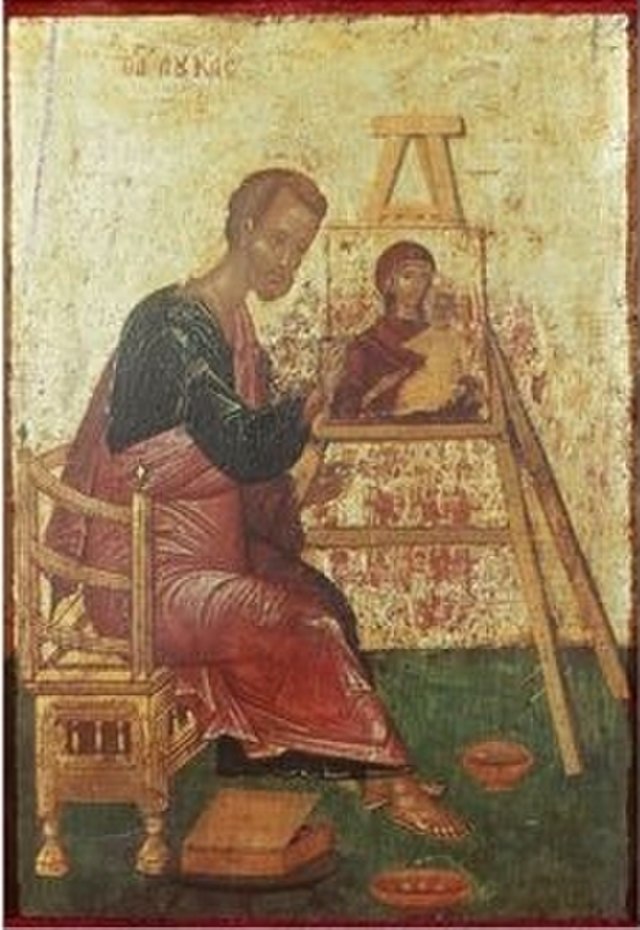
Legend has it that Saint Luke was commissioned to paint a portrait of Mary and the Christ Child and that was the first eye witness portrait of Jesus.

We know that early Christian art had to be symbolic because until 313 when Constantine legalized Christianity, Christians were being killed and persecuted for their faith so it was dangerous to be carrying or sharing images of Christ.

Ancient Panel paintings derived from the Egyptian panel paintings of gods and goddesses, therefore, the very early Christian panel paintings have similar compositions and figures replacing images of Egyptian gods with Christian imagery . As Christians found NEW WAYS OF VISUALIZING THE DIVINE, specifically in mosaics, Icons, and mural paintings for monasteries, icon panel paintings began to flourish.

The theological significance that Christians gave to their icons was in many ways more exalted than the ancient Egyptians had given to their sacred images.  As the Christian movement spread, naturally, each culture depicted Jesus as looking like them. To the Chinese, he looked Chinese, to the Indians, he looked Indian, to the Africans He is black, and so forth. The icons of early Christianity were expressions of beliefs and Biblical stories.

Early Christian artists were concerned with representing Christ, God made man.  “The Word became flesh and dwelt among us, full of grace and truth; we have beheld his glory, glory as of the only son of the Father.  Early Christians had faith that they saw God through Christ.

The early panel paintings of Roman Egypt, and through them, the early icon panels, are the seeds of the development European painting.  This influence can be seen as late as post Renaissance artists like Michelangelo, Raphael, and a whole host of more modern artists like Rembrandt, El Greco and many more.  

 While Icons exemplified a new understanding of the liturgy, with the central focus on the Eucharist, this not something you could say about religious paintings after the renaissance. Part II of this blog will cover sacred art and icons from the 7th century onward.

In the fourth century there was a move away from statuary. Icon painting, illumination, and mosaics  became the primary methods of representing the Divine.  Icons proliferated at this time, with many different styles of depicting Christ.

The fifth century is the age of great visions in Church decoration, and by the end of the century, Icons were impacting church decoration in a major way. At this time there arose many versions of Christ on portable panel paintings and evidenced in the Church of the Hagia Sophia in Istanbul,

CHRIST IN GLORY.  In the image of Jesus we have a vision of Christian spirituality and the universal, the human, the life of the spirit.

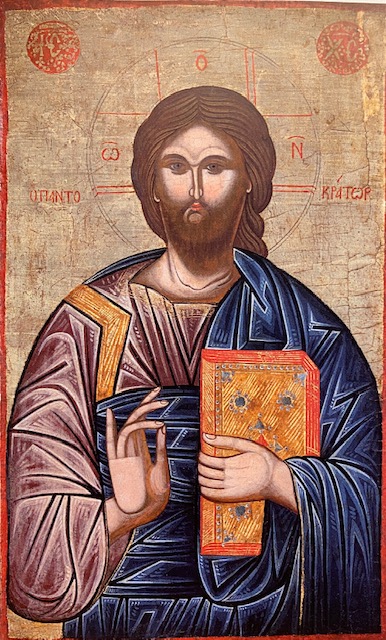
PANTOCRATOR The image of Jesus bridges worlds, between the human and the divine, between heaven and earth.

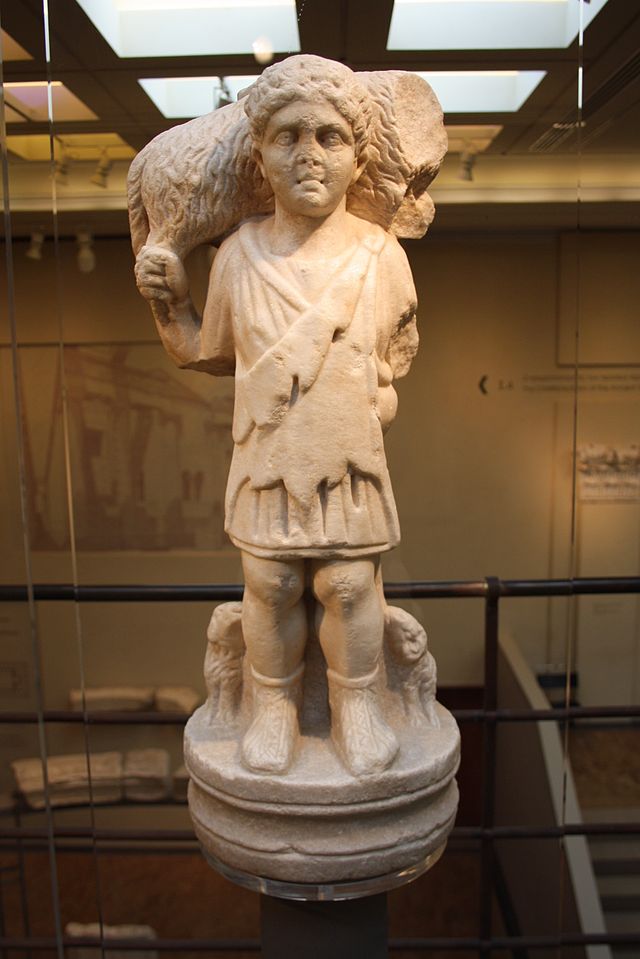
GOOD SHEPHERD– A long lasting Symbolic image of Christ

Sacred Geometry

Sacred Geometry:   Greek artists and mathematicians believed the golden ratio to be the unifying principle of the universe and to be responsible for the beauty within design and sound.  It’s a deep subject that I won’t go into here, but I have written about it in more detail in my book, “Eyes of Fire”, for those who are interested. 

For now, I will tell you that the golden ratio produces an order of such great intelligence that it was considered sacred by those who knew it.  An important aspect of the golden ratio is that it has an integrated relationship with unity.  The circle, often found in nature, is many times used in art to represent God. It is a form without beginning or end.

Iconoclasm

By the seventh century, theological debate arose over the belief that the icon was incarnational- its holiness deriving from the fact that because God had assumed physical matter, the icons could be a valid representation of God’s presence also. The iconoclastic controversy arose at this time with heated debate and at times whole sale destruction of icons if they were perceived to violate the second commandment. It requires the second council of Nicea in the ninth century to resolve this issue. Icons were intimately connected with the origins and growth of Christianity itself.

A lot has been written about this period of iconoclasm, and it is a controversy that seems to repeat itself in the Reformation in Europe in the 1500 and 1600’s.  For the 6th and seventh century destruction of religious images preceded the split between the Eastern and Western churches, each of whom developed a unique approach to religious art from that period onward.  The Roman Church preferred statuary and romantic paintings as church decoration and the Eastern Church developed a flattened, symbolic use of visual images in the Icons.

It’s interesting to note that the Celtic Church in Ireland, Scotland, Wales and Brittany also had an ultimately disunifying encounter with the steady movement forward of the centralized Roman Church by the 7th century. Monastic life under the rule of St. Columba was much more stringent than the Rule of Saint Benedict and became increasingly unpopular.  The Synod of Whitby in 664 sought to resolve the conflict and this resulted in a steady decline of the Celtic church.

I’m not a historian by any means, and I only study history in relation to the development of art and culture, but the simultaneity of these two conflicts is interesting.  Please comment below with perceptions or redirects that may make a contribution to our understanding of the conflicts involved in creating religious art.  Many of you are from Russia, Ukraine, Greece, and other countries with perhaps a different perspective of the history of Christian art.  It would be fascinating to pool together our knowledge and perceptions over the course of time and be able to share that with our communities and coming generations of sacred artists.

Next month will be Part II, moving forward from the Nicean Council and Saint John of Damascus’ brilliant defense of icons to  present day developments in religious imagery that builds up the church.  I feel that a thorough understanding of the history of Christian art will be an invaluable aid to those of us creating icons and religious imagery today.

I have written and published a book called “Eyes of Fire”, How Icons Saved My Life As An Artist” available on Amazon that also brings together knowledge and understanding of art and the Art Spirit through the ages, with a bias towards Byzantine iconography.

That’s all for this month, May God continue to bless the work of your hands and give you holy inspiration to create icons and religious paintings that build up His holy church.

Christine Hales

Holy Trinity Icon

Holy Trinity Icon
Holy Trinity Icon by andrei Rublev

Every icon has a theological background. Using images, forms and colors, the icon shows what Holy Scripture is teaching us by the Word.  The icon offers us truth as a vision, and thereby is a direct approach to our non-reasoning mind and heart, allowing us thereby to reach a deeper understanding of the Biblical message.  From the early development of icons to the present, the theological meaning of the icon is always connected to a concrete representation.

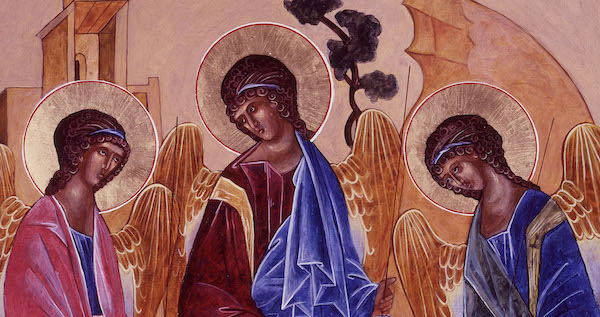
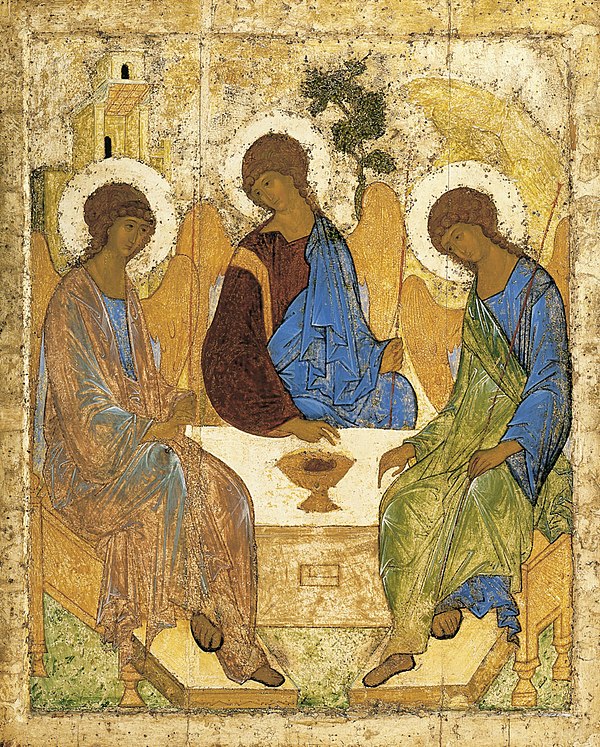
Considering the icon of the Holy Trinity painted by Russian iconographer Andrei Rublev in the fifteenth century, we have a very clear representation of the biblical passage Genesis 18:1-8.  The Trinity represents the three angels who visited Abraham at the Oak of Mamre.  Rublev’s intention for this icon was for it to embody spiritual unity, peace, harmony, mutual love and humility.

The composition of the icon uses sacred geometry to create a perfect circle that encloses the figures of the three angels. The left angel represents God the Father who is blessing the cup. The central angel represents Jesus Christ- his blue robe represents his divinity. He accepts the cup, bowing, and it is generally believed that this cup symbolizes the Eucharist and  the sacrifice of Jesus.

The oak of Mamre symbolizes not only the tree of life, but also the death of Jesus on the cross. The mountain is a symbol of spiritual ascent that man accomplishes with the help of the Holy Spirit. The inclination of the angels’ heads demonstrate submission to the Father on the left.

Typical of Rublev’s icons, the faces of the angels are shown illuminated by an inner light, and not as a reflection of an exterior light source.   His technique foregoes the white lines often used in painting faces in icons, using instead a method of paint application called “plav”.  This method crates a radiance and a glowing countenance that achieves nuances of form and expression which also suggest unity and harmony.

In the icon of the Trinity, Rublev preferred transparent colors in blue-green tones that he combined with the technique of scumbling to achieve a luminous presence that also speaks to the heavenly nature of the three angels.  The term “dymon pisano”, meaning transparent like a cloud”, is sometimes used to describe this technique.

Rublev’s icons appear to be more natural than those of the Palaeologue period. Their transparency reflects harmony of matter and mind.  The essential nature of the icon is that it is the expression of Christian revelation. For Rublev, the drawing-design dominated the process of icon writing.  His intention was to create harmony and unity through perfect contours and lines. 

In the Trinity icon, the drawing of the central angel’s garment is very geometric.  The angels on the sides, in contrast, are drawn with a gentle, calm movement. Similarly, the blue garment of the central angel is opaque and built up with layers, but the two side angels’ garments are transparent with touches of white.

In the Trinity icon, the complex theology of the Holy Trinity is represented by the  unity of the three angels.  The spiritual nature of God’s Divine Essence as the triune God is depicted as simply three angels. In this icon, we are invited not to look at three separate angels, but instead, to the Holy Trinity, the Triune God.

All-Holy Trinity, have mercy on us.
Lord, cleanse us from our sins.
Master, pardon our iniquities.
Holy God, visit and heal us
For Thy Name’s sake.

My next Zoom, online icon writing class will be April 18-21 and we will be painting the Holy Trinity Icon using egg tempera and gold leaf gilding. For more information click here.

May God continue to bless your interest in creating and praying with Holy Icons.

Kind regards,

Christine Hales

Newchristianicons.com

Sources for this article: Primarily excerpted from “The Icon, Image of the Invisible” by Egon Sendler

Virtual Icon Gallery Exhibition

Greetings Friends and Iconographers:

This month I am presenting some writings and images from a beautiful exhibition of Eastern European icons dating from the nineteenth to sixteenth centuries that is hosted by a non-profit gallery of icons located in Žilina (Slovakia). The Gallery of Icons (OZ IKONY) in Žilina is found at: https://ikony.hour.sk/en/

Christ Pantocrator, Albania, seventeenth century, Courtesy, OZ IKONY

Gallery of Icons – OZ IKONY

The gallery was established in 2015 as the result of a private collection of East Christian icons. During the last 7 years of existence, the gallery has collected about 300 icons from Russia, Ukraine, Belarus, Cyprus, Greece, Romania, Bulgaria, North Macedonia or Albania. The icons are dated from the 14th until the beginning of the 20th century. Among the main activities of the gallery, I can name the presentation of the icons from various regions of Eastern Christian cultures, the conduct of research on icons and providing space for and organizing of conferences, lectures and concerts. The aim of the exhibition is to present the spiritual and artistic beauty of Eastern Christian icons and to create a living bridge between the East and the West. 

In March 2021 the gallery celebrated its 5th anniversary. The current exhibition called The Mysterious Face of Jesus Christ is the fifth in a row after the exhibitions dedicated to the themes of The Old Testament ProphetsThe Church FeastsThe Icons of the Mother of God, and Wisdom Hidden in Icons.

The 5th exhibition is opened from the 15th of September 2020 until June 2023. There are 25 artistically and historically valuable icons on display. Most of them are exhibited in Slovakia for the first time. There are Russian and Greek icons, one Romanian, Macedonian, and Albanian icon, and one icon from Mount Athos among the exhibits.

The Only Begotten Son and the Word of God, Russia, nineteenth century, Courtesy, OZ IKONY

American Association of Iconographers’ Goals 

Even as this is a newsletter to foster the development of American iconographers, we all owe a debt of gratitude to our Eastern Orthodox brothers and sisters who, through the centuries have produced so many beautiful and deeply spiritual icons worth imitating and learning from. The aim of this exhibition is to create a living bridge between the East and the West, which is closely aligned with the goals of the American Association of Iconographers.

Membership to the American Association of Iconographers is without financial obligation to its members and is open to all friends and lovers of icons around the world.  It is an ecumenical, primarily Christian group of icon collectors, scholars, icon writers and those whose mandate is education in the liturgical arts.

We invite members to contribute educational articles that might benefit all who love icons.  Email: christinehales@me.com for submission details.

The Saviour Depicted up to His Shoulders, Russian, sixteenth century, Courtesy OZ IKONY

Quotes from Milan Lach SJ, Bishop of the Eparchy of Parma, Ohio

“St John of Damascus (+749) once said: “When someone asks you about your faith, take him to church and show him the icons.”  … Icons are liturgical objects. They speak- communicate.  Persons depicted on icons are already in the Heavenly Kingdom.  They are transformed by uncreated light and participate in the life of the Most Holy Trinity.

Icons are not merely art, as Western culture would perceive it.  They are more than art.  Through an encounter with the person of Jesus Christ, the Most Holy Theotokos, and the saints depicted on the icon, we can have a personal experience with the living God.

The icon is a tool of evangelization, through which the Church proclaims the living Jesus Christ.  To His person is dedicated this exhibition of twenty five beautiful  icons, here at the Gallery of Icons in Zilina.”

You can visit the 5th exposition in the virtual gallery: https://ikony.hour.sk/en/virtual-gallery/

I hope this virtual exhibition enriches your understanding and scope of possible models for future icons. Sending prayers for God to bless the work of your hands and minds, to the service of His Holy Church.

Kind regards,

Christine Simoneau Hales, Artist, Iconographer

www.newchristianicons.com

The Crucifixion, Russia, 1800, Courtesy, OZ IKONY

Novgorod Icons

Novgorod Icons

What is so special about Novgorod Icons?  In addition to being known for their beautiful colors and lively compositions, Novgorod Icons offer a rich history and background to the study of icon writing.

Novgorod is one of the oldest cities in Russia, dating from about  859 AD.  The period from the 12th to the 17th centuries was especially bountiful in producing many beautiful icons. This period of time is sometimes referred to as “the Proto- Renaissance” because it still embraced the union of religious and aesthetic ideas.

Saints John Climacus, George, and Blaise, 13th Century

The Effects of the Western Renaissance on Icon Writing

The Proto- Renaissance that was operational in Russia was able to encompass all the cultural phenomena of its time within the context of religion and produce icons of spiritual depth without being overly influenced by Humanism.

In the West from the 14th to 16th centuries, the Renaissance moved art, even religious art, more toward man’s interests and became more human, less religious.  Even Christianity in the West at this time became more rational and scholastic and emphasized the emotional experiences of the subject.

In the practice of writing icons, we tend to strongly favor copying icons from before the Renaissance for this very reason.   Iconographers agree that imagery from before the Renaissance is preferred because we want our icons to reflect a culture that placed God as the center of the universe, not human reason.

Nativity of the Virgin, 14th Century

Fourteenth Century Russian Culture

Russian culture of the late fourteenth and early fifteenth centuries developed strong ties with Byzantium, particularly in Novgorod and Pskov.  The great iconographer, Andrei Rublev was part of this cultural and spiritual movement. The famous Byzantine master Theophanes the Greek worked in Novgorod in 1378.  His magnificent frescoes in the Church of Our Savior in Ilyina Street formed a bridge between the art of Novgorod and Byzantium.

The Transfiguration by Theophanes

The Artistic Language of the Novgorodian icon is simple, laconic and precise; the composition is based on large contrasting shapes.  The rhythm and coloring are tense and mobile, the drawing energetic.  Colors are especially important and tend to be simple and bright.  Faces, while classical. Tend to have large, expressive eyes.  They are painted in a gentle manner with subtle gradations of value.  The linear design of the hair, lips, nose and eyes is in contrast to the subtle tonal gradations.  In the earlier icons, the minimal color scheme of olive and yellow prevails. 

Saint Nicholas Icon

In the thirteenth century icon of Saint Nicholas from the Novgorodian monastery of the Holy Spirit, we see clearly the simplicity of composition, the harsh linear forms, and sparse contrasting colors that complement the restraint of the image. This icon, as well as the  is very characteristic of Novgorodian twelfth and thirteenth century painting.

Saint Nicholas

Presentation of the Virgin Icon and Boris and Gleb Icon

In these icons of the late thirteenth, early fourteenth centuries we see the qualities of simplicity of composition combined with monumental, flat graphic qualities balanced by relative depth of form.  The colors show an abundance of cinnabar, white, ochre, brown and green.

Presentation of the Virgin

At this time, Novgorodian painting came closer to Byzantine icons of the Palaeologus period.   Icons became monumental and soon were given to freer and more complex compositions.  Here we find images with inner tension, power and a classical simplicity.  We also see the beginnings of interest in man and his feelings and this affects both color and composition.

Boris and Gleb Icon

I need to end this here, but will pick it up again in a subsequent blog in order to continue the historical development of icons in this most important period of icon history.  For further reading I suggest the book:  Novgorod Icons, 12-17th Century by Aurora Art Publishers, Leningrad.

Some of the best characteristics of Novgorodian icons are their rational yet popular imagery, economy of means, and a brilliant use of color.  Definitely a period of icon writing worth exploring for every aspiring iconographer!

To see more of my icons visit: New Christian Icons

To see my available online icon writing classes visit: online.iconwritingclasses.com

May God bless you and your icon writing, until next month,

Christine Simoneau Hales