
And the Enduring Influence of Byzantine Icon Training
Hello Fellow Iconographers:
As you probably already know, I love making connections between Byzantine iconography and modern art. I always think that icons were the contemporary art of their time, so how can we bring a contemporary approach to our icon writing? This article about the work of ElGreco shows how one iconographer of the 16th century made that transition. The approaches each iconographer takes to contemporary iconography will be as individual as the iconographers themselves, but some things will remain. Here is an account of how this issue played out in the life and work of ElGreco.
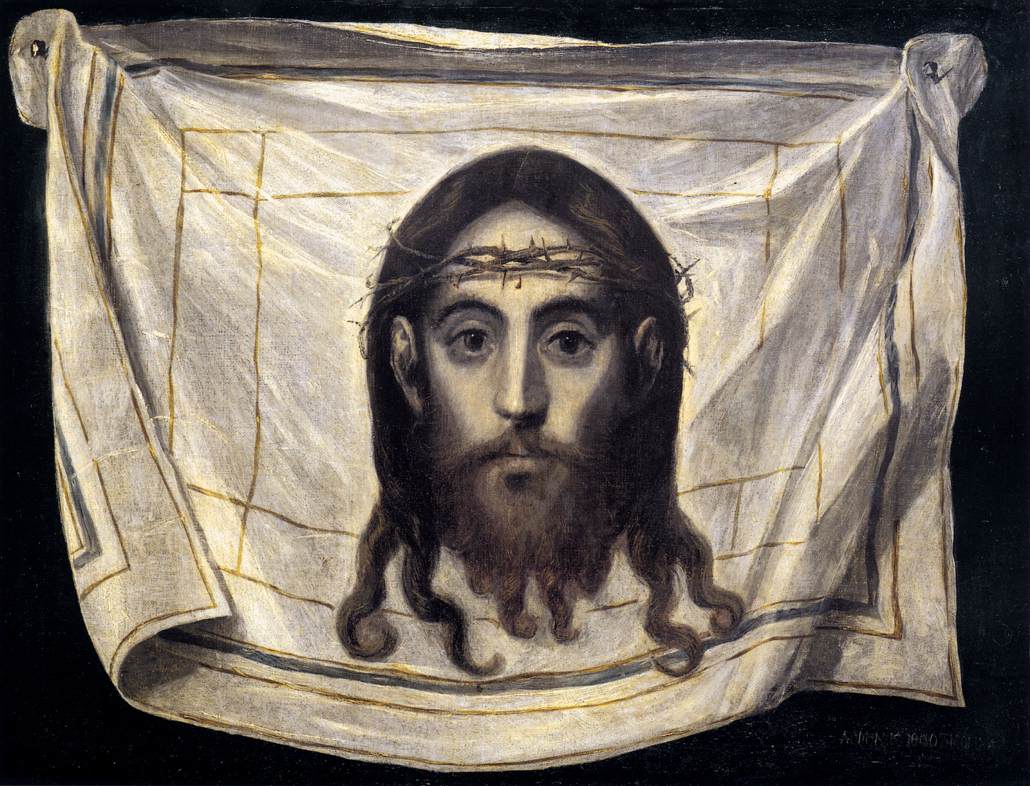
Doménikos Theotokópoulos—better known as El Greco—has long fascinated scholars of Early Modern art. While his mature works in Toledo are celebrated for their dramatic elongations, expressive color, and visionary intensity, less often explored in depth is the formative influence of his early training in the Byzantine icon tradition. This article examines how the discipline of icon-painting, rooted in the post-Byzantine Cretan School, left an enduring imprint on El Greco’s aesthetic, technique, and theological vision. His icon training, I argue, was not a youthful chapter to be overcome, but a structural foundation that underlay his later innovations.
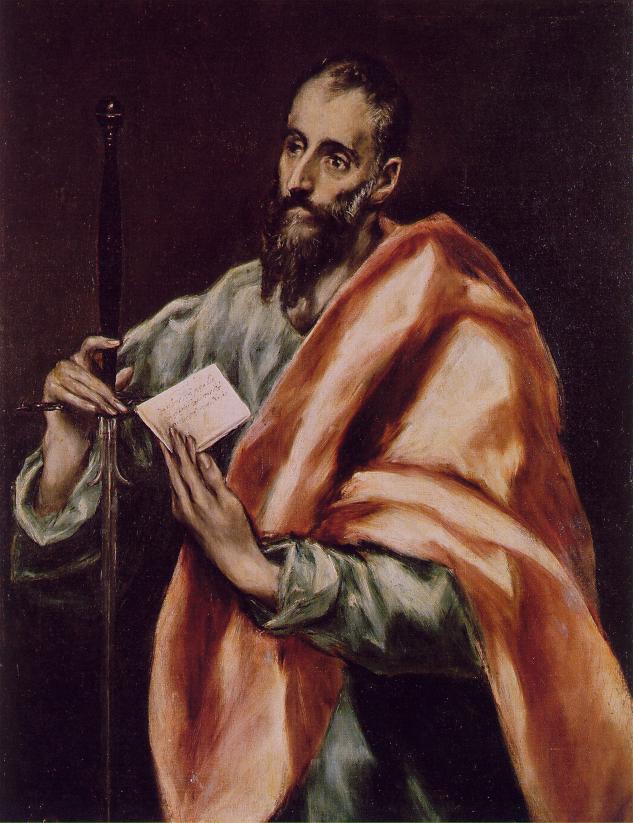
From Crete to Venice
Although he was born in Crete in 1541, after receiving icon painting training in his early life, Domenikos left Crete in 1567 for Venice. Some key characteristics Domenikos learned from the icon painters were:
A hieratic vocabulary of elongated, stylized figures and flattened pictorial space intended for devotion.
The use of traditional materials and techniques—tempera, wooden panels, and gilding.
An emphasis on spiritual vision over empirical realism.
But in Venice he was encountering the artistic milieu of the Italian Renaissance and Mannerism, absorbing the vibrant color, dynamic composition and spatial experimentation of artists such as Tintoretto and Titian. This Western training did not supplant his icon-foundation but merged with it. One of his trademark features—elongated, upward-reaching figures, almost defying gravity—can be traced back to the hieratic verticality of icons, in which figures are often elevated beyond the earthly realm. In his mature altarpieces in Toledo, this physical stretching expresses a spiritual tension: the human yearning toward the Divine.

Rome, Toledo, and the Transformation of a Style
From Venice, El Greco moved to Rome (1570–1576), where he sought patronage but struggled to achieve success amid the competitive papal art world. In 1576, he relocated to Spain, where his career flourished under the patronage of the Church and the Spanish nobility. His first major commission came from the dean of Toledo Cathedral: three altarpieces for the Church of Santo Domingo el Antiguo, works that already reveal a synthesis of iconographic form, Mannerist stylization, and Venetian color.
Even as his technique evolved, the influence of icon-painting persisted. The vertical elongation of figures—one of El Greco’s most recognizable traits—can be traced to the hieratic verticality of Byzantine icons, where figures are elevated beyond the earthly realm. In El Greco’s mature altarpieces, this elongation expresses a spiritual tension, a reaching upward toward the Divine.
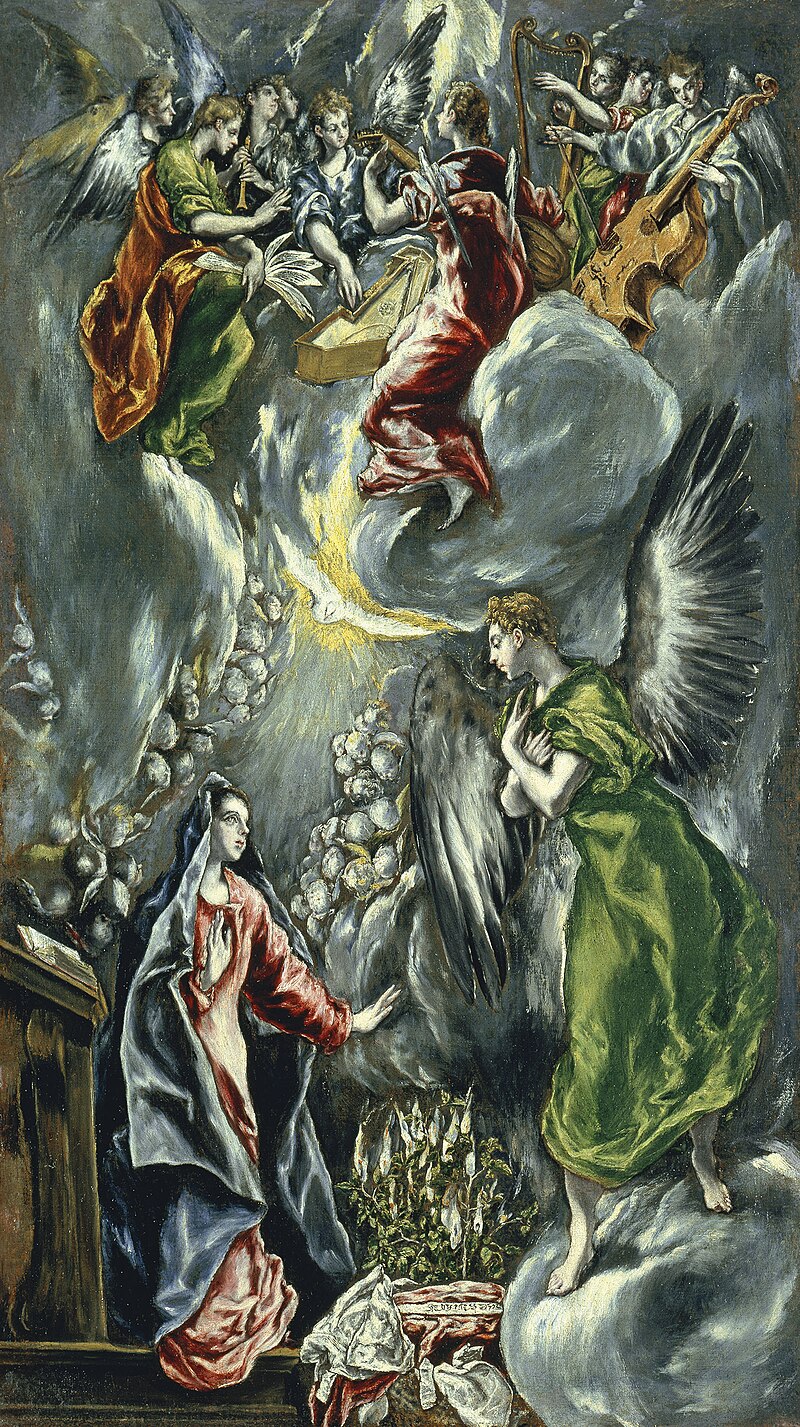
Similarly, his treatment of space often resists Renaissance perspectival illusion. Instead of a fully realistic spatial construction, El Greco employs stacked planes and compressed layers to evoke a metaphysical dimension. Scholars have linked this to his Byzantine roots, where sacred space functions symbolically rather than empirically.
Theological Continuities: Painting as a Spiritual Act
Beneath the stylistic parallels lies a deeper continuity: El Greco’s theological conception of painting. In the icon tradition, the painter’s task is to serve as a mediator of divine light, not merely an imitator of nature. This conception of sacred art as a spiritual discipline—requiring prayer, fasting, and inner illumination—found new expression in El Greco’s Spanish works.
His figures seem animated not by physical energy but by spiritual light, glowing from within. In this, El Greco remained faithful to the iconographer’s conviction that beauty reveals the presence of God.

Reception and Legacy
“El Greco is one of the few old master painters who enjoys widespread popularity,” writes Keith Christiansen of the Metropolitan Museum of Art. Rediscovered in the nineteenth century by collectors, critics, and artists, El Greco was hailed as both the quintessential Spaniard and a proto-modern painter of the spirit.
For members of the Blue Rider school, including Franz Marc, El Greco embodied a mystical resistance to materialism—a painter who, as Christiansen writes, “felt the mystical inner construction of life.”
Conclusion: The Icon as Foundation of Innovation
El Greco’s artistic evolution cannot be fully understood without acknowledging the foundational role of his icon-training on Crete. Far from being a mere apprenticeship, this discipline remained the structural ground of his mature art—shaping his understanding of color, form, space, and the sacred.
His work ultimately represents a synthesis of:
- The spiritual economy of the icon,
- The painterly brilliance of Venice and Rome, and
- The religious fervor of Counter-Reformation Spain.
For students of sacred art and iconographers today, El Greco offers a powerful model: discipline does not restrict creativity—it frames and empowers it. His art demonstrates that fidelity to tradition can be the very source of visionary originality.

I hope you have enjoyed this article and that it is food for thought. The battle for art is not won or lost in an academic tradition, but in the spiritual realm where God is all powerful. God wants each of us to give glory to His name in each individual way that he has created us.
Here are some interesting links that are passed on from Dorothy Alexander, a friend and iconographer in California:
1.How Icons Are Made” is the fourth and final lecture by Aidan Hart presented at St. Julian’s Church in Shrewsbury, England. https://www.youtube.com/watch?v=Of2eq-NiDVE&t=82s. He speaks on both the theology as well as the practical details of making an icon.
2.You can see the beauty of natural pigments as you watch how vivianite is made from the mineral. This also helps to understand why it is not cheap to buy. The example at the end shows the versatility of the color
. https://www.youtube.com/watch?v=Ww2QRpSG4fA&t=40s&pp=2AEokAIB
3. This slow moving video is an example of Instacoll gilding, faulting (repairing or filling in any holes) and burnishing with a cloth. https://youtu.be/bK1gKiO2sSo?si=CaLsBN_NLJbjt85g
That’s all for this month!
God bless you all,
Christine
These are my links if you’d like to see more of what I do:
LINKS For Christine Simoneau Hales 2025
- https://newchristianicions.com my main website
- Https://christinehalesicons.com Prints of my Icons
- https://online.iconwritingclasses.com my online pre-recorded icon writing classes
- https://www.youtube.com/channel/UCK2WoRDiPivGtz2aw61FQXA My YouTube Channel
- Facebook: https://www.facebook.com/ChristineHalesFineArt or https://www.facebook.com/NewChristianIcons/
- Instagram: https://www.instagram.com/christinehalesicons/?hl=en
- American Association of Iconographers: FB Group: https://www.facebook.com/groups/371054416651983
- American Association of Iconographers Website: https://americanassociationoficonographers.com







 American Association of Iconographers