Renewal in Liturgical Art- Encompassing Differing Worldviews in One Faith
A world view is a pattern of ideas and beliefs. Everyone seeks answers to the questions of “why are we here? What is the meaning and purpose of life? Is there a difference between right and wrong? Is there a God? Do our actions have consequences? Is there a connection between this visible world and an invisible one? Our world view helps us to make sense of our being, our God, our purpose in this world. The Christian worldview has a narrative of all history, as told in the Old and New Testaments.
What is our world view as Christian artists and Iconographers? For each of us this may be defined differently with fine nuances, depending on our denominational affiliations. The Eastern and Western Churches evolved from the same beginning, yet have grown to have differences in art, liturgy, theology, etc.
So, finding common ground, much as our forefathers and mothers all experienced in the early church, is a worthy goal for Sacred Art makers of today.
Christian Renewal
The renewal of the mind involves a transformation of the way a person thinks and lives, which can be achieved through the power of the Holy Spirit as we reflect on God’s word. By being transformed in this way, believers can discern what is good, acceptable, and perfect according to God’s standards.
“Don’t copy the behavior and customs of this world, but let God transform you into a new person by changing the way you think>”. Romans 12:2
I’ve researched some very good books on related subjects and have gathered some thoughts for you. I include at the end of this article titles and authors of each book mentioned here.
Liturgical Art Renewal
Our goal, as iconographers, is to help others to see the sacred more deeply proclaim the Gospel more faithfully and pray together more honestly, using our eyes, our hearts, and our minds. And our hands.
An icon mediates or contains the Holy Presence
“The artist’s task is not merely to record but also to present the result of the encounter as it is shaped by that disciplined imagination…One can be in a kind of dialogue with the thing being observed or between the thing imagined and that which is produced.
Christian worship is aided immeasurably by our sense of sight. In worship we see each other and gain a glimpse of what it means to be the body of Christ.” Beauty, Spirit, Matter, Icons in the Modern World., Aidan Hart
“The spirit which knows God naturally comprehends divine beauty and seeks to delight in it alone. . .To contemplate divine beauty, to delight in it and partake in it is a requirement of the Spirit and is its life and heavenly life.” Theophan the Recluse (1880)
The icon is a radical way of seeing and therefore suggests a radical way of acting. When we look at an icon we are seeing as a saint sees.
An icon is not merely a painting of a religious subject but a crystallization of a whole culture, a culture which worships God and therefore venerates the material world that He created as a gift.’
Art is something essential to the shaping of faith and religious experience.
Sacred art is always abstract, in that word’s literal sense. In that it draws out the essence of its subject. It uses stylistic abstraction to suggest these invisible realities….Sacred art typically reveals the union of the inner with the outer, the invisible with the visible. Iconographic depictions of great suffering, such as the Crucifixion, keep this suffering united to love and hope. They show that the suffering is genuine, but they also show that this suffering is on the road to the Resurrection. An icon always joins opposites.
An icon brings the good news into the world by showing the face of Jesus Christ: God became man. Moreover, through Christ, the icon reveals to us the true image of humanity transfigured and deified; it is the image of the kingdom of heaven, the kingdom that is to come and that will restore the harmony now marred by sin…if an icon depicts a saint, its real purpose is to bring us face to face with someone in whom God’s goodness shines forth.” Irina Yazykova
“Eyes of fire perceive each thing as the outer sign of an inner fact, or the local sign of a distant power. For such eyes nothing is lonely matter, all things are caught up in a mysterious, ultimately divine whole that challenges understanding over a lifetime. Eyes of flesh focus on the thing itself, eyes of fire on facts but still more intently on their participation in a larger meaning by which they are raised.” An Art of Our Own, the Spiritual in Twentieth Century Art, Roger Lipsey
Books and Related Links
The Substance of Things Seen, Art, Faith, and the Christian Community by Robin M. Jensen
An Art of Our Own, the Spiritual in Twentieth Century Art, Roger Lipsey
Beauty, Spirit, Matter, Icons in the Modern World, Aidan Hart
Eyes of Fire, Christine Hales
An Excellent Series of Talks at the Cathedral of All Saints Divine, Albany NY, by Brynna Carpenter-Nardone :
One of the difficulties with creating icons or works of art depicting Jesus is that we don’t really have any eyewitness drawings or paintings from people who actually saw him while he was alive.
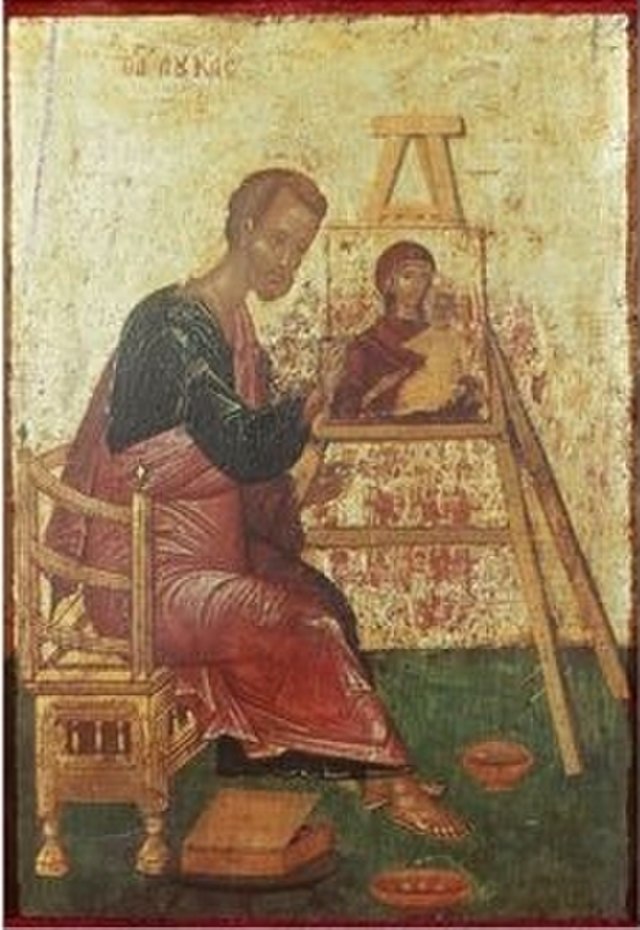
Legend has it that Saint Luke was commissioned to paint a portrait of Mary and the Christ Child and that was the first eye witness portrait of Jesus.
We know that early Christian art had to be symbolic because until 313 when Constantine legalized Christianity, Christians were being killed and persecuted for their faith so it was dangerous to be carrying or sharing images of Christ.
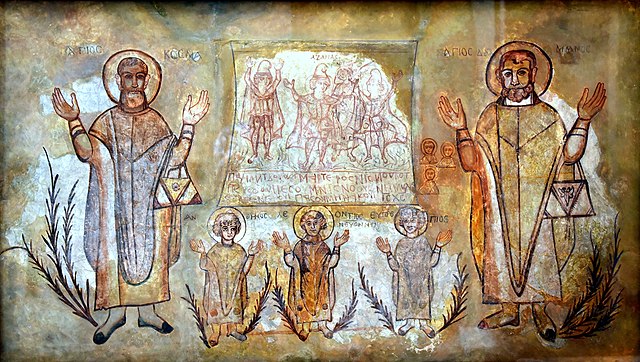
Ancient Panel paintings derived from the Egyptian panel paintings of gods and goddesses, therefore, the very early Christian panel paintings have similar compositions and figures replacing images of Egyptian gods with Christian imagery . As Christians found NEW WAYS OF VISUALIZING THE DIVINE, specifically in mosaics, Icons, and mural paintings for monasteries, icon panel paintings began to flourish.
The theological significance that Christians gave to their icons was in many ways more exalted than the ancient Egyptians had given to their sacred images. As the Christian movement spread, naturally, each culture depicted Jesus as looking like them. To the Chinese, he looked Chinese, to the Indians, he looked Indian, to the Africans He is black, and so forth. The icons of early Christianity were expressions of beliefs and Biblical stories.
Early Christian artists were concerned with representing Christ, God made man. “The Word became flesh and dwelt among us, full of grace and truth; we have beheld his glory, glory as of the only son of the Father. Early Christians had faith that they saw God through Christ.
The early panel paintings of Roman Egypt, and through them, the early icon panels, are the seeds of the development European painting. This influence can be seen as late as post Renaissance artists like Michelangelo, Raphael, and a whole host of more modern artists like Rembrandt, El Greco and many more.
While Icons exemplified a new understanding of the liturgy, with the central focus on the Eucharist, this not something you could say about religious paintings after the renaissance. Part II of this blog will cover sacred art and icons from the 7th century onward.
In the fourth century there was a move away from statuary. Icon painting, illumination, and mosaics became the primary methods of representing the Divine. Icons proliferated at this time, with many different styles of depicting Christ.
The fifth century is the age of great visions in Church decoration, and by the end of the century, Icons were impacting church decoration in a major way. At this time there arose many versions of Christ on portable panel paintings and evidenced in the Church of the Hagia Sophia in Istanbul,
CHRIST IN GLORY. In the image of Jesus we have a vision of Christian spirituality and the universal, the human, the life of the spirit.
PANTOCRATOR The image of Jesus bridges worlds, between the human and the divine, between heaven and earth.
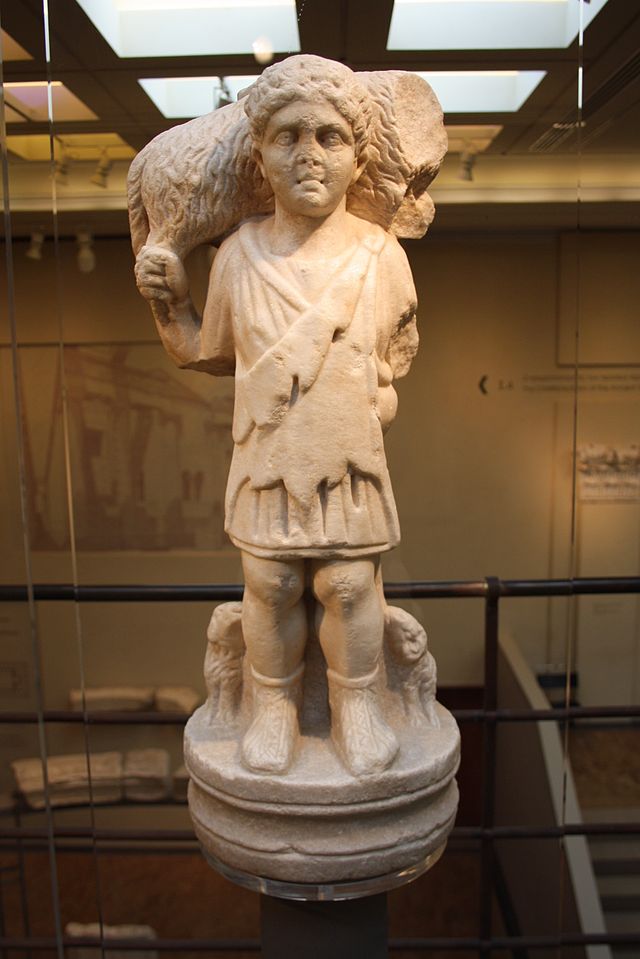
GOOD SHEPHERD– A long lasting Symbolic image of Christ
Sacred Geometry
Sacred Geometry: Greek artists and mathematicians believed the golden ratio to be the unifying principle of the universe and to be responsible for the beauty within design and sound. It’s a deep subject that I won’t go into here, but I have written about it in more detail in my book, “Eyes of Fire”, for those who are interested.
For now, I will tell you that the golden ratio produces an order of such great intelligence that it was considered sacred by those who knew it. An important aspect of the golden ratio is that it has an integrated relationship with unity. The circle, often found in nature, is many times used in art to represent God. It is a form without beginning or end.
Iconoclasm
By the seventh century, theological debate arose over the belief that the icon was incarnational- its holiness deriving from the fact that because God had assumed physical matter, the icons could be a valid representation of God’s presence also. The iconoclastic controversy arose at this time with heated debate and at times whole sale destruction of icons if they were perceived to violate the second commandment. It requires the second council of Nicea in the ninth century to resolve this issue. Icons were intimately connected with the origins and growth of Christianity itself.
A lot has been written about this period of iconoclasm, and it is a controversy that seems to repeat itself in the Reformation in Europe in the 1500 and 1600’s. For the 6th and seventh century destruction of religious images preceded the split between the Eastern and Western churches, each of whom developed a unique approach to religious art from that period onward. The Roman Church preferred statuary and romantic paintings as church decoration and the Eastern Church developed a flattened, symbolic use of visual images in the Icons.
It’s interesting to note that the Celtic Church in Ireland, Scotland, Wales and Brittany also had an ultimately disunifying encounter with the steady movement forward of the centralized Roman Church by the 7th century. Monastic life under the rule of St. Columba was much more stringent than the Rule of Saint Benedict and became increasingly unpopular. The Synod of Whitby in 664 sought to resolve the conflict and this resulted in a steady decline of the Celtic church.
I’m not a historian by any means, and I only study history in relation to the development of art and culture, but the simultaneity of these two conflicts is interesting. Please comment below with perceptions or redirects that may make a contribution to our understanding of the conflicts involved in creating religious art. Many of you are from Russia, Ukraine, Greece, and other countries with perhaps a different perspective of the history of Christian art. It would be fascinating to pool together our knowledge and perceptions over the course of time and be able to share that with our communities and coming generations of sacred artists.
Next month will be Part II, moving forward from the Nicean Council and Saint John of Damascus’ brilliant defense of icons to present day developments in religious imagery that builds up the church. I feel that a thorough understanding of the history of Christian art will be an invaluable aid to those of us creating icons and religious imagery today.
That’s all for this month, May God continue to bless the work of your hands and give you holy inspiration to create icons and religious paintings that build up His holy church.
This Monastic spiritual practice of prayer, Scriptural reading, and meditation, although usually undertaken with a Bible and a prayer journal, can also be used very effectively with Icons as well. Sometimes this is called “Visio Divina”. Because Icons are meant to be Holy Scripture in visual form, they add a level of understanding and identifying with the Scripture and are particularly helpful with visual people in meditation.
Many icons easily lend themselves to this practice of meditation, for example, many of the Festal Icons of the Orthodox Church: The Nativity of Christ, The Baptism of Jesus, the Annunciation, The Resurrection, Crucifixion, Lamentation, Pentecost, The Entry into Jerusalem, and several others beautifully illustrate Holy Scripture and provide meditation opportunities for the liturgical year.
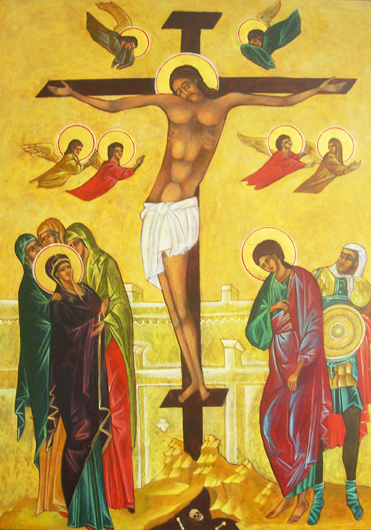
Crucifixion Icon written by Christine Hales
One of the main purposes of Lectio, or Visio, Divina is to promote a personal communion with God while also studying Scripture. It’s not primarily intended as a theological analysis of Biblical passages but rather as a means of personally entering into the scene or Biblical passage and asking God what He wants to teach or show you in this prayer and meditation. It can be a very personal interpretation that sheds light on areas of our lives that need us to grow in our understanding of them.
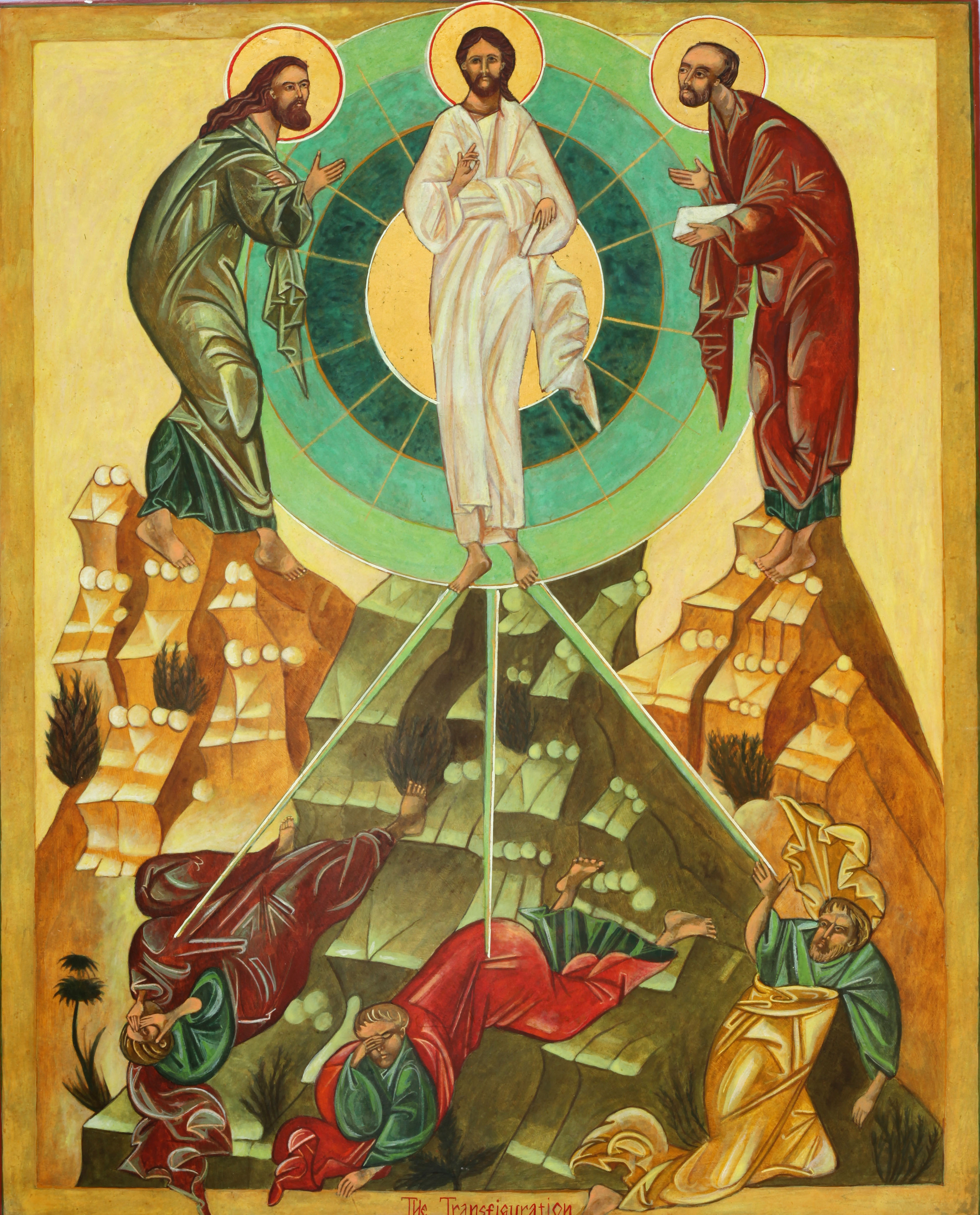
Transfiguration Icon Written by Christine Hales
The roots of this kind of Scriptural meditation go back to Origen in the third century who thought of Scripture as a Sacrament. The practice was handed down through many generations of Christian leaders, including St. Augustine of Hippo. Saint Benedict of Nursia encouraged his monks to practice Lectio Divina in the sixth century. During the twelfth Century the practice of Lectio Divina was simplified to include four main parts:
First, The Reading of a Scriptural passage (or, choose an Icon AND a Scriptural Passage).
Second, meditate on the passage and the icon. I suggest that using journaling thoughts and prayers to be very helpful tools in this process.
Third, pray, talk to Christ, ask questions, pour out your heart to Him, ask for His direction.
Fourth, Contemplation and Meditation. Spend time in silence with the Icon before you and allow the peace of the silence to be a space where you can just rest with God. Again, after contemplation, journaling is very helpful.
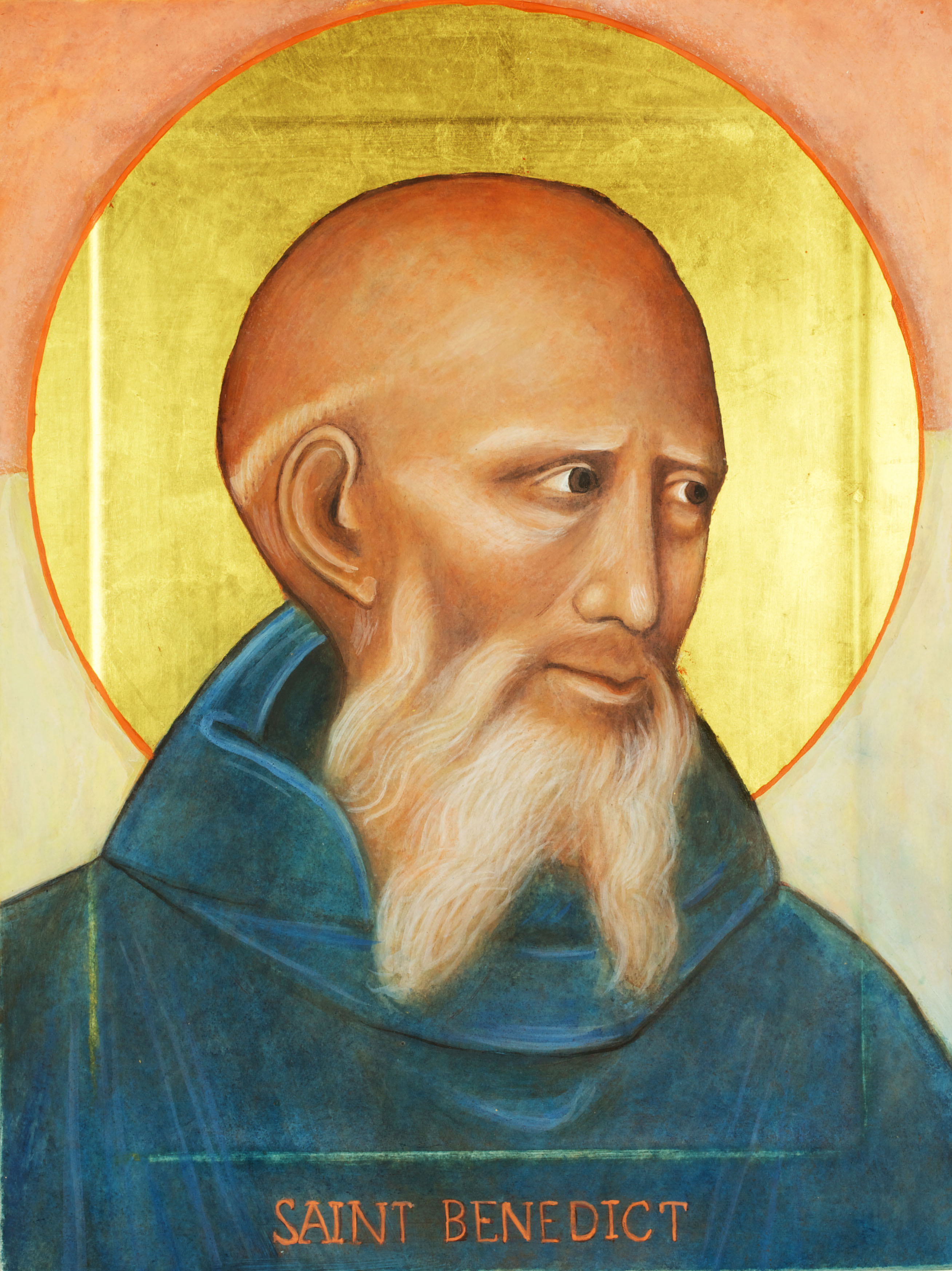
Saint Benedict Icon Written by Christine Hales
Saint Benedict created a Rule for his monastics that included three main things: Liturgical Prayer, manual labor, and Lectio Divina- the slow, careful reading of Scripture, meditating and pondering of the meaning.
In the twelfth Century, Saint Bernard of Clairvaux thought that Lectio Divina guided by the Holy Spirit the keys to nourishing Christian spirituality.
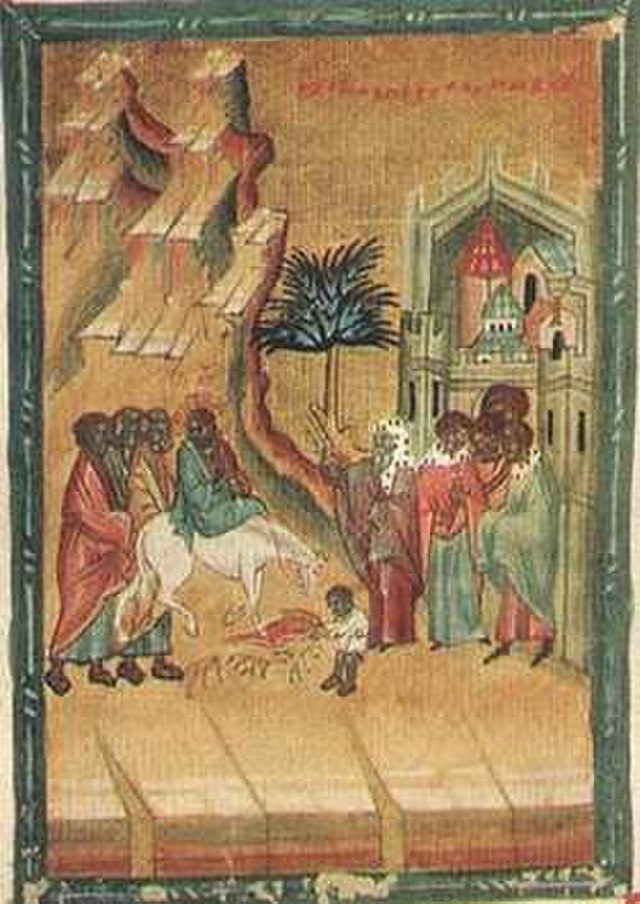
Russian Orthodox Icon of “Entry into Jerusalem”, fifteenth century
As time went on, many other monastic orders emphasized the importance of Lectio Divina to the spiritual life and this has continued with the second Vatican Council in 1965 and then again in 2005 with Pope Benedict and then Pope John Paul II, who used a questions and answer format: “One condition for Lectio Divina is that the mind and heart be illumined by the Holy Spirit, that is, by the same Spirit who inspired the Scriptures, and that they be approached with an attitude of ‘reverential hearing.”
In our times, Lectio Divina has spread to lay people and has been widely adopted in the Anglican Tradition as well.
The famous Henri Nouen was instrumental in bringing meditation with icons to the fore in Western Christianity, reminding us that for well over a thousand years Icons were the liturgical art of both the West and East, in the undivided Church. His book, “Behold the Beauty of the Lord” is a classic and details his deepening experience of living with four icons in particular.
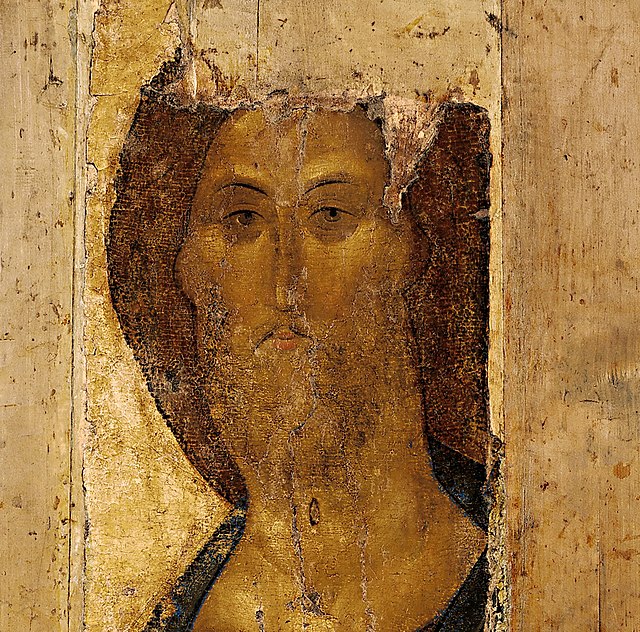
Face of Christ Icon by Andre Rublev 15th century
“WhIle staying at L’Arches in France, someone had put a reproduction of Rublev’s icon of the Holy Trinity on the table of the room where Henri was staying. “After gazing for many weeks at the icon,” Henri wrote in Behold the Beauty of the Lord, “I felt a deep urge to write down what I had gradually learned to see.’” Quote from an online article by Jim Forest, a good friend of Nouen’s.
Icons played a major role in Nouen’s spiritual life and development, no doubt with the accompaniment of prayer and reading of Holy Scripture. There are many books on the subject, for example, “Lectio Divina-the Sacred Art-Transforming Words and Images Into Heart Centered Prayer” by Christine Valtners Paintner, PHD, “Meeting God in Scripture: A Hands on Guide to Lectio Divina”, by Jan Johnson, and many more. Connecting this ancient practice to Icon writing and praying with icons is helpful in growing our connection with God through our work.
Recently, while teaching an online Icon writing class, I shared some prayers and quotations I have long cherished from Esther De Waal’s excellent book, “Seeking God, The Way of Saint Benedict.” Afterwards, I started reading again her book, “The Celtic Way of Prayer” which inspired me to compare and contemplate Byzantine culture and Icons with Celtic Spirituality and Celtic icons.
The Celtic Way of Prayer
She explains that the Celtic way of prayer is a way of praying that embraces all of ourselves, allowing us to pray not only with words, but with our hearts, feelings, and body. A lot of Celtic prayer is poetry, reaching out to God using symbols and images, and imagination either verbally or mentally or physically in some other way. Here, I was thinking of how we pray while writing icons, and how writing icons allows us to pray also with our whole selves. In this sense, writing icons becomes a journey that we take with Christ, allowing Him to guide and show us our true selves in Him.
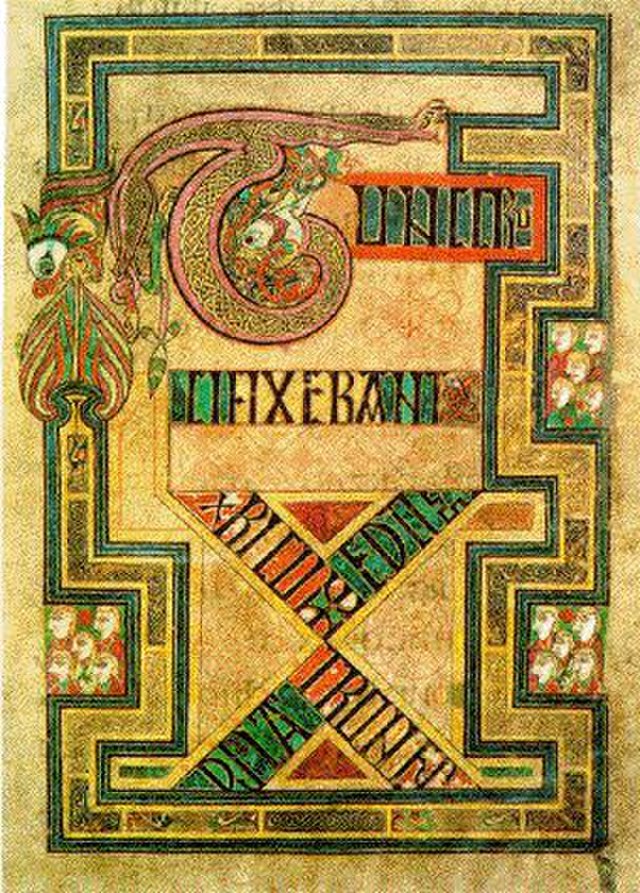
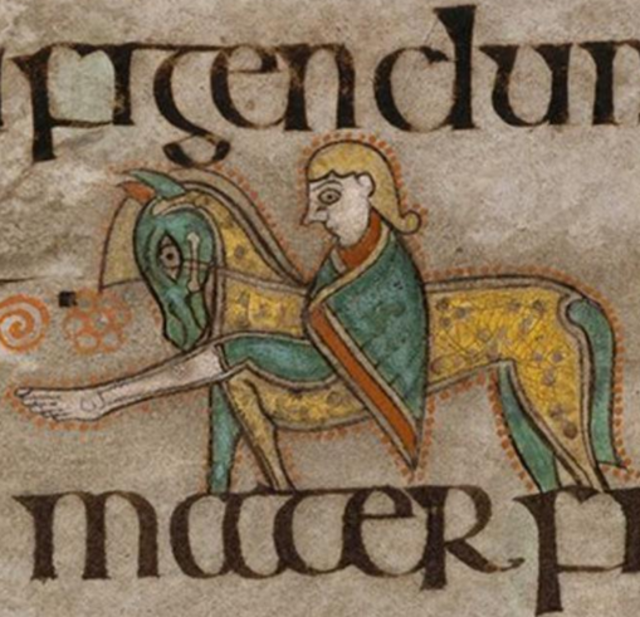
Praying/writing/painting icons involves our hands and our minds, and our very breath becomes a prayer as we work. Celtic Christianity originates from a time when the separation of the Eastern and Western churches had not yet been thought of. Back in the ancient, early days of Christendom, the Book of Kells was a visual testimony to the Celtic Christian faith in rich symbols, colors, shapes and patterns in much the same way that icons were in the eastern countries. These images touch a deep part of our being with their intricacies, woven imageries and words proclaiming the Gospel in all its mystery and beauty.
Book of Kells
Monasteries were home to both the Book of Kells and ancient Eastern icons, making clear to us that there need be no separation between praying, living and working. Writing icons is a process of uniting our thoughts, hands and breath in prayer and praise to God, allowing our worship of God to flow into the art work. Clearly, the Book of Kells is just a different way of expressing visually the same process as icon writing.
Continual prayer and work become our Opus Dei, and we are blessed to experience a monastic grace as we work on icons. However, the Celtic way is to celebrate this rhythm of prayer and work in ordinary life, removing the dichotomy of holy vs secular life. As the ancient Celts were largely outside the purview of the Roman Empire, they were free to develop a very strong connection with nature, sun, sky, water, land, fire as elemental forces in their Christian spirituality. In part, due to this deep connection with nature, they early Celtic have a universal, primal tone in their prayers and worship. The Celtic connection between God, man, nature, animals, birds, and other wild creatures allows for a holistic world view that permeates our senses in ways that are beyond our ability to rationally understand.
In this way, the mystical communion of saints enter into our world, through our remembrance of them in song, prayer, and art, helping us to maintain our understanding of our place in time, and our significance in God’s eternal plan. We become aware that everything we engage and encounter is relational, and we exist in the same relational way with God.
The Byzantine culture and worship is well known for its ability to involve us through all of our senses in the beautiful churches that have multitudes of icons, music, and incense. Similarly Celtic spirituality uses our perception of nature to engage our senses as we worship.
“O Father! O Son! O Spirit Holy! Be the Triune with us day and night, On the machair plain or on the mountain ridge, Be the Triune with us and His arm around our head, Be the Triune with us and His arm around our head”. From “The Celtic Way of Prayer, Esther DeWaal.
As this is the American Association of Iconographers, and thus, a culture made up of a myriad of nationalities, it’s interesting to contemplate the Irish, or Celtic form of Icon writing as well as the more well known forms of Byzantine, Greek, etc.
I hope this has been thought provoking and please do keep all iconographers lifted in prayer as we continue the important work of understanding and creating icons for our time.
Some Useful Links:
Betsy Porter hosts an online meeting for iconographers one Sunday afternoon a month, covering topics interesting and informative for iconographers: NEW ONLINE ZOOM CLASSES, Sunday October 17, November 14, and December 12, 2021, 2 to 3 PM Pacific time. We will look at each other’s work and discuss iconography. No charge, but donations to the church are always welcome. For a link, contact me at 510-517-5360 Betsy Porter, betsyhartporter@yahoo.com
Dorothy Alexander hosts an icon writing workshop in Santa Barbara, California. It’s a drop in workshop where you can bring your own icons to work on and enjoy fellowship, usually once a month. Email: dotalexander@westmont.edu
A lovely new book about Andrey Rublev, “Andrey Rublev, The Artist and His World”, by Robin Milner-Gulland not only gives a detailed picture of the world Rublev created in, but is also beautifully illustrated with color prints. The result is one of the most detailed and innovative books on the subject that I’ve seen. I highly recommend it to all interested in understanding more about Rublev and the importance of his work artistically and spiritually.
Every icon has a theological background. Using images, forms and colors, the icon shows what Holy Scripture is teaching us by the Word. The icon offers us truth as a vision, and thereby is a direct approach to our non-reasoning mind and heart, allowing us thereby to reach a deeper understanding of the Biblical message. From the early development of icons to the present, the theological meaning of the icon is always connected to a concrete representation.
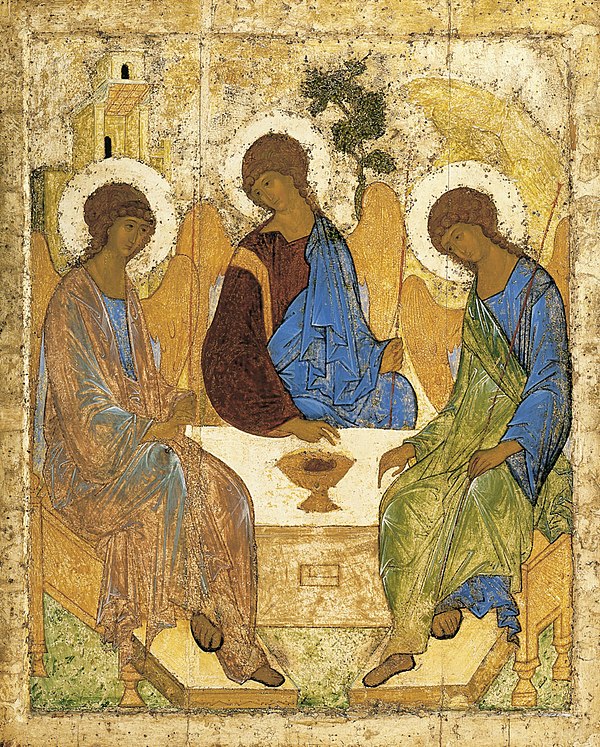
Considering the icon of the Holy Trinity painted by Russian iconographer Andrei Rublev in the fifteenth century, we have a very clear representation of the biblical passage Genesis 18:1-8. The Trinity represents the three angels who visited Abraham at the Oak of Mamre. Rublev’s intention for this icon was for it to embody spiritual unity, peace, harmony, mutual love and humility.
The composition of the icon uses sacred geometry to create a perfect circle that encloses the figures of the three angels. The left angel represents God the Father who is blessing the cup. The central angel represents Jesus Christ- his blue robe represents his divinity. He accepts the cup, bowing, and it is generally believed that this cup symbolizes the Eucharist and the sacrifice of Jesus.
The oak of Mamre symbolizes not only the tree of life, but also the death of Jesus on the cross. The mountain is a symbol of spiritual ascent that man accomplishes with the help of the Holy Spirit. The inclination of the angels’ heads demonstrate submission to the Father on the left.
Typical of Rublev’s icons, the faces of the angels are shown illuminated by an inner light, and not as a reflection of an exterior light source. His technique foregoes the white lines often used in painting faces in icons, using instead a method of paint application called “plav”. This method crates a radiance and a glowing countenance that achieves nuances of form and expression which also suggest unity and harmony.
In the icon of the Trinity, Rublev preferred transparent colors in blue-green tones that he combined with the technique of scumbling to achieve a luminous presence that also speaks to the heavenly nature of the three angels. The term “dymon pisano”, meaning transparent like a cloud”, is sometimes used to describe this technique.
Rublev’s icons appear to be more natural than those of the Palaeologue period. Their transparency reflects harmony of matter and mind. The essential nature of the icon is that it is the expression of Christian revelation. For Rublev, the drawing-design dominated the process of icon writing. His intention was to create harmony and unity through perfect contours and lines.
In the Trinity icon, the drawing of the central angel’s garment is very geometric. The angels on the sides, in contrast, are drawn with a gentle, calm movement. Similarly, the blue garment of the central angel is opaque and built up with layers, but the two side angels’ garments are transparent with touches of white.
In the Trinity icon, the complex theology of the Holy Trinity is represented by the unity of the three angels. The spiritual nature of God’s Divine Essence as the triune God is depicted as simply three angels. In this icon, we are invited not to look at three separate angels, but instead, to the Holy Trinity, the Triune God.
All-Holy Trinity, have mercy on us. Lord, cleanse us from our sins. Master, pardon our iniquities. Holy God, visit and heal us For Thy Name’s sake.
My next Zoom, online icon writing class will be April 18-21 and we will be painting the Holy Trinity Icon using egg tempera and gold leaf gilding. For more information click here.
May God continue to bless your interest in creating and praying with Holy Icons.
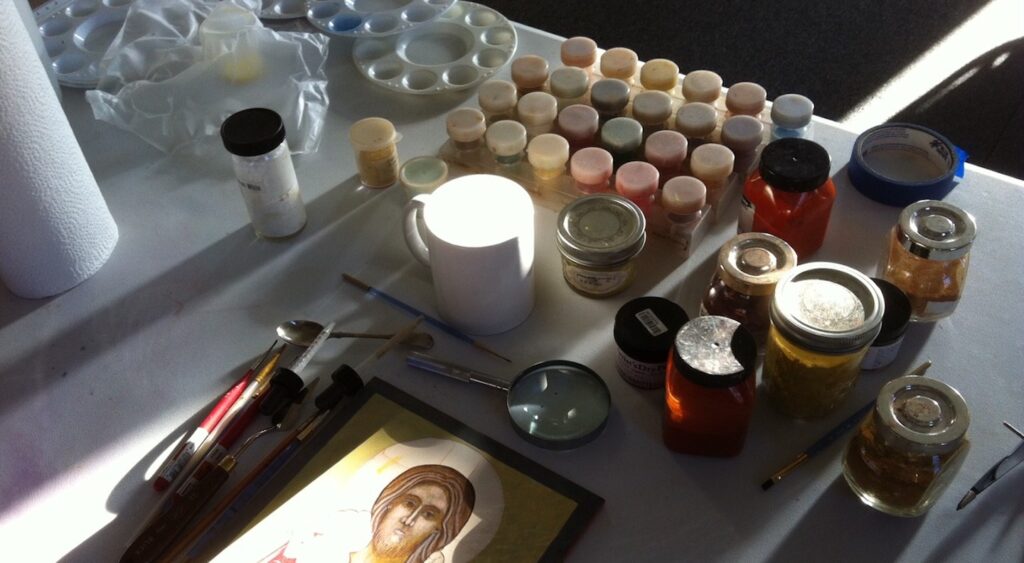
Painting Icons using egg tempera paints requires that we use a solid, stable support that is also absorbent for the many layers we need to result in the jewel like appearance of icons.
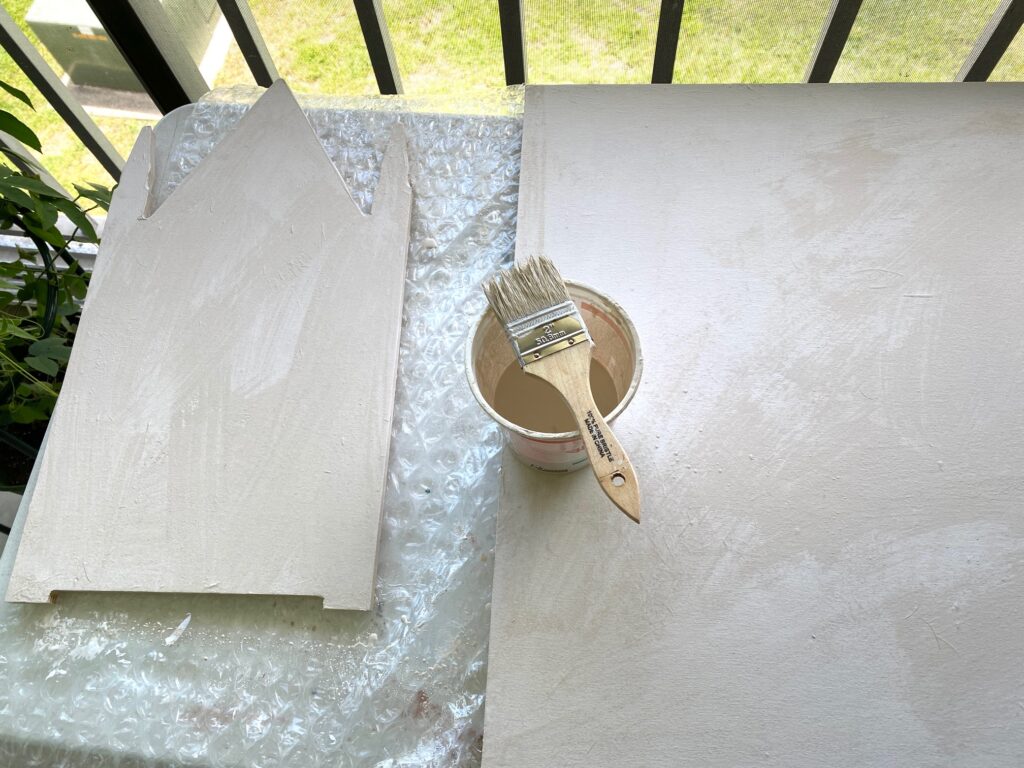
Traditionally, poplar boards have been used that are coated in rabbit skin glue (as a sealer) and then between 8 – 14 layers of natural gesso, sanded in between layers. The result should be a polished, smooth surface that is also highly absorbent. Natural gesso is not the same as the acrylic gesso most people are familiar with. Natural gesso is made using rabbit skin glue and chalk or marble dust.
Today there are many more modern materials that iconographers are experimenting with in part because the process of preparing an icon board is lengthy and requires a lot of physical effort and time. Natural Pigments makes a product, “easy Gesso”, that seems much easier to use and works well, especially for beginning students. https://www.naturalpigments.com/mediums-grounds/gesso-primers/gessoes/easy-gesso.html
Also, I tend to use Baltic Birch Wood panels because I feel they are less prone to warping than more traditional woods.
Below I will provide an explanation of how to prepare and gesso an icon board that I trust will be helpful. If you should choose to experiment with other materials and find success, do write to me and I will add that to this list.
Icon Board Materials
Baltic birch panels of various sizes, a sauce pan and another container for mixing the gesso. I use recycled plastic or glass containers about the size of a large yogurt container. Distilled water, measuring spoons, measuring cup, wood spoon to stir, oxgall liquid, glycerin, marble dust or chalk, rabbit skin glue, 2″ bristle paint brush from the hardware store, 3 grades of sand paper- 300, 600, 1200 grit. Muslin or linen large enough to overlap the icon boards’ dimensions by 1 inch all around.
Set up your workspace with a long table covered with a painter’s drop cloth. I like to use one that I can dispose of when the whole process is finished because it will get quite messy.
Steps to Gesso Icon Boards
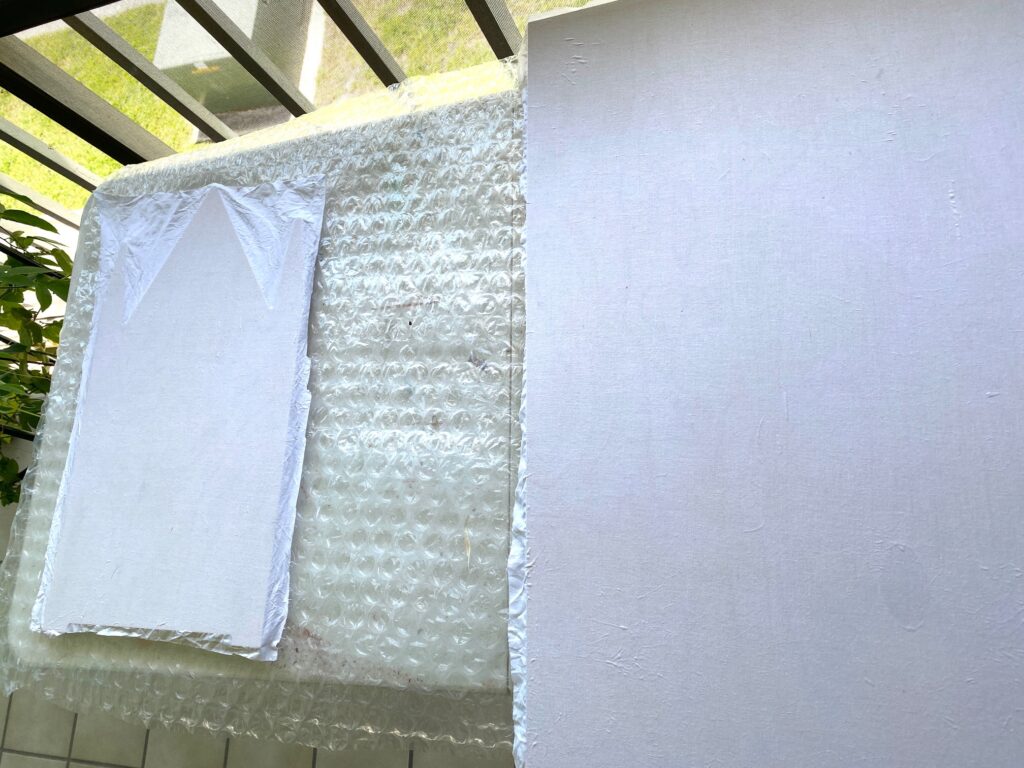
Linen drying on the boards, having been soaked in rabbit skin glue.
Measure 2 Tablespoons of Rabbit Skin glue into 2 cups of distilled water, stir well. Let sit until glue is completely absorbed and expanded- 2-4 hours.
Place glue mixture in a container that rests in a saucepan , double boiler is good), containing 3 inches of boiling water and let the glue melt. Be careful it doesn’t get too hot- do not boil the glue mixture! 135 degrees Farenheit is too hot!!
Next, using the 2″ Bristle brush, coat both sides and edges of each board with the glue. Let each side dry about 2-4 hours. This will prevent the board from warping and will keep out atmospheric moisture in the future.
When the boards have dried, the next day, you can mix up some more glue This you will use to, first, coat the dry icon boards with it. Second, dip the pre cut linen into this glue mixture and spread evenly on the board. Smooth out wrinkles- I use plastic gloves.
Next day, use a mat knife to trim edges of over lapping linen.
Time to trim the edges of the linen- when they are completely dry.
Making the Gesso
Now it’s time to make the gesso itself! Make the glue- 2Tbs rabbit skin glue added to 2 cups of water – as before. Let soak, then warm until completely dissolved, as above.
When the glue is ready, using a sieve, gradually add approx 3 cups of whiting – chalk or marble dust. I also add 1 teaspoon of oxgall liquid and 1 tsp of glycerin. These are dispersion agents and they are optional. I use Kremer Chalk from Champagne K 58000, and/or marble dust K 58500. I often make a mixture of chalk and marble dust but you can use just the chalk as well.
When this is ready, start putting layers of gesso on the boards, letting them dry in between layers. It doesn’t take too long for each layer to dry- in the summer it might take 1/2 hour.
Sanding the Boards
After 3 or 4 layers, I usually give the boards a rough sand to take off any bumps or rough spots. This can be done with a wet sanding method described in the video below, or with regular sandpaper. The wet sand method is my choice, usually. Don’t forget to coat the edges of the board. After 6 layers I sand again. Then, a final sand after the last 2 layers. You can make anywhere from 4-8 layers. Use the finest sand paper for the final sand and you will get a beautiful smooth surface ready to paint on!
There are several videos on you tube showing different approaches to gessoing an icon board. You might want to watch this, or one like it, all the way through before starting. Icon boards video by Paul Stetsenko. Or, if this is too much bother, you can always order an icon board!! I have included some new sources on my website on the student resources page.
Happy Icon Painting!
May God bless you and guide you in all of your endeavors in this Holy ministry.
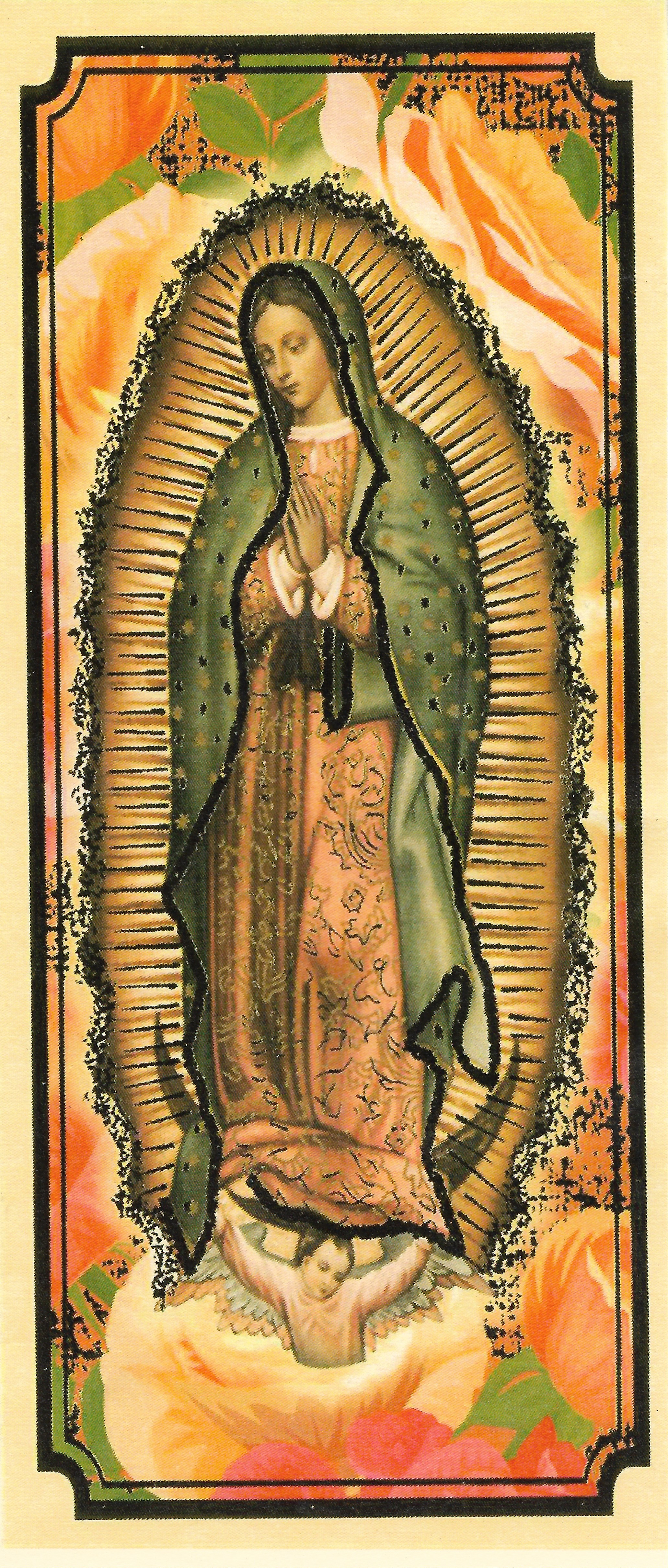
One of the most important icons of the western world is Our Lady of Guadalupe, sometimes called the Virgin of Guadalupe.
While the history of the apparition and subsequent miracles are fodder for speculation, there are certain facts that all agree on.
A series of five apparitions occurred in December of 1531 within the Basiclic of Our Lady of Guadalupe in Mexico City. This basilica is the most visited Catholic shrine in the world, and the world’s third most visited sacred site.
According to legend, the Virgin Mary appeared four times to Juan Diego, an indigenous Mexican peasant, and once to his uncle, Juan Bernardino. The first apparition occurred on the morning of Saturday, December 19, 1531. Juan Diego experienced a vision of a young woman at a place called the Hill of Tepeyac. The woman spoke to Juan in his native language, Nahuatl, and identified herself as the “Virgin Mary, mother of the very true deity”. She asked for a church to be erected at that site in her honor. Juan Diego then told the Archbishop of Mexico City what had happened. Unsurprisingly, Juan wasn’t believed. Later that same day, Juan Diego saw the second apparition. The young woman asked him to continuing pressing the Archbishop for a church to be built.
The next day, a Sunday, when Juan Diego spoke to the Archbishop a second time, the Archbishop asked for a truly miraculous sign to prove her identity. Later that day, the third apparition appeared when Juan Diego returned to Tepeyac Hill. He again encountered the same young woman and told her of the request for a miraculous sign. She agreed to provide this the next day.
By Monday, Juan Diego’s uncle, Juan Bernardino, became ill and Juan Diego had to care for him. Unfortunately, the uncle’s condition worsened and In the very early hours of Tuesday, Juan travelled to find a Catholic priest to hear his uncle’s confession and minister to him on his deathbed. On this journey, Juan Diego traveled around the place of is previous encounters with the young woman because he was ashamed by not meeting her as promised the previous day. But still, the young woman found him and asked where he was going. This was the fourth apparition. When Juan Diego explained what had happened, she gently reminded him that he should have sought her assistance. She asked “ No estoy yo aqui que soy tu madre?” (AM I not here, I who am your mother? She assured him that his uncle was now recovering and told him to gather flowers from the top of Tepeyac Hill. This hill was normally barren in December. Juan obeyed her instructions and found Castilian roses, not native to Mexico, blooming there. The Virgin arranged the flowers in Juan’s tilma (cloak), and when he opened his cloak later that day for the Archbishop, the flowers fell to the floor, revealing the image of the Virgin of Guadalupe.
The next day, Juan Diego found his uncle completely healthy, just as the Virgin had told Juan. Juan Bernardino said that he had also seen her praying at her bedside and that she had instructed him to tell the Archbishop about his miraculous cure and that she had told him she wanted to be known as the Virgin of Guadalupe.
The Archbishop kept the mantle in the church where it attracted many visitors. On December 26, 1531, a procession formed to transfer the miraculous image back to Tepeyac Hill where it was installed in a small chapel. During this procession, the first miracle occurred when a young native who was accidently mortally wounded was completely healed when brought before the Virgin’s image with many prayers and supplications.
The Virgin of Guadalupe is known as the Queen of Mexico, the Paton saint of both North and South America, and titles given by Pope John Paul II, “Empress of Latin America and Protectress Of Unborn Children”.
It’s so interesting to hear the stories behind icons. Please contact me if you have other examples to share. (chales@halesart.com).
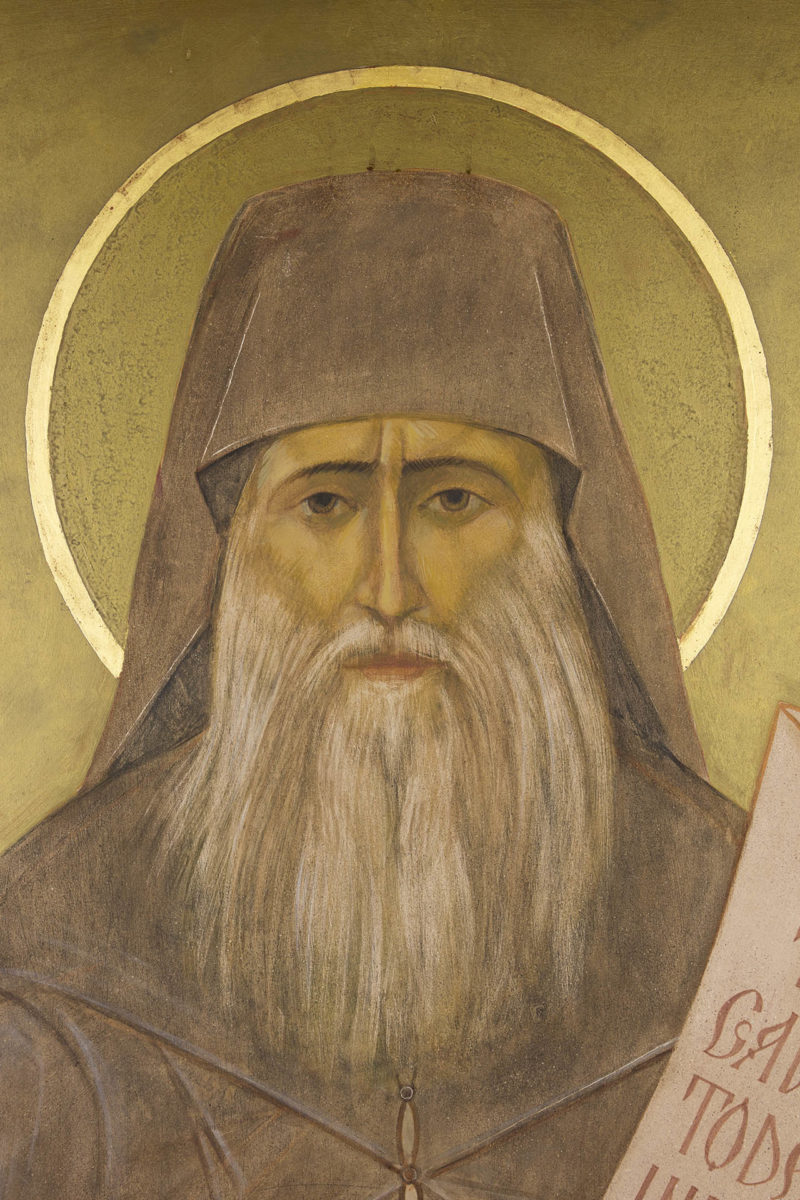
Recently I have been reading a book by Sister Gabriela about Father Sophrony that includes many of his drawings and icons. I’m inspired by his approach and work and want to share that with you here.
While attending art school in Russia in the 1920’s, one of his teachers was Vassily Kandinsky. Soon after, Sophrony moved to Paris where he exhibited his paintings and was not interested in pursuing a Christian life. This changed drastically and in 1926 he entered the Monastery of Panteleimon on Mt Athos where he remained until finally settling in Essex, UK at the Monastery of Saint John the Baptist.
Father Sophrony Drawing
To learn more about Father Sophrony, please read Sister Gabriela’s excellent books: “Being, The Art and Life of Father Sophrony”, or “Seeking Perfection in the World of Art”, or “Painting As Prayer: The Art of A. Sophrony Sakharov.”
I include here several quotes from the “Painting as Prayer” book that I know will be inspiring to all of you as well:
“An artist is a person who believes with deep conviction in the rightness of what he creates; who devotes his entire life to art for mankind. Only in such people does the Divine spark burn, brightly an unquenchably. And this is what’s most important in art.”
Drawing by Father Sophrony
Kandinsky
This is a quote in the book attributed to Kandinsky: ” the artist must not consider himself master of the situation, but the servant of nobler aims- a servant whose obligations are majestic, distinctive, and sacred. He must nurture himself and plumb the depths of his inner life, he must conserve his inner life and develop it lest his outer talent becomes empty, like a lost glove, the empty and vain likeness of a hand.”
Painting as Prayer, Book by Sister Gabriela
“The Icon is an art which expresses the spiritual world in form and color. It is made with a stylistic language of its own which introduces the person looking at it into another sphere of being, another world of perception. Intentionally it follows a different logic of perspective and reality, placing emphasis on the inner life because its main purpose is either to depict the face of God or convey the soul of the saint or the essence of the scene being depicted. Deliberately this makes it somewhat abstract. The artist seeks divine inspiration for their work and in order to receive this, rather than some other influence, he needs a humble and prayerful attitude, recognizing that he is not master of the situation.
Inspiration from on high depends to a considerable extent on us- whether we open our heart so that the Lord- The Holy Spirit Who ‘stands at the door and knocks’ does not have to enter forcibly.
The iconographer will try to free himself from all that hinders or is contrary to the action of Divine Inspiration. This requires both humility and asceticism, but as ascetic feats may lead to pride, and thus deter grace, it is humility that is the essential part. This keeps him both open to others and their suggestions and open to grace. It preserves a rigorous questioning and checking in prayer with his conscience and with the ideal which is the humble example of Christ.”
Orthodox Journal Article
I first learned about Father Sophrony’s work from an excellent article on the Orthodox Journal. Here is the link .
“For me, the most fascinating part of the study was the subject of Father Sophrony as an iconographer. His approach to iconographic practice is described and this section is rich in quotations and comments of great interest. Sister Gabriela writes that by having “absorbed the iconographic tradition through observation and living with it, while leading a strict ascetical life…one’s understanding goes deeper, beyond the external aesthetic aspect.” “…he understood iconography in its essential form, as an inspiration for prayer, and a “springboard”, as he called it himself, to eternity. In this sense he was free from any attachment to any specific school or iconographic movement. His sole interest was to render the icon as authentically as possible.” As a result of this it is apparent that “One cannot classify his icons into any particular style or school. He took what he found best from each. His only concern was the icon itself, how best to express the given situation.”
In summation Sister Gabriela writes of Father Sophrony’s life that “This is the search for Christ, the yearning for close contact with Him and, within this, striving to portray His face in a correct and worthy manner, both in the inner life and in iconographic panting.”
Additional Link to Icon Gallery in Slovakia
I have recently seen a lovely online exhibition of Eastern European Icons at The Gallery of Icons. Here is the link.
That’s all for this month. Please email me with suggestions for future articles on understanding and appreciating icons.
What is so special about Novgorod Icons? In addition to being known for their beautiful colors and lively compositions, Novgorod Icons offer a rich history and background to the study of icon writing.
Novgorod is one of the oldest cities in Russia, dating from about 859 AD. The period from the 12th to the 17th centuries was especially bountiful in producing many beautiful icons. This period of time is sometimes referred to as “the Proto- Renaissance” because it still embraced the union of religious and aesthetic ideas.
Saints John Climacus, George, and Blaise, 13th Century
The Effects of the Western Renaissance on Icon Writing
The Proto- Renaissance that was operational in Russia was able to encompass all the cultural phenomena of its time within the context of religion and produce icons of spiritual depth without being overly influenced by Humanism.
In the West from the 14th to 16th centuries, the Renaissance moved art, even religious art, more toward man’s interests and became more human, less religious. Even Christianity in the West at this time became more rational and scholastic and emphasized the emotional experiences of the subject.
In the practice of writing icons, we tend to strongly favor copying icons from before the Renaissance for this very reason. Iconographers agree that imagery from before the Renaissance is preferred because we want our icons to reflect a culture that placed God as the center of the universe, not human reason.
Nativity of the Virgin, 14th Century
Fourteenth Century Russian Culture
Russian culture of the late fourteenth and early fifteenth centuries developed strong ties with Byzantium, particularly in Novgorod and Pskov. The great iconographer, Andrei Rublev was part of this cultural and spiritual movement. The famous Byzantine master Theophanes the Greek worked in Novgorod in 1378. His magnificent frescoes in the Church of Our Savior in Ilyina Street formed a bridge between the art of Novgorod and Byzantium.
The Transfiguration by Theophanes
The Artistic Language of the Novgorodian icon is simple, laconic and precise; the composition is based on large contrasting shapes. The rhythm and coloring are tense and mobile, the drawing energetic. Colors are especially important and tend to be simple and bright. Faces, while classical. Tend to have large, expressive eyes. They are painted in a gentle manner with subtle gradations of value. The linear design of the hair, lips, nose and eyes is in contrast to the subtle tonal gradations. In the earlier icons, the minimal color scheme of olive and yellow prevails.
Saint Nicholas Icon
In the thirteenth century icon of Saint Nicholas from the Novgorodian monastery of the Holy Spirit, we see clearly the simplicity of composition, the harsh linear forms, and sparse contrasting colors that complement the restraint of the image. This icon, as well as the is very characteristic of Novgorodian twelfth and thirteenth century painting.
Saint Nicholas
Presentation of the Virgin Icon and Boris and Gleb Icon
In these icons of the late thirteenth, early fourteenth centuries we see the qualities of simplicity of composition combined with monumental, flat graphic qualities balanced by relative depth of form. The colors show an abundance of cinnabar, white, ochre, brown and green.
Presentation of the Virgin
At this time, Novgorodian painting came closer to Byzantine icons of the Palaeologus period. Icons became monumental and soon were given to freer and more complex compositions. Here we find images with inner tension, power and a classical simplicity. We also see the beginnings of interest in man and his feelings and this affects both color and composition.
Boris and Gleb Icon
I need to end this here, but will pick it up again in a subsequent blog in order to continue the historical development of icons in this most important period of icon history. For further reading I suggest the book: Novgorod Icons, 12-17th Century by Aurora Art Publishers, Leningrad.
Some of the best characteristics of Novgorodian icons are their rational yet popular imagery, economy of means, and a brilliant use of color. Definitely a period of icon writing worth exploring for every aspiring iconographer!
The next icon class that I teach online we are painting an Icon of Mary Magdalene. In order to make an accurate copy of the prototype, I am researching the relatively scant information available about her and want to share some of that with you here.
Mary Magdalene
The questions to ask are: “Who was this woman, what does she represent to us today?” I rely heavily on Wikipedia for this article, and I include the following:
“Mary Magdalene is considered to be a saint by the Catholic, Eastern Orthodox, Anglican, and Lutheran churches. In 2016 Pope Francis raised the level of liturgical memory on July 22 from memorial to feast, and for her to be referred as the “Apostle of the apostles”. Other Protestant churches honor her as a heroine of the faith. The Eastern Orthodox churches also commemorate her on the Sunday of the Myrrhbearers, the Orthodox equivalent of one of the Western Three Marys traditions.” Wikipedia
Early Materials: Who Was Mary Magdalene
“The earliest materials that refer to Mary Magdalene appear from two very different sources: the canonical Gospels of the New Testament, and a group of fringe materials that have come to be known as the Gnostic Gospels, which were rejected by the Catholic Church.” The Gospel of Mary Magdalene, by Jean-Yves Leloup.
I share Leloup’s thoughts that the path of Mary Magdalene emphasizes inner preparation, introspection, and inner transformation. “As one who has been cleansed from sin, who remains with Christ throughout his death on the cross; and who first witnesses, understands, and believes in Christ’s resurrection, she represents a human being who is open and available to true “inner knowing” and can see in deeper, clearer ways through a unique spiritual connection to both earthly death and the Divine.”
Lamentation painted by Christine Hales
Canonical Gospels
“Mary Magdalene, sometimes called Mary of Magdala, or simply the Magdalene or the Madeleine, was a woman who, according to the four canonical gospels, traveled with Jesus as one of his followers and was a witness to his crucifixion and resurrection. She is mentioned by name twelve times in the canonical gospels, more than most of the apostles and more than any other woman in the gospels, other than Jesus’s family. Mary’s epithet Magdalene may mean that she came from the town of Magdala, a fishing town on the western shore of the Sea of Galilee in Roman Judea.” Wikipedia
“Mary Magdalene’s epithet Magdalene (ἡ Μαγδαληνή; literally “the Magdalene”) most likely means that she came from Magdala, a village on the western shore of the Sea of Galilee that was primarily known in antiquity as a fishing town. Mary was, by far, the most common Jewish given name for females during the first century, so it was necessary for the authors of the gospels to call her Magdalene in order to distinguish her from the other women named Mary who followed Jesus. Although the Gospel of Mark, reputed by scholars to be the earliest surviving gospel, does not mention Mary Magdalene until Jesus’s crucifixion,]the Gospel of Luke 8:2–3 provides a brief summary of her role during his ministry: “Soon afterwards he went on through cities and villages, proclaiming and bringing the good news of the kingdom of God. The twelve were with him, as well as some women who had been cured of evil spirits and infirmities: Mary, called Magdalene, from whom seven demons had gone out, and Joanna, the wife of Herod’s steward Chuza, and Susanna, and many others, who provided for them out of their resources.” Wikipedia
There Is No Direct Evidence to Support The Notion of Her As a Prostitute.
“The portrayal of Mary Magdalene as a prostitute began in 591 when Pope Gregory I conflated Mary Magdalene, who was introduced in Luke 8:2, with Mary of Bethany (Luke 10:39) and the unnamed “sinful woman” who anointed Jesus’s feet in Luke 7:36–50. Pope Gregory’s Easter sermon resulted in a widespread belief that Mary Magdalene was a repentant prostitute or promiscuous woman.[5][1] Then elaborate medieval legends from western Europe emerged which told exaggerated tales of Mary Magdalene’s wealth and beauty, as well as of her alleged journey to southern Gaul (modern-day France.) The identification of Mary Magdalene with Mary of Bethany and the unnamed “sinful woman” was still a major controversy in the years leading up to the Reformation, and some Protestant leaders rejected it. During the Counter-Reformation, the Catholic Church emphasized Mary Magdalene as a symbol of penance. In 1969, Pope Paul VI removed the identification of Mary Magdalene with Mary of Bethany and the “sinful woman” from the General Roman Calendar, but the view of her as a former prostitute has persisted in popular culture. …
Mary Magdalene, detail, written by Mary Jane Miller
Mary Magdalene Was Probably From a Wealthy Family
The Gospel of Luke 8:2–3 lists Mary Magdalene as one of the women who traveled with Jesus and helped support his ministry “out of their resources”, indicating that she was probably wealthy. The same passage also states that seven demons had been driven out of her, a statement which is repeated in Mark 16. In all the four canonical gospels, Mary Magdalene was a witness to the crucifixion of Jesus and, in the Synoptic Gospels, she was also present at his burial. All the four gospels identified her, either alone or as a member of a larger group of women which includes Jesus’s mother, as the first to witness the empty tomb, and, either alone or as a member of a group, as the first to witness Jesus’s resurrection… Because Mary is listed as one of the women who were supporting Jesus’s ministry financially, she must have been relatively wealthy. The places where she and the other women are mentioned throughout the gospels strongly indicate that they were vital to Jesus’s ministry and the fact that Mary Magdalene always appears first, whenever she is listed in the Synoptic Gospels as a member of a group of women, indicates that she was seen as the most important out of all of them. Carla Ricci notes that, in lists of the disciples, Mary Magdalene occupies a similar position among Jesus’s female followers as Simon Peter does among the male apostles.”Wikipedia
Mary Magdalene is the only woman besides Mother Mary who is mentioned by name in all four texts., and her name is always listed first when the presence of women is noted.
Crucifixion Icon written by Christine Hales
Healed By Jesus of Seven Demons
Jesus heals Mary by freeing her from seven demons. Mark 16:9 and Luke 8:2. She is mentioned also as one of the three, along with Mother Mary and John the apostle who wait at the foot of Christ’s cross at the Crucifixion. John 19:25
And importantly we know that she is the first to see Jesus resurrected from the tomb: John 20:11-18, Mark 16:9, Matthew 28:9-10. It is because of this that she is considered to be the apostle of the apostles.
Because Mary was the first to witness the Resurrection, she was considered by the Apostle John as the founder of Christianity. This was long before Saint Paul had his vision on the road to Damascus.
Women at the Tomb Icon
Women at the Tomb
According to Matthew 28:1–10, Mary Magdalene and “the other Mary” went to the tomb. An earthquake occurred and an angel dressed in white descended from Heaven and rolled aside the stone as the women were watching. The angel told them that Jesus had risen from the dead. Then the risen Jesus himself appeared to the women as they were leaving the tomb and told them to tell the other disciples that he would meet them in Galilee. According to Luke 24:1–12, a group of unnamed women went to the tomb and found the stone already rolled away, as in Mark. They went inside and saw two young men dressed in white who told them that Jesus had risen from the dead. Then they went and told the eleven remaining apostles, who dismissed their story as nonsense. In Luke’s account, Jesus never appears to the women, but instead makes his first appearance to Cleopas and an unnamed “disciple” on the road to Emmaus. Luke’s narrative also removes the injunction for the women to tell the disciples to return to Galilee and instead has Jesus tell the disciples not to return to Galilee, but rather to stay in the precincts of Jerusalem.
Another Account of Mary Magdalene and the Resurrection
Mary Magdalene Painting
Mary Magdalene’s role in the resurrection narrative is greatly increased in the account from the Gospel of John. According to John 20:1–10, Mary Magdalene went to the tomb alone when it was still dark and saw that the stone had already been rolled away. She did not see anyone, but immediately ran to tell Peter and the “beloved disciple”, who came with her to the tomb and confirmed that it was empty, but returned home without seeing the risen Jesus. According to John 20:11–18, Mary, now alone in the garden outside the tomb, saw two angels sitting where Jesus’s body had been. Then the risen Jesus approached her. She at first mistook him for the gardener, but, after she heard him say her name, she recognized him and cried out “Rabbouni!” of the grammar (negated present imperative: stop doing something already in progress) as well as Jesus’ challenge to Thomas a week later (see John 20:24–29). Jesus then sent her to tell the other apostles the good news of his resurrection. The Gospel of John therefore portrays Mary Magdalene as the first apostle, the apostle to the apostles.
The relationship between Jesus and Mary Magdalene shows us that Jesus did not reject women, but loved and welcomed women, sinners, and the weak.
The Relevance of Mary Magdalene for Christianity Today.
Another interesting book on the subject is Cynthia Bourgeault “The Meaning of Mary Magdalene, Discovering the Woman at the heart of Christianity”. In this book, Bourgeault re -examines both the Traditional and liturgical meanings of Mary’s role in the Gospels in the light of today’s hunger for personal spiritual understanding and meaning.
“ In the liturgy for the great vigil of Easter, one of the readings comes from the Old Testament book of Ezekiel:’I will remove from your body the heart of stone and give you a heart of flesh.’ Ezekiel 36:26 It seems to me that this promise captures the essence of Mary’s Magdalen’s healing vocation to contemporary Christianity…”
Mary Magdalene Icon
Legends and Creative Imaginings
There remain many stories, legends and creative imaginings surrounding the person of Mary of Magdala. I close this article with a lovely quote from the Leloup book:
“Each morning, according to another legend, a group of angels lifted Mary Magdalene above the summit of the cliffs where she could listed to the entire choir of angelic hosts, the divine sounds of original and continuing creation.”
Until next month, be blessed and do your best to help and be kind to others. 🙏❤️