
Hello Fellow Iconographers: Today I am writing this blog on the Feast Day of Saint Michael, and I include here the collect for St. Michael and All Angels from the book of Common Prayer:

“Everlasting God, you have constituted in a wonderful order the ministries of angels and mortals. Mercifully grant that, as your holy angels always serve and worship you in heaven, so by your appointment they may help and defend us here on earth; through Jesus Christ our Lord, who lives and reigns with you and the Holy Spirit, one God, for ever and ever. Amen.
Lately I’ve been writing monthly articles about Icons and their place in history, and more theoretical topics related to understanding the field of writing icons. This month I am writing about the possibility of experimenting with new and maybe surprising materials that can be used to create satisfactory grounds for painting icons using egg tempera.
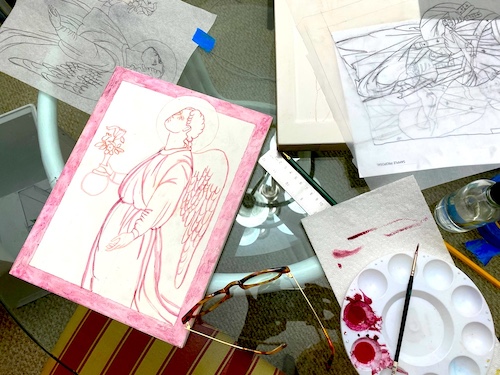
I will always consider the very best possibility for painting icons in egg tempera to be traditionally prepared icon boards, either by the iconographer herself or puchased from a reputable icon board maker. But, as we all know, those traditionally prepared icon boards are labor and time intensive, and therefore costly. And in my teaching experience, many people are interested in giving icon writing a try, but either aren’t able or don’t want to invest heavily in materials until they are sure this is an activity they want to pursue over time.

Icon writing materials are a significant investment for a complete beginner, I understand. Add to that the fact that practicing icon writing is absolutely necessary to mastery of the technique, you have the need for inexpensive, easy to find alternatives to icon boards.
I always love to experiment both with materials and techniques, so I am able to share a number of alternatives with you here that I hope will help you in your icon writing practice.
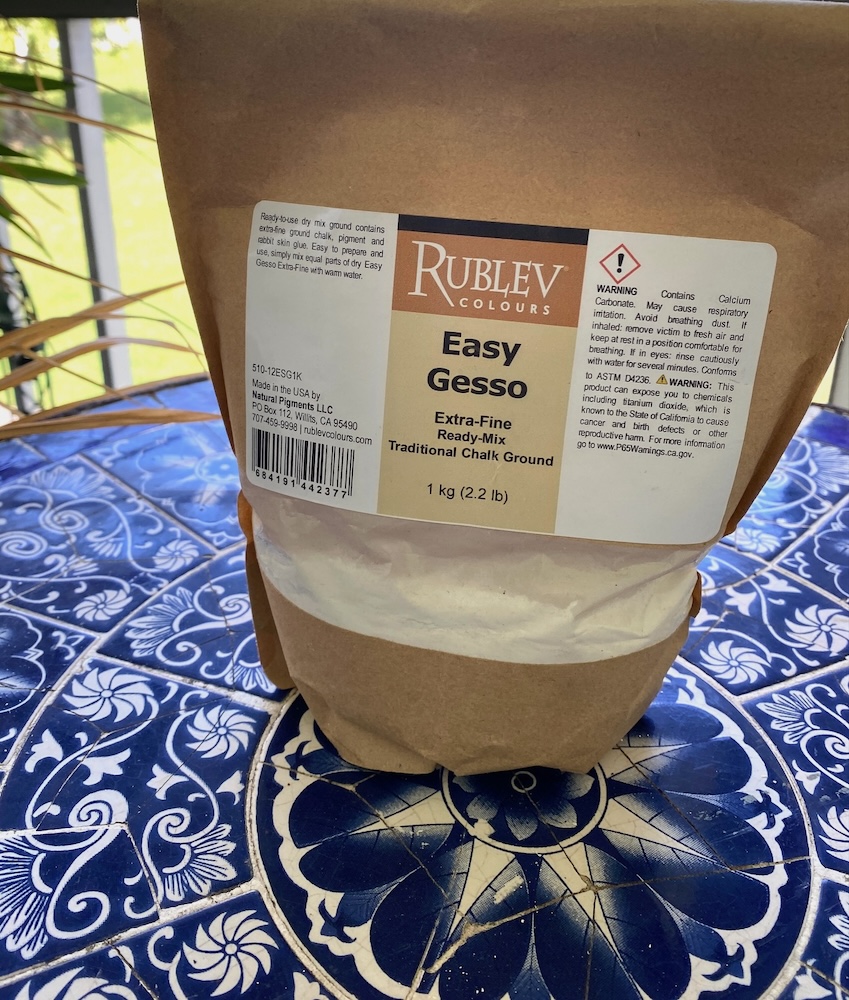
Easy Gesso
First, I find the “Easy Gesso” product made by Natural Pigments to be an excellent ground that can be used on watercolor paper, bristol board, ampersand and aquaboards, birch panels- almost anything that is a solid enough support. Obviously the watercolor paper is only going to work for practice sketches because egg tempera needs a stable (un-bendable) surface so that the tempera does not crack. Trekell Art Supplies has some very nice and inexpensive baltic birch panels available in a variety of sizes and shapes and I recommend these. especially for students.
You must follow the directions for the Easy Gesso, (don’t mix with cold water etc.) and use 3 coats, allowing each layer to dry before applying the next one. Then lightly sand the surface and I think you will be happy with the result. If you prepare several surfaces at a time, it’s a good investment in your icon writing practice, and very handy to have surfaces ready for painting.


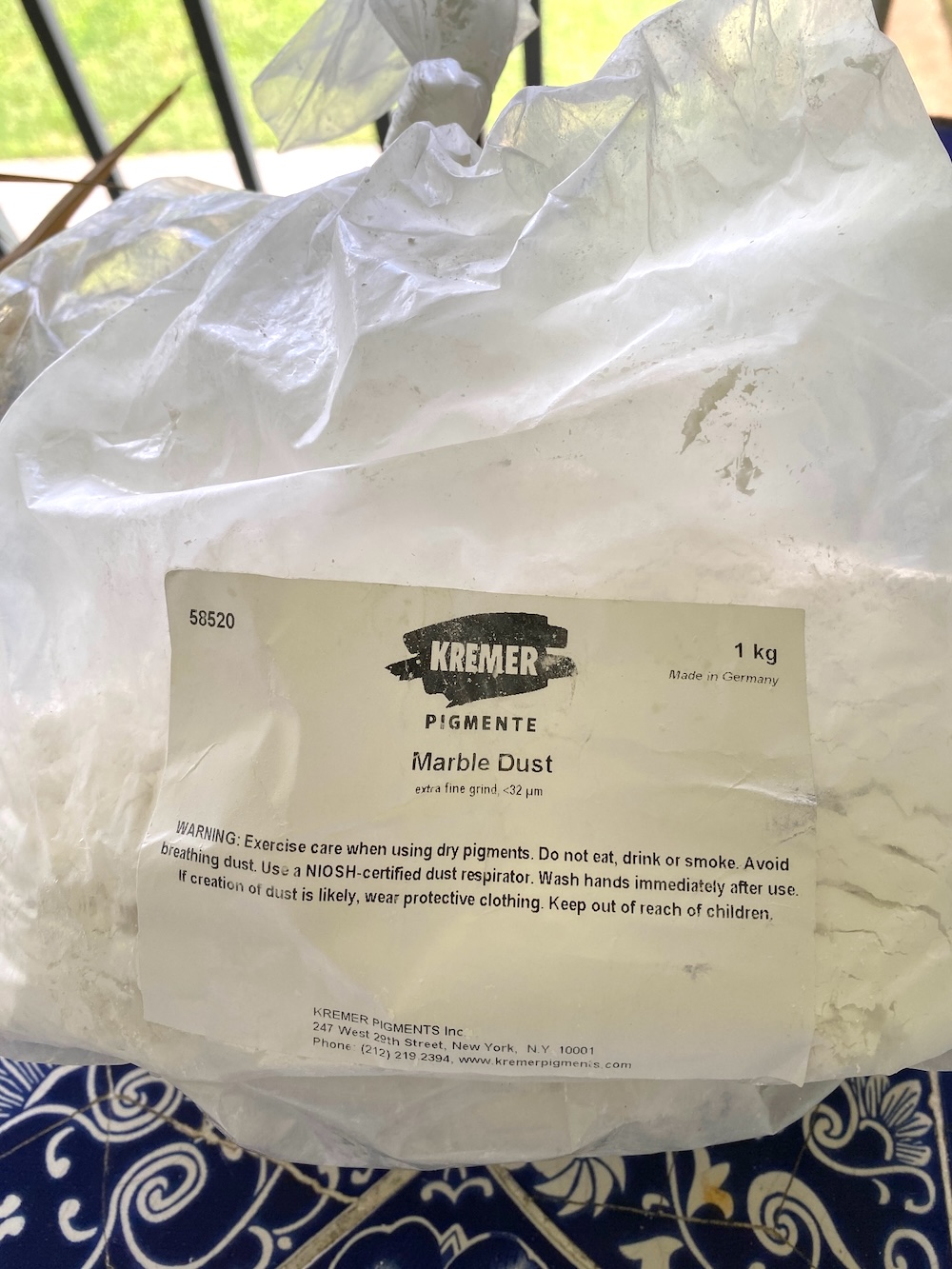
A combination that I have used many times is to use acrylic gesso and mix it with either Marble Dust or Chalk, then a bit of water to tinh apporpriately. What like about this mixture is te acrylic gesso base of this mixture is waterproof and mold proof. The marble dust or chalk provide tooth and absorbency. If you decide to try it, experiment first to see if you like it as well. I put about 1/3 marble dust to 2/3 acrylic gesso. I don’t always use this mixture, but at times I have found it useful. Also, one of my students has successfully used wood filler, applied with a large putty knife over a cradled board, and then lightly sanded to be effective and good to work on.

Golden Paints has many new products out now, including a variety of gessoes for different purposes. I highly respect the Golden Paint Company because I know their research is of primary importance for them, and they keep accurate records of results while being highly knowlegable. Here is a link to an article from them about wet sanding acrylic gesso. Here is a link to their newsletter about recent research experiments with a variety of products- it’s always interesting and informative. And I’ll close this article with a link to the Golden gessoes, I have tried the absorbent one and it works well.
The American Association of Iconographers has an article on how to gesso boards from scratch as well, and here is the link.
If you have a favorite work around for gesso, and want to share it, you can leave the info in the comments section. Make sure you give instructions on how to use the materials.
May God continue to bless the work of your hands,
Christine Hales

 American Association of Iconographers