Making Pigments, A Fine Summer Project!

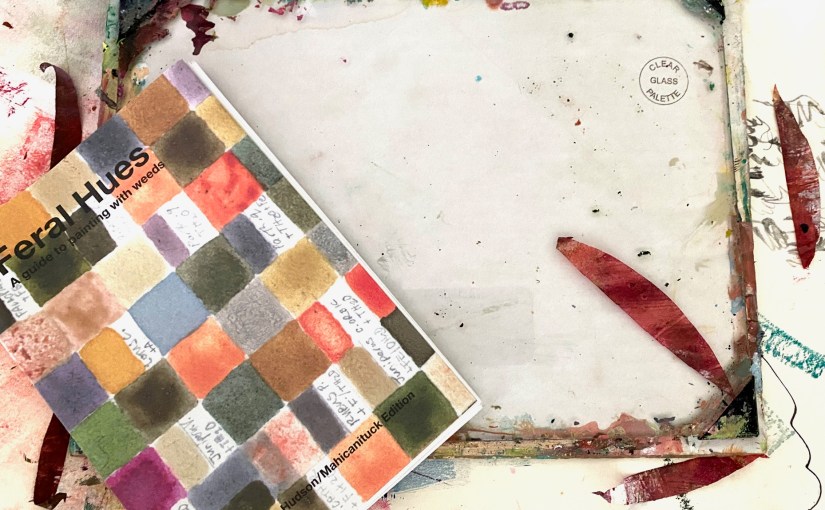
Lately I’ve become very excited about making some of my own pigments. It all started with my discovery of a book written by Ellie Irons “Feral Hues”, A Guide to Painting with Weeds. It’s a lovely book, packed with examples, color samples, pigment charts and insights into gathering, experiencing, and creating pigments from weeds, or common plant that currently grow in the Hudson Valley- my former home. https://www.publicationstudio.biz/books/feral-hues-a-guide-to-painting-with-weeds/

The Feral Hues Book on My Studio Table

The colors are so delicate and resonate with a natural authenticity that I realized I wanted to include something like this in my icon writing practice.  I often enjoy experimenting and incorporating new techniques in my painting practice and this idea of connecting more with the natural world around me seems like a new facet of praying and painting. It’s inspiring to engage with nature and makes me happy to think of how this duplicates artist practices from the ancient world.

So I have done some research, which I provide here, along with some links to YouTube videos demonstrating different approaches to pigment making from natural sources to maybe inspire you to collect some natural materials from your environment this summer to incorporate in your icons or icon sketches.  I would love it if any of you make your own pigments, or just experiment with doing so, would send photos and descriptions to me and I will post them all at the end of summer!

The Historical Context of Icon Pigments

The making of pigments for icons is deeply rooted in tradition. Orthodox Christian iconographers of the Byzantine and Russian schools, for instance, inherited their pigment recipes and with these traditions, making pigments is not merely a technical exercise—it is experienced as a sacred act, performed with prayer and reverence.

Early iconographers relied on the natural world to supply their colorants: minerals, plants, earths, and even insects. Over time, as trade routes expanded, so too did the palette, with rare minerals and exotic substances making their way into the hands of skilled artisans.

Today, we can enjoy the sense of connection with nature, authenticity and spiritual resonance inherent in the process.  But first, a short video to define qualities and properties of different pigments.

Raw Materials: The Source of Color

Pigments for icons originate from a remarkable array of materials, each with its own story:

  • Minerals: Lapis lazuli (yielding ultramarine blue), malachite (green), cinnabar (vermilion red), and ochres (yellows, reds, browns) are classic examples. These minerals are prized for their intensity, permanence, and rich symbolism.
  • Earth Pigments: Natural earths provide warm tones, such as siennas and umbers. Their subtlety and stability are essential for creating flesh tones and backgrounds.
  • Plant and Animal Sources: While less common, certain reds (like carmine) are derived from insects, and greens can be obtained from plant extracts. However, these tend to be less stable over time.

The Process of Making Pigments

Pigment-making is a precise and often labor-intensive process, requiring patience and a thorough understanding of both material and method. Let us walk through the general stages:

1. Sourcing and Preparing Raw Materials

Sourcing is the first challenge. Authentic pigments demand high-quality, uncontaminated raw materials. Stones must be carefully selected for color and purity. Once acquired, the raw material—be it a mineral or earth—is cleaned of any impurities. For stones, this can involve washing, sorting, and initial crushing.

2. Grinding and Levigation

The heart of pigment-making lies in the grinding. The raw material is broken down, traditionally using a mortar and pestle, into ever finer particles. This step is crucial: the fineness of the pigment determines its brilliance, texture, and how it mixes with the binder.

Levigation follows: the ground material is suspended in water, and the heavier, coarser particles are allowed to settle while the finer, more suitable material remains in suspension. This is then collected, dried, and stored.

3. Washing and Purification

Some pigments require further washing to remove soluble salts or other contaminants that could affect long-term stability. For certain minerals, repeated washing and filtering are essential to preserve both color and integrity.

4. Testing for Quality

Not all ground minerals make suitable pigments. Quality tests—rubbing a small amount onto a glazed tile, exposing it to light, mixing it with a test binder—help the iconographer judge hue, granulation, opacity, and permanence.

Spiritual and Symbolic Dimensions

For the iconographer, making pigments is more than craft; it is a spiritual discipline. Every act—from choosing the finest lapis lazuli or malachite to breaking and grinding local river stones is done prayerfully, often accompanied by the recitation of psalms or other devotions. In the tradition, the humility demanded by such painstaking labor is itself a form of worship, aligning the artist with the saints and ancestors who have gone before.

Making Pigments From Flowers

Color holds profound symbolic meaning in the icon. Gold, for example, does not symbolize worldly wealth, but rather the uncreated light of God. Red conveys divine life and resurrection; blue, mystery and transcendence; green, renewal. The careful selection and preparation of each pigment ensures the icon communicates not just beauty, but theological truth.

Challenges and Considerations in Modern Practice

While modern chemistry offers synthetic pigments of impressive intensity and consistency, many iconographers still prefer natural pigments for their authenticity and spiritual resonance. However, challenges abound:

  • Availability: Some minerals, like true lapis lazuli, are rare and expensive.
  • Ethical Sourcing: Ensuring that materials are procured responsibly and sustainably is increasingly important.
  • Health and Safety: Some traditional pigments, such as lead white or cinnabar, are toxic. Proper protective measures are essential.
  • Conservation: Icons must be made with materials that will endure, and so a careful balance between tradition and innovation is often sought.

Conclusion

The making of pigments for icons is a testament to the union of art, science, and faith. It is a craft that honors the natural world, reveres tradition, and aspires toward the sacred. In every grain of crushed stone, in every brushstroke of egg tempera, lies a profound continuity with the past—a legacy of devotion and excellence. Obviously, if we are painting with egg tempera, then egg will be our binder. But if you read some of the comments, there are other natural binders as well.

For those who practice the art of icon writing, making pigments can be a transformative journey. It is an invitation to slow down, to engage deeply with one’s materials, and to approach the act of creation as a form of prayer. In honoring the old ways, iconographers not only preserve a heritage, but also manifest, through color and light, the inexpressible mysteries of the spirit.
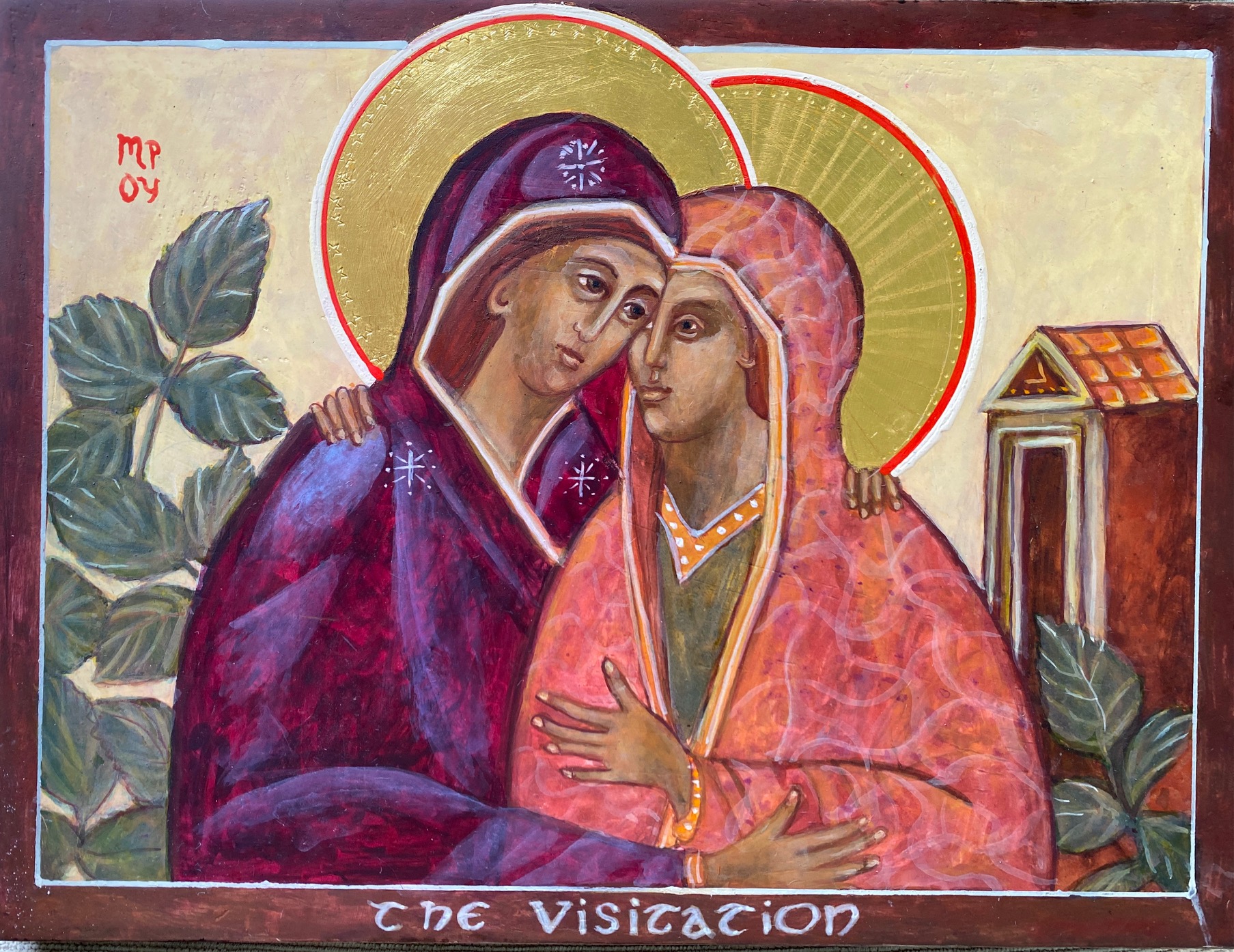
One of my new Icons, “The Visitation”. Christine Hales

I hope that you are enjoying reading this blog and invite those who have an interesting article or review that would contribute to iconography practice to email those to me for possible inclusion in future blogs.

May God continue to bless the work of your hands,

And may the grace of our Lord Jesus Christ, and the love of God, and the fellowship of the Holy Spirit be with us all forever.

Christine

Christine Simoneau Hales

Interesting Links for Iconographers:

These links were provided by Dorothy Alexander, an Iconographer and friend from California:

Here are most of my links:

LINKS For  Christine Simoneau Hales   2025

  1. https://newchristianicions.com   my main website
  2. Https://christinehalesicons.com  Prints of my Icons
  3. https://online.iconwritingclasses.com  my online pre-recorded icon writing classes
  4. https://www.youtube.com/channel/UCK2WoRDiPivGtz2aw61FQXA  My YouTube Channel
  5. Facebook: https://www.facebook.com/ChristineHalesFineArt     or  https://www.facebook.com/NewChristianIcons/
  6. Instagram:   https://www.instagram.com/christinehalesicons/?hl=en
  7. American Association of Iconographers:  FB Group:  https://www.facebook.com/groups/371054416651983

American Association of Iconographers Website: https://americanassociationoficonographers.com
Icon Materials

“He who works with his hands is a laborer,

He who works with his hands and head is a craftsman.

He who works with his hands and his head and his heart is an artist.”

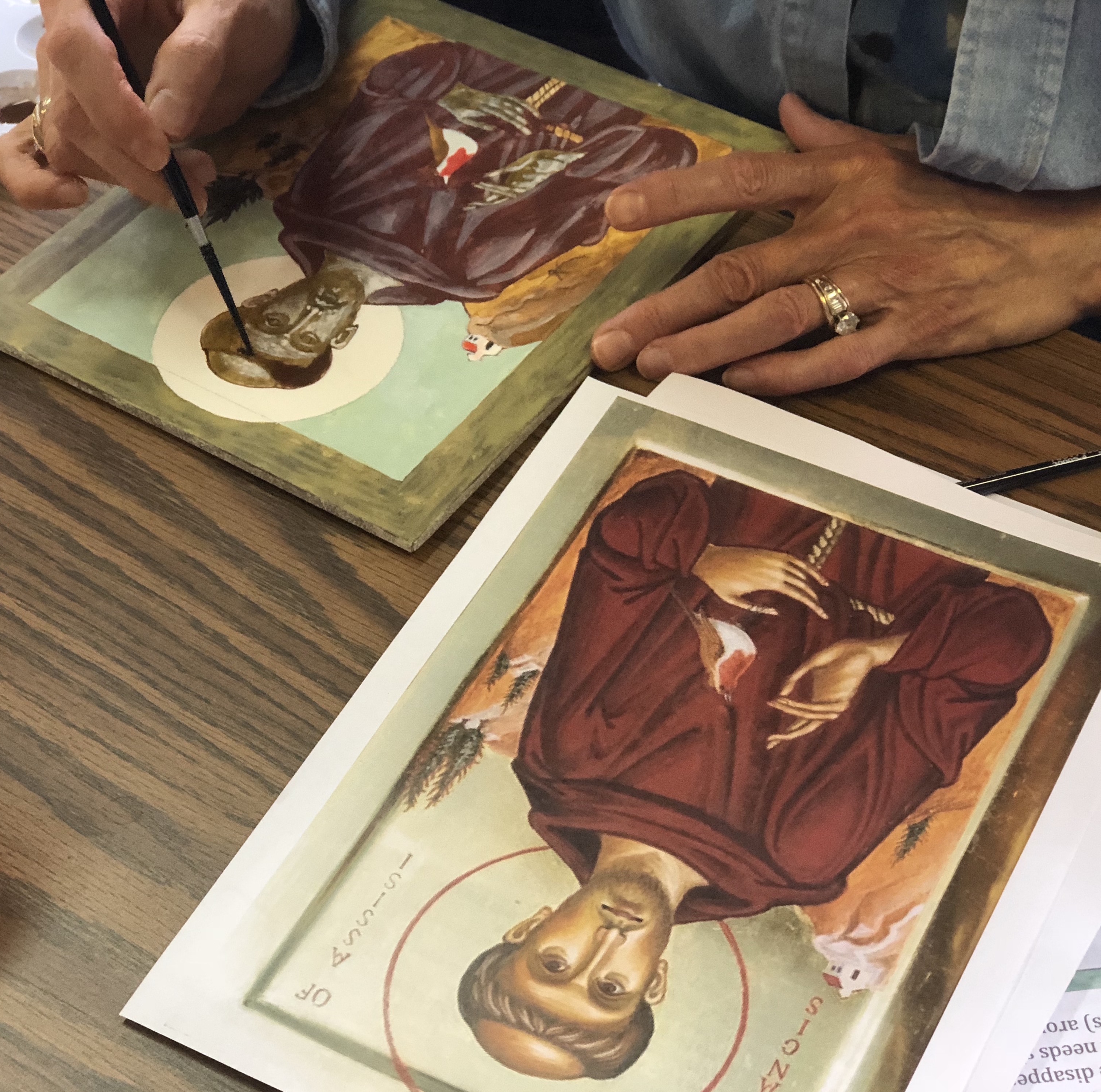
Saint Francis of Assisi
St. Francis
St. Francis Icon Hales

One of the beautiful things about writing icons is the re-introduction of ancient materials and methods. If a modern painter makes a painting of religious imagery without observing the ancient materials and principles of iconography, the effect just isn’t the same.

I realize that many of the readers of this blog are international as well as American, so this month’s news is about materials and where to get them. There are two books that I find extremely helpful that I would like to recommend.

Living Craft

The first is, Living Craft, A Painter’s Process, by Tad Spurgeon. This book contains “creative methods and materials based on older practice, featuring solvent – free techniques. There are also several highly informative chapters on the grammar of color and ninety unique formulas for oils, mediums, grounds, and paint.”

Many materials and processes are explained in detail in this book. For example, there are pages describing the how and why of using cloth to cover the wood surface before gesso application. In this book there are several formulas for glue size, gesso, egg emulsion and varnishes. Even though this is not strictly an icon book, the methods and materials within are of great value to iconographers as well as painters.

Since the philosophy behind this book values the traditional materials and processes of classical painting, there are many sections that go more deeply into materials than most icon books.

“When a painting is constructed with harmonious proportions- a process with both inner and outer dimensions- the result has both beauty and strength. Proportional harmony is involved in three major areas: the color, the composition, and the materials themselves.” And another quote that I find valuable in teaching color theory for iconographers is:

Living Craft, Tad Spurgeon

“Painting light convincingly is not enhanced by color variety, nor by color identity, but by the accuracy and harmony of color relationship within the value structure. These must be finely tuned to feel natural and are far easier to access with fewer colors and mixing based on value and temperature – the logic flight- than with more colors and mixing based on guess work.”

Living Craft, Tad Spurgeon

This is not so much a textbook as a record of one painter’s process of experimentation and research into classical and pre classical materials.

The other book I highly recommend is Formulas For Painters by Robert Massey. (Available on Thriftbooks.com)

Formulas For Painters

This is a book that is easy to see and read and contains two hundred simple formulas for making paints, glazes, mediums, varnishes, grounds, fixatives, sizes and adhesives for tempera, gouache, pastel, encaustic, fresco and other painting techniques.

Here is a quote from the author’s introduction:”Since the Middle Ages- indeed as early as the thirteenth century when Theophilus, the monk of Paderborn, wrote his work, On Divers Arts, – artists and craftsmen have cooked, blended, borrowed, and stolen an amazing variety of recipes and formulas, always striving to concoct a better paint or a quicker drying varnish tonsure the permanence of their art works.”

There are recipes for hide glue solutions, synthetic resin emulsion, egg and water solution, gelatine, and casein sizes to be used in the preparation of gesso. The varnishes section is particularly helpful for iconographers, with many alternatives to the traditional olifa of linseed oil.

I hope that these books prove helpful to iconographers searching to find the methods and materials that work best in their studio, climate, and circumstances.

American association of Iconographers, Romanesque Style
Romanesque Style, circa 1145AD

Additional Notes:

A couple of additional points to share: Betsy Peter, an iconographer from California has been hosting an informal discussion, on Zoom, with and for iconographers each Sunday afternoon. Different topics are introduced each week and it is an open forum for sharing links and information. For an email invitation contact me below.

Also, my next online Icon painting class will be on April 13-16th, a morning session and an afternoon session, each of the four days. The focus will be on color and the Icon and we will be painting Saint George and the Dragon in egg tempera. There is a lot of advanced information regarding color theory for the experienced iconographers as well as step by step demonstrations for complete beginners.

I hope this blog is helpful, and provides not only community but valuable resources for al iconographers. Until next month, may God continue to bless the work of your hands and keep you safe and well.

Christine Simoneau Hales

New Christian Icons

Go back

Your message has been sent

Warning
Warning
Warning
Warning.

Training for Iconographers

Greetings Fellow Iconographers :

Training for Iconographers

St. Basil
St. Basil Icon by Christine Hales

This month I am recommending two articles that have been published in an on-line journal- The Orthodox Arts Journal– as elements contributing to  good training for Iconographers.  As I go around the country teaching an “Introduction to Icon Writing Class”, I am aware of how little knowledge people in general have about Icon painting.  It is impossible to gain enough knowledge of this art from a few classes to be able to make truly authentic Icons.  I recommend two things:  look at as much art and as many Icons as you possibly can. Books, online resources, museums, all of these will help your painting to become mature as you practice what you see.  The second thing I recommend is to read as much as you can about the history as well as the technique of Icon writing.   Both of these activities go hand in hand with taking workshops and practicing at home.

Two Articles for Iconographers in Training.

First Article

Mustard Seed Manual of Painting

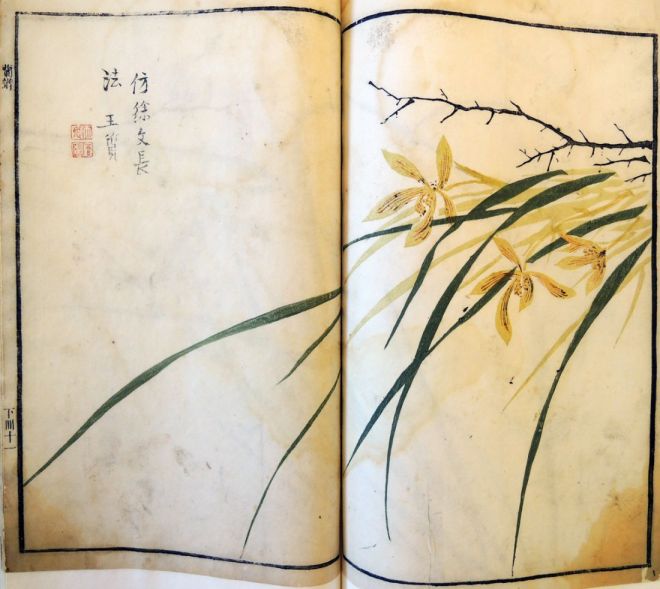
The first article is written by English Iconographer Aidan Hart and it is entitled, ” The Mustard Seed Garden Manual of Painting,: A Chinese Painting Manual Offers Inspiration to Iconographers.”  This article contains quotes from the Chinese manual as well as comments by Aidan Hart as to their usefulness for Iconographers.  It is quite a beautiful and clear article that speaks to some of the nuances of Icon painting.  Here is a quote from that article. The italics are quotes from the manual, and the regular text is Aidan Hart’s commentary:

“You must learn first to observe the rules faithfully; afterwards, modify them according to your intelligence and capacity. The end of all method is to seem to have no method. (17)

When we learn a second language, we consciously study its rules of grammar and learn its norms. But as we gain knowledge and confidence, we find our own voice. Iconography should be the same.

I have heard it said by some Orthodox thinkers that iconography is not art. I disagree. The icon is indeed more than art because it is part of the liturgy and exists for more than aesthetic delectation. But it is at least art. Although the icon’s sacred purpose means that its aesthetic categories are more extensive than those of secular art, it should nonetheless include them. The same universal colour theories and composition principles apply.”

One more quote:

“If you aim to dispense with method, learn method. If you aim at facility, work hard. If you aim for simplicity, master complexity.(19)

Hard work is the only path to the authentic abstraction. In the years that I have taught iconography I have found that drapery is the most common stumbling block for learners. Prolonged and analytical study is required to understand the drapery that the icon tradition abstracts. Drapery’s complexity needs to be mastered in order to make sense of its simplification, otherwise it becomes irrational, not supra-rational. Lines need to be understood as horizons of forms and not strings hanging in space.

Here is the link for the entire article.  Enjoy!

Anton Daineko
Anton Daineko

The Second article is written by Anton Daineko “The Living Icon”, also published in the Orthodox Arts Journal.  In this article, Anton grapples with the issue of what is the criterion used to make  authentic Icons?  This is not a simple or easy question to answer.  He cites examples of Iconographers from the past such as Andrei Rublev, Hilandar and Panselinos in order to visually show the necessary qualities of good Icons.

In this article, he also speaks about the importance of the Iconographer’s direct experience, through prayer, with God.

“The Criterion

Commenting on copying in iconography, Father Igor, a priest from Minsk and himself an icon painter, noted that “There are no icon copies; each icon is a REVELATION”. Naturally, this raises questions: is it even possible to define such a delicate matter as REVELATION, and what aspects should be included under the resultant definition?

It cannot be answered in a few simple words. With some icons, everything is easy: one look at the Redeemer from the Zvenigorod deesis tier, and you feel that it really is a REVELATION. But with most icons, the matter is far more complicated.

Confession of St. Peter Icon

“It would be appropriate here to recall the words in the epigraph to this article, the Apostle Peter’s reply to Our Lord’s question “Who do you say that I Am?” – “YOU ARE THE CHRIST, THE SON OF THE LIVING GOD“.

Perhaps this line holds the key to understanding much about the Church, including the canonical texts: in those texts, the early Christians saw an image of the LIVING GOD, crucified and raised from the dead. And that is what is most precious in the Church. It is precisely the PRESENCE of the Living God that sets the Christian Church apart from other religions and other communities. And it is precisely this PRESENCE that we can observe in scripture as well as virtually everything else in church life. The icon is no exception in this regard.

The iconic image consists of many simple elements: strokes, stripes, and smudges, while the different colors are obtained by various combinations of minerals and egg yolk. Taken separately, none of these elements carry any artistic – let alone spiritual – meaning in and of themselves. But when these elements come together in a particular combination, a miracle occurs: the strokes, the stripes, and the smudges cease to exist, and we see the Face of the Living God looking directly at us. It is as much of a miracle as the image of the Living God emanating from the simple words of the Gospels’ narrative.”

I suggest again, reading the entire article in order to fully understand the nuances and also to see more examples of the Icons mentioned in the article.  We are so blessed today to have great contemporary Iconographer who are sharing their wisdom and experience to those who are eager to learn.

Enjoy, as we come to the official close of summer, and may God bless all of your Icon writing with His Presence.

Christine Hales

Christine Hales’ Icon Prints 

Icon Classes Taught by Christine Hales