What is an American Iconographer?

What IS An American Iconographer?

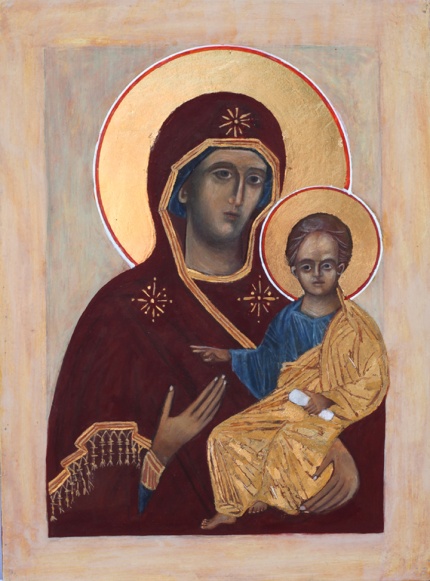
Good question. When we speak of Greek Iconographers, or Romanian, or Russian, or English we immediately have a picture in our minds of what those “styles” look like.  Even the contemporary European and Eastern Iconographers, while experimenting with new ideas, are still working from the old style.  That old style consists of illustrative images, cartoonish almost, with a kind of light and form that differs from “natural” light and form, but it is varied in  interpretations.

America as a country is home to people of many different national origins, so our nationality is defined more by citizenship and allegiance than by ethnicity. After many years as a “melting pot” of different cultural ideas, America has come to have its own identity, even amongst diversity.

So what does an American style of Iconography look like?  Many American Iconographers I know have styles that are derived from the teachers they studied under. So much so, that one can see their Icons and immediately know whom they studied with.  In part this is due to the notion that copying is the approved way of making an Icon.

In my training, I was taught that we always use models for our Icons  created before the Renaissance and this is because after the Renaissance, the age of humanism dawned and people created art not to glorify God, but to glorify man’s achievements.  I was and am so grateful for this awareness, for it helped to break me free from the traditional art college training I had had and allowed me to see a more ancient, God centric approach to making art.

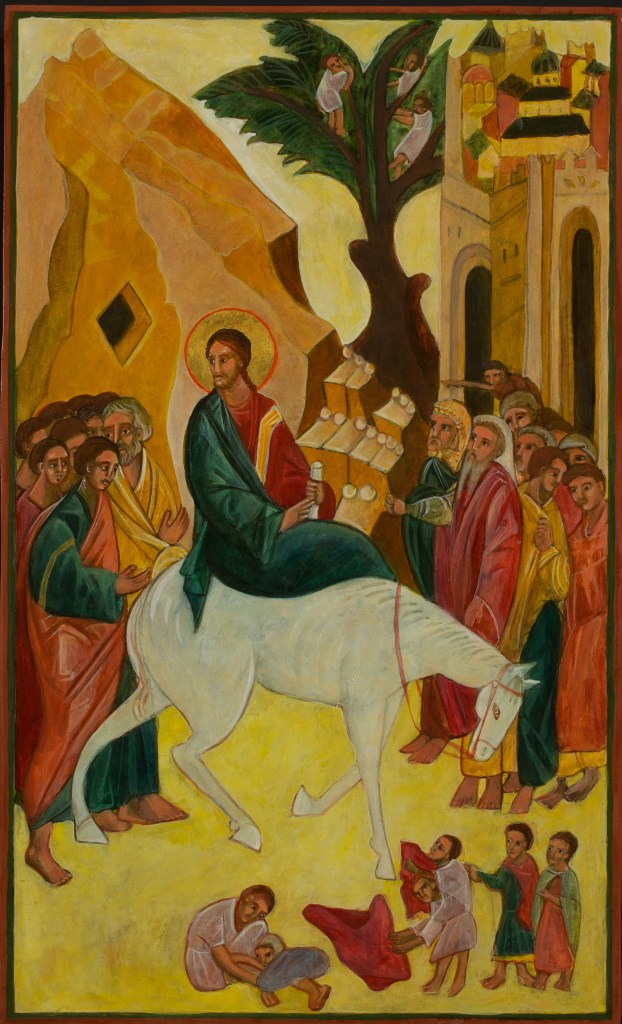
Entry into Jerusalem Icon
Entry Into Jerusalem Icon by Christine Hales

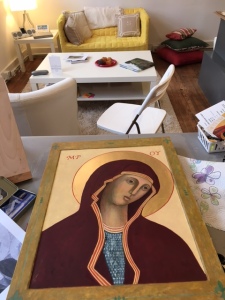
That being said, I do however, owe a lot to some of the really good art teachers available in the art world.One of those, Arthur Wesley Dow (1857-1922) said “Good drawing results from trained judgement, not from the making of facsimiles or maps.  Train the judgment and ability to draw grows naturally.” So this more experience based approach to drawing is what I use in creating my Icons.  I research, find models from before the Renaissance (or just at the turning point- a time when many painters were trained first as Iconographers), then spend time praying, reading relevant Holy Scripture, the saints’ biography, listening to sacred music, and enter into a prayerful creative experience with the Creator.  This last, being in a prayerful state is of the highest importance in the “writing” of an Icon.img_3107

That is the gift of the practice, it lifts us up out of our intellect into our creative selves, that discipline of getting past the chatter of the mind is facilitated by the practice of prayer and painting. (paraphrased from Tim Hawkesworth).

This being said, one would not wish to ignore the importance of Tradition in Icon writing.  “Since in its essence the Icon, like the word, is a liturgic art, it never served religion, but, like the word, has always been and is an integral part of religion, one of the instruments for the knowledge of God, one of the means of communion with Him.” Leonid Ouspensky, The Meaning of Icons.  It is not a question of either or, but both and.

Jesus, Peter, Icon
Icon by Dahlia Herring

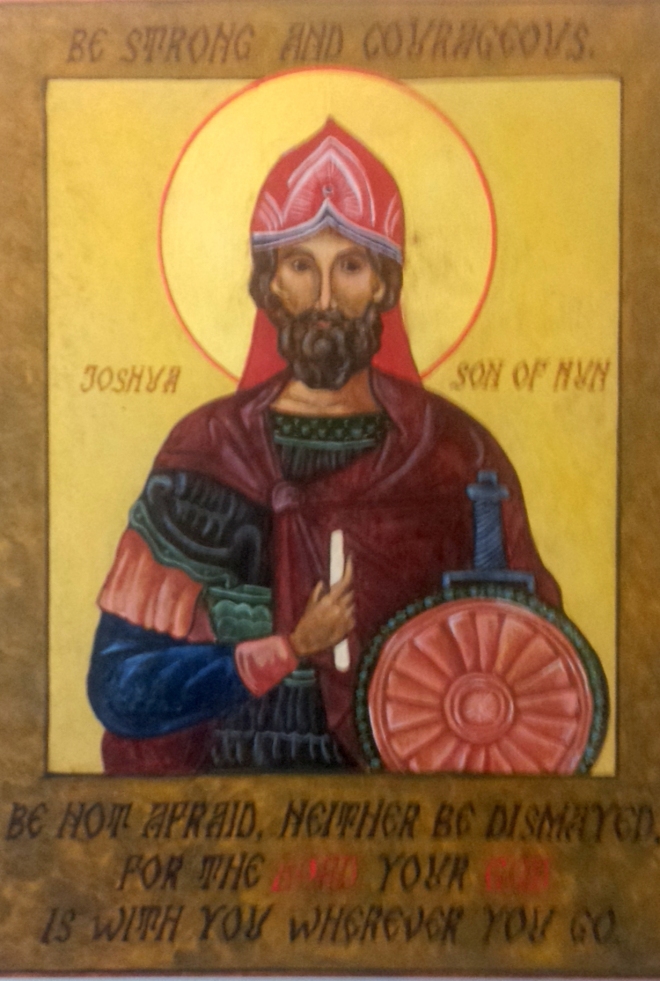
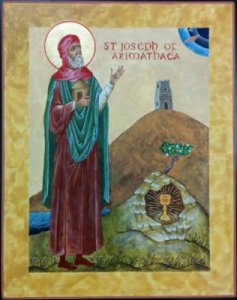
I know that many of my students’ Icons are reflective of a deep relationship and personal experience with God.  An example of one student’s faith and desire to bring others into relationship with God, is Dahlia Herring’s Icon of Jesus pulling Peter from the water.  Another student, W. Michael Shirk, an Independent Catholic Priest, writes his Icons while praying constantly, and this is often reflected in attention to detail.

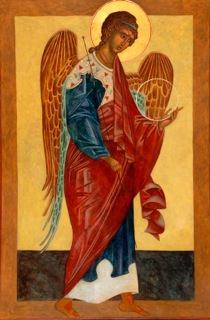
Icon, Joseph of Arimathea
Joseph of Arimathea Icon by W. Michael Shirk

When I wrote my Icon of the “Entry Into Jerusalem”, I was identifying with Jesus and thinking about the human aspect of what it’s like when one goes forward to one’s destiny.  His looking back seems so human, and his movement forward, Divine.  As an artist I gain strength and guidance from this moment, and I keep this Icon to remind me to pray for God’s will, not mine.

This country is so vast geographically, and there are many Iconographers in each of the 50 states.  I hope someday to have a list of all the American Iconographers and their contact details on this site, in order for people to contact them for commissions and classes.  I do get asked if I can recommend an Iconographer in different cities and hope to be able to serve as that kind of an association for Iconographers in the future.

Please contact me if you are an Iconographer, if you’d like to be listed on this site with a link to your website.

In prayer and blessing,

Christine Hales

www.newchristianicons.com      Icon writing retreats and classes    Christine Hales’ cv

January Icon News and Links

Sign up For Free Monthly Icon Blogs!    photo copy

The nice thing about writing icons is that whether it is “January Freeze” or “January Thaw”, you can usually manage things to be able to write icons for a few hours a day!

photo copy 5

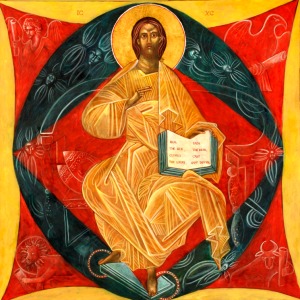
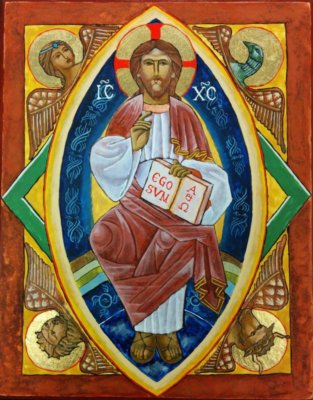
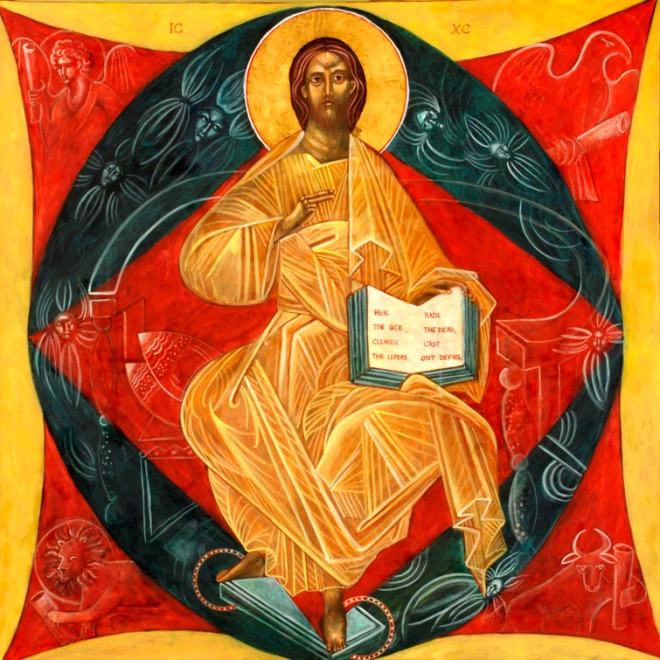
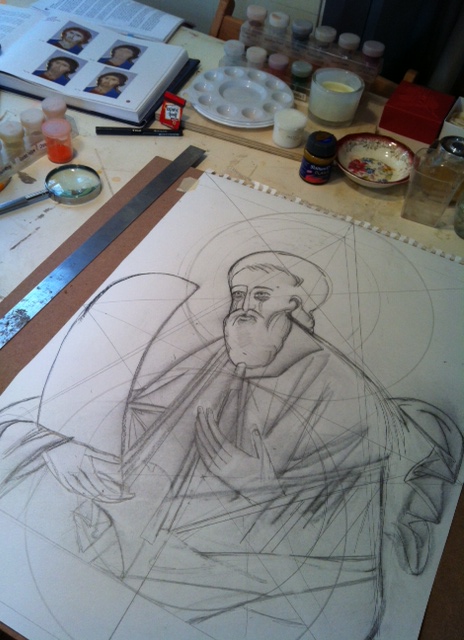
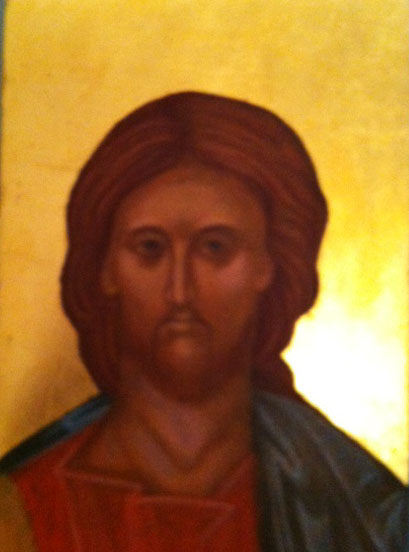
My new “Christ” icon study has accompanied my prayers over the last two weeks in the area of inner healing.  Particularly  the idea that Christ came to FORGIVE us of our sins. That call for us also to forgive has been part of the prayer journey for this icon.  I really love it!  It’s almost finished now.

“The degree to which art has a liturgical quality is in direct ratio to the spiritual freedom of the artist.” from The Meaning of Icons by Leonid Ouspensky

I think that making twenty first century icons has to incorporate the Traditions of the Church as well as spiritual freedom.  Andrey Rublev in the Fifteenth Century being able to occupy that place of Spiritual freedom, training,  and artistic skill points toward what we aspire to today.     photo copy 6

The icon class I teach in New York is a spiritual and artistic container for the students and myself to grow in relationship to each other, God, and the icons.  It’s an honor to be able to serve such a courageous group of people.

The Art Center in Troy, New York is hosting a student/faculty exhibition of our icons later this month. Here’s the description and you are invited!

Contemporary Icon
January 31 – March 2, 2014 | Faculty Student Gallery
Reception: Friday, January 31, 5-9PM at Troy Night Out | Artist Demonstration at 6:30PM

              image001Master iconographer and faculty member, Christine Simoneau Hales will exhibit her icon paintings along with selected pieces from her past students.  Icon writing is a traditional method of painting that dates back to the ancient Byzantine era of using egg tempera, rare natural pigments and gold leaf gilding to create beautiful works of art. Hales takes the step-by-step method of classical painting and infuses it with contemporary inspirations all while keeping with the spiritual subjects found in these works on panel.

I came across the website that offers short introductory art and business classes that looks very good.  Here’s the  link:     Skillshare

Also a link for icon boards that I use and like: St. John’s Workshop.

One last quote from Ouspensky and The Meaning of Icons book to leave you with:

“For a true iconographer, creation is the way of asceticism  and prayer, that is, essentially, a monastic way.”

TO see a gallery of my completed icons visit my website, New Christian Icons. 


Blessings,

Christine Simoneau Hales

Go back

Your message has been sent

Warning
Warning
Warning
Warning

Warning.