
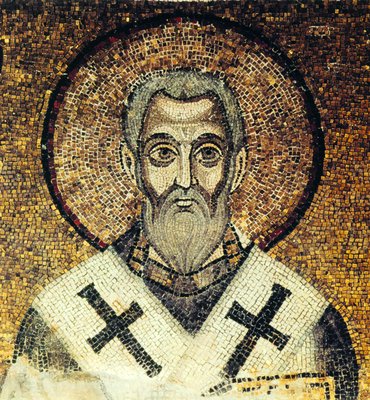
Greetings Friends and Fellow Iconographers:
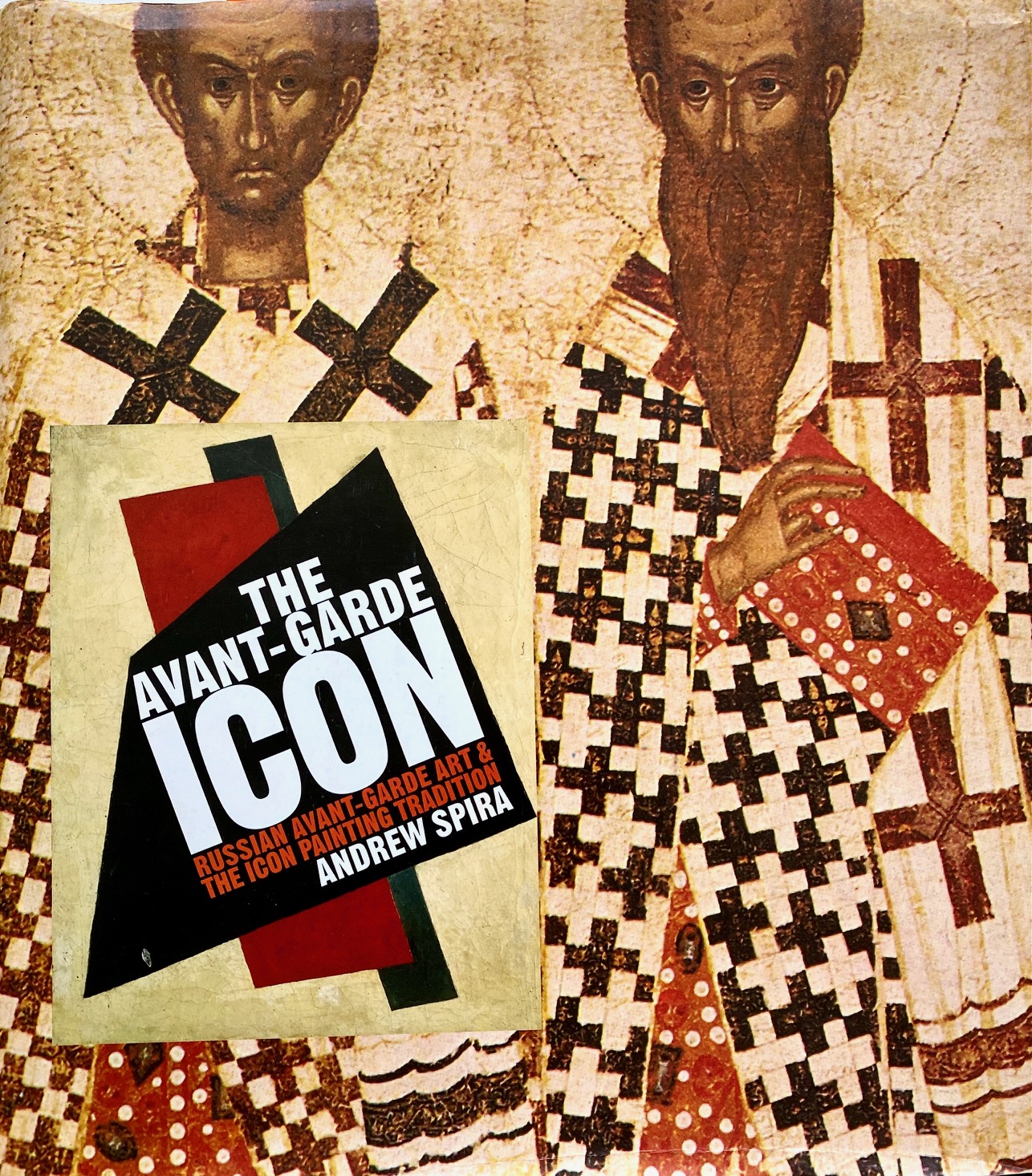
I am spending more time re-reading some of my icon related books and want to share with you this months some of the insights I found in : “The Avant-Garde Icon, Russian Avant Gard Art & The Icon Painting Tradition” by Andrew Spira. I really like the clarity of thought here about what is important to carry forward in our contemporary icons. I hope you enjoy it!
At the heart of the icon lies a radical claim: the presence of an Absolute in the world. This is the underlying principle that distinguishes the icon from all other forms of religious art. The definitive characteristic of the icon is not stylistic consistency or historical fidelity, but its metaphysical identity. An icon does not simply depict holiness—it participates in it.
For iconographers today, this distinction is crucial. The challenge is not merely to preserve a tradition, but to remain in living relationship with it. The struggle to create an art form capable of communicating the mystery of the incarnate God has shaped icon painting from its earliest beginnings. Because God became flesh, matter itself became capable of bearing divine presence. Icon painting is therefore an innately sacred art, one that originates in—and continues through—the reality of the Incarnation.
Icons as Encounter with God
A sixth-century tradition tells us that the first icon was of the Madonna and Child, painted from life by the Apostle Luke. Whether taken literally or symbolically, this story reveals something essential about the nature of iconography: icons arise from encounter, not abstraction. They are born from witness, prayer, and lived experience rather than from theory alone.

Icons are replete with symbolic meaning, but their power lies in more than symbolism. Their narrative and didactic conventions—long associated with the transmission of Truth—operate on both conscious and subliminal levels. For the iconographer, fidelity to these conventions is not a matter of imitation for its own sake, but an act of participation in a sacramental language. Adherence to both the symbolic and sacramental significance of the icon is essential to its true identity.
The iconographic tradition reached one of its highest expressions in the work of the Russian monk Andrei Rublev (c. 1370–1430). His Old Testament Trinity became a defining image of Orthodox theology precisely because it does not explain the Trinity—it reveals it. Drawing on Genesis 18, Rublev’s use of three angels to represent the Father, Son, and Holy Spirit allows the viewer to encounter the unity of the Godhead through contemplation rather than analysis. The icon silently discloses divine mystery to the inner eye and the receptive heart.

Yet even living traditions can lose their interior vitality. In sixteenth-century Russia, efforts to preserve iconography led to the Hundred Chapters Council (Stoglav) of 1551. Iconographic manuals were introduced to formalize and regulate canonical forms. While this development was consistent with long-standing practices of copying prototypes, it also signaled a deeper shift. The contemplative spirit that had sustained the tradition from within no longer prevailed with the same force.
Dangers of Losing the Contemplative Spirit
A subtle transformation followed. Icon painters continued to reproduce established models, but increasingly focused on external form rather than inward engagement. Copying, once a sacramental act rooted in prayer and insight, risked becoming an exercise in technical replication. The icon was still produced correctly, yet no longer always created from within the living current of the tradition.
This historical moment speaks directly to contemporary iconographers. In our own time, the desire to create an art that is both accessible and faithful often leads us back to Byzantine models. But the question remains: are we copying in order to conform, or copying in order to participate?
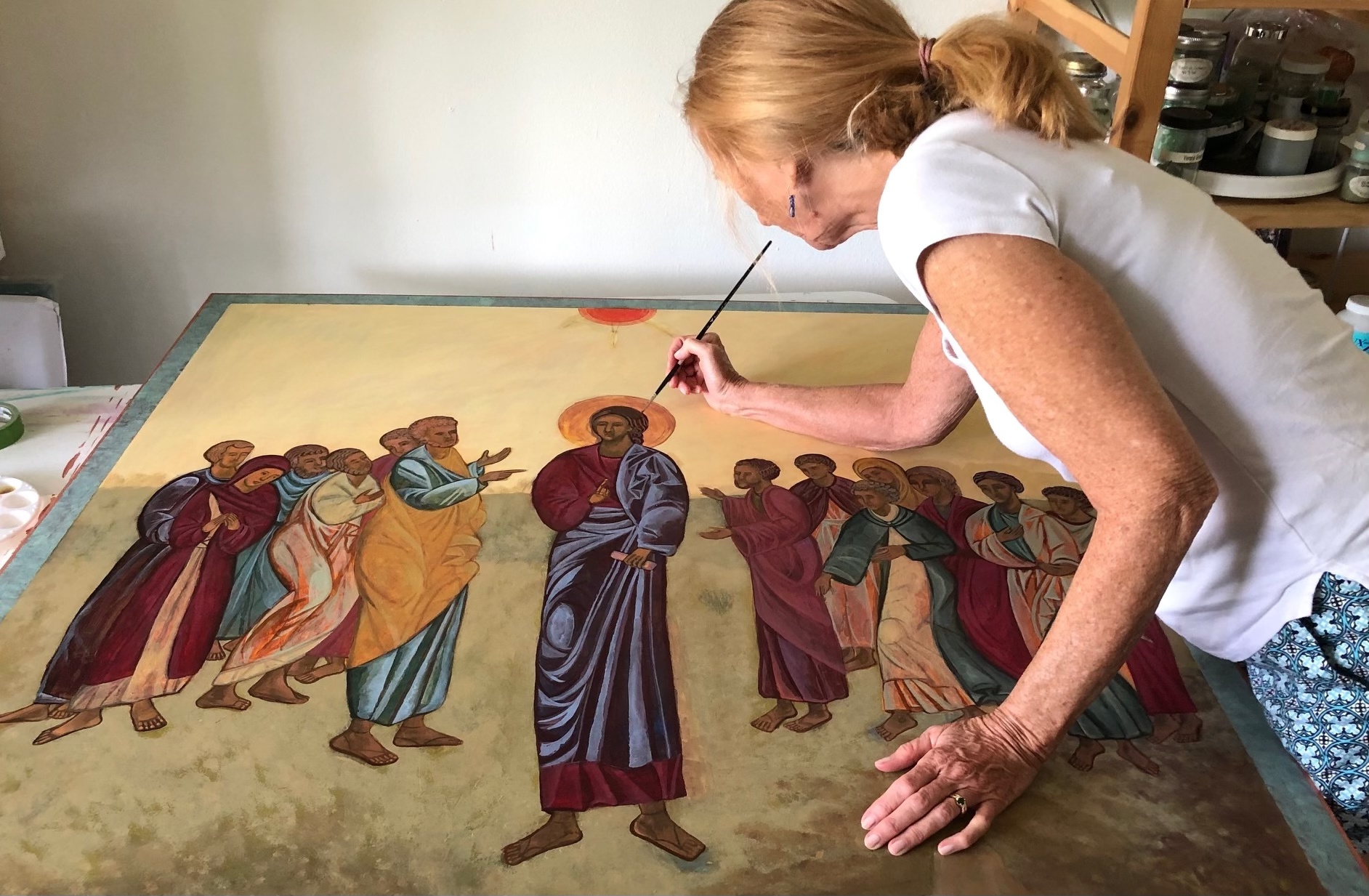
Exploring the potential of icons within the modern world requires more than technical mastery or historical accuracy. It calls for a renewed commitment to the transcendental nature of the icon itself. For the iconographer today, tradition is not a fixed archive but a living inheritance—one that demands not only discipline of hand, but attention of heart.
A Closing Reflection for the Contemporary Iconographer
For those of us working within the iconographic tradition today, the essential question is not whether we are faithful to the models we inherit, but how we are faithful to them. Technique, historical knowledge, and canonical accuracy matter deeply—but they are not sufficient on their own. Without interior attentiveness, they risk becoming ends rather than means.
Importance of Prayer and Humility
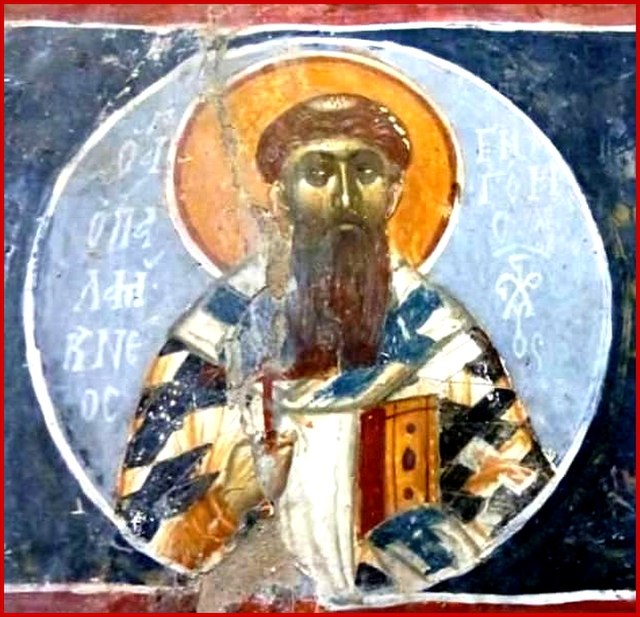
The tradition reminds us that copying was never intended to be a mechanical act. It was, and remains, a sacramental discipline: a way of submitting the self to a form that reveals more than it contains. When approached with prayer, humility, and discernment, the act of copying becomes a participation in the same contemplative vision that gave rise to the prototype in the first place.
In a contemporary context—where icons are often encountered as cultural artifacts, aesthetic objects, or commodities—the iconographer is quietly entrusted with a different responsibility. Our task is not to innovate for novelty’s sake, nor to preserve forms as relics of the past, but to allow the icon to remain what it has always been: a place of encounter between the visible and the invisible.

The enduring challenge, then, is this: to work with discipline without rigidity, tradition without nostalgia, and creativity without self-assertion. When the iconographer remains attentive to the spiritual source of the tradition, the icon continues to speak—not as an echo of history, but as a living witness to the incarnate God in the present moment.
Please share your thoughts or ideas for future posts! Many thanks for following and you are all in my prayers, for God’s blessings to go before you as you work on His icons.

Blessings,
Christine
My Links: https://newchristianicions.com my main website
Https://christinehalesicons.com Prints of my Icons
https://online.iconwritingclasses.com my online pre-recorded icon writing classes
https://www.youtube.com/channel/UCK2WoRDiPivGtz2aw61FQXA My YouTube Channel
Facebook: https://www.facebook.com/ChristineHalesFineArt or https://www.facebook.com/NewChristianIcons/
Instagram: https://www.instagram.com/christinehalesicons/?hl=en
American Association of Iconographers: FB Group: https://www.facebook.com/groups/371054416651983
American Association of Iconographers Website: https://americanassociationoficonographers.com

 American Association of Iconographers